
Barra, Aveiro: the Lighthouse, the Beach and Where to Stay

Barra is best treated as a half-day from Aveiro or a quiet seaside base, not a destination that needs days of its own. The draw is the Farol da Barra, Portugal's tallest lighthouse, standing where the Aveiro Lagoon meets the Atlantic, with a broad beach and a walkway to Costa Nova alongside. This guide covers what to see, when the lighthouse opens, and the Gafanha da Nazaré side of the district.
What Barra is and who it suits
Barra is the coastal edge of Ílhavo, sitting between the São Jacinto Dunes and the Costa Nova beach, with the lighthouse as its landmark. It suits travellers who want an ocean beach and a landmark climb within a short drive of Aveiro, and who are happy to plan around a Wednesday-only lighthouse window. It does not suit anyone expecting a dense old town, museums or a café-lined centre. If you want the city's canals and streets instead, the Aveiro Neighbourhoods: 4 Area Guides shows how the districts compare.
The district is tied closely to Gafanha da Nazaré, which is where most of the holiday flats around Praia da Barra are listed. Staying here means accepting a quieter, car-friendly base with the beach on foot and Aveiro a short drive away. If you would rather be in the city and visit the coast, base yourself centrally and treat Barra as an outing; Beira-Mar, Aveiro is the more urban alternative for a short break.

Farol da Barra: 271 steps and why it was built
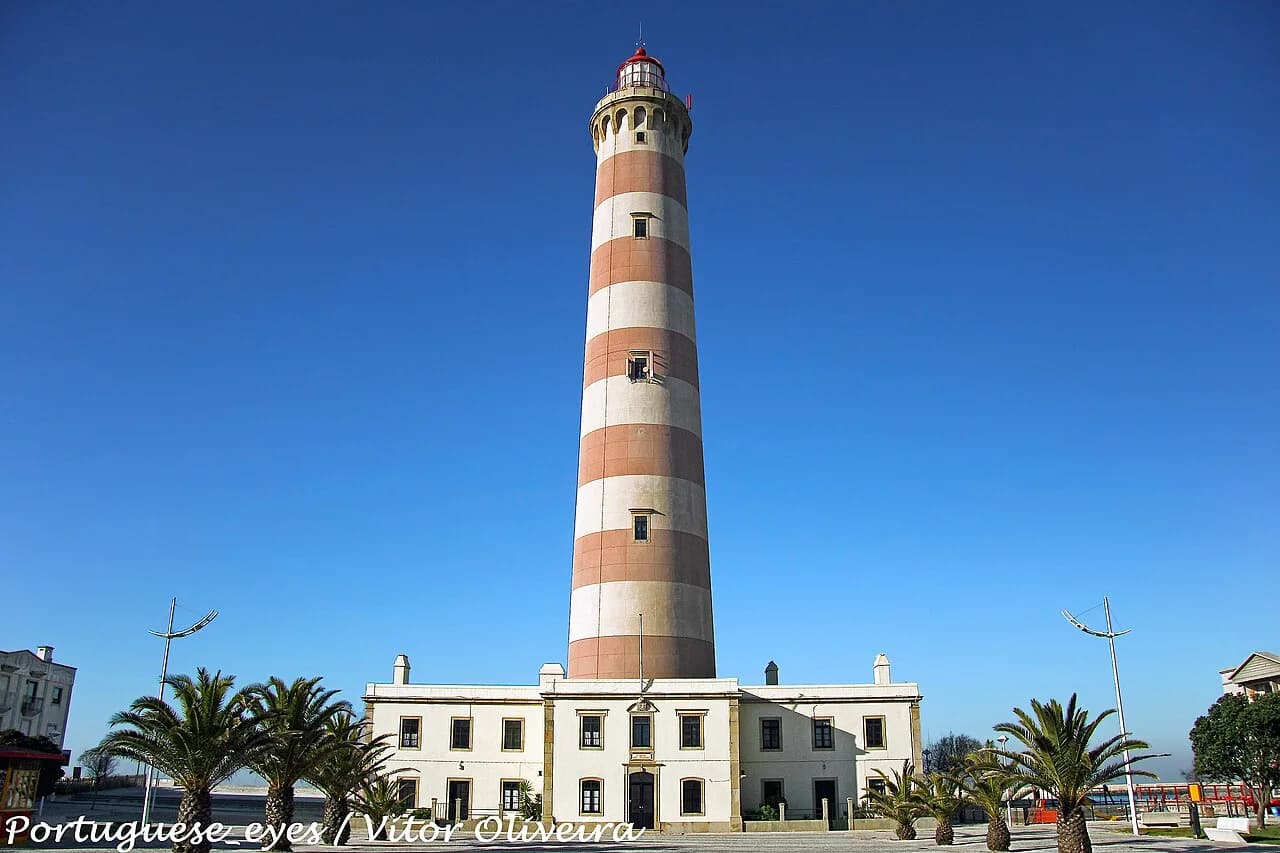
The Farol da Barra is a 19th-century lighthouse inaugurated in 1893, rising more than 60 metres above sea level and marking the point where the Aveiro Lagoon meets the sea. Before it was built, the flat coast created an illusion that land was farther away than it was, drawing boats inland; since then the light has guided shipping toward the Barra and harbour. It is the highest lighthouse in Portugal and one of the highest in Europe, and the climb is the main reason to come.
The ascent is by a spiral stone staircase, which is manageable for most visitors but not a lift-assisted visit. At the top, the view takes in the sea, the beach and the Barra where boats enter and leave. Allow time to linger, because the reward is the panorama rather than an exhibition inside.

When you can climb: Wednesday visits in winter and summer
Climbing is limited to Wednesdays, three times a day, and it is free of charge. In winter time the window is 13:30 to 16:30; in summer time it runs from 14:00 to 17:00. The Visit information on the lighthouse's own tourism listing also refers to 283 stairs, so treat the climb length as approximate. Plan the rest of your day around that slot rather than assuming you can drop in at any hour, and check which time regime applies on your date before you go.
Because the lighthouse is the district's headline sight and opens only one day a week, a Wednesday visit is the single most useful decision you can make when planning a short break around Barra. If your trip does not include a Wednesday, the beach, the sea wall and the walkway to Costa Nova still fill an afternoon, but the climb will not be possible.
Praia da Barra: two sandy areas and a sea wall
Praia da Barra is a broad Atlantic beach noted for its long sandy shore and good conditions for surfing and bodyboarding. It sits between the São Jacinto Dunes and Costa Nova, giving it a long, open feel. Atlantic beaches here are exposed, so pick your spot and your activity to match the conditions on the day.
A sea wall runs out into the water, and a wooden walkway runs through much of the beach. The wall is the spot to watch boats cross the Barra, and the walkway makes it easy to move along the sand without trampling the dunes. The beach is the district's second reason to come after the lighthouse, and on a windy Atlantic day it is more bracing than balmy.
Surfing and bodyboarding conditions are noted on the exposed Atlantic shore. For a wider sense of what the city offers beyond the sand, see the things to do in Aveiro.
Walking from Barra to Costa Nova on the wooden walkways
Praia da Costa Nova is roughly 3 km from Praia da Barra, and seaside wooden walkways link the two beaches on foot. It is the best way to turn a lighthouse visit into a fuller day without moving the car.
Costa Nova is known for its striped houses and its position on the Ria de Aveiro, so the walk gives you both the ocean side and the lagoon side in one outing. Costa Nova, Aveiro has the detail if you want to plan that end of the walk properly.
Where to eat and stay in Barra and Gafanha da Nazaré
Most of the holiday accommodation around Praia da Barra is listed on the Gafanha da Nazaré side, in flats a short walk from the beach. The choice runs from small apartments near the sand to larger flats with terraces, and some sit right on the beachfront. Book early for summer and check the exact address, because the district stretches along the coast.
Eating is casual and beach-oriented. For a wider choice of cafés and tascas, Aveiro city is the obvious centre to head for, a short drive away.
Getting there from Aveiro
Praia da Barra is roughly 10 km from Aveiro city, a short drive on the roads toward the coast. The beach, the lighthouse and the start of the Costa Nova walkway are all within the district, so a car makes the most of a half-day trip and lets you combine Barra with the lagoon side. Without a car, arrange a lift or taxi from Aveiro rather than assuming a frequent service.
If you are building a city-based break, Aveiro Attractions: 8 Visitor Guides covers the urban sights that pair with a coastal afternoon.
Half a day at Barra versus a full day with Costa Nova
Half a day is enough for the lighthouse on a Wednesday plus a walk on the beach and a look at the sea wall. Add the roughly 3 km walkway to Costa Nova and you have a full day: lighthouse, beach, lunch and the striped houses at the other end. If the weather is poor, the lighthouse climb still works, but the beach loses its appeal and the day shortens.
For a different city-side evening after the coast, Rossio, Aveiro is the central district to know.
Where Barra fits if you are staying in Aveiro city
If you are staying in Aveiro, Barra is a coastal outing rather than a base: go on a Wednesday for the lighthouse, tack on the beach and decide on the spot whether to walk to Costa Nova. Staying in Barra instead suits travellers who prioritise sea air and Don't mind driving into the city for meals and museums. Either way, the district rewards a planned visit rather than a spontaneous detour, because the lighthouse window is narrow.
Is Barra worth a half-day from Aveiro?
Yes, if your trip includes a Wednesday and you want Portugal's tallest lighthouse plus an Atlantic beach within a short drive of the city. No, if you are looking for a walkable old town or a sight-dense break, in which case stay central and visit the coast only if time allows. The practical plan is to check the Wednesday window, drive out, climb, walk the beach and extend to Costa Nova on the walkway if the weather holds.
Frequently Asked Questions
What is the tallest lighthouse in Portugal?
The Farol da Barra, at Praia da Barra near Aveiro, is the highest lighthouse in Portugal and one of the highest in Europe, standing more than 60 metres above sea level.
Can you climb the Barra lighthouse?
Yes, on Wednesdays only, three times a day, via a spiral stone staircase. Visits are free, with a winter window of 13:30 to 16:30 and a summer window of 14:00 to 17:00. The lighthouse's tourism listing gives the staircase as 271 steps in its main text and 283 in its visit box, so treat the count as approximate.
How far is Barra from Aveiro?
Praia da Barra is roughly 10 km from Aveiro city, a short drive toward the coast. It is close enough for a half-day trip from the city.
Can you walk from Barra to Costa Nova?
Yes. Praia da Costa Nova is roughly 3 km from Praia da Barra, and seaside wooden walkways connect the two beaches on foot.