Things to Do in Évora: The Old Town, the Bones and the Aqueduct
Plan a short break in Évora with the Roman temple, the Capela dos Ossos, the Sé, Praça do Giraldo and the aqueduct, plus how many days the city needs.
On this page
Two days is the right amount of time for Évora: enough for the Roman temple, the Capela dos Ossos, the cathedral and a slow evening on Praça do Giraldo, with an hour spare for the aqueduct. The city is small, UNESCO-listed and layered with Roman, Moorish and medieval building, so the pleasure is in walking between monuments rather than ticking them off. This guide arranges the sights the way the streets actually run, from the main square out to the eastern edge, and adds where to eat, where to park and what to cut if you only have one day.
What to see in Évora in one, two or three days
With one day, concentrate on the compact core: Praça do Giraldo, the Roman temple, the cathedral and the Capela dos Ossos, all within a walk of each other inside the walls. Two days let you add the aqueduct, a church or two and an unhurried lunch; three days turn Évora into a base for the wider Alentejo. The old town is a UNESCO World Heritage Site precisely because that dense mix of Roman, Moorish and Portuguese layers survives intact, so distance is never the problem, only how much you try to fit in.
Many travellers reach Évora from Lisbon by train in roughly an hour and a half and treat it as a day trip, which works but leaves no room for sunset or dinner. Staying at least one night is what turns a rushed circuit of monuments into a proper short break. The train runs from Lisbon's Sete Rios, Entrecampos and Oriente stations, and the usual advice is to book through the operator's own site rather than a reseller.
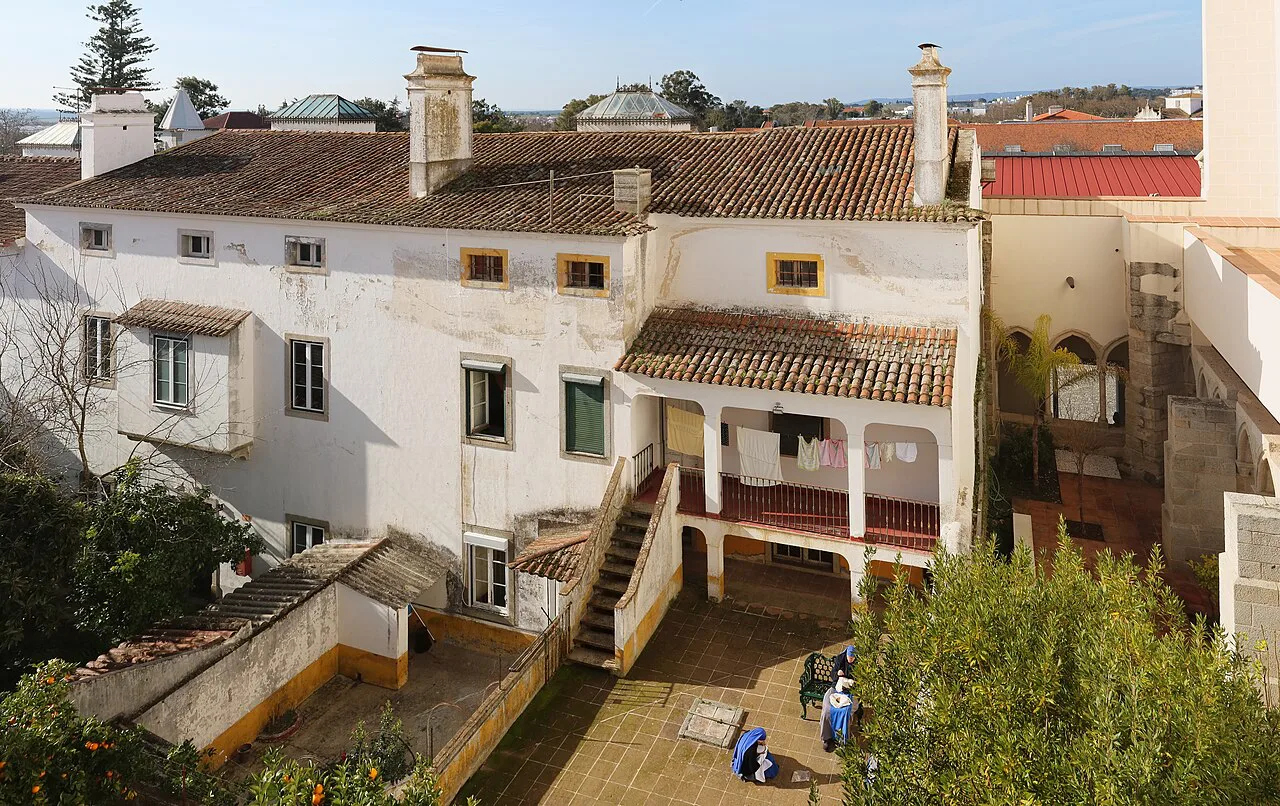
How Évora is laid out: the walled old town, Praça do Giraldo and the walk to the Capela dos Ossos
Praça do Giraldo is the hinge of the city: the arcaded main square where the old streets fan out and where you will pass several times a day without planning to. From it, the lanes climb gently north-west towards the Roman temple and cathedral, while the Capela dos Ossos sits on the eastern side of the centre near the Igreja de São Francisco. Everything inside the walls is close enough to walk, and the pleasure is in the detours, so give yourself permission to get mildly lost.
The old town is ringed by medieval walls, and the gates and aqueduct mark its edge rather than its middle. A sensible shape for a first morning is to start on the square, walk up to the temple and cathedral, then cross to the bone chapel and loop back along the wall. If you would rather have the route decided for you, a guided walking tour compresses the orientation into a couple of hours and frees up the rest of the day.
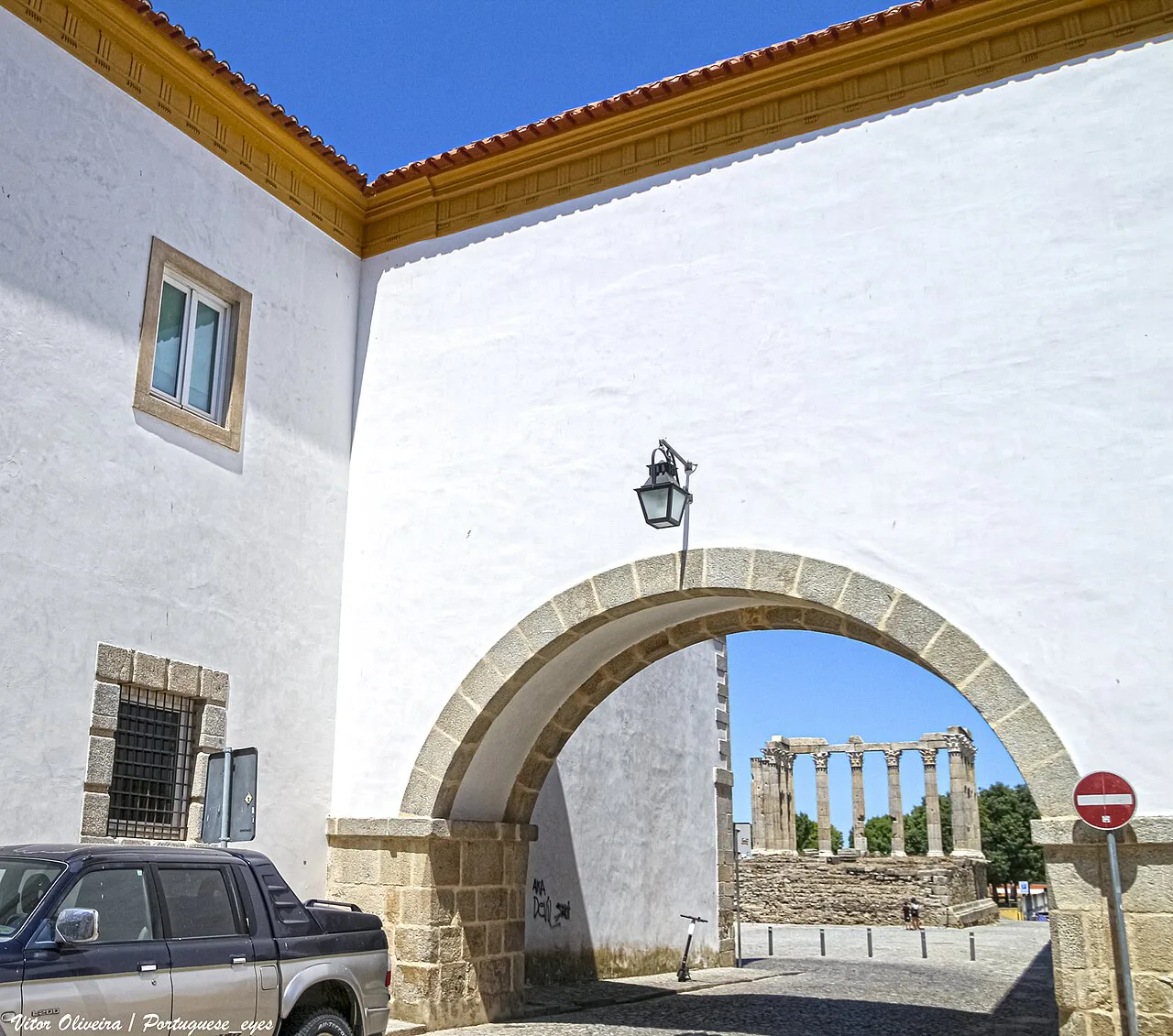
The Roman temple and the Sé: Évora's two headline monuments
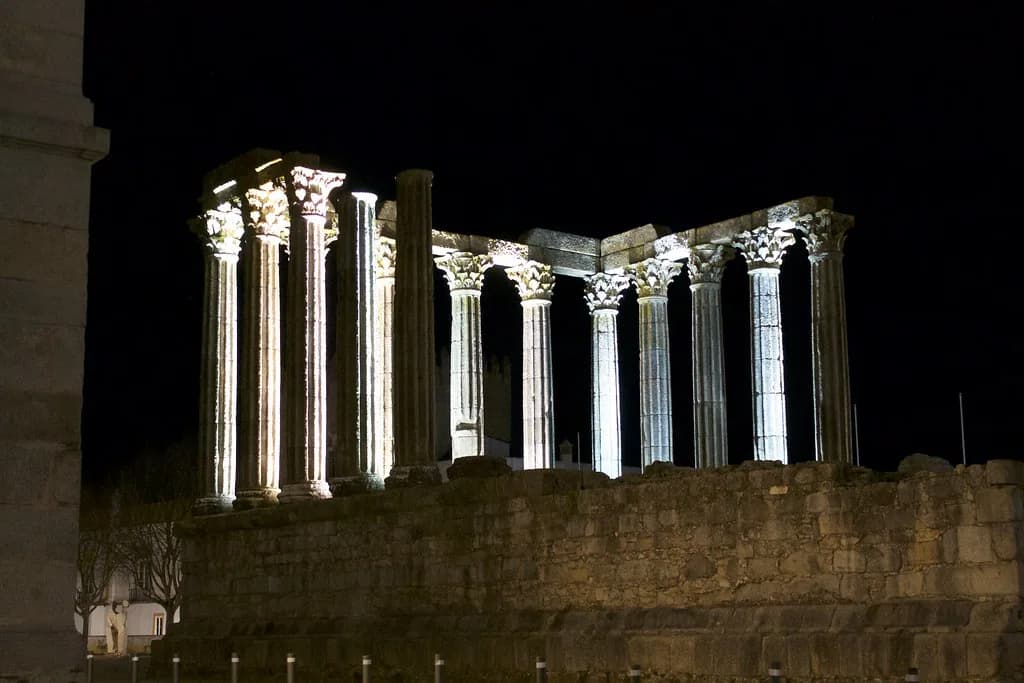
The Templo Romano, often called the Temple of Diana, stands on the highest point of the old town beside the cathedral, its surviving columns oddly marooned among later buildings. It is the image most people carry away from Évora, and it takes only a few minutes to see, so pair it with the Sé next door rather than making a separate trip. The pair together are the reason the walk up from the square is worth doing first thing, before the day heats up.
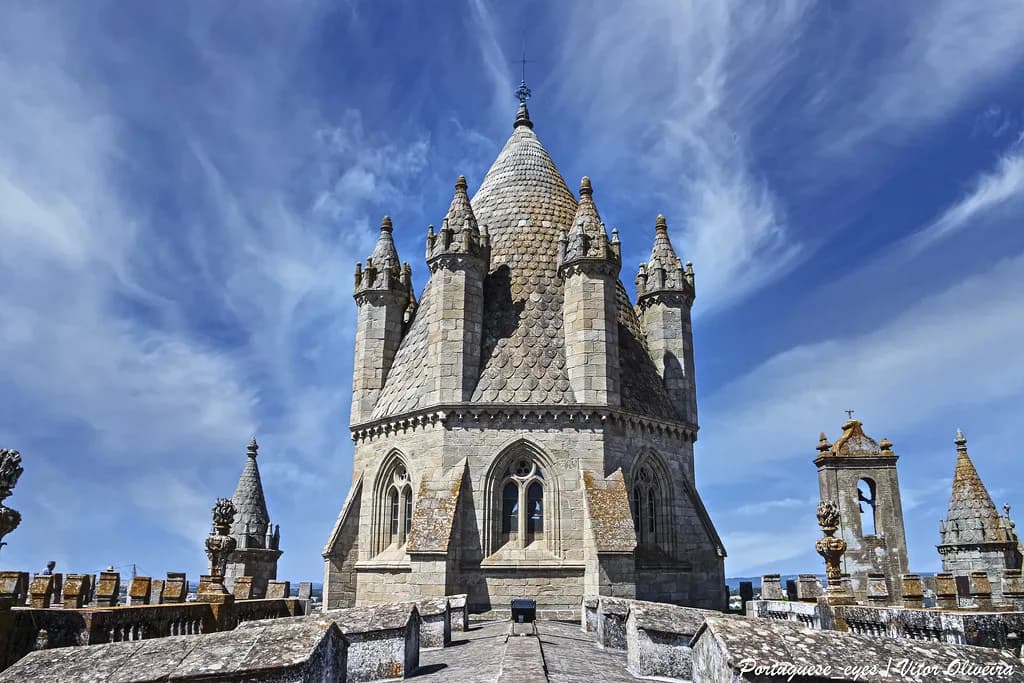
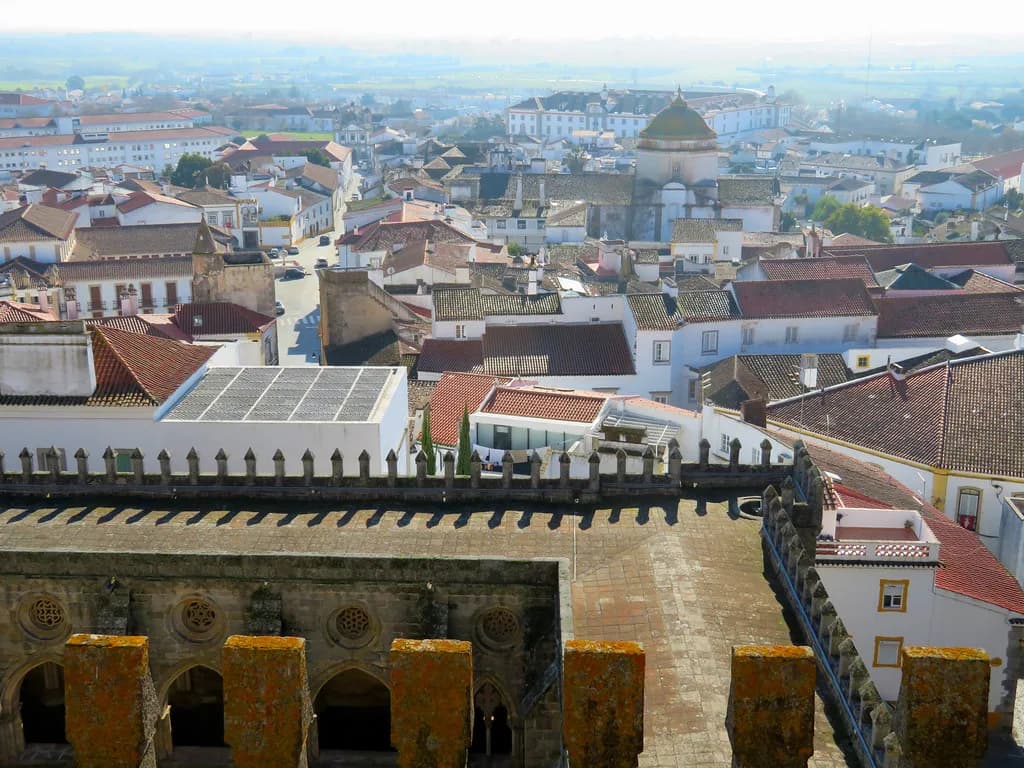
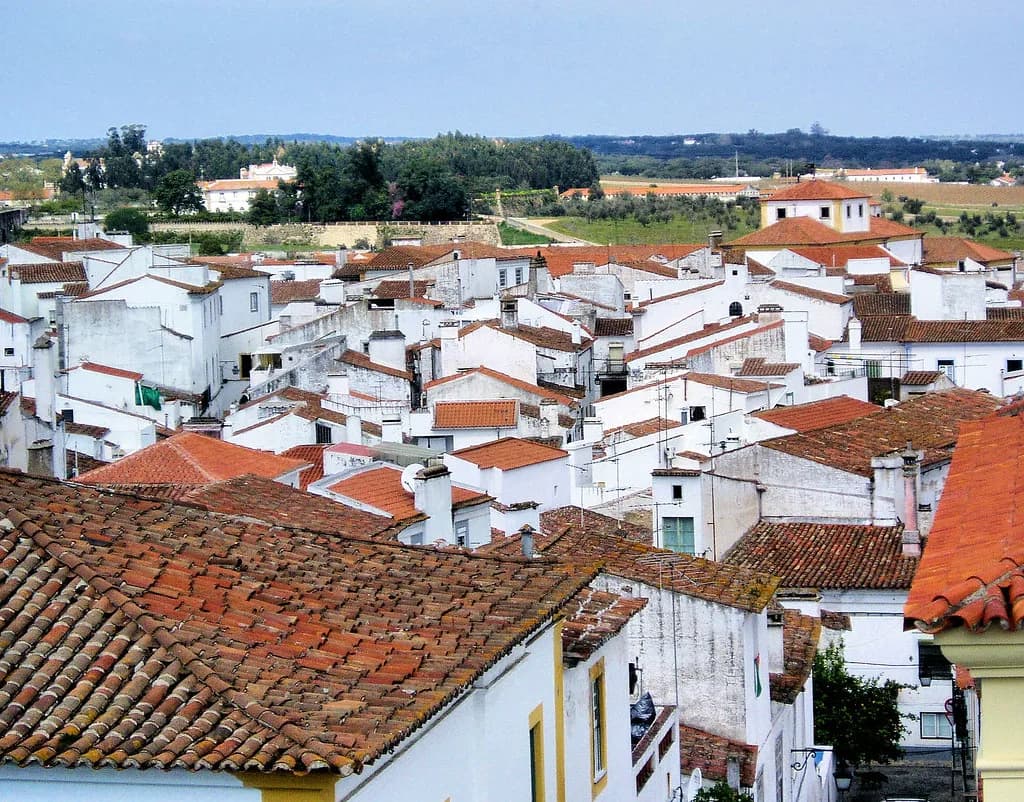
Évora Cathedral (Sé) is a fortress-like Gothic building with a cloister and a roof terrace reached by stairs, and it rewards more time than the temple. The climb is the point: from the top you see the temple columns, the whitewashed houses and the plain beyond in one sweep. Check the day's opening before you commit, since cathedral hours and terrace access can vary.
The Capela dos Ossos and Igreja de São Francisco at the eastern edge of the old town
The Capela dos Ossos, the Chapel of Bones, is the sight everyone remembers: a 16th-century chapel next to the Igreja de São Francisco whose walls and pillars are lined with human skulls and bones. The bones were moved here from the city's cemeteries by monks, and the message over the door is a reminder to visitors about the brevity of life. It is small, busy and oddly sobering, and most people need less time inside than they expect.
The adjoining Igreja de São Francisco is worth a look on the way in or out, since admission to the chapel is tied to the church complex. If you are travelling with children or with someone who finds ossuaries grim, this is the one sight to skip in favour of a longer cathedral visit. The church sits at the eastern edge of the centre, so it makes a natural last stop before heading back towards the square.
Évora's churches and how to plan around their hours
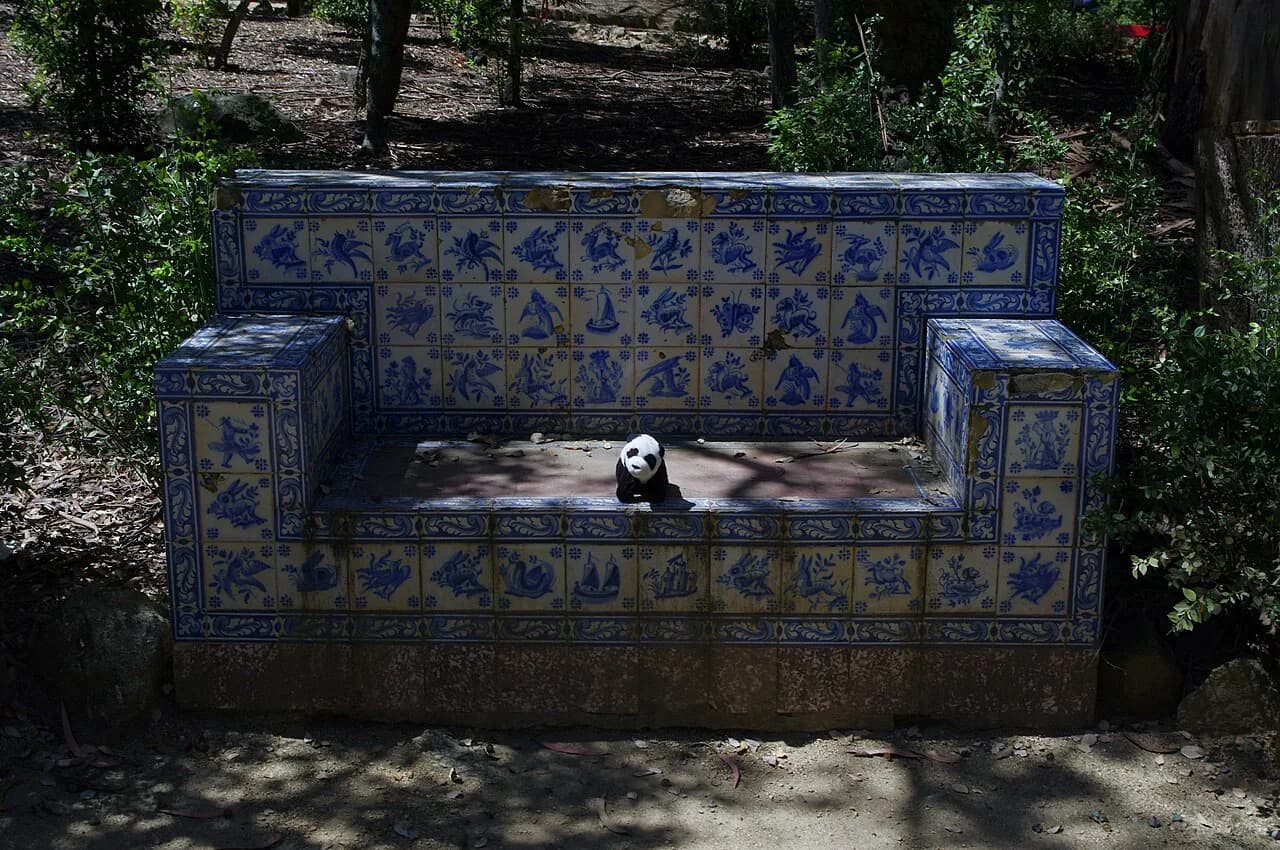
Évora has more churches than most visitors manage, and the sensible approach is to pick two or three rather than trying to see them all. The Igreja de São João Evangelista, near the Largo do Conde de Vila Flor, is known for a interior dense with gilded carving and blue-and-white tiles, a useful contrast to the bare stone of the cathedral. The convent churches scattered through the centre add quieter courtyards and cloisters to the walk.
Church opening is the practical snag in Évora: many places of worship keep short hours and close for part of the middle of the day, so a church you passed at noon may be shut when you come back. Build your day around the monuments you most want to see and treat churches as stops that may or may not be open. It is worth having a museum or a café lined up as a fallback.
The aqueduct, the walls and the old gates: how to walk Évora's edge
The Aqueduto da Água de Prata brings water into the city, and inside the walls its arches are woven into houses, so you can walk beneath or alongside it without leaving the centre. Seen from the street it costs nothing, which makes it a good filler between paid sights or something to do on the day you arrive before checking in. Follow it towards the edge of the old town to pick up the wall and gate circuit.
Museums and the small history collections near the centre
Évora's museums are modest in scale and useful when the weather or the midday closure pushes you indoors. The Museu Nacional Frei Manuel do Cenáculo, near the cathedral, holds art and archaeology in a former bishop's palace and pairs well with the temple and Sé. Allow an hour rather than a morning, and treat it as a complement to the streets rather than the main event.
Convent sweets and Alentejo food: where to stop between sights
Pastelaria Conventual Pão de Rala is the obvious mid-morning stop, a bakery café with hand-painted blue-and-white tiles and a counter of doces conventuais. Try the queijadas de Évora, the pão de rala that gives the place its name, or the airy sericaia, and you have both a rest and a piece of local food culture in one stop. It fills the gap between the morning monuments and lunch better than another church.
For a proper meal, look for Alentejo cooking rather than international menus: pork, migas, açordas and robust red wines are the local register, and portions are generous. Prices are moderate by western European standards for a small city, but they change, so read the menu at the door before sitting down. The tascas and smaller restaurants are often better value than the places fronting the main square.
Praça do Giraldo and the evening passeio
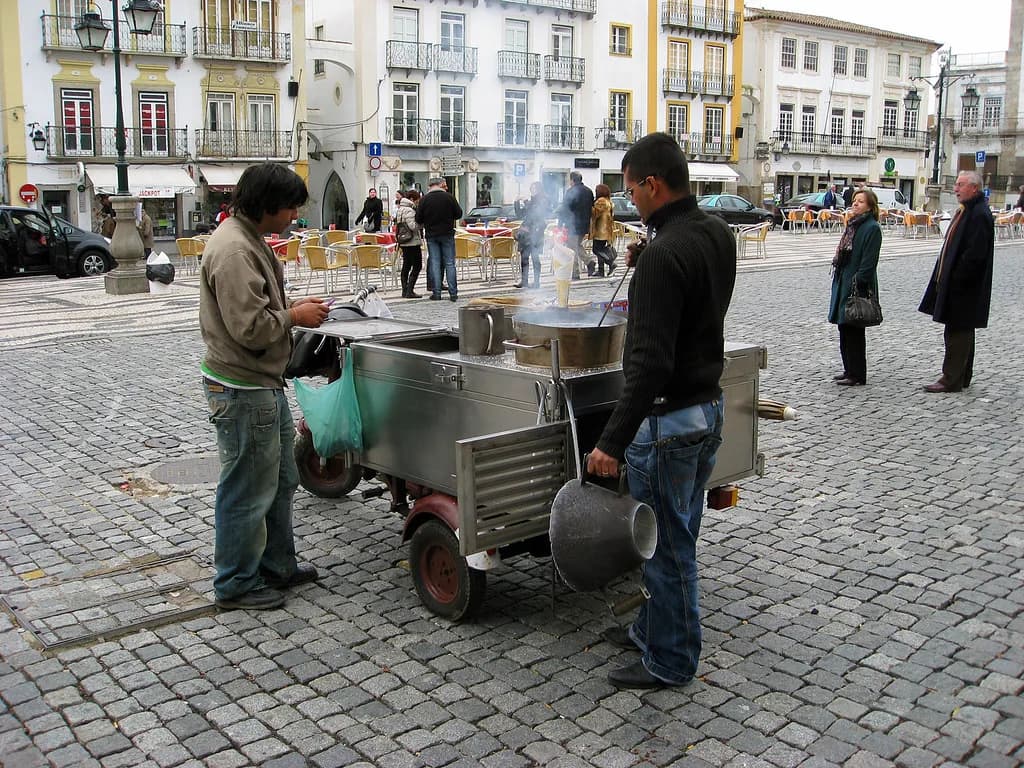
In the evening, Praça do Giraldo becomes the living room of the city, with families and couples strolling the arcades in the Portuguese passeio. The light on the white and ochre façades is the reason to be there at sunset, so plan dinner around the square rather than eating early. It costs nothing and is the best free thing to do in Évora.
Viewpoints and gardens for a slower hour
Évora's rooftop views come from the cathedral terrace and from the open ground beside the Roman temple, where the city falls away towards the Alentejo plain. A garden in the centre offers shade and a bench for the hottest part of the afternoon, which in summer matters more than squeezing in one more church. Pick one viewpoint for the day and let the rest of the walk be flat.
Markets and artisan shops in the old town
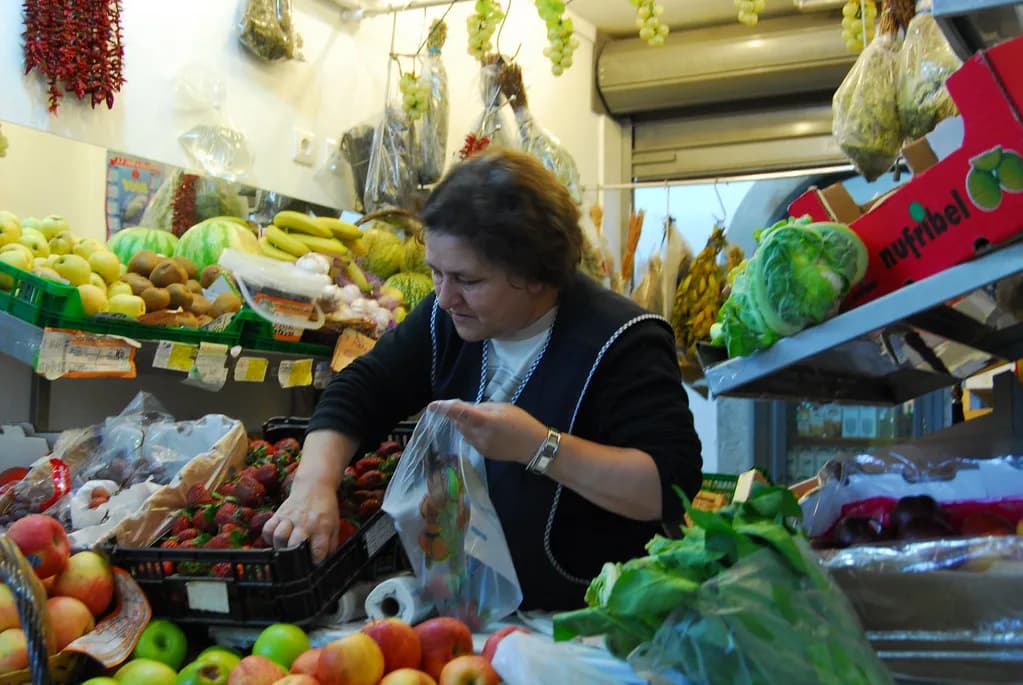
The old town's small shops are where Évora feels lived-in rather than preserved: cork goods, ceramics and embroidery from the surrounding Alentejo appear in windows along the lanes off the main square. Even if you are not buying, browsing gives you an excuse to wander the side streets that the monument trail skips. Market days and individual shop hours vary, so treat shopping as an afternoon activity rather than an early-morning one.
How many days Évora needs, and what to cut if you have one
Two days is the sweet spot: one for the Roman temple, cathedral and bone chapel, one for the aqueduct, churches, museums and a proper lunch. One day is enough for the headline monuments if you arrive early and resist detours, but you will leave without the evening on the square. Three days only makes sense if you plan to use Évora as a base and spend a day outside the city. If you are weighing up a second short city break, the same two-day logic shapes things to do in Aveiro, where canals replace the aqueduct as the thread between sights, and it is worth comparing the shortlist in these best towns in the Alentejo for a base beyond Évora.
Évora with a car: parking outside the walls and walking in
Driving inside the walls is a mistake: the streets are narrow and navigation is a headache, so the practical move is to park in one of the lots outside the city walls and walk in. The centre is compact enough that you will not miss the car, and you avoid the one-way tangle. For the Alentejo's wine estates and hill towns, though, a car is genuinely useful, so it is a question of where you sleep rather than whether you drive at all.
Évora for travellers from the UK: euros, walking distances and language
Évora uses the euro, card payments are widely accepted in cafés and shops, and a little cash is useful for small tascas and market stalls. The old town is small and largely flat apart from the climb to the cathedral quarter, so comfortable shoes and a water bottle matter more than fitness. English is spoken in hotels and many restaurants, but a few Portuguese words go a long way in smaller places.
Évora compared with a Lisbon day trip: what an overnight buys you
A Lisbon day trip to Évora is feasible, since trains run frequently and take about ninety minutes, but it delivers a compressed version: monuments in the middle of the day and a rush back for the evening. Staying overnight buys the sunset on Praça do Giraldo, dinner at a local restaurant and a second morning before the coaches arrive. If you only have a day, a guided tour from Lisbon covers the highlights efficiently; if you have two, the city rewards you for slowing down.
One day or two: which Évora plan fits your trip
If your itinerary is tight, give Évora one full day and start early: Praça do Giraldo, the Roman temple and cathedral, then the Capela dos Ossos, with a convent-sweet stop in between. If you can stretch to two days, add the aqueduct, a museum or two and an evening on the square, and you will have seen the city the way it wants to be seen. Three days only pays off if you plan to explore the Alentejo beyond the walls.
Explore more Évora guides
Frequently Asked Questions
Is Évora worth visiting?
Yes. Évora packs a Roman temple, a cathedral with a roof terrace, the Capela dos Ossos and a medieval aqueduct into a walled centre you can walk across in twenty minutes, and the surrounding Alentejo landscape adds a calm that Lisbon does not have. It is a UNESCO World Heritage Site for the density of its Roman, Moorish and medieval layers, and two days is enough to see it without rushing.
What should you not miss in Évora?
The Roman temple and the Sé are the two headline monuments, and the Capela dos Ossos next to the Igreja de São Francisco is the sight most people remember. If you have time for one more thing, walk the line of the Aqueduto da Água de Prata and end the day on Praça do Giraldo at sunset.
How long should you spend in Évora?
Two days is the sweet spot. One day covers the main monuments if you arrive early, but it leaves no room for the evening passeio or a relaxed lunch; three days only makes sense if Évora is your base for exploring the wider Alentejo.
Sources
Notes for your next Portuguese break
Optional updates to our town guides.
You might also like
Continue reading
More guides you'll find useful