Évora Cathedral (Sé): What to See and How Long It Takes
Évora Cathedral is a granite Gothic landmark worth about an hour, best paired with the Roman Temple and the Chapel of Bones in one old-town loop.
On this page
Évora Cathedral, the Sé, is worth about an hour of a short break: enough for the granite Gothic nave, the main portal and a look at the cloister, with the roof climb as the optional extra. It sits at the top of the old town, a few minutes' walk from the Roman Temple, which makes it easy to fold into a half-day circuit rather than a standalone outing. This guide covers what to look at outside and in, how the building's history shaped its character, and how to sequence it with the Igreja de São Francisco, the Capela dos Ossos and the Aqueduct of Silver Water.
Where the Sé sits in the old town
The cathedral sits at the top of the hill inside Évora's walls, a few minutes' walk from the Roman Temple. Arriving on foot from the Praça do Giraldo means a steady climb through narrow streets, so allow ten to fifteen minutes from the square rather than treating it as a two-minute hop. That geography matters for planning: the Sé and the temple are close together, while São Francisco and the Chapel of Bones lie in another direction.
Because the whole centre is compact and pedestrianised, a sensible route is to start high at the cathedral, work down to the temple and museums, then cross to São Francisco before looping back. You get the steepest walking done early while the streets are quiet, and the afternoon is left for the flatter ground. If you want the historical framing before you walk, this UNESCO World Heritage Site rewards a little reading first.
Why the Sé matters
Construction of the cathedral began in 1186 and took roughly sixty years to complete, with further additions in the fourteenth and sixteenth centuries, according to travel writing on the city. The survival of the original granite structure is what gives the building its character.
That continuity is the reason to visit. The Sé reads as a fortress as much as a church, with thick granite walls, battlements and a heavy main portal that photographs well in low morning light. If you have seen the gilded woodwork and blue-and-white tiled interiors of Lisbon or Porto churches, adjust expectations here: Évora's cathedral is austere, grey and architectural rather than ornamental.
What to look at outside
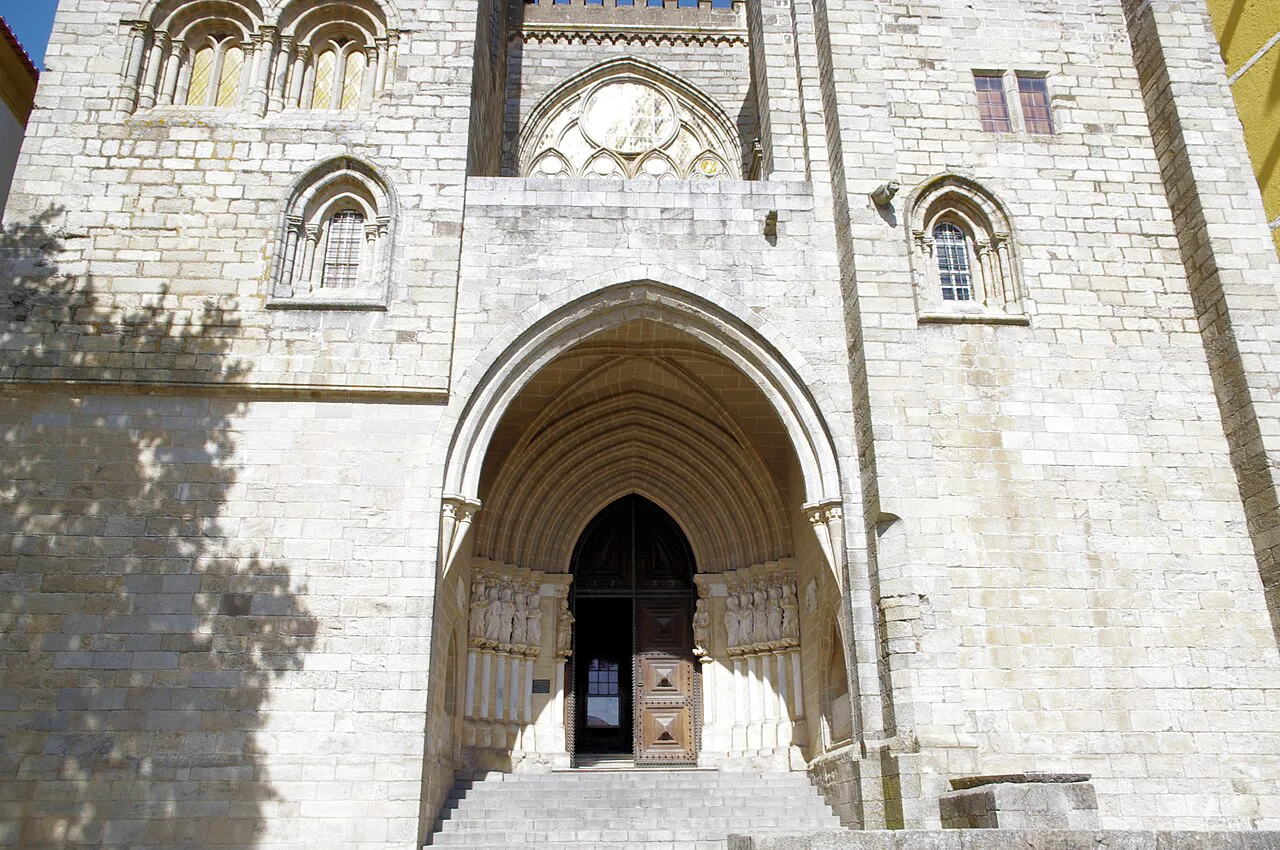
Stand back on the terrace in front of the main door, because the portal is the highlight of the exterior. The great main door, framed by layered arches carved into the granite, is the building's signature image and the best place to appreciate the scale of the masonry.
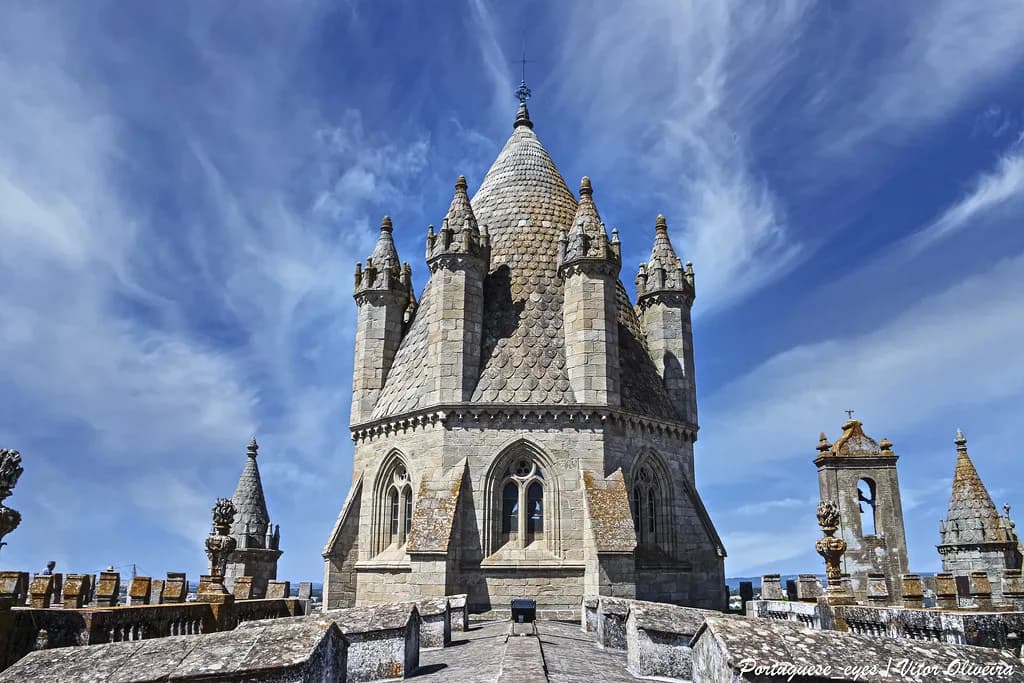
Walk the perimeter before going in. The twin towers, the crenellated roofline and the buttresses give the building its fortress character, and the side facing the museum quarter catches warmer light later in the day. It is a five-minute circuit, not a sight in itself, but it sets up what you see inside.
Inside the nave
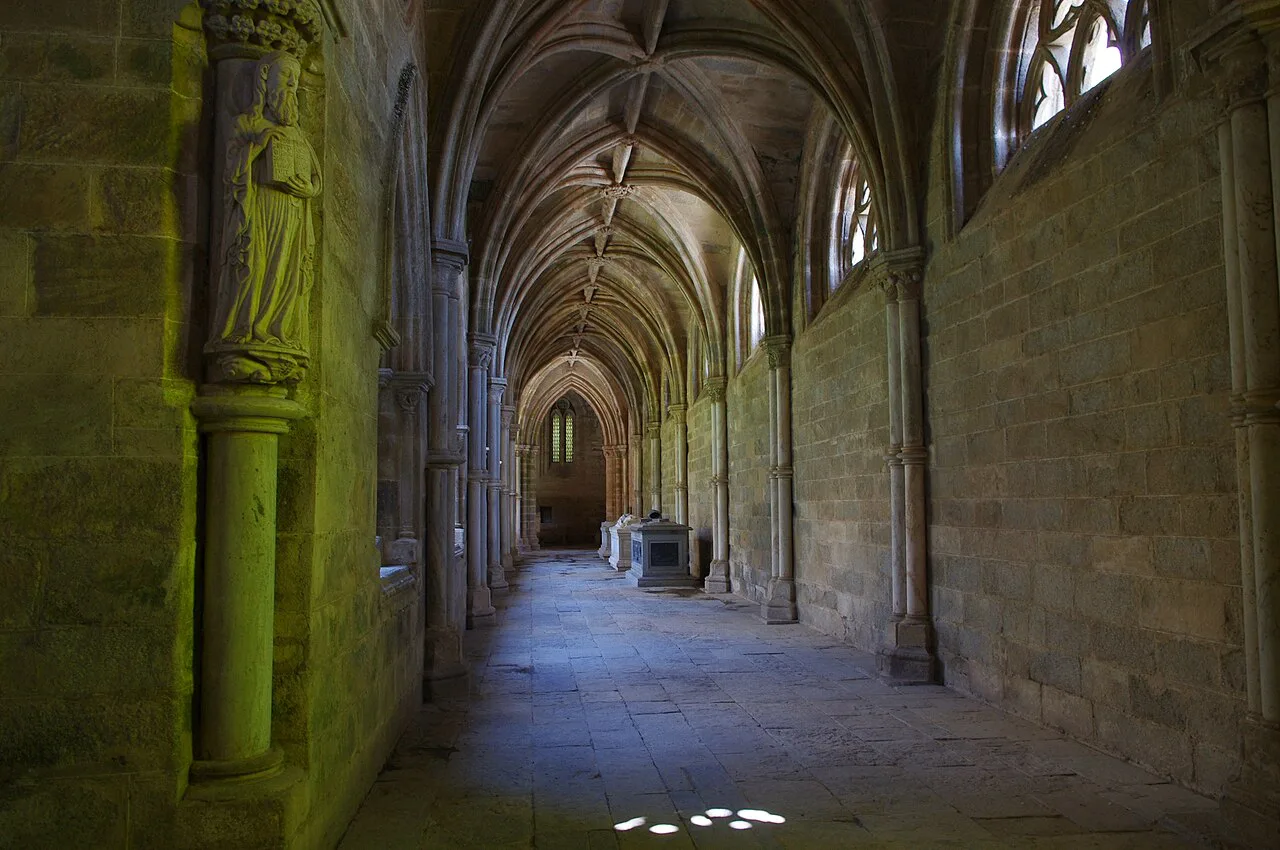
The interior is a Latin cross with a wide nave, high granite vaulting and side chapels, and the overwhelming impression is of weight and height rather than colour. Look up at the ribs of the vault and the contrast between the dark stone and the light entering from the clerestory windows.
The chapels radiating off the nave and the sixteenth-century additions repay slow looking, and the organ loft and choir area are usually the busiest corner when a group is in. Keep your voice low and expect worshippers: this is an active cathedral, not a museum, so move through the nave courteously and leave the sanctuary area to those using it.
The cloister and the roof
The cloister, entered from the cathedral, is a quieter square of arcades where the granite gives way to open sky and you can see the building's layers of construction at close range. Access to the cloister and the roof is managed by the cathedral and can vary with services and restoration work, so treat both as possibilities rather than guarantees and confirm on arrival.
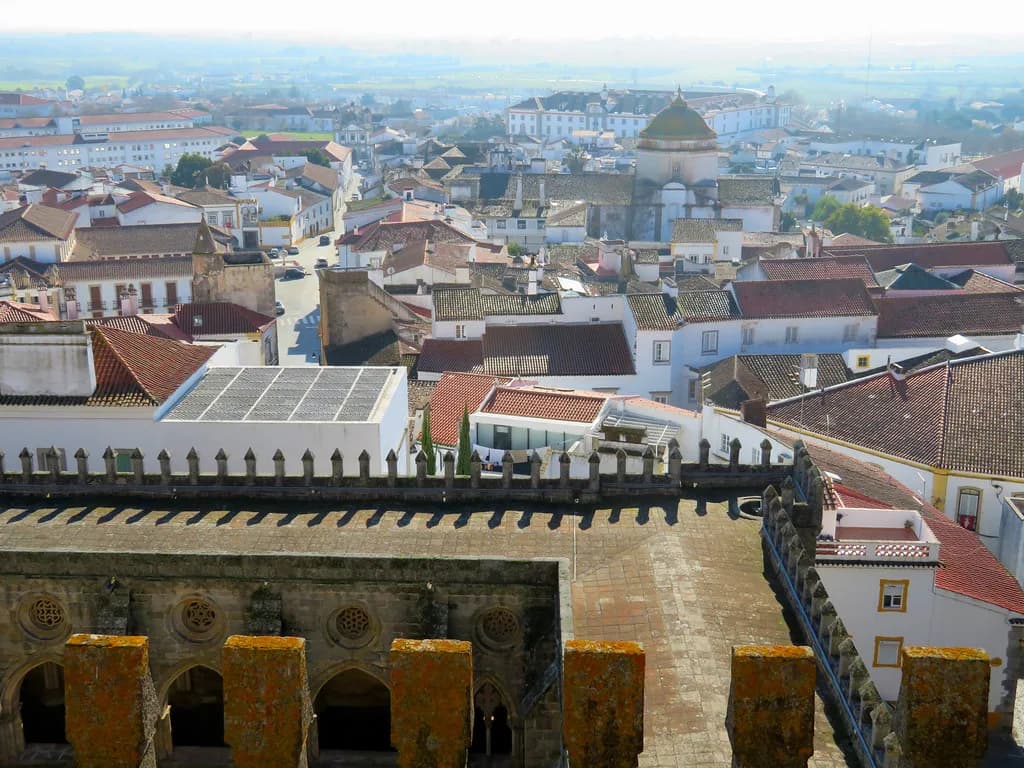
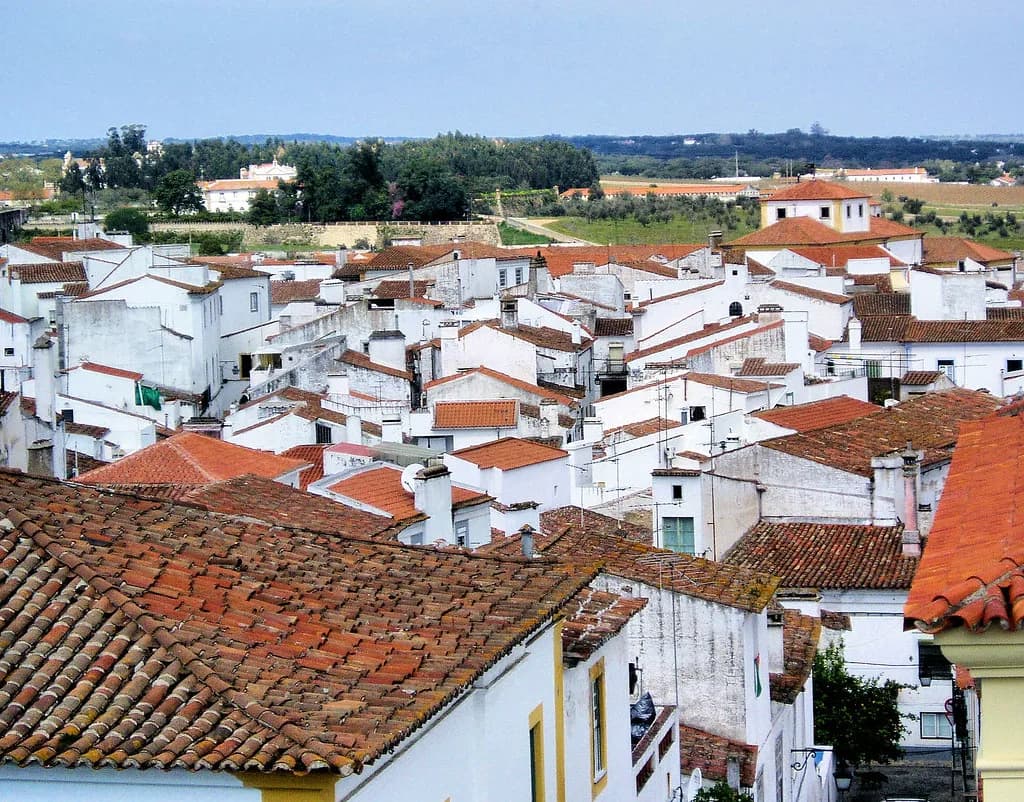
The roof climb, when it is open, is the reason many visitors rate the Sé above its interior alone: you come out above the nave and look over the whitewashed houses, terracotta roofs and the plain beyond. The trade-off is a spiral stair and a narrow passage, so skip it if you are pressed for time or uneasy with heights, and do it first thing if you want the terrace to yourself.
How long to allow
Budget forty-five minutes for the nave, chapels and cloister at an unhurried pace, and add twenty to thirty minutes if the roof is open and you climb. That makes the Sé a comfortable hour-long stop, or ninety minutes if you linger over the exterior and the views.
The most practical sequence is a single half-day loop: Sé first, then the Roman Temple five minutes away, then the museum quarter, then a twenty-minute walk east to São Francisco and the Capela dos Ossos. Doing the cathedral last risks arriving with tired legs just as the roof climb demands them.
Saint Francis and the Chapel of Bones next door
The Igreja de São Francisco, built between roughly 1475 and 1550, is one of the largest churches of its kind in Portugal and carries nautical decoration that reflects the country's maritime reach. Most visitors pair it with the Capela dos Ossos, the bone-lined chapel attached to the church, which was created in the seventeenth century by Franciscan monks to address overcrowded graveyards.
The Chapel of Bones is the sight most people come to Évora for, and it is genuinely small: fifteen to twenty minutes covers it, plus whatever time you give São Francisco's nave. Pairing the two churches in one afternoon works well because they sit a short walk from each other, but leave the Sé for the morning so the heavier, more decorative interiors do not blur together.
Completing the medieval set
The Aqueduct of Silver Water, finished in 1530 to a design by Francisco de Arruda, is the fourth piece of Évora's medieval and early modern set, and its arches run with houses and shops built into them. Seeing it takes a deliberate detour north of the centre rather than a passing glance, so slot it into a second walk or an evening stroll rather than the cathedral morning.
If you have only one full day, choose between the Sé and São Francisco rather than rushing both, and keep the temple and aqueduct as free, open-air stops that need no ticket planning. For the wider picture of what fills a one- to four-day break, work from a broader list of things to do in Évora and cut it down to the cluster you can walk comfortably.
Tickets, services and timing
The cathedral charges for entry, and the ticket typically covers the building and cloister, with the roof managed separately or included depending on the day. Prices and inclusions are set by the cathedral rather than by resellers, so check what the current entry covers at the door before you pay, rather than relying on an older online figure.
Because the Sé is a working church, opening can shift around services and religious feast days, and the same applies to São Francisco. Build flexibility into your plan: if the doors are shut when you arrive, walk to the Roman Temple and come back rather than losing the morning.
Is the Sé worth an hour of your Évora break?
Yes, provided you treat it as one stop in a loop rather than a destination in itself. The granite Gothic nave and the main portal justify the entry, and the roof, when open, gives the best value for the extra twenty minutes.
Start at the cathedral in the morning, walk down to the Roman Temple and museums, then finish at São Francisco and the Chapel of Bones. That sequencing fits the Sé, the temple and the bone chapel into one unhurried half-day, leaving the aqueduct and the old-town streets for a second wander.
Explore more Évora guides
Frequently Asked Questions
Do I need to book Évora Cathedral tickets in advance?
There is no confirmed need to pre-book. Entry is charged at the cathedral, and the current inclusions are best confirmed at the door or via the cathedral's own information when you arrive, so on-the-day visits are straightforward.
Is the Chapel of Bones included with the cathedral ticket?
No. The Capela dos Ossos sits at the Igreja de São Francisco and is ticketed separately, so plan two entries if you want both.
How much time should I give the Sé?
Allow about an hour for the nave, chapels and cloister, and up to ninety minutes if the roof is open and you climb it.
Sources
Notes for your next Portuguese break
Optional updates to our town guides.
You might also like
Continue reading
More guides you'll find useful