Free Things to Do in Évora: Sights, Squares and Views That Cost Nothing
Free things to do in Évora, from the Roman Temple and Praça do Giraldo to the aqueduct, plus what the cathedral ticket costs and what to skip.
On this page
Évora's free sights are its streets, squares and Roman ruins, and they are enough for a satisfying half-day. The Roman Temple, Jardim Diana, Praça do Giraldo, Rua 5 de Outubro, Largo da Porta de Moura and the lanes of the old town cost nothing to wander, and they sit within a compact, walkable centre. This guide sorts what is genuinely free from what merely looks free, gives a route that links the free sights, and flags the one paid ticket worth buying when the budget is tight. For the wider picture, start with Things to Do in Évora.
Free Things to Do in Évora: The Short Answer
Build your day around the free core: the Roman Temple and adjoining Jardim Diana, Praça do Giraldo, the old-town lanes and the aqueduct. These are outdoor sights, so they cost nothing and do not depend on museum opening days. Save the ticketed sights for the part of the day when you want to be indoors.
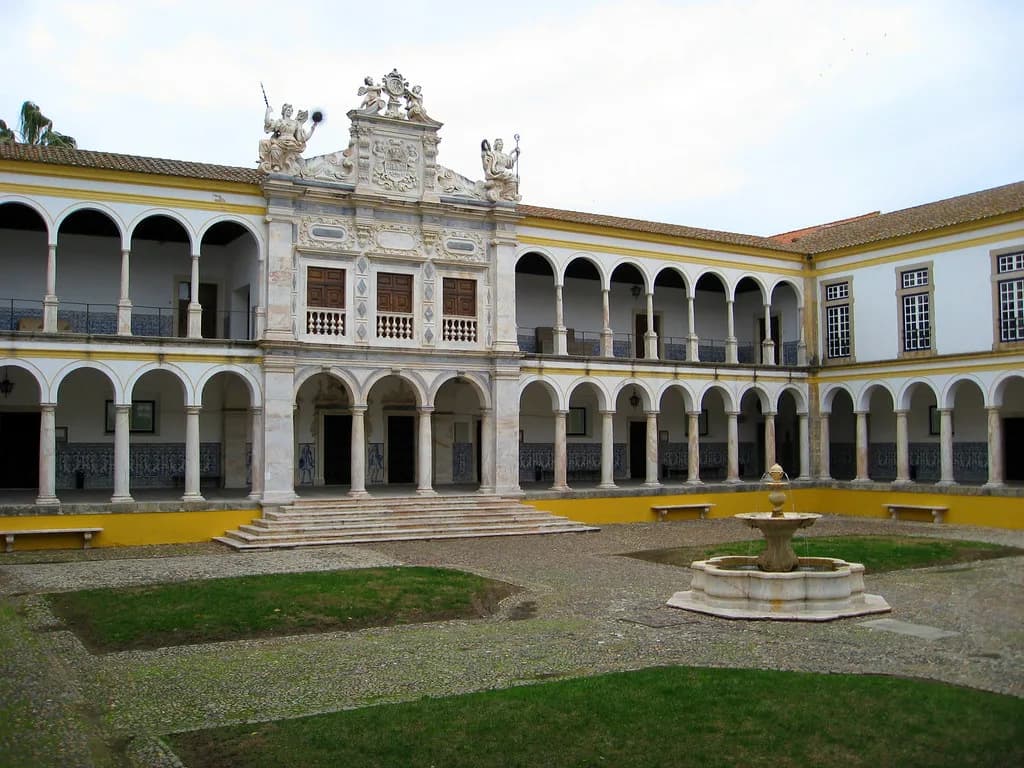
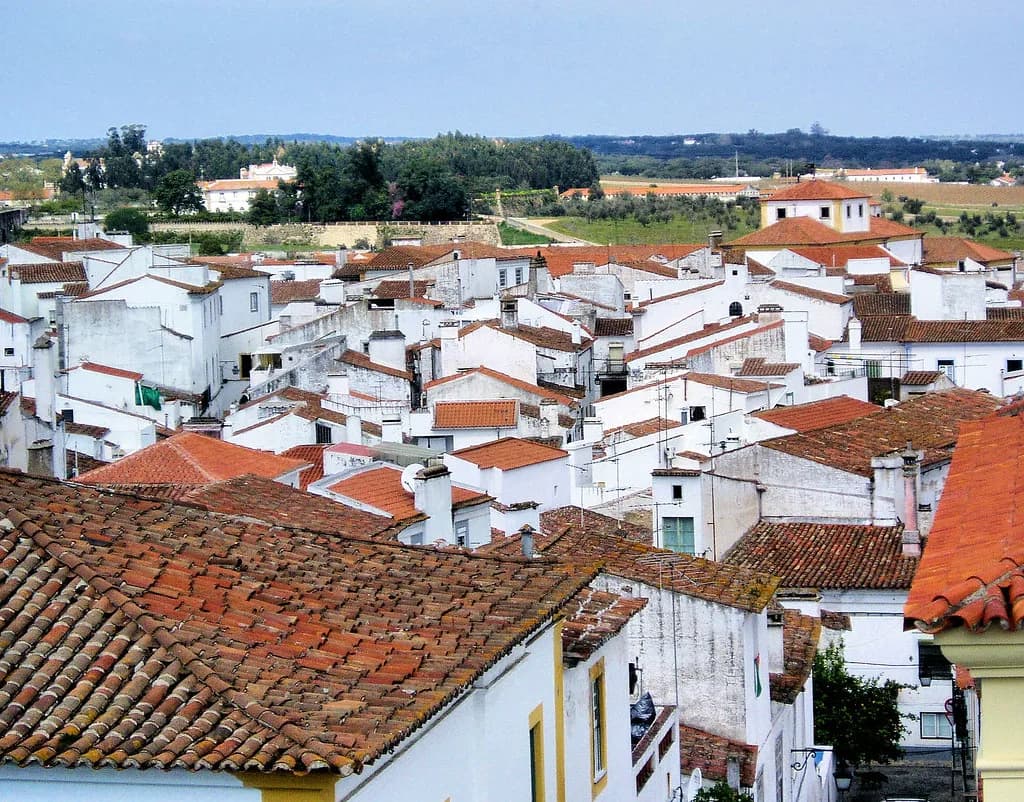
The old town has been a UNESCO World Heritage Site since 1986, and its white-and-yellow houses and grand buildings are the attraction in themselves. Walking the centre is the cheapest way to see why the city was listed. If you want the history behind the streets, our guide to Évora Old Town covers the layout and the main set pieces.
The Roman Temple and Jardim Diana
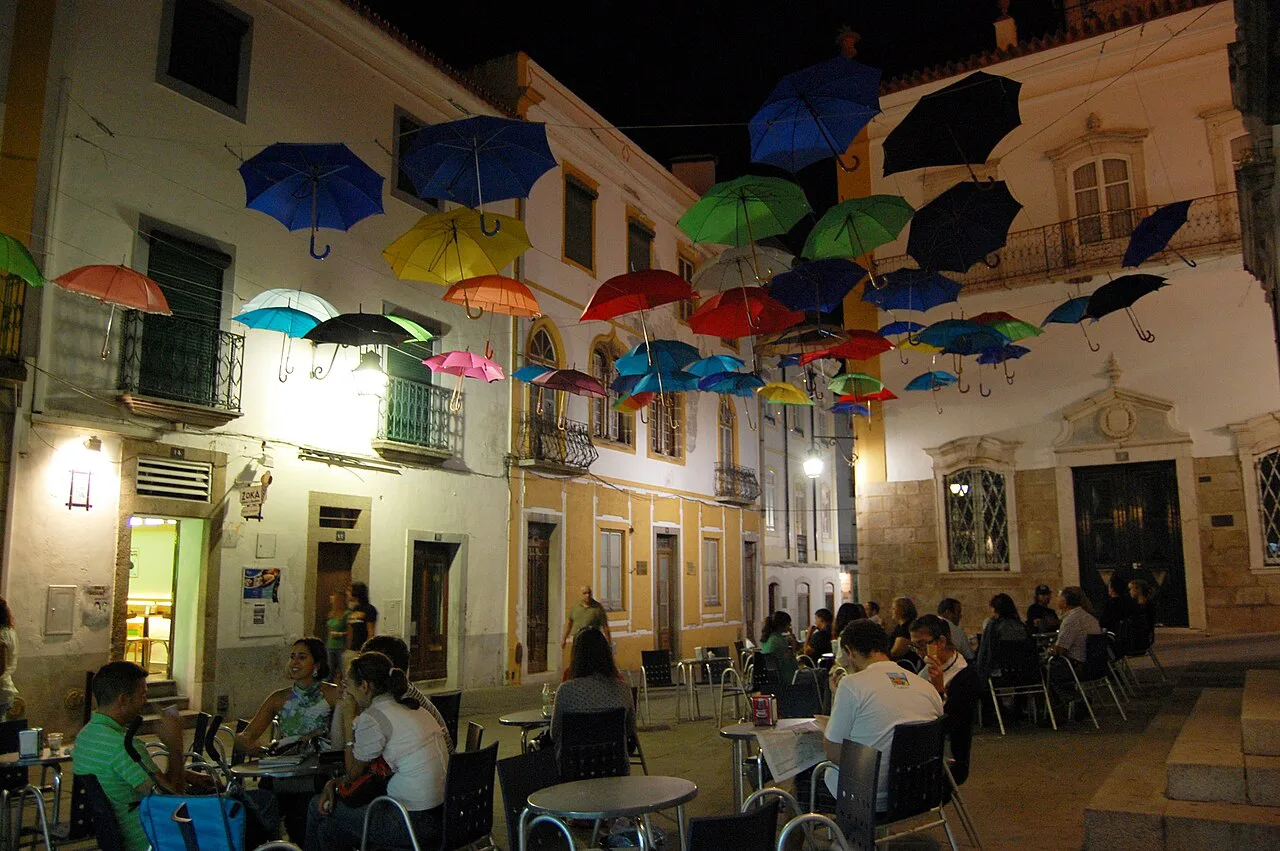
The Roman Temple dates to the 1st century AD and is around 2,000 years old, yet you can walk around it for nothing. There is no museum or information centre on site, so this is a look-and-leave sight rather than a long stop. Go early or late for the best light on the columns.
The Jardim Diana sits by the temple, a short walk through the streets of the old town from the cathedral. It is free to sit, and the people-watching is part of the appeal. Go early or late to catch the temple when it is quiet.
Praça do Giraldo and the Old Town Streets
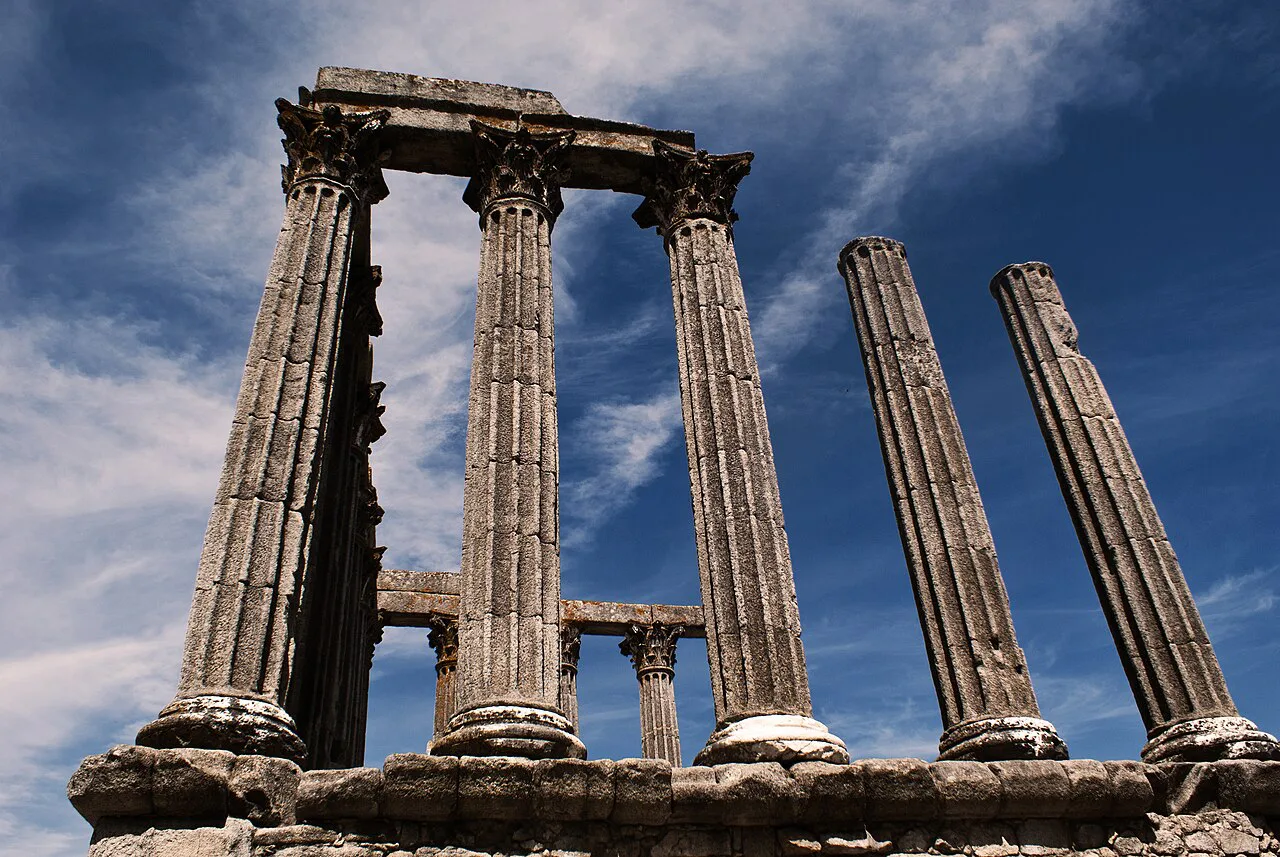
Praça do Giraldo is Évora's central square, named after Giraldo the Fearless, the Christian knight whose surprise attack reclaimed the city from the Moors in 1165. The square is free to cross and a natural meeting point, with cafés around the edges if you want to sit down. It gets touristy along Rua 5 de Outubro towards the cathedral, so expect crowds at peak times.
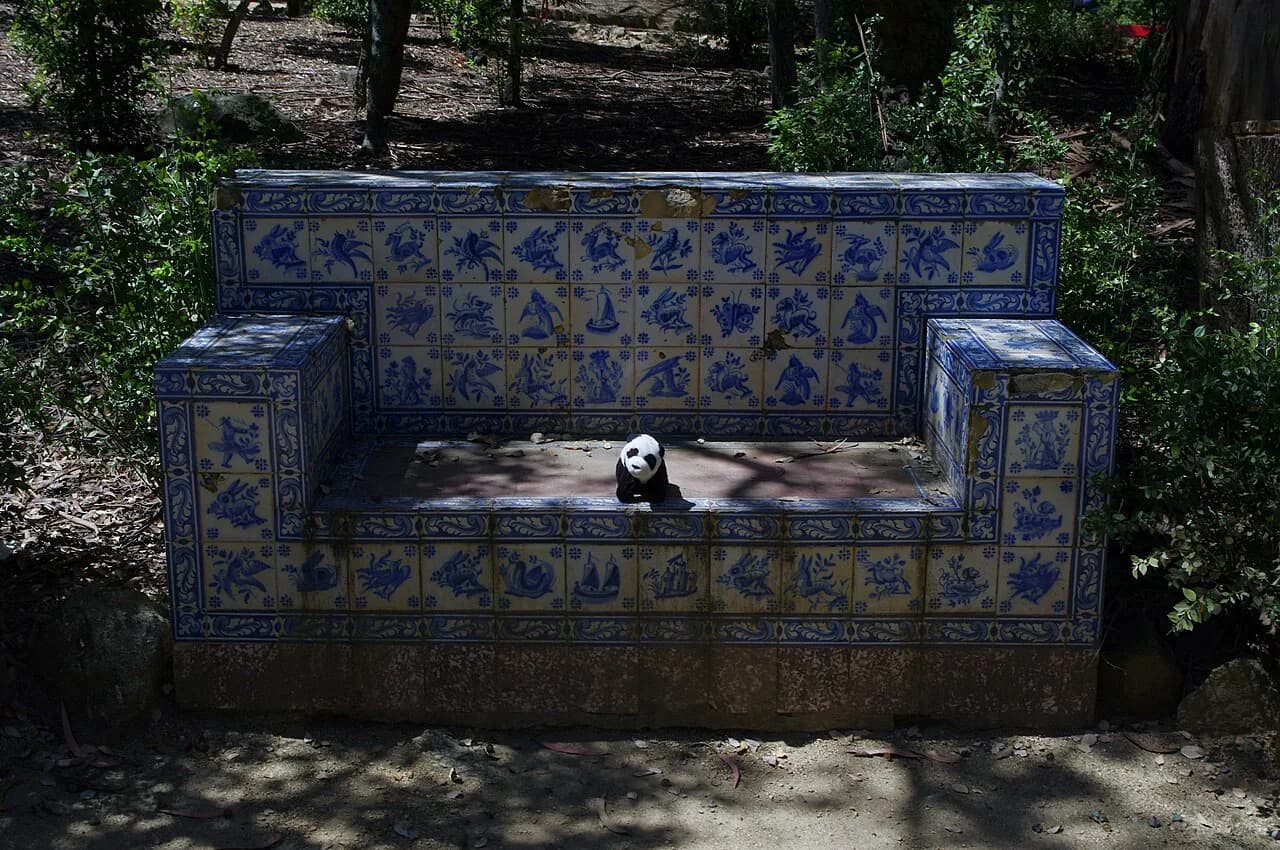
The lanes north of the aqueduct are quieter than the main drag and reward a slow wander. Look for the azulejos on church and house fronts as you go; the tiles are one of the city's free pleasures. Our guide to azulejos in Évora explains what you are seeing.
Rua 5 de Outubro and Largo da Porta de Moura
Rua 5 de Outubro runs from Praça do Giraldo towards the cathedral and is the city's busiest shopping street. It costs nothing to walk, and the busy frontage gives you a sense of the old town's daily life. Largo da Porta de Moura is a quieter square in the centre, a good place to slow down after the crowds.
These streets are where free sightseeing and shopping overlap. If you want to know which shops and crafts are worth a stop, our guide to shopping in Évora covers the options. Otherwise, use the street as a free route between the square and the cathedral.
Évora Cathedral: What the Ticket Buys
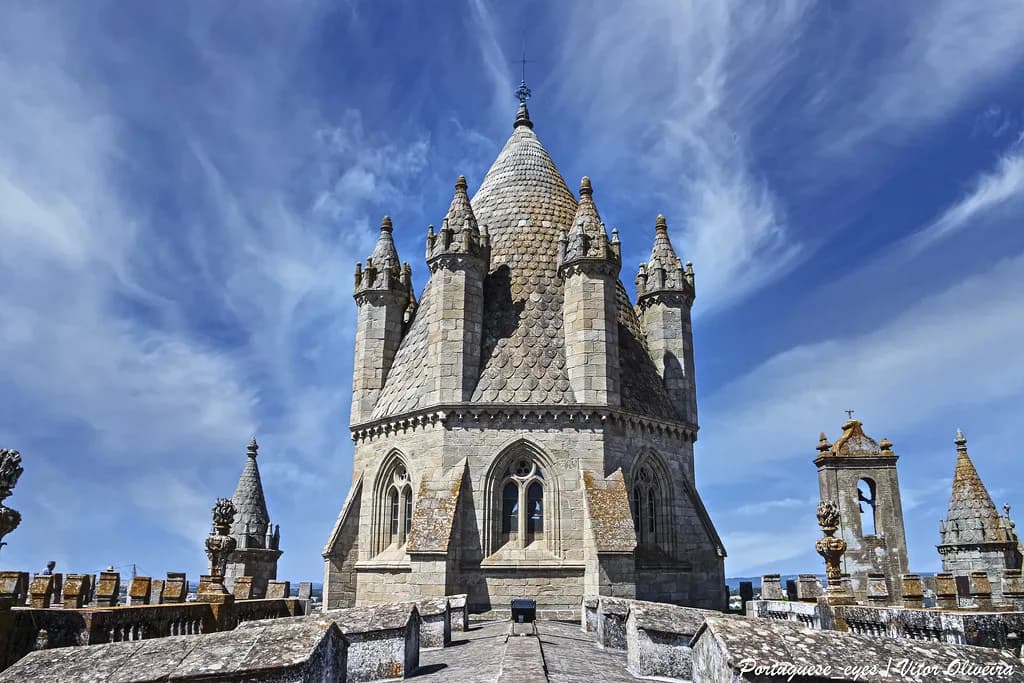
The Cathedral of Évora is one of Portugal's most significant cathedrals, and its ticket is the one paid sight most visitors should consider. In 2024 the Sommertage guide quoted admission at 4 euros, or 5 euros including the treasury. The route takes you up to the roof for a panorama, through the Gothic cloister with its orange trees, and into the vast interior. Those prices are historical, so confirm them at the door.
If your budget allows only one ticket, make it this one: the roof view and the cloister are the parts you cannot get for free elsewhere. The cathedral is a short walk from the Roman Temple, so it slots easily into a free-sights morning. Check the current opening times before you go, as they are not set here.
The Aqueduct and the Northern Edge of the Old Town
The aqueduct marks the northern edge of the old town, and the area around it is noticeably quieter than the centre. Seeing it from the streets below costs nothing, and the scale of the structure is impressive from underneath. This is a good add-on to a free walking route rather than a destination in itself.
The lanes near the aqueduct are among the most serene spots in the city, a contrast to the busy Rua 5 de Outubro. Use them to loop back towards the centre on foot, keeping the walk outdoors whatever the day.
Capela dos Ossos and Igreja de São Francisco: Free or Paid?
The Capela dos Ossos, or Chapel of Bones, is the city's most talked-about sight: its walls are lined with human bones, moved there in the late 16th century, when monks relocated the remains of some 5,000 people. The message above the door, 'We bones that are here, for yours we wait', sets the tone. Do not assume the chapel is free; check the current position at the entrance before you build a day around it.
The chapel adjoins the Igreja de São Francisco, and the two are usually visited together. If there is a charge, the church exterior and the surrounding square still give you a sense of the complex. The Bones Chapel is the sight where the decision is really about whether the macabre spectacle appeals to you.
Igreja dos Lóios and the Churches You Can Step Into
Évora has more churches than most visitors can manage, and some are free to step into while others charge or keep limited hours. The Igreja dos Lóios, with its tiled interior, is one of the most striking, but do not assume free entry anywhere without checking at the door.
If you want to see the best of them without wasting a morning, pick two or three near your route rather than trying to tick them all off. The churches are part of the old town's fabric, and even a look at the façades is worthwhile. Our guide to Évora churches covers the main ones.
Free Views: Alto de São Bento and the Cathedral Roof
For a free panorama, walk out to the Alto de São Bento viewpoint, which looks back over the city. It is a short excursion from the centre and costs nothing. The walk there takes you through quieter streets, so it doubles as a free way to see a different side of Évora.
The cathedral roof is the other classic view, but that one comes with the cathedral ticket. If the budget stretches, the roof is the best view in town; if not, the Alto de São Bento viewpoint gives you the wide shot for nothing. Choose one and skip the other.
Walking the UNESCO Old Town: A Free Half-Day Route
Start at Praça do Giraldo, walk up Rua 5 de Outubro towards the cathedral, then cut through to the Roman Temple and Jardim Diana. From there, head north to the aqueduct and loop back through the quieter lanes. The whole route is on foot and costs nothing, and it covers the free core of the old town in a morning.
A guided Évora walking tour can add context to the same route, but it is not necessary to enjoy the free sights. If you prefer to go it alone, our guide to things to do in Évora fills in the details. Either way, the walk is the backbone of a budget day.
Cheap Food Stops: Convent Sweets and a Picnic
Évora's convent sweets are a budget-eating plan: look for queijadas de Évora, pão de rala and sericaia at a pastelaria. Pastelaria Conventual Pão de Rala is known for its tiled interior and its sweets. A coffee and a cake costs far less than a sit-down lunch.
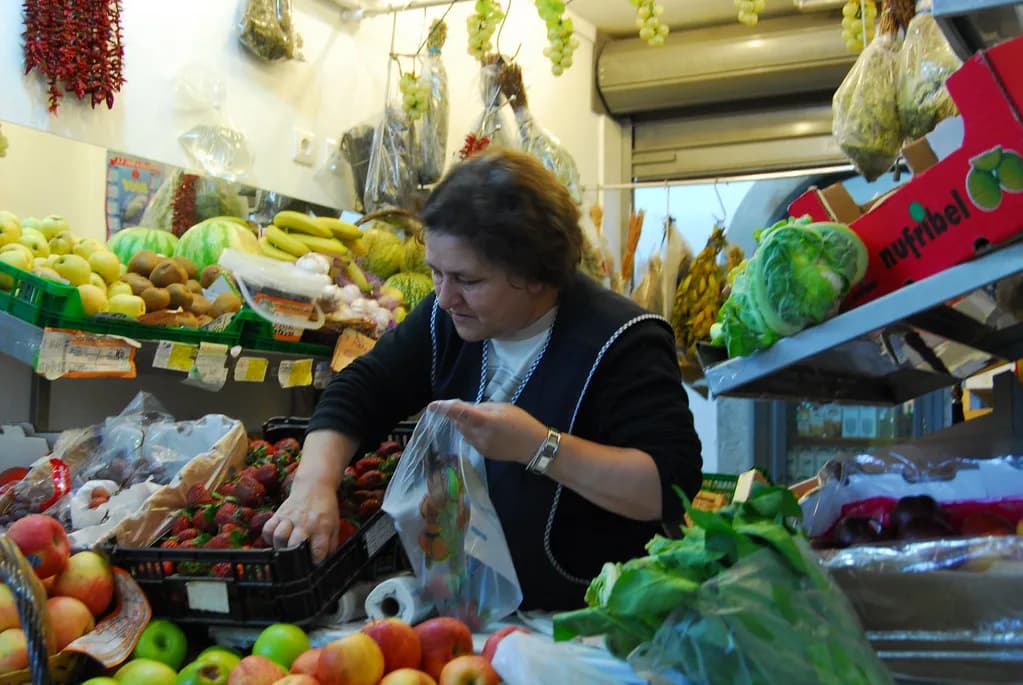
For a picnic, pick up bread, cheese and fruit and eat in one of the free squares or gardens. The Évora market is the place to assemble the ingredients, and it is free to browse even if you buy nothing. If you want a proper meal, Origens is a well-regarded restaurant for a splurge, but it is not part of a free day.
Free Things to Do in Évora When It Rains
When the weather turns, the free outdoor sights lose their appeal, so shift to the covered options: churches you can step into and the tiled interiors of the old town. Check at the door whether there is a charge. A café with azulejos is a dry, cheap way to wait out a shower.
The museums are the obvious rainy-day answer, but not all are free, so check entry charges before you commit. Our guide to Museums in Évora sets out the options. If the rain is short, the cathedral cloister is covered by the ticket and worth the money.
What Is Worth Paying For in Évora
The cathedral ticket is the clear first choice: the roof, the cloister and the interior are the parts most worth paying for. The Capela dos Ossos is the second call, but check whether there is a current charge before you commit. Everything else can wait.
If you have time for one more paid sight, the Roman Temple is already free, so put the money towards the cathedral instead. For a full list of what is on offer, see our Évora Attractions: 8 Visitor Guides. The free sights alone fill a half-day, and the paid ones are the icing.
Which Free Sight Comes First?
Start with the Roman Temple and Jardim Diana, then walk to Praça do Giraldo and up Rua 5 de Outubro. That sequence gives you the free core in a morning and leaves the afternoon for the cathedral or the Bones Chapel if you want to pay. It keeps you outdoors whatever day you visit.
Explore more Évora guides
Frequently Asked Questions
Are the Roman Temple and Jardim Diana free?
Yes. The Roman Temple is an outdoor sight with no entry charge and no museum or information centre on site; walk around it and look across the small garden beside it without paying anything. The Jardim Diana beside it is a public garden and also free.
Is the Chapel of Bones free to enter?
Do not assume it is. Check the current position at the entrance before you plan your day around it; the church exterior and surrounding square remain free to see from outside.
Sources
Notes for your next Portuguese break
Optional updates to our town guides.
You might also like
Continue reading
More guides you'll find useful