Azulejos in Évora: Where to See the Town's Painted Tiles
Azulejos in Évora reward a slow half-day, from the Misericórdia church panels to the Jesuit college rooms, São Mamede and the São Bento de Cástris monastery.
On this page
Azulejos in Évora are best treated as a half-day of slow looking rather than a single museum stop. The panels that matter sit in four separate buildings across the historic centre: the Igreja da Misericórdia, the Colégio do Espírito Santo, the Igreja de São Mamede and the Mosteiro de São Bento de Cástris. This guide explains what each scheme shows, gives the dates carried by the tile history and links the sites in a short walk that fits around the rest of your things to do in Évora.
Portuguese workshops turned the glazed tile into large pictorial schemes rather than simple wall covering. Évora's panels are distinctive because so many were commissioned by religious orders with a programme in mind: Jesuit philosophy at the Espírito Santo college, the Blessed Sacrament at São Mamede and the life of a Cistercian abbot at São Bento de Cástris. Reading them as arguments rather than decoration changes what you notice.
What azulejos are and why Évora's panels stand out
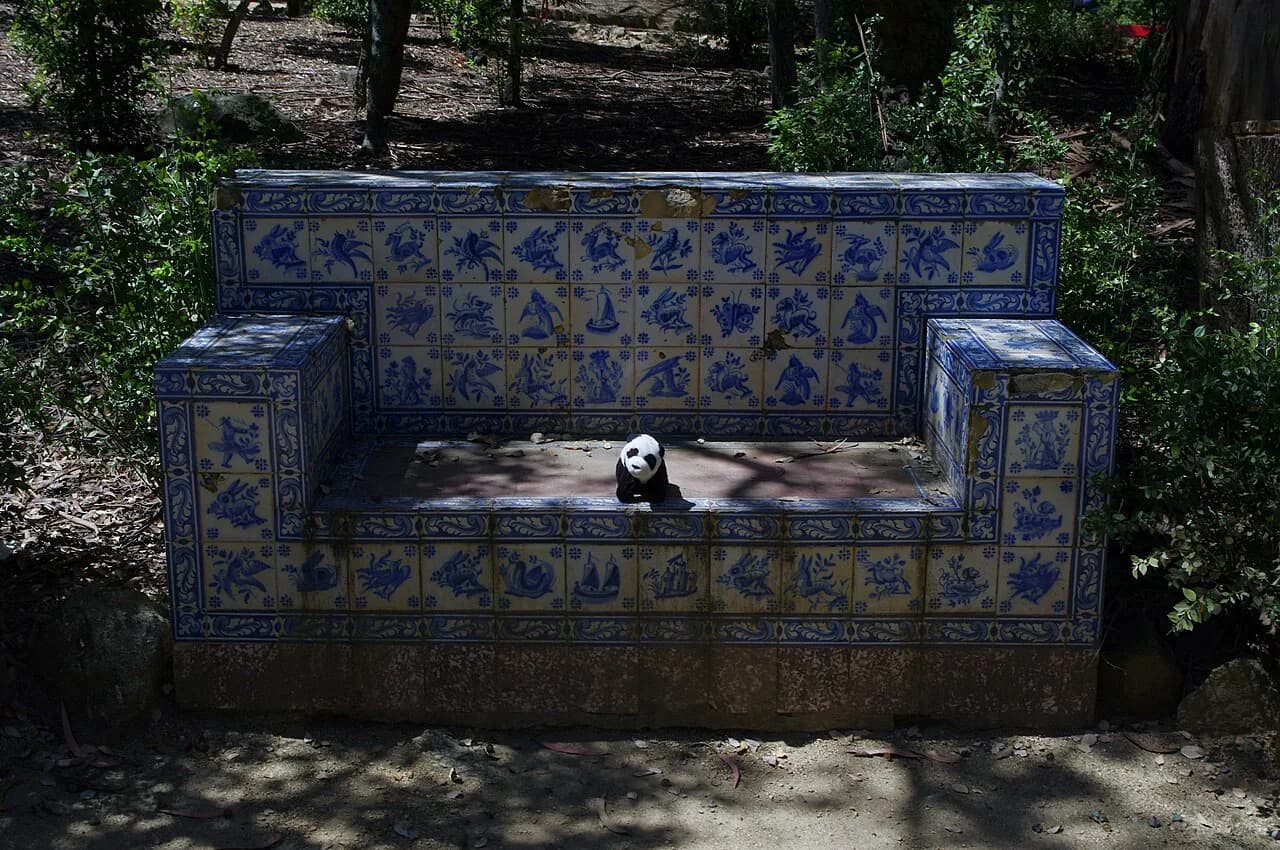
Azulejos are glazed ceramic tiles, usually square, painted before firing and set in repeating patterns or as a single continuous picture across a wall. The blue-and-white schemes most travellers picture are only one tradition: Portuguese workshops also produced polychrome panels in green, yellow and manganese. In Évora the tiles are not background décor but the main event, often covering a chapel's entire interior.
Évora's advantage is that these schemes survive in their original rooms. The Igreja da Misericórdia's interior was renovated in a campaign by the painter António de Oliveira Bernardes in 1716, and the tile historian Celso Mangucci describes it as one of the best examples of tiles combining an image programme with a decorative scheme. You are seeing the panels where the 18th-century congregation saw them, not in a museum vitrine.
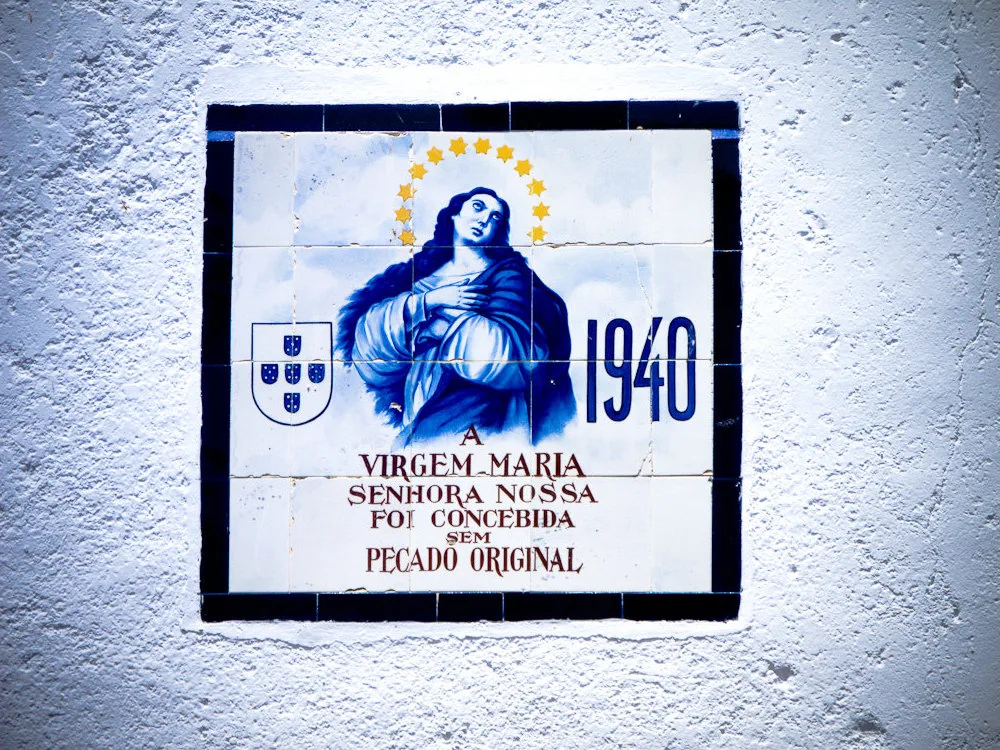
The Igreja da Misericórdia: António de Oliveira Bernardes's 1716 scheme
The Misericórdia church is the most accessible starting point because it sits in the heart of the old town near the Praça do Giraldo. The 1716 renovation turned the interior into a unified pictorial space, with António de Oliveira Bernardes named as the painter responsible. Look at the tile panels on the lower walls, then let the rest of the interior frame them, since the scheme works as a single composition rather than a set of separate pictures.
Mangucci singles out this scheme for the way the images and the decorative programme work as one composition, which is the reason to linger rather than glance. It is a working church, so your visit depends on services and the doors being open; the church entrance is the one place in this walk where you should simply try the door and come back later if it is shut.
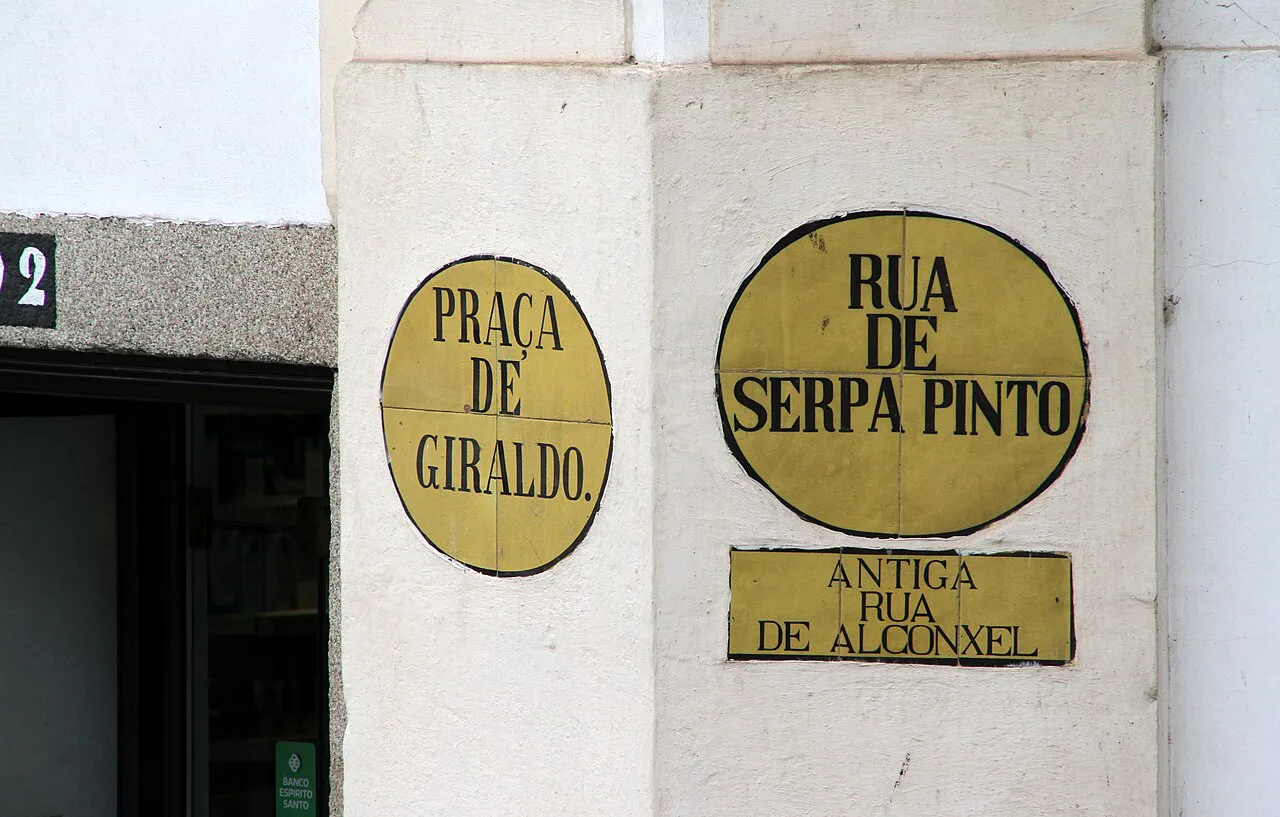
The Colégio do Espírito Santo: physics and mathematics on the walls
The former Jesuit college, now part of the Universidade de Évora, holds the most intellectually ambitious tiles in the city. In 1675 the great hall's interior was completely transformed, and the classrooms were decorated with panels that carry the disciplines taught there. The physics room compares its subject to the punishment of Prometheus, a theme with a long humanist tradition running back to Andrea Alciato's emblem book.
The programme is Jesuit, not merely decorative: the panels argue that science served evangelisation, and the physics and mathematics rooms both draw on the story of Archimedes' war machines as a bridge between learning and missionary success. The philosophy course behind it was built on Aristotelian thought, with natural philosophy and logic taught in the early levels before metaphysics, which helps explain what the rooms put in front of you. For context on the university's place in the city, the Évora history page fills in the wider story.
Because this is an active university building, the rooms are not a public gallery you can wander at will. Approach the entrance and ask what is visitable that day, or join a guided visit if one is running; the tiles are in teaching and ceremonial spaces rather than a dedicated exhibition. Do not plan the rest of the morning around them without confirming access first.
São Mamede: tiles and ceiling frescoes in praise of the Blessed Sacrament
The Igreja de São Mamede holds a small side room whose wall tiles form a coherent iconographic programme in praise of the Blessed Sacrament. It is the more intimate of the schemes, and the easiest to read: the panels carry a single theme rather than a sprawling narrative. Read the tiles on the walls, then step back to take in the room as a whole.
São Mamede sits inside the old town circuit, so it folds naturally into a morning that also takes in the Évora cathedral and the Roman Temple. The church is a parish building, which means the tiled room may be roped off or in use; if so, the main nave and the rest of the old town are still worth the detour. If you want to compare ecclesiastical interiors across the city, the churches guide covers the Sé and its neighbours.
Mosteiro de São Bento de Cástris: the Bernard of Clairvaux panels
The Mosteiro de São Bento de Cástris, a Cistercian house, holds the most unusual set: nineteen tile panels illustrating scenes from the life of Bernard of Clairvaux, the French abbot who shaped the Cistercian order. They were commissioned to mark the nuns' return to Évora and are dated to about 1783–1785, likely produced at the Royal Tableware Factory in Lisbon. The scale is different here: this is a narrative cycle, not a single chapel scheme.
The monastery lies beyond the compact chapel core, so it works better as a separate stop than as a link in the chapel-to-chapel walk. Plan it for a slot of its own and treat the other three sites as the compact centre. Because it is a former monastic complex rather than a parish church, the visit depends on the site's own access arrangements rather than a simple door on the street.
A short walking route linking the four sites
Start at the Igreja da Misericórdia just off the Praça do Giraldo, then walk uphill through the old town to the Colégio do Espírito Santo. From there, drop to the Igreja de São Mamede and finish the compact loop with the Évora cathedral and the Roman Temple if time allows. The three central sites sit within a short walk of each other inside the walled centre, which is itself a UNESCO World Heritage Site, though the streets are steep and cobbled.
Save the Mosteiro de São Bento de Cástris for a separate outing, since it sits outside the centre and does not connect neatly to the others on foot. A self-guided Évora walking tour can help you link the central three without doubling back, and it gives you a way to fill the gaps when one building turns out to be closed. Wear shoes with grip: the calçada in this part of town is slippery when wet.
Reading the panels: the tile painter's error and the Jesuit programme
Look closely at the Espírito Santo panels and you will find mistakes in the Latin inscriptions, just as similar errors appear in the mathematical theorems on the tiles of the Santo Antão-o-Novo college in Lisbon. These slips are useful: they remind you that the panels were painted by craftsmen working from written models, not composed by the theologians themselves. The scheme is a translation, and the errors show where the translation strained.
Treat the iconographic readings as arguments to test against the panels rather than settled verdicts. The Jesuit programme of science in the service of faith is visible in the choice of subject and the pairing of rooms, but how far the painter intended every philosophical nuance is a question art historians continue to debate. That uncertainty is part of the pleasure: the panels reward a second look more than a single guided pass.
If you want a wider taste of Portuguese tile painting before or after the walk, the Museu Nacional Frei Manuel do Cenáculo in Évora is the local collection to know, and the museums guide explains what else is in it. A list of free things to do in Évora will tell you which civic sights cost nothing, so you can balance a tile morning against the paid interiors.
How much time to allow and where these fit in a one- to two-day visit
Give the three central sites a relaxed half-day and treat the Mosteiro de São Bento de Cástris as an optional extra. The Misericórdia and São Mamede reward a slow look if the doors are open; the Espírito Santo rooms can hold you far longer if you read the Latin and follow the programme. In a one-day Évora visit, the central three plus the cathedral and Roman Temple already fill a morning.
On a two-day visit, spread the tiles across both days so a closed church does not sink the plan. Pair them with other interior sights and leave the market for a lunch stop, then return to whichever panel scheme you liked best at a quieter hour. That approach suits the way the city works: the tiles are embedded in buildings with their own rhythms, not in a single ticketed venue.
If shopping for contemporary tiles is part of the appeal, Évora's shops and the wider shopping guide cover where to look, but buy after the visits so you understand what you are choosing. And if you only have an afternoon, pick two of the central sites rather than rushing all three; the panels reward attention, not coverage.
Which tile site should you see first?
Start at the Igreja da Misericórdia if you want the single best introduction to Évora's tile painting: the 1716 Oliveira Bernardes scheme is the most concentrated, and it sits where you begin the old town walk. Move on to the Colégio do Espírito Santo only if the doors are open, because the rooms are part of a working university and access depends on the day. If you have half a day to spare, add São Mamede and the São Bento de Cástris panels as a pair of quieter, narrative alternatives.
Explore more Évora guides
Frequently Asked Questions
What does azulejo mean in Portuguese?
In Portugal the term covers both repeating geometric patterns and large pictorial panels painted on ceramic and set into walls, which is the kind Évora is known for.
Are the Évora tile panels open every day?
No current opening pattern is published for all four sites, and they are different kinds of building. The Misericórdia and São Mamede are parish churches, the Espírito Santo rooms belong to the university, and São Bento de Cástris is a former monastery, so each has its own access. Try the doors or ask at the entrance on the day.
Do I need a guide to understand the panels?
Not necessarily, but the Jesuit programme at the Espírito Santo is dense and benefits from explanation. A walking tour or a printed guide that explains the physics and mathematics rooms will save you guesswork. For the Misericórdia, the visual scheme is legible without a guide.
How do I see the Mosteiro de São Bento de Cástris?
Treat it as a separate stop rather than part of the central walking loop. It sits outside the immediate old town, so plan it for its own time slot and ask about access when you arrive. The nineteen Bernard of Clairvaux panels, dated to about 1783–1785, are the reason to make the trip.
Sources
Notes for your next Portuguese break
Optional updates to our town guides.
You might also like
Continue reading
More guides you'll find useful