Azulejos in Faro: Where to See the Town's Painted Tiles
Where to see azulejos in Faro, how aresta-viva and corda-seca panels are made, and how to combine façades, churches and a working atelier in one walk.
On this page
Faro's azulejos are seen in passing rather than in one place: painted tiles sit on house fronts and, where church interiors are open, inside churches too, so you build a half-day around scattered stops instead of a single gallery. This guide explains what the tiles are, how to read the difference between a good panel and a plain one, and how to link the façades with a working atelier. For the wider picture, see our guide to things to do in Faro.
Plan for roughly two to three hours on foot, treating any church interior as dependent on opening times. The centre is compact, so tiles, coffee and the waterfront fit into one morning.
What azulejos are and why they cover so much of Faro
Azulejos are the glazed ceramic tiles that line Portuguese façades, stairwells and church interiors, and they are typically made from red clay before being glazed and fired with a painted design. On southern façades they work as decoration and as weather protection for rendered walls.
The blue-and-white scheme most travellers picture is only one variant. The palette widened as production absorbed outside influences, and Portuguese workshops reproduced older patterns rather than settling on a single historic style.
For a visitor the practical point is that you can see tiles on the street without buying a ticket: a walk through the centre gives you façades at eye level, while church interiors depend on whether they are open when you pass.
Pattern types and tile-making techniques
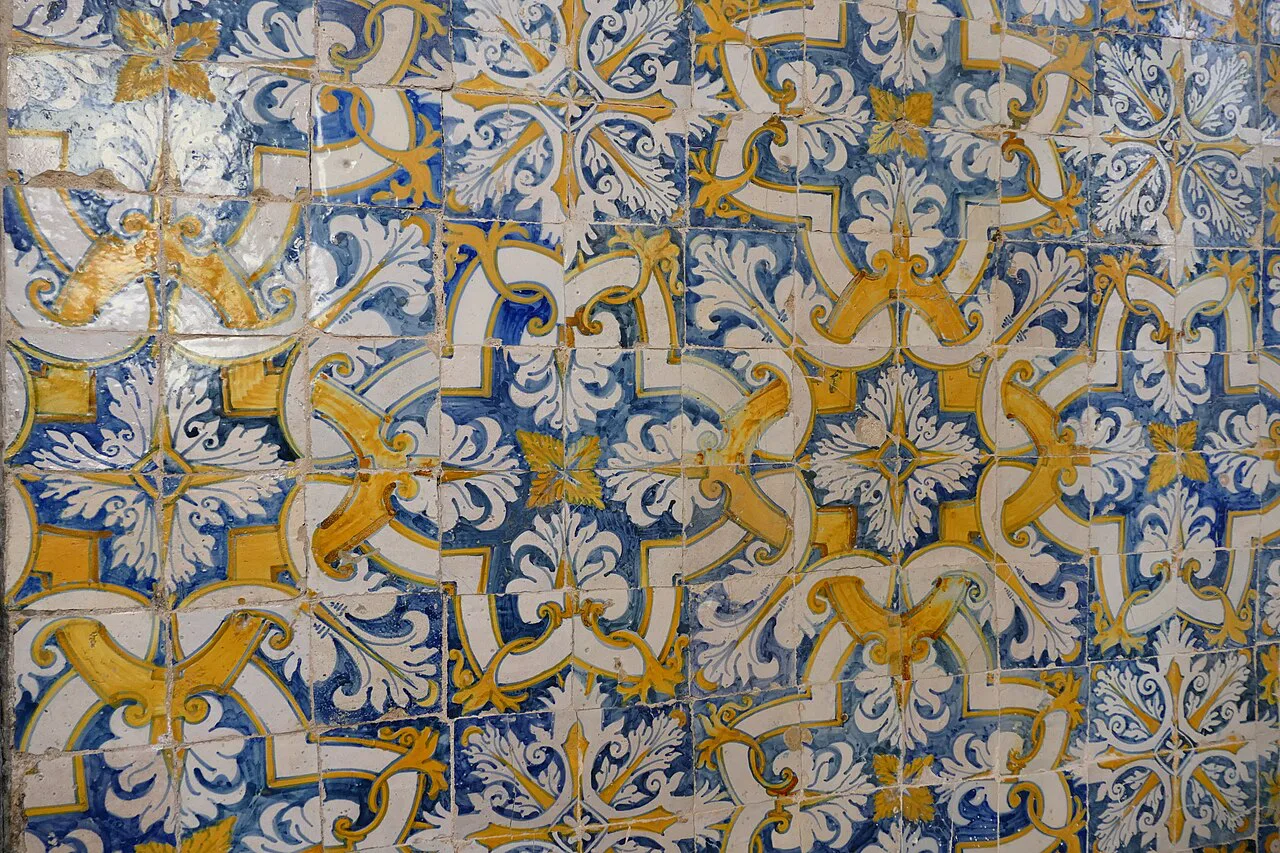
Tile work runs from single-colour repeats to multi-tile pictorial panels, and the vocabulary helps you describe what you see. Hispano-mourisco tiles follow Moorish-derived geometry, enxaquetados are laid as a chequerboard, padrões are repeating patterns, and painéis are the large narrative panels pieced together from many tiles.
Technique separates a crisp panel from a flat one. Aresta-viva is a raised ridge of glaze that stops colours running together in the kiln, while corda-seca is a line drawn in oil to hold a coloured glaze in place; both are hand methods, and both show in the surface if you look closely.
Glaze depth matters as much as the drawing. Stand at an angle: good glazes vary in sheen and hold a slight thickness, while thin, uniform tiles read as decorative infill rather than craft. Crazing and chipped edges on old façades are age, not necessarily poor work.
Where to look for azulejos on Faro's old houses
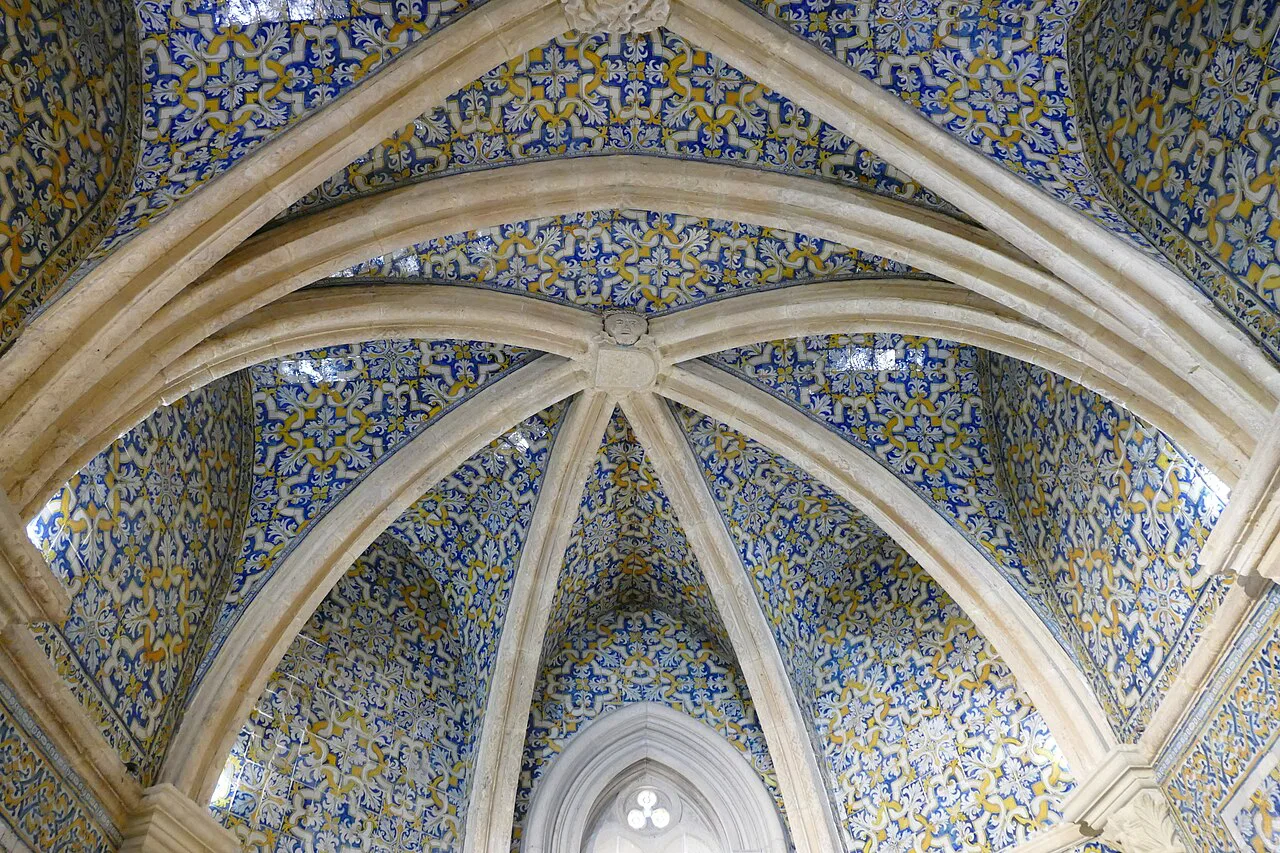
The best hunting ground is the domestic façade: tiled fronts appear on older houses in the centre, most visibly on streets where buildings sit close to the pavement. Photographs of Faro house fronts show the standard arrangement of patterned tiles under windows and around door surrounds.
Walk slowly and look up rather than straight ahead. Ground-floor tiles take the most damage from street level, so the cleanest panels are often one storey up, framing upper windows or covering a gable end.
The walled old town rewards the same approach, and its lanes narrow enough to read façades properly. Work them on foot, using gates and squares as markers so you do not retrace your steps, and keep the wider old-town layout in mind.
Tiles inside Faro's churches
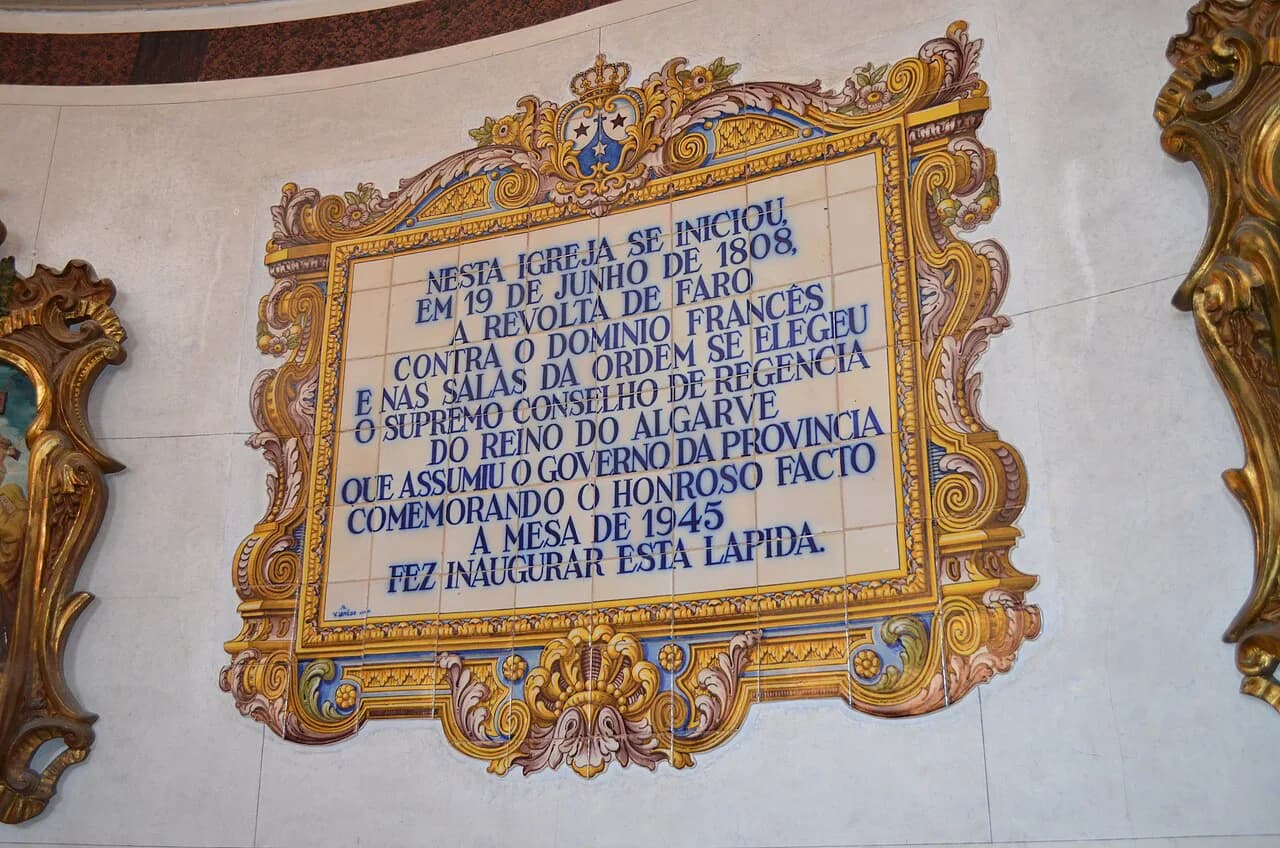
Where a church interior in Faro or the wider Algarve carries a tile scheme, it shows tiles at their most ambitious, lining nave walls and dadoes in continuous runs designed to be read from the floor. Look at how the pattern is scaled to the building: large repeats low down, finer work where the eye gets close.
Access is the constraint. Portuguese churches can keep restricted hours and may close at lunchtime, so treat an interior as a bonus rather than the backbone of your route, and check hours locally before setting out.
If a church is shut when you arrive, any museum that happens to be open nearby is a sensible substitute; allow an hour rather than an afternoon.
Aresta Viva: the Faro atelier reproducing and restoring historic tiles
The one address worth planning around is Aresta Viva on Rua Antero de Quental, nº 22, a workshop founded in 1989 after a course in azulejaria and restoration. Its work concentrates on reproducing and restoring Hispano-Moorish tiles and traditional seventeenth-century Portuguese tiles, made by hand using aresta-viva and corda-seca methods.
That is a different experience from reading façades. A working atelier works from drawn pattern to painted glaze, which explains why a reproduction panel costs more than a printed imitation: the labour is in the drawing and the firing, not the clay. The studio also takes on bespoke projects and restoration for clients, including the Museu Nacional do Azulejo, and its site invites visitors to get in touch.
The atelier publishes contact numbers on its site but no visitor hours, so call ahead on those numbers to ask when visitors are received or to discuss a commission before you travel.
Buying tiles versus just looking
Treat buying as a separate decision from sightseeing. Decide first whether you need a set that can be installed, for a splashback or fireplace surround, or a single panel to hang, because the two carry very different packing and transport needs.
Take measurements of the space and photograph the wall you intend to tile, including sockets and any tiles you must match. Ask the seller to confirm each tile's size and whether the pattern needs a repeat count to finish cleanly at an edge; that is where most projects go wrong.
Looking is a rewarding end in itself. Note the depth of the blue and how a design breaks at corners, and you will leave better able to tell a hand-worked panel from a factory tile.
A short walking route between the façades and the atelier
Start with the façades in the centre and work towards Rua Antero de Quental for Aresta Viva, calling ahead first to confirm it can receive you.
Allow two to three hours with coffee stops built in. A simple loop keeps you from crossing the same lane twice. If you would rather follow a set route, our Faro walking tour takes in the centre.
If you have only a morning, give the time to the façades and the atelier rather than spreading yourself thin. If the weather turns, look for an open interior stop as a fallback.
Is the atelier worth building the day around?
Yes, if you want to understand the tiles rather than merely photograph them. Aresta Viva shows how a panel is made, and the streets of the centre show you the result at scale: pair the two instead of treating tiles as background scenery — confirming first that the atelier can receive you.
If you are short on time, prioritise the façades and one open church interior, and save the workshop for a longer stay. Either way, the theme makes a coherent half-day that does not depend on buying anything. For more, see Faro old town.
Explore more Faro guides
Frequently Asked Questions
What does azulejo mean in Portuguese?
Azulejo is the Portuguese word for a glazed ceramic tile, and in practice it also covers the patterned wall coverings built from many such tiles. The plural, azulejos, is what you will see on signs and shopfronts in Faro.
Why are Portuguese tiles often blue and white?
The blue-and-white scheme is the most recognisable variant, but it is one palette among several. Portuguese workshops reproduced and continue to reproduce a wide range of historic patterns, so expect other colours on older façades.
Can you buy azulejos in Faro?
Faro has a workshop that reproduces and restores historic tiles, Aresta Viva on Rua Antero de Quental. Ask the studio directly what is available and whether it sells or ships to visitors, because stock and terms change.
Sources
- Aresta Viva – Portuguese Tiles | Portugal Tiles – Atelier de azulejaria artesanal – Rua antero de quental, nº22, 8000-210 FARO – 289 802 187 – 967 979 249 Portuguese Tiles - Atelier Aresta Viva - Portugal
- Azulejos: A Portuguese tradition influenced by globalization
- Traditional Portuguese tiles called azulejos on one of the old houses in Faro, Portugal Stock Photo - Alamy
Notes for your next Portuguese break
Optional updates to our town guides.
You might also like

Continue reading
More guides you'll find useful