Évora History: What to See From Roman Temple to Chapel of Bones
Évora's history in Roman, Moorish and medieval layers, with the temple, cathedral, aqueduct and Chapel of Bones where you can still see each period.
On this page
Évora's history comes down to four layers you can walk between in an afternoon: a 1st-century Roman temple, a medieval cathedral and old town shaped after the 1165 reconquest, a 16th-century chapel of bones, and an aqueduct that carried the city's water. The historic centre has been a UNESCO World Heritage Site since 1986, and its compact walled core means the Roman, Moorish and royal chapters sit within minutes of each other. This guide ties each period to a named place so the history becomes a route rather than a timeline, starting in the Évora Old Town.
Why Évora is famous: UNESCO status and the golden age as a royal residence
Évora's standing rests on a historic centre that UNESCO describes as a museum-city whose roots go back to Roman times and which reached its golden age in the 15th century, when it became the residence of the Portuguese kings. That royal period is why the old town holds so much for its size: palaces, convents and churches packed inside walls.
For a visitor, the practical consequence is that the headline sights cluster in the old town and can be covered on foot rather than by bus or car. Plan your days around that cluster, and treat the outlying Roman remains as a separate outing.
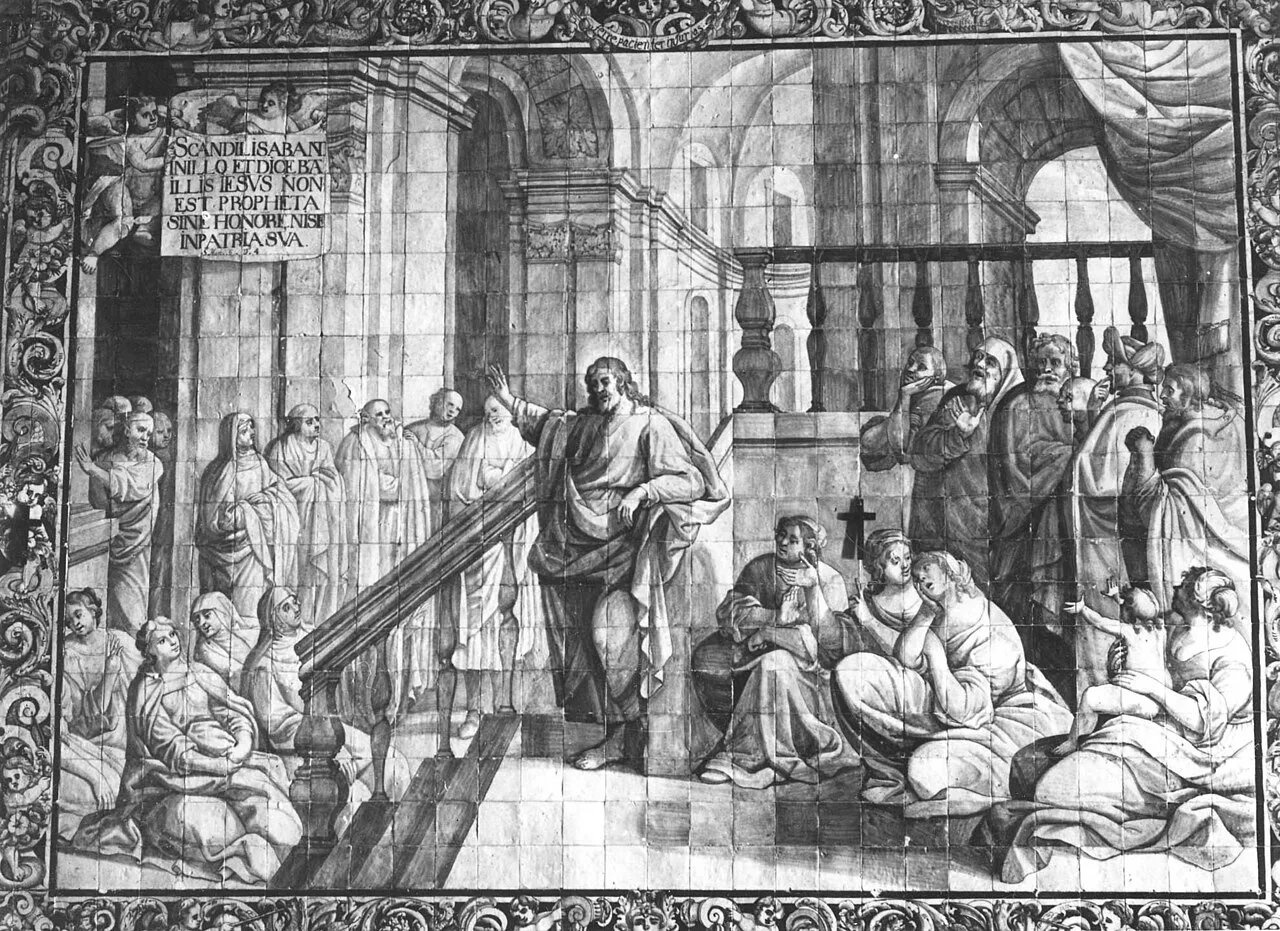
Roman Évora: the 1st-century temple and the city's wheat and silver wealth
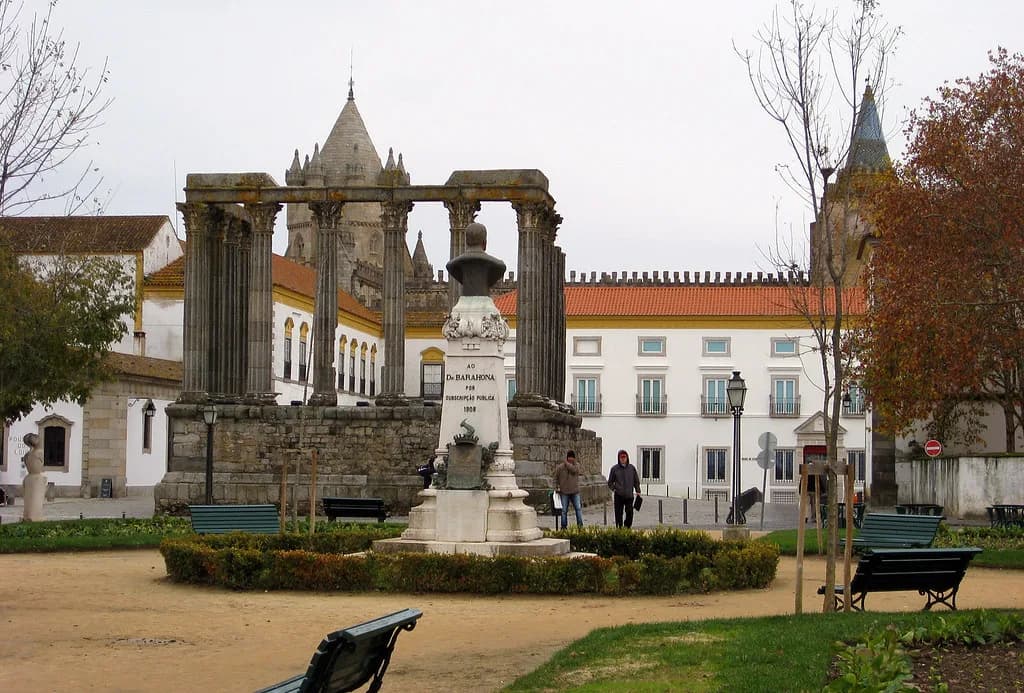
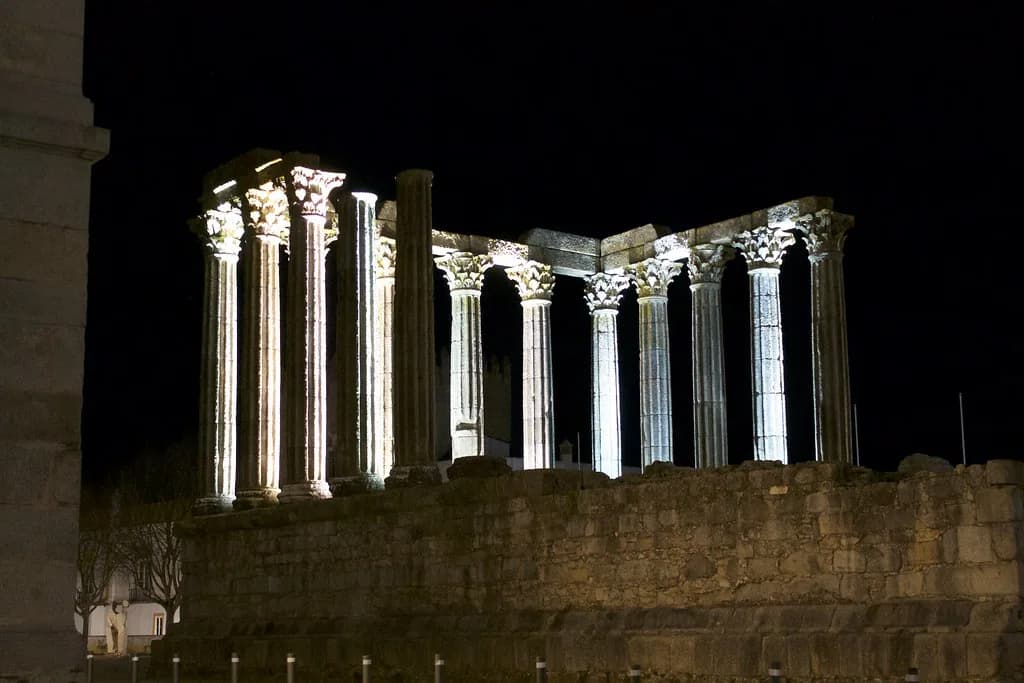
The Roman Temple, standing beside Jardim Diana, dates from the 1st century AD, which makes it roughly two thousand years old. Its survival is the single most tangible piece of Roman Évora, and there are no museum displays or information panels on site, so a simple walk around it is all it takes to take it in.
Because the temple carries no interpretation of its own, the structure is all you get on site: read up before you arrive or accept it as a piece of scenery. Keep your visit short and fold it into the same stop as the garden and the city view beyond.
The Romans were here for the region's wealth in wheat and silver as much as for its position on a trade route, which explains why a temple of this scale was built in an inland Alentejo town at all. Standing in front of the columns, that economic logic is easier to grasp than any caption.
Moorish Évora and the 1165 reconquest behind Praça do Giraldo's name
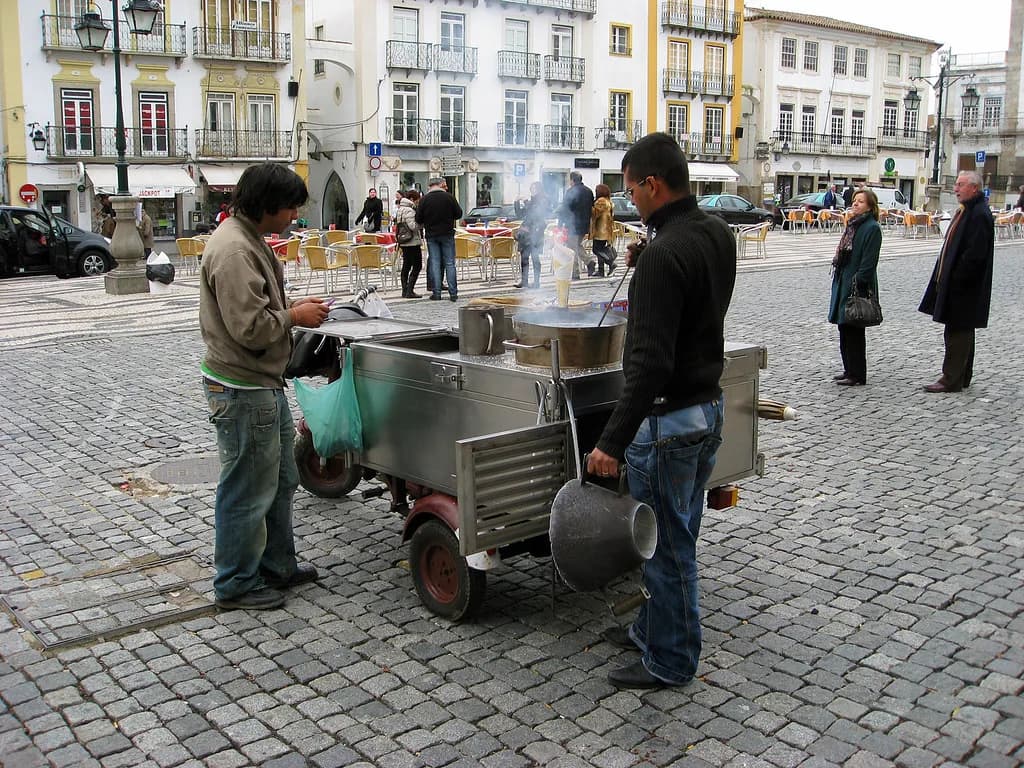
Praça do Giraldo, the long arcaded square at the heart of the city, is named after Giraldo the Fearless, the Christian knight whose surprise attack retook Évora from the Moors in 1165. Once you know that, the square stops being just a meeting point with a fountain and becomes the marker of the moment the town changed hands.
The Moorish centuries left less standing than the Roman and medieval ones, so this layer is read through the street plan and the square's name rather than through a single monument. Walk the lanes off the square towards the cathedral and you are following the shape of the town the reconquest inherited.
Medieval and royal Évora: the cathedral, the Lóios church and the old town streets
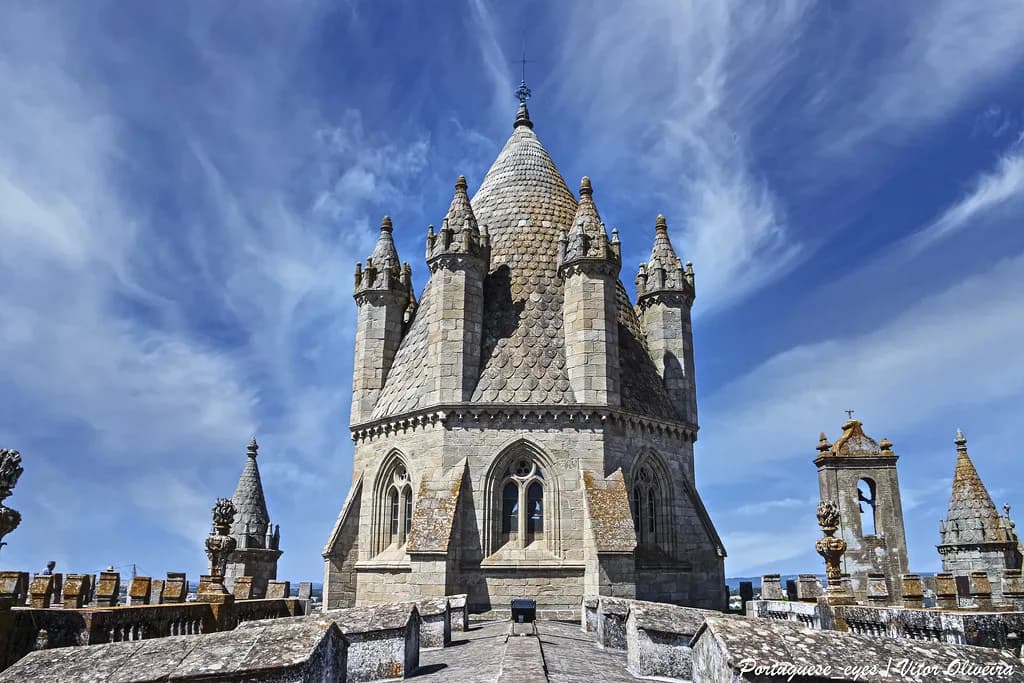
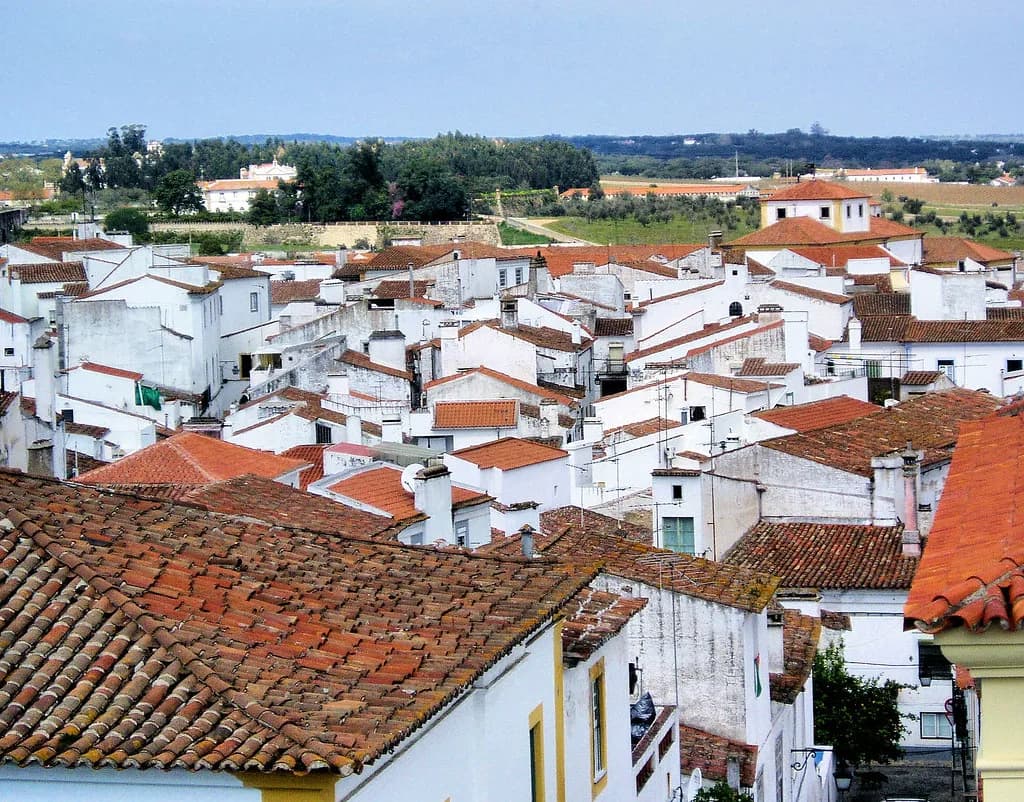
The Cathedral of Évora, the Sé, is the city's largest landmark and the anchor of its medieval chapter. The visit runs as a set circuit: up to the roof for a panorama over the white and yellow houses, through the Gothic cloister with its orange trees, then into the vast interior.
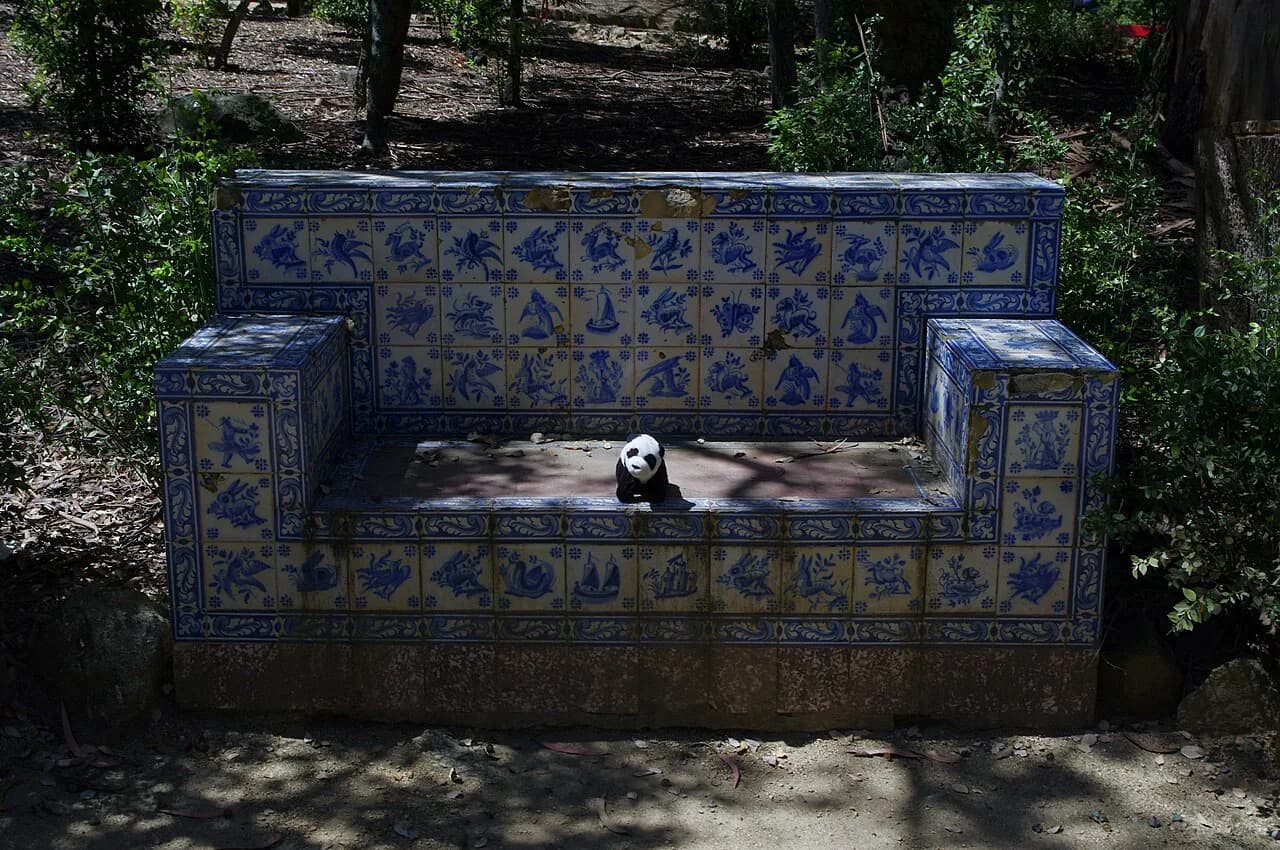
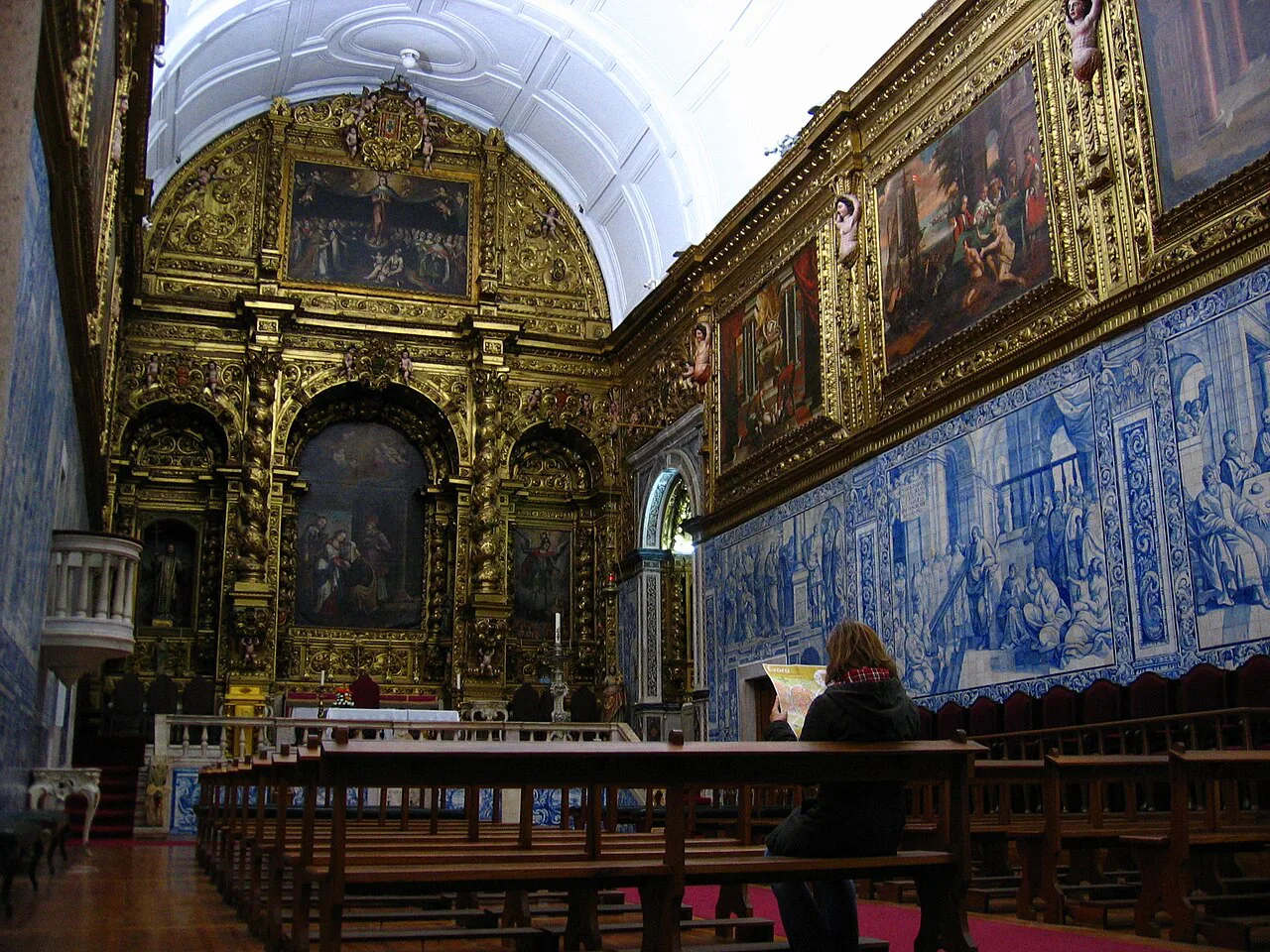
Nearby, the Igreja dos Lóios and the Misericórdia Church fill in the royal and charitable side of the story, and the university's tiled rooms show how the same streets were reused in later centuries. These smaller interiors reward a slow look at the azulejos rather than a quick photo.
Allow time simply to wander: Rua 5 de Outubro, the stretch from the main square towards the cathedral, is the busiest and most commercial lane, while the streets to the north near the aqueduct are noticeably quieter. If you only have an afternoon, pick the cathedral circuit plus one church and leave the rest.
The Chapel of Bones: 16th-century monks, 5,000 skeletons and the message over the door
The Capela dos Ossos, attached to the Igreja de São Francisco, was built in the late 16th century when monks moved the bones of around 5,000 people into a purpose-made chapel. The walls and columns are lined with skulls and long bones, and the intention was reflection on the brevity of life rather than spectacle.
Over the entrance, a message addresses the visitor directly: we bones that are here, for yours we wait. Read it before you go in; it reframes the room from a spooky photo stop into a piece of sixteenth-century religious instruction.
The chapel sits on the quieter eastern side of the centre, so pair it with the São Francisco church rather than doubling back across town later. Entry is ticketed and hours vary by season, so confirm both at the door or with the city's official visitor information before you set out.
The aqueduct and the water-supply story you can walk along
The Água de Prata aqueduct runs into the city and its arches are still a visible piece of infrastructure rather than a monument behind glass. Walking beneath or alongside the arches gives you the unglamorous but revealing side of Évora's history: how a hill town kept itself supplied.
The northern streets near the aqueduct are among the calmest in the centre, which makes this a good place to end a walking loop when the square and the cathedral route have filled up. There is no ticketed sight here, just the structure and the neighbourhood around it.
Where to see each layer: a short walking order through the old town
Start at the Roman Temple and Jardim Diana, cross to the cathedral for the roof and cloister, then drop down through the lanes to Praça do Giraldo. From the square, head east to the Chapel of Bones and finish north along the aqueduct. Every leg is a short walk inside the compact centre, so the whole sequence fits comfortably into a single unhurried day.
For the indoor stops, check opening days before you commit to an order: the cathedral, the chapel and the city's museums do not all keep the same rhythm, and a closed door can force a reshuffle. Our Things to Do in Évora guide and the museums page set out what is where, including the Museu Nacional Frei Manuel do Cenáculo, if you want a wet-weather backup.
How much time history-minded visitors need in Évora
Two nights gives you a full day for the main sights at a relaxed pace, with the arrival afternoon and departure morning left over for the square, the shops and a long lunch. One night works if you accept a tighter version: the main sights on the arrival afternoon and the following morning.
If your interest is specifically the historical layers, prioritise the temple, cathedral and chapel and treat the rest as optional. Add a second day only if you want the outlying prehistoric standing stones or the cork country beyond the walls, both of which need transport.
A guided walk is the quickest way to make the streets legible if you would rather be told the story than read it, and it front-loads the context before you wander alone. Otherwise, a decent map of the centre plus this order of visits is enough.
Which layer to see first
If you only have a few hours, begin at the Roman Temple early, then take the cathedral circuit and end at the Chapel of Bones. That single line covers the Roman, medieval and sixteenth-century chapters in the shortest possible walking distance.
With a full day, add the aqueduct walk and a slow pass through the northern lanes, which is where the old town feels least like a sight and most like a working city. Check opening days for the ticketed interiors before you set out, and the rest of the route needs no planning at all.
Explore more Évora guides
Sources
Notes for your next Portuguese break
Optional updates to our town guides.
You might also like
Continue reading
More guides you'll find useful