Évora Walking Tour: A Self-Guided Route Through the Old Town
A self-guided Évora walking tour linking Praça do Giraldo, the Roman Temple, the cathedral and the Chapel of Bones, with cathedral ticket prices and a sweet stop.
On this page
A self-guided Évora walking tour covers the city's main sights in a single day, because everything worth seeing in the historic centre sits within a compact area that is easy to explore on foot. The route below links Praça do Giraldo, the Chapel of Bones, the Roman Temple and the cathedral in one loop, with a pastelaria stop in the middle. It is written for travellers on a short Alentejo break who want a fixed order of stops rather than a checklist of names.
Plan on half a day of actual walking and the rest of the day inside monuments and at the table; the cathedral alone deserves more time than the rest because of the rooftop climb and cloister. Almost everything is uphill or downhill cobbles rather than level pavement, so build in slower pace and a break in the heat of the afternoon.
How the old town is laid out
Praça do Giraldo is the natural starting point: the arcaded central square where the city orients itself, named after the Christian knight whose surprise attack retook Évora from the Moors in 1165. From there, Rua 5 de Outubro runs towards the cathedral and gets steadily more touristy as you approach it. The lanes north and east, towards the aqueduct, are noticeably quieter and are where the walk feels most like a working Alentejo town.
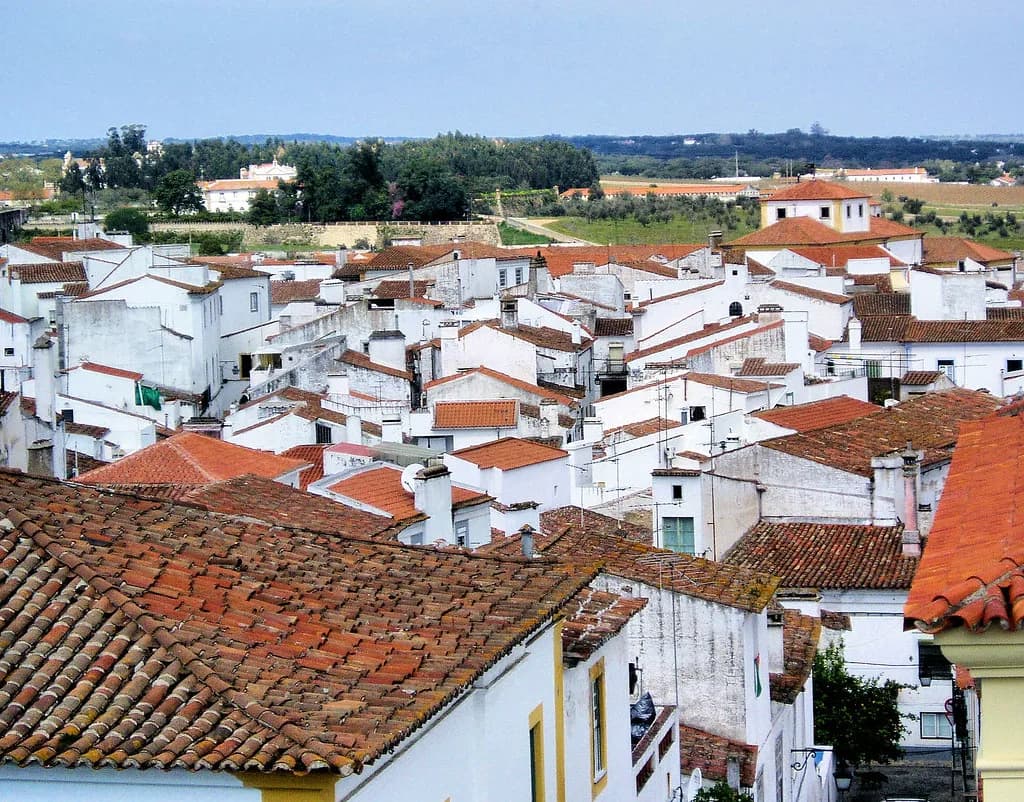
The historic centre has been a UNESCO World Heritage Site since 1986, and the tight street pattern is exactly why it works on foot: the whitewashed houses and yellow trim are best seen slowly, and the distances are short enough that you never need transport between stops. Allow a full day to link the stops below without rushing, and two nights if you want to spread the walking over two mornings.
Route overview: the order of stops
Follow this order: Praça do Giraldo, then east to the Igreja de São Francisco and the Capela dos Ossos, back through the lower town to Largo da Porta de Moura, up to the Templo Romano and Jardim Diana, then the Sé de Évora, and finally Igreja dos Lóios before dropping back to the square. The shape is a rough loop rather than an out-and-back, so you end near where you started, which matters if you have left bags or a train to catch.
The one deviation worth making is the walk north to the Aqueduto da Água de Prata and the quieter lanes around it. On the way, the Pastelaria Conventual Pão de Rala fills the mid-morning gap with the city's convent sweets. If you only have an afternoon, cut the aqueduct leg and go straight from the cathedral to the square.
Stop 1: Praça do Giraldo
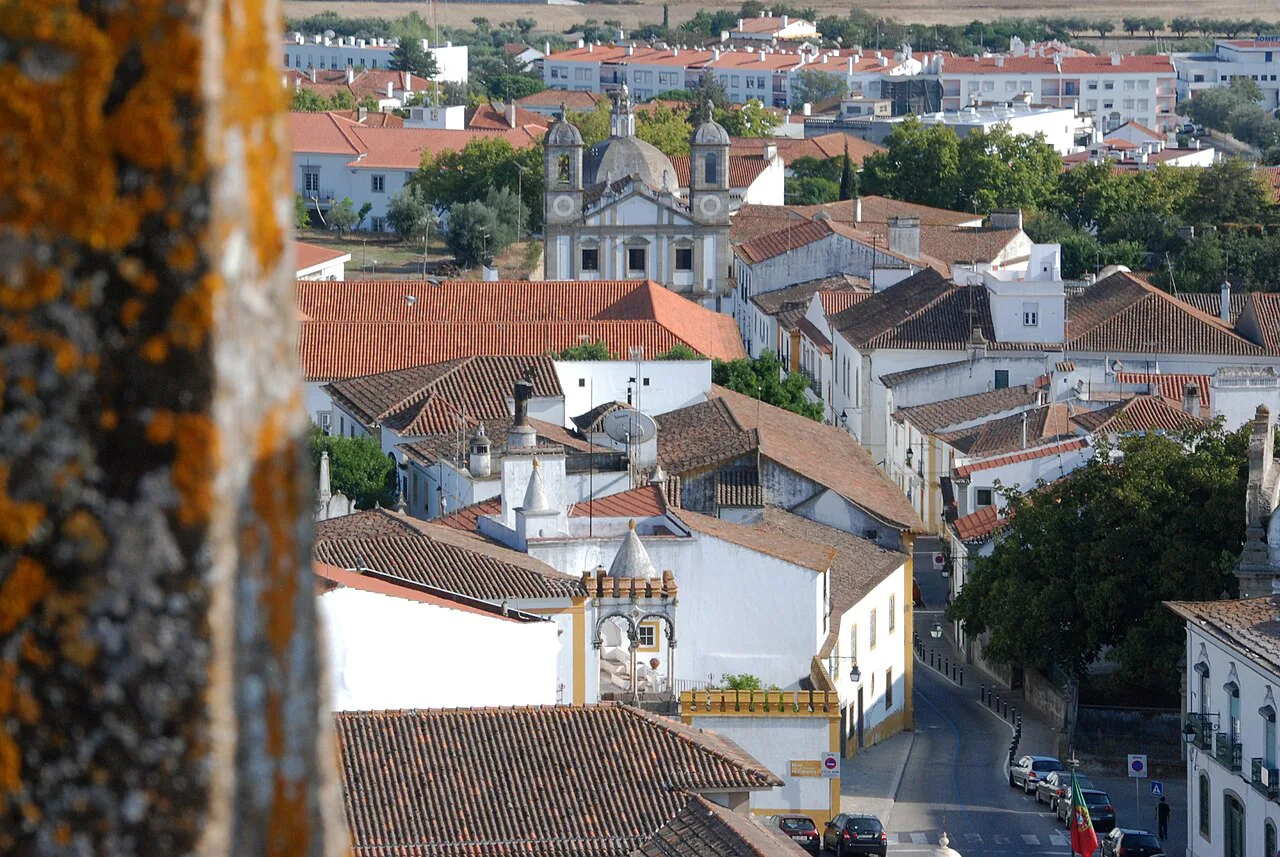
Start here with a coffee and use the square to get your bearings: the arcades, the fountain and the surrounding streets give you a mental map before the climb. This is the busiest point in the city, and it stays lively into the evening, which makes it a sensible place to end the day too. Look down at the calçada underfoot, the Portuguese pavement that turns slick when wet and uneven under thin soles.
Stop 2: Igreja de São Francisco and the Capela dos Ossos
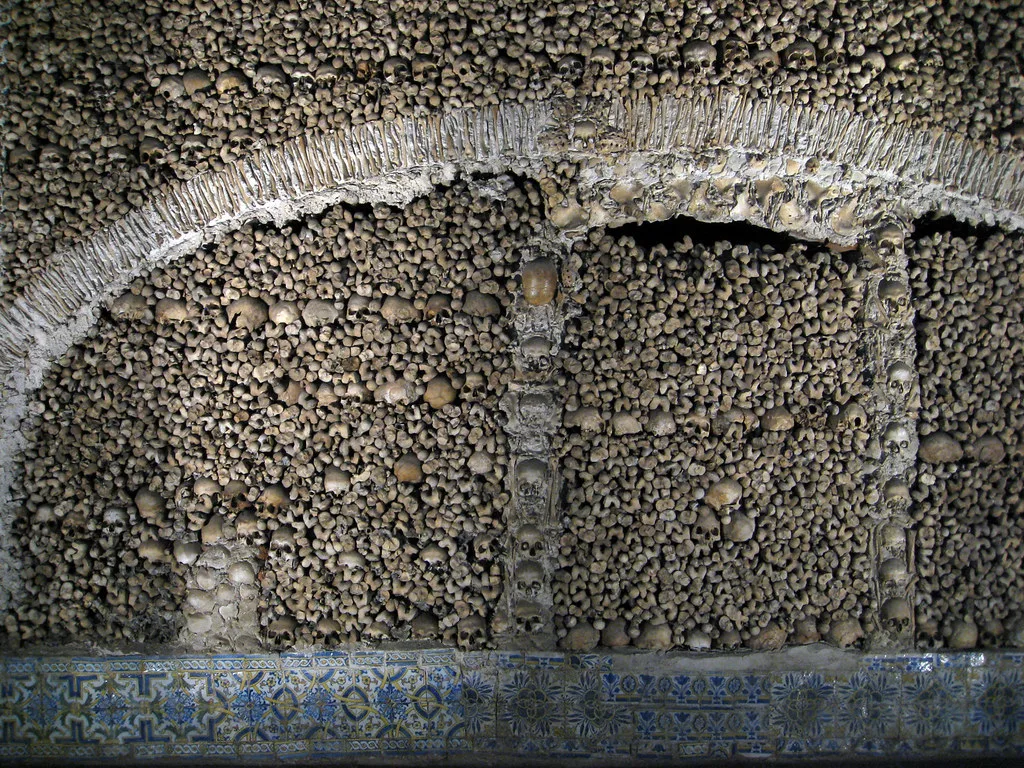
The Chapel of Bones sits next to the Igreja de São Francisco and is the stop most people remember. In the late 16th century, monks moved the bones of 5,000 people into a purpose-built chapel, and the walls and pillars are lined with skulls and bones floor to near the ceiling. The motto over the entrance is the point of the room: it asks the visitor to reflect on the fleeting nature of life and the worthlessness of material things.
It is a short, sobering visit rather than a long one, and it works best early before the coach groups arrive. The adjoining church is worth a few minutes for its scale alone. Check the current entry charge and opening times at the door or on the chapel's own signage before you commit, since the ticket desk is the only reliable source for both.
Stop 3: from the square to the Roman Temple
Walk back through the lower streets to Largo da Porta de Moura, a small square that marks the transition between the commercial centre and the monuments. From there it is a short climb to the temple, and the gradient is the reason this leg feels longer than it looks on a map. Take the lanes rather than the main shopping street if you want the quieter version.
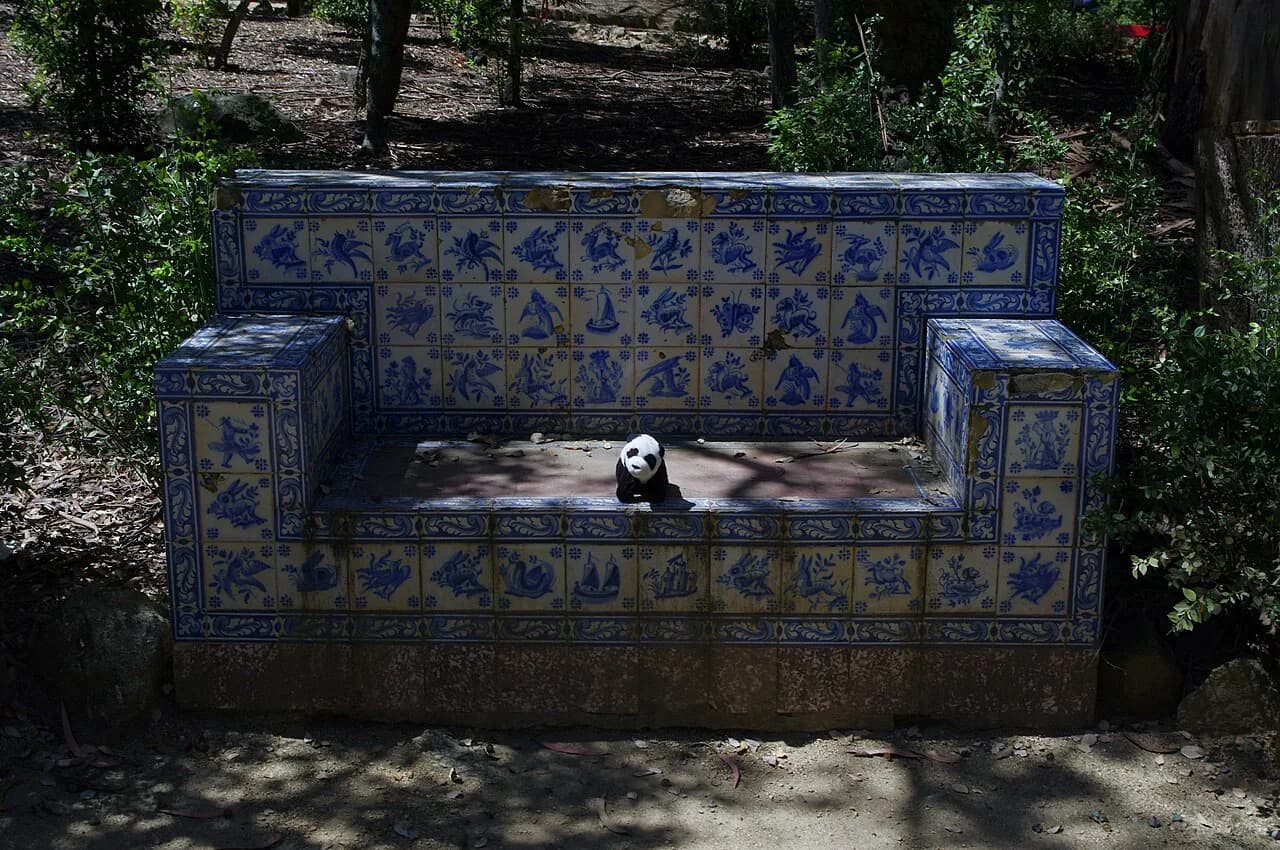
Along the way you pass the kind of tiled frontages that make Évora worth slowing down for; the azulejos here are best spotted on ordinary shopfronts and doorways rather than saved for a museum.
Stop 4: Templo Romano and Jardim Diana
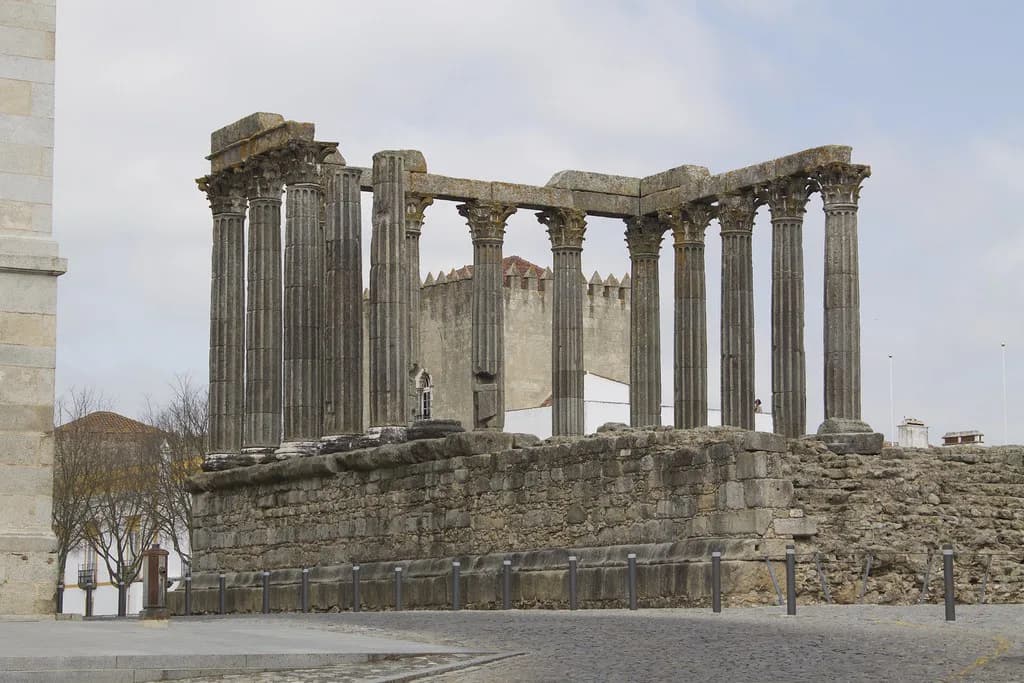
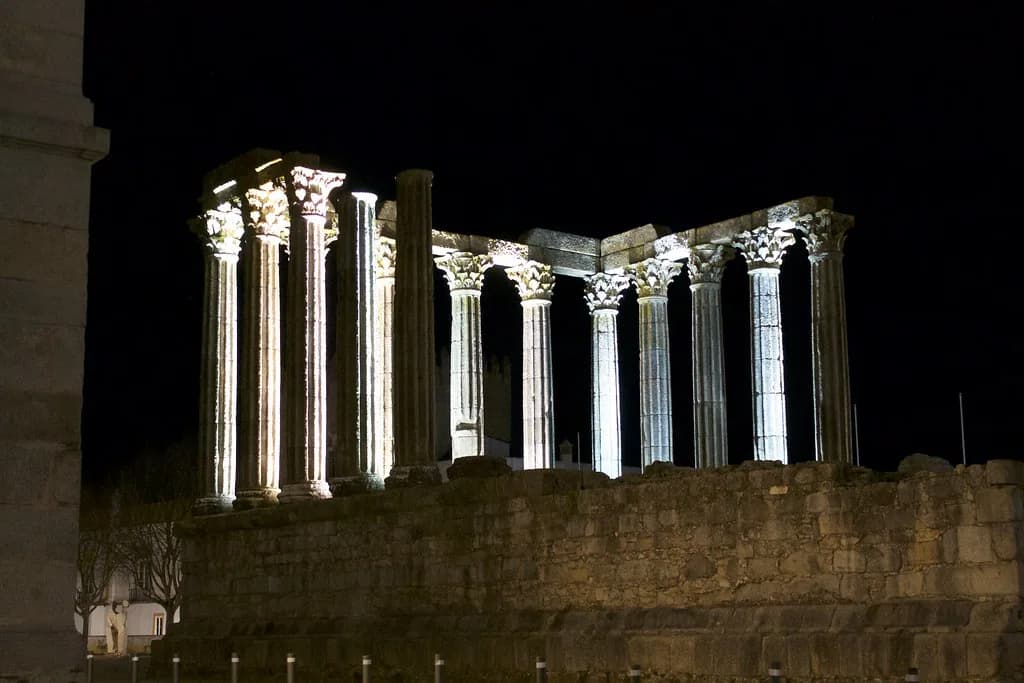
The Roman Temple dates from the 1st century AD, which makes it roughly two thousand years old, and its row of columns is the image most travellers carry home. There is no museum or information display on site, so a slow walk around the structure and a read-up beforehand is the whole visit; do not arrive expecting exhibits. Next to it, the Jardim Diana offers shade, benches and a small kiosk for a drink.
The temple is always visible from outside, so this leg still works after the monuments themselves close and makes an obvious sundowner spot when the light softens. If your day is running late, finish here rather than rushing the cathedral.
Stop 5: Sé de Évora (the cathedral)
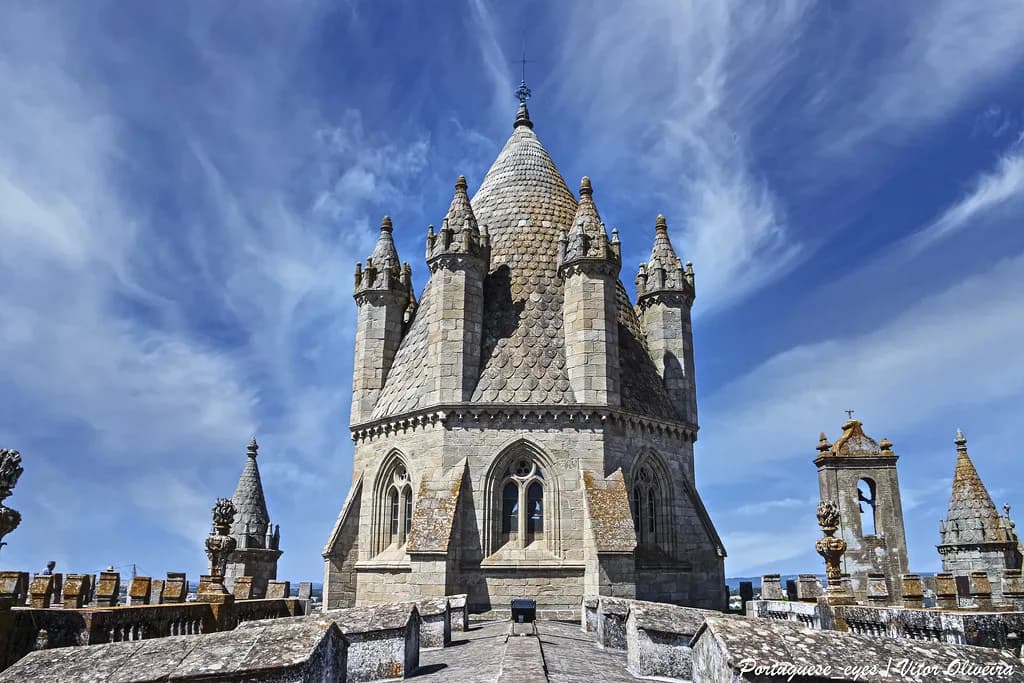
The Sé de Évora is the largest cathedral in Portugal, and the visit is organised as a circuit that takes you up to the roof first for a panorama over the whitewashed city, then down through the Gothic cloister with its orange trees, and finally into the vast interior. Admission is €4, or €5 including the treasury, so the extra euro is worth taking if you have any interest in church silver and vestments.
Budget the longest single stop of the day here: the roof climb involves stairs and narrow passages, the cloister is the kind of place you sit in rather than pass through, and the treasury adds another room. Wear shoes with grip for the rooftop.
Stop 6: Igreja dos Lóios and back through the centre
The Igreja dos Lóios is the last monument on the loop, a short walk from the cathedral and easily combined with the return leg to the square. Its tiled interior is the reward for anyone who has already seen a lot of stone. From here, wander back downhill without a fixed route; the pleasure of the centre is the unplanned lanes.
The convent-sweet stop
Pastelaria Conventual Pão de Rala is the bakery to aim for between the cathedral and the square, with a counter of doces conventuais and interiors of hand-painted blue-and-white tiles. Order a queijada de Évora, the small cheesecake, and a pão de rala, the local stuffed cake; sericaia, the fluffy sponge, is the lighter option after a big lunch.
Prices are modest and change, so look at the counter labels rather than relying on any published list. This is also the natural place to pause the walk, since the old town rewards a sit-down rather than a march between sights.
Adding the Alto de São Bento viewpoint
If your legs still have a climb in them, the Alto de São Bento gives the panorama back over the city and is the standard excursion for a wider view than the cathedral roof. It is an addition to the route rather than a replacement for it, and it suits the end of the day when the light softens. Leave it out if you are walking in high summer.
Guided or self-guided?
A self-guided loop is the better choice for most short-break travellers: you set the pace, you can linger in the cloister, and you can abandon the plan when a lane looks interesting. App-based audio guides are a middle option, letting you listen at each stop and pause for lunch without losing a group.
A guided walk earns its place if you want the history explained in sequence and the lesser-known stops included alongside the headline sights; small-group options in English of around ninety minutes are advertised for the city, which is a sensible add-on rather than a substitute for a full day.
One day or two
Two nights is the comfortable amount of time: that gives you a full day for the loop above and a second morning free for the parts that are not monuments. With only one night, do the Chapel of Bones and the temple on arrival afternoon and the cathedral the next morning before you leave. The wider Alentejo, from cork farms to the Almendres cromlech, is a separate day rather than a detour from the walking route.
Practical points for the day
The old town is calçada and cobbles, so trainers with grip beat sandals, and the walking is short but constant up and down. The Alentejo summer heat peaks in the afternoon, which argues for monuments in the morning and the siesta hours at a café. Carry water, since the fountains are not on every corner.
For the parts of the day outside the walking route, the Évora museum options and the wider list of sights are worth a separate look, and the main Things to Do in Évora are gathered in one place. Do check current opening days and any holiday closures with each monument before setting out, as these are set locally and change through the year.
Is the cathedral roof worth the queue?
Yes, if you have one day in the city: the rooftop view and the orangery cloister make the cathedral the stop that justifies the whole walk, and the extra euro for the treasury is trivial against the day's other costs. If you are short on time, cut the aqueduct leg and the Lóios church before you cut the roof.
Start at Praça do Giraldo early, take the bones and the temple in the morning, eat and rest at midday, then finish with the cathedral and the sweets. That order matches the way the old town climbs and the way the light falls.
Explore more Évora guides
Frequently Asked Questions
How long does an Évora walking tour take?
Plan a full day rather than a tight circuit. The walking between stops is short because the centre is compact, but the cathedral roof and cloister, the Chapel of Bones and a sit-down stop for convent sweets each take real time, and the cobbled gradients slow you down more than the distance suggests.
Do I need a guide to walk Évora's old town?
No. The centre is compact and walkable, and a loop linking the square, the chapel, the temple and the cathedral works without help. A guided walk adds a historical narrative and access to lesser-known stops, and app-based audio guides let you listen at each stop at your own pace.
Can you see Évora's main sights in one day?
Yes, if you stay overnight and start early. One day covers Praça do Giraldo, the Chapel of Bones, the Roman Temple and the cathedral comfortably; a second morning gives you room for the viewpoint, the quieter lanes near the aqueduct and the museum options.
Sources
Notes for your next Portuguese break
Optional updates to our town guides.
You might also like
Continue reading
More guides you'll find useful