Azulejos in Ericeira: Where to See the Town's Painted Tiles
A short guide to the azulejos of Ericeira, Portugal: what the painted tiles show, where they sit above the harbour, and how to see them on foot in an hour.
On this page
Azulejos in Ericeira are worth an hour of your short break, but treat them as street decoration rather than a sight with a ticket desk. The strongest single view is a tiled rail on the seafront of the old village, with the harbour in the bay behind it and the coloured houses of the former fishermen's village rising above. This guide explains what the painted tiles show, where they sit and how to walk between them.
If your days here are already full of surf and seafood, the tiles are what you notice on the way to everything else, and they cost nothing. For the wider picture, our guide to things to do in Ericeira sets the tiles alongside the town's other draws.
What azulejos in Ericeira are and what you are looking at
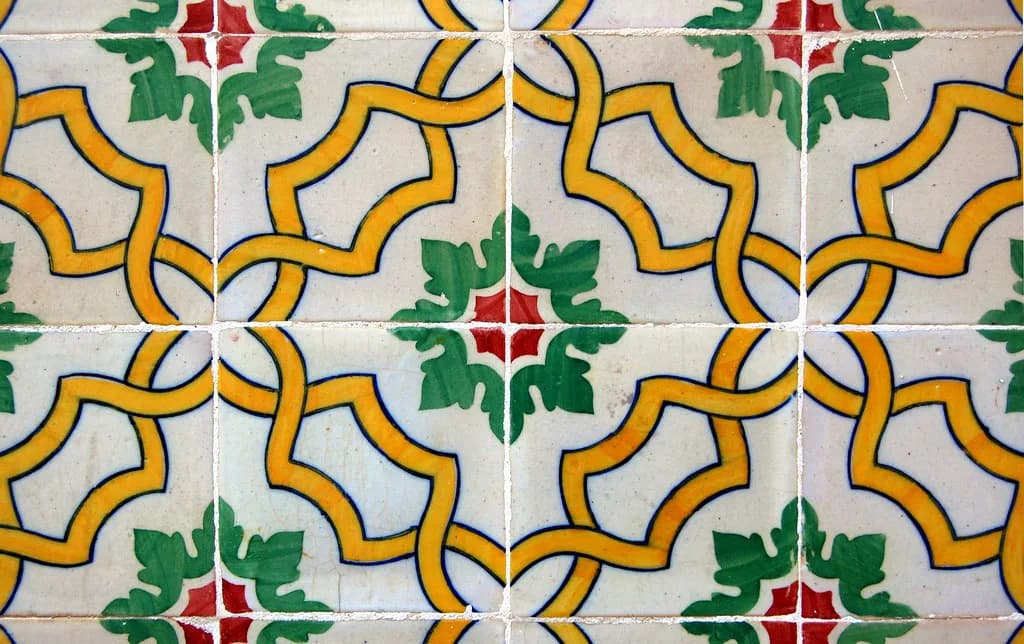
Azulejos are glazed ceramic tiles, usually square, painted before firing and set in repeating patterns or picture panels. Portuguese towns use them for both: a geometric skin that protects a wall from damp and salt, and figurative scenes that tell a story. In Ericeira the salt air is part of the reading, because the tiles sit on outdoor walls rather than behind glass.
Work through four things in order: the colour palette, the repeat or picture, the border, and what the wall is for. Blue-and-white is the classic look, but earthy greens, yellows and browns appear too, and a border shows where the tiler wanted the eye to stop, usually around a window or door. Read the condition as well: crazing, missing corners and faded glaze are normal on an exposed coast, and a patch of newer tiles among old ones usually marks a repair.
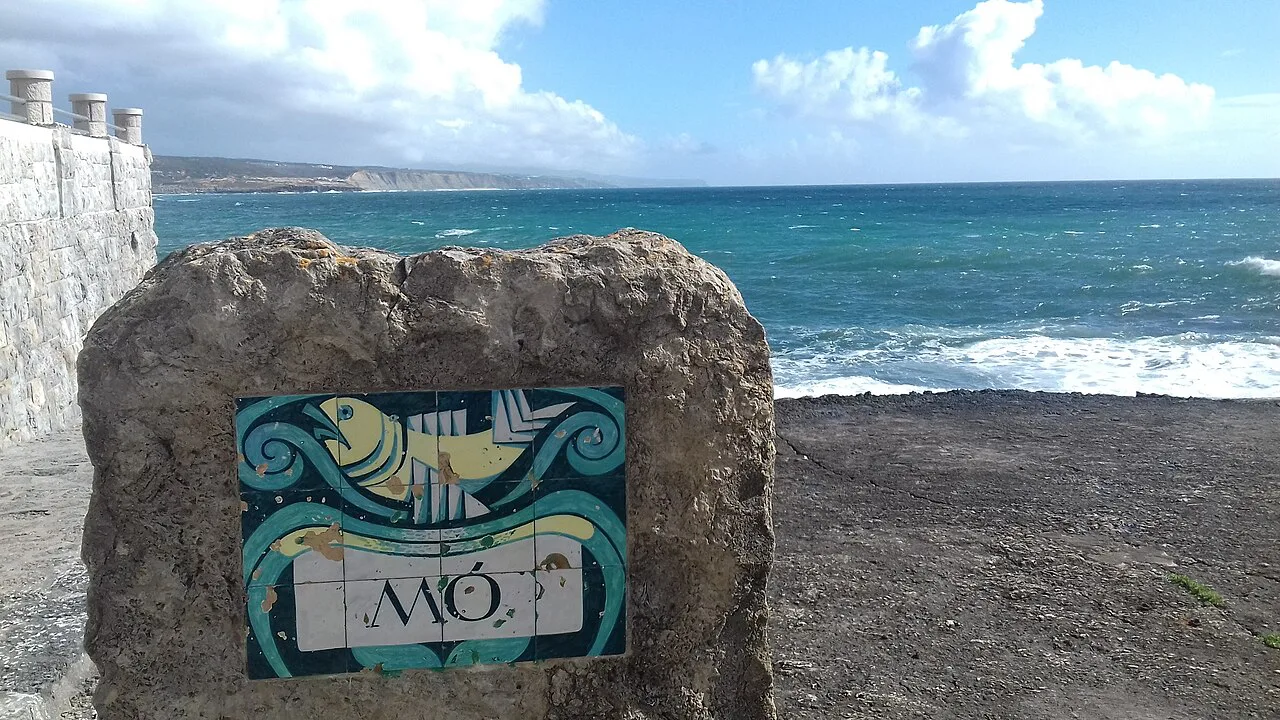
Where the tiles sit in the old village above the harbour
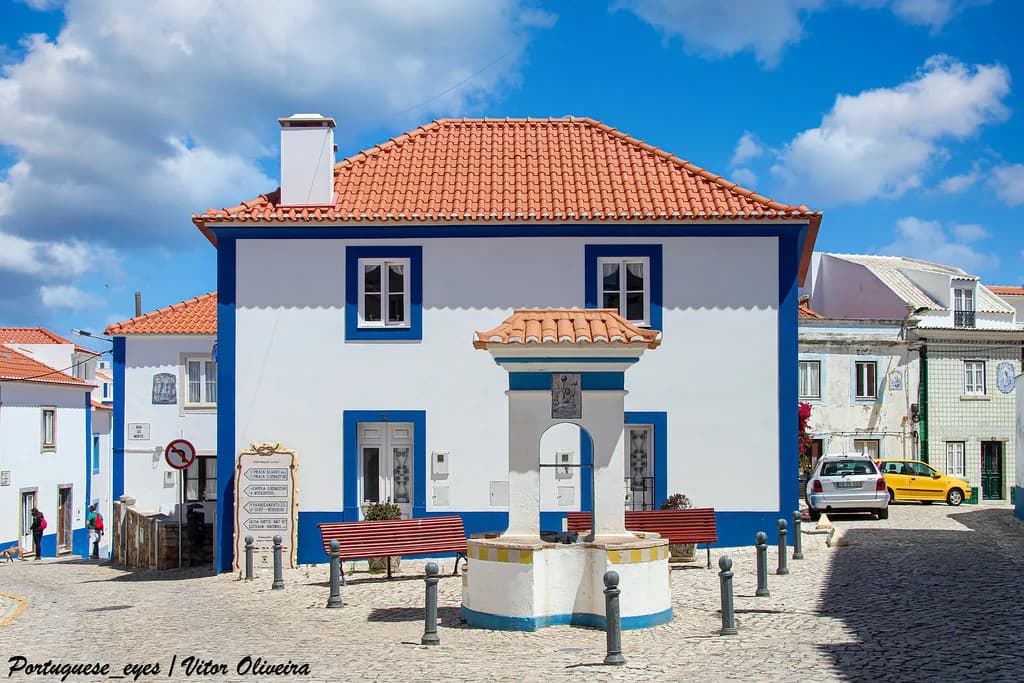
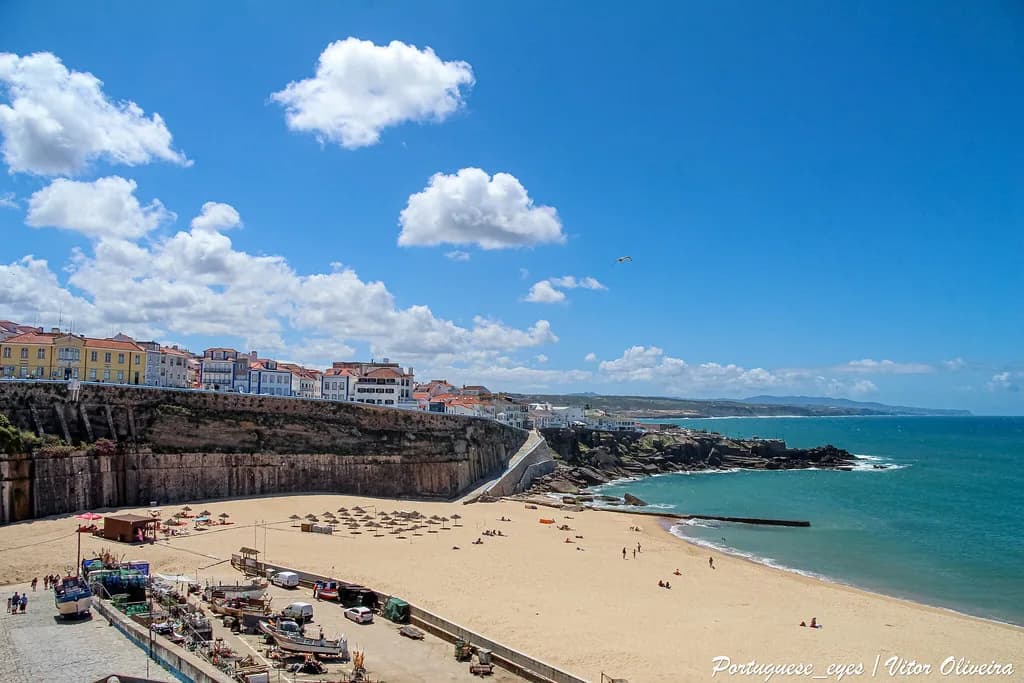
The tiled rail that gives Ericeira its best tile-and-view combination sits on the seafront of the old part of the village, with the harbour in the bay behind it and the coloured houses stacked up the slope. Photographs of the spot show exactly this arrangement: patterned tiles in the foreground, fishing boats and bay beyond.
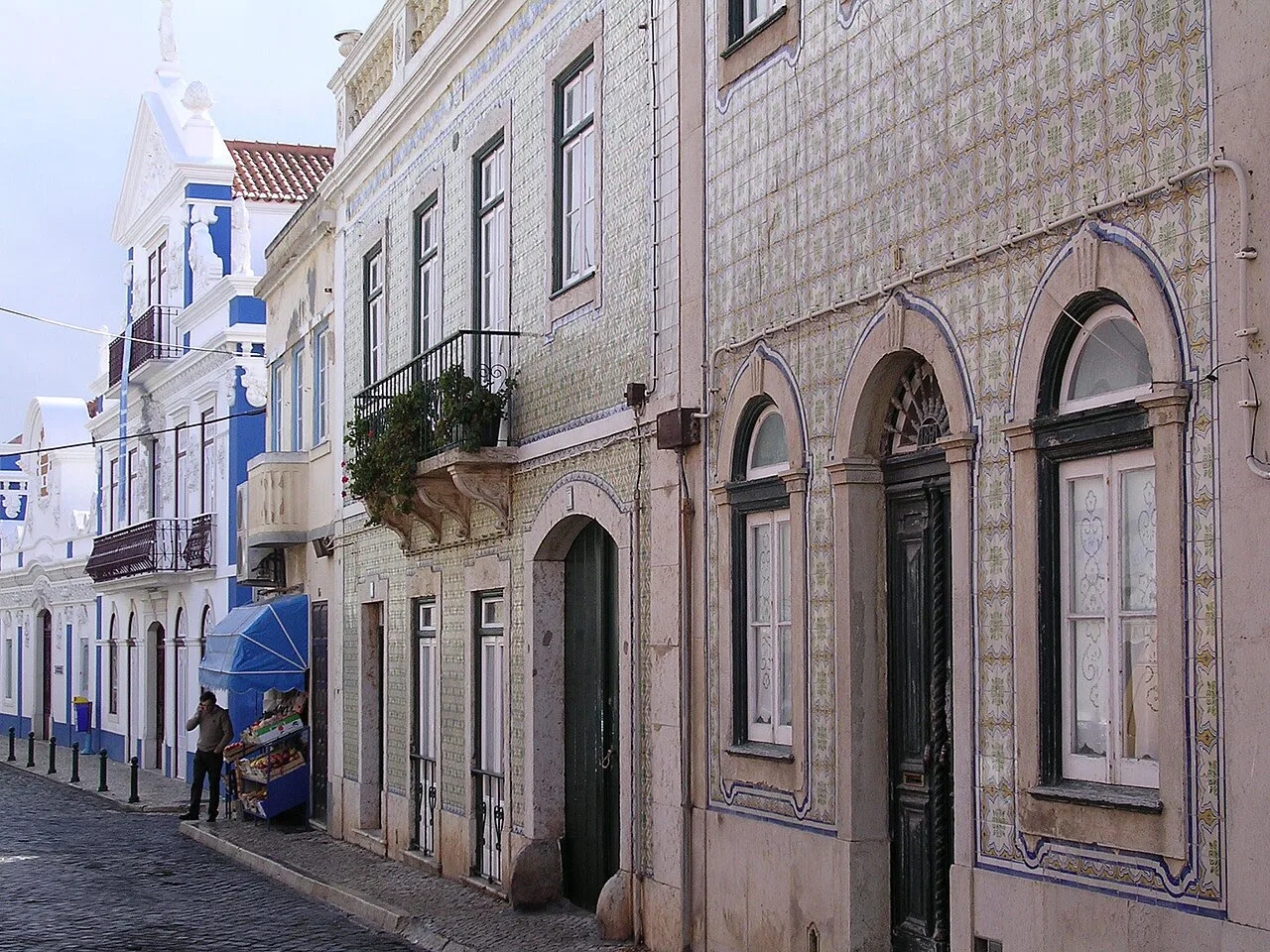
Because the tiles are street furniture rather than an attraction, you can see them at any hour and in any weather, but there is no label or leaflet to explain the pattern, so bring your own curiosity and a phone camera for close-ups. The lanes of the old town around the rail are where most of the surviving façade tiling sits.
Be realistic about scale: Ericeira's tile heritage is domestic, not monumental. Expect house fronts, entrances, stair risers and boundary walls rather than vast church interiors, which makes a tile walk a good filler between surf-watching and lunch rather than the main event of a day.
The azulejo-framed view from the seafront rail: houses, harbour and bay
Stand at the rail, look through the tiled opening towards the water, then turn round and look back at the houses. The composition changes completely in a few steps, which is the point: the tiles act as a frame and the coloured façades above the harbour are the picture. Give this spot ten minutes rather than two.
Light decides whether the tiles read well. Midday sun flattens glaze and can blow out pale blues, while lower, side-on light brings out the relief of the glaze and the texture of old mortar. Early morning is usually the quietest time to have the rail to yourself.
The same viewpoint doubles as an orientation point for the rest of your day. Once you have the harbour, the bay and the old village clear in your head, the town's layout stops being a puzzle. If you are still weighing up whether the town deserves a slot in your itinerary, our honest answer on whether Ericeira is worth visiting covers what the town does well.
Façades, churches and fountains: how to read tiles in context on a walk
Read tiles by the building they dress. On a house, the tile skin is weatherproofing and status at once, so the pattern runs up the whole front and stops at the eaves. Around a doorway, the tiles are a threshold, often with a different border colour from the rest of the wall.
Churches and fountains need a different eye, because their tiles usually sit inside a decorative scheme rather than covering everything. Look for a panel placed where light falls, often on a porch or side chapel, and check whether the scene matches the building's dedication; whether a particular church in Ericeira is tiled inside is a question the open doorway answers, and where a church is shut to visitors its exterior tiling still frames the street.
A short walking order through the old streets, with rough times
Allow about an hour for a leisurely tile walk, or forty minutes if you move briskly. Start on the seafront by the tiled rail, spend ten minutes on the framed harbour view, then turn inland into the lanes behind the front. Walk uphill slowly, taking any street that shows a tiled façade, and loop back down towards the harbour.
Keep the order simple: rail first, lanes second, harbour edge last. Doing the viewpoint first means you can recognise the houses and the bay from above for the rest of the walk, and finishing at the water gives you an easy exit towards food. Add twenty minutes if you stop for photographs of individual panels.
The rest of a short break here tends to organise itself around the water. Surfers will already know the town's reputation, and our guide to surfing in Ericeira explains how the beaches and breaks fit into a day.
Tile painting and pottery workshops nearby when you want to try it yourself
If looking is not enough, Gaëlle Ceramica runs hands-on pottery sessions in the Ericeira area from its studio in Ribamar, five minutes from town, and the studio publishes its own prices. A private workshop is €85 per person for two and a half hours for up to three people, while a group workshop is €65 per person for the same length of time for four to nine people. Both are clay sessions rather than a tile-painting class, so go expecting to make a pot, not a panel.
For a deeper immersion, the same studio offers a six-day clay retreat at Casa Paço D'ilhas just outside Ericeira, near Ribeira d'Ilhas, held twice a year in spring and autumn with dates announced by the studio. That is a holiday in its own right rather than something to bolt onto a two-night break.
Other studios within a short drive give you choice. Limoerio, down the road among lemon trees, has a small retail area and workshop space and has hosted pop-up classes in tile painting, raku and glass. Tia Lie Casa Criativa in Santo Isidoro offers hand building, wheel throwing and jewellery-making, and MATE Ceramics in Mafra sells functional pottery and runs classes and open studio hours; confirm times and prices with each studio directly.
Practical trade-offs: light, crowds, church closing times and rain
The main trade-off is between light and company. Soft early light flatters glaze and keeps the rail quiet, while midday brings the strongest colours but also the most people and the harshest shadows. If you only have one slot, take the earlier one and accept slightly cooler tones.
Rain changes the experience rather than ruining it. Wet glaze deepens colour and makes patterns pop, but the lanes above the harbour are steep and slick, so wear shoes with grip. Wind off the Atlantic is the bigger nuisance at the rail, so keep that stop short on a blustery day.
Church interiors in Portugal often follow their own rhythm and close for parts of the day, so plan a tile walk that does not depend on getting inside one. The street tiles, façades and the rail are always there. Check current details for any church or studio you specifically want to enter before you set out.
Where to see more azulejos across Portugal
Ericeira is a small-scale introduction; for the full repertoire of Portuguese tilework, larger towns and cities hold bigger collections. Getting here from the capital is straightforward, and our guide to Lisbon to Ericeira covers the route and the timing.
Is a tile walk worth an hour of your Ericeira break?
Yes, if you treat it as a slow hour on foot rather than a sight to tick off. The tiled rail above the harbour gives you the town's best free view, the lanes behind it supply the detail, and a pottery session at Gaëlle Ceramica turns looking into doing. Skip it only if your days are already full of surf and seafood and you would rather not slow down.
Frequently Asked Questions
Can you buy handmade tiles or pottery in Ericeira?
You can buy handmade pottery rather than loose antique tiles. Limoerio, just outside Ericeira, keeps a small retail area, Tia Lie Casa Criativa in Santo Isidoro sells mugs, plates, jewellery and vases, and MATE Ceramics in Mafra sells functional pottery. Each studio sets its own stock and hours, so ask before making a special journey.
Do you need to book a pottery workshop in advance?
Yes for the Ericeira-area sessions, which are booked directly with Gaëlle Ceramica through its website. Private sessions take up to three people and group sessions run for four to nine, so small parties should book early rather than turning up. Other studios in the area run their own booking arrangements.
Sources
Notes for your next Portuguese break
Optional updates to our town guides.
You might also like
Continue reading
More guides you'll find useful