
Costa Nova, Aveiro: A Practical Guide to the Striped Houses and Beach

Costa Nova is worth visiting if you want one distinctive sight and a big Atlantic beach in the same short stop, and it takes roughly an hour to see the village itself before any beach time. The district sits on a narrow sandbar 11km west of Aveiro, with the calm Canal de Mira of the Ria de Aveiro lagoon on its eastern side and open ocean on its western side.
This guide covers the palheiros, the two coasts of the sandbar, the boardwalk to the Farol da Barra, where to eat and the practical business of arriving from Aveiro. It treats Costa Nova as a half-day or full-day excursion within a short break in Aveiro rather than a resort in its own right.
What Costa Nova is: a sandbar between lagoon and ocean
Costa Nova occupies a thin strip of land with two distinct characters: a sheltered lagoon waterfront of striped houses and a small fishing harbour on one side, and a wind-swept Atlantic beach on the other. That split is the key to planning a visit, because you can drift between the two on foot in minutes but the experiences feel quite different.
The name Costa Nova do Prado appeared in the early nineteenth century, after the Aveiro lagoon Barra opened in 1808 and fishermen shifted here from the older shore at São Jacinto. "Do Prado" refers to the meadow beside the beach, a reminder that this was a working shoreline long before it became a photogenic day trip.
Administratively the village belongs to the Ílhavo municipality rather than the city of Aveiro, which is why you will see it listed under Gafanha da Encarnação and Ílhavo in directories. For a visitor the distinction matters little, but it explains why the bus, the beach and the wider municipality are often described separately.

The palheiros: why the striped houses exist
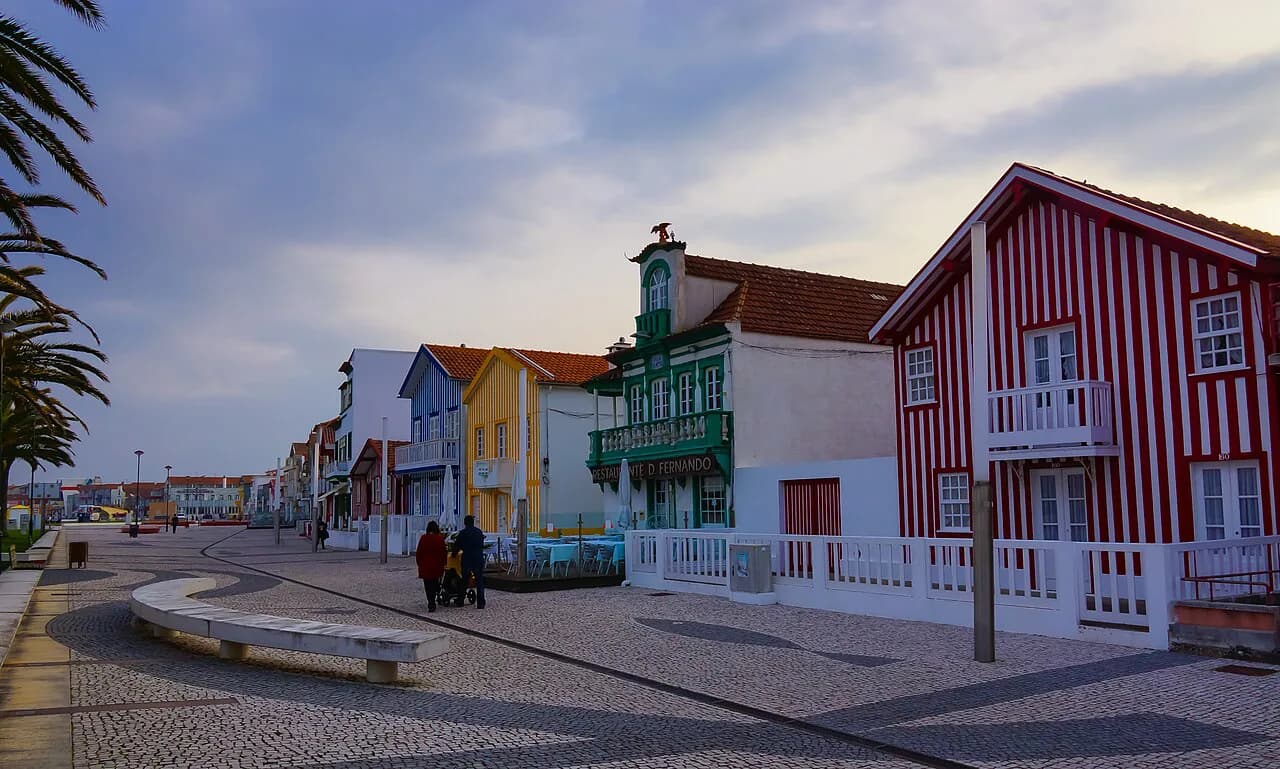
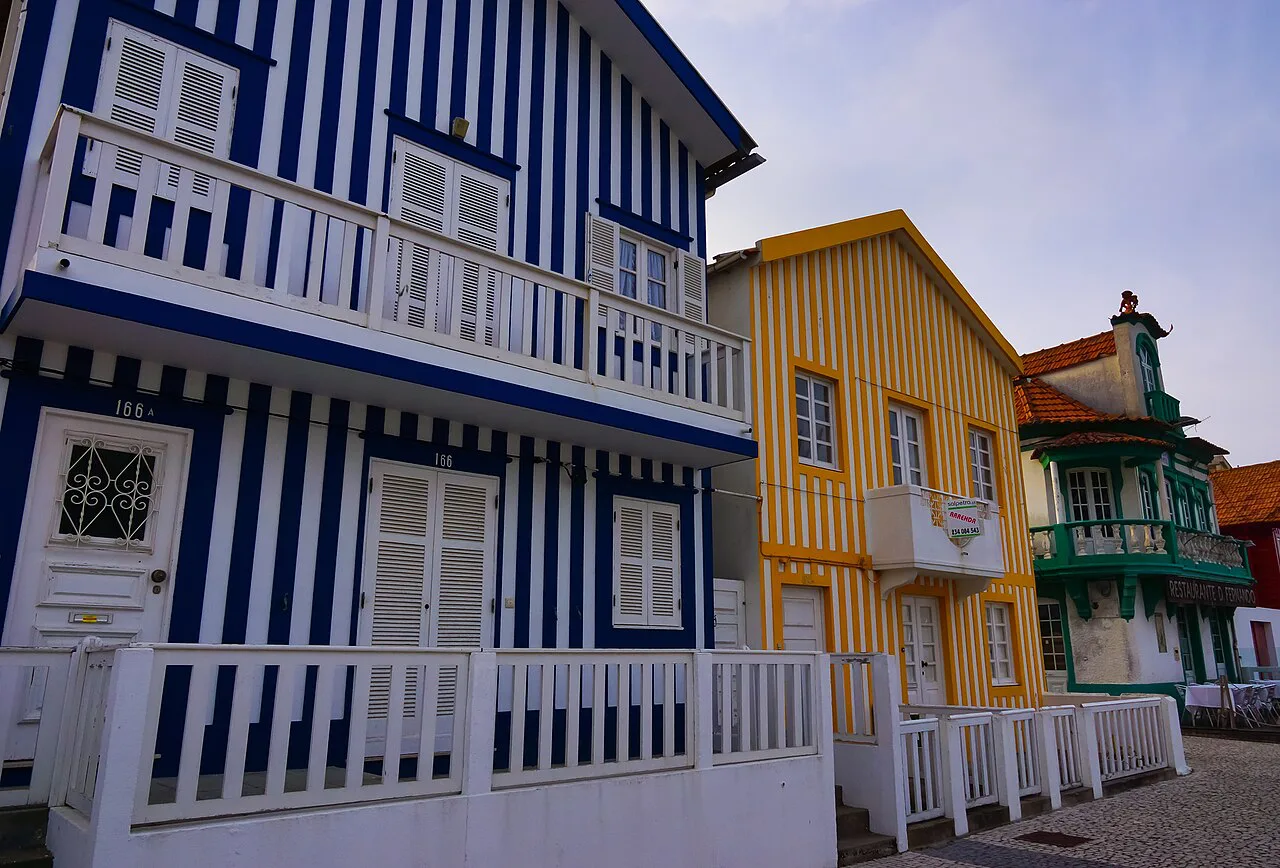
The striped houses, known as palheiros, began as storage huts where fishermen kept nets and tackle, built from local materials on stakes above the dry sand. Their façades were painted in bright colours so the huts could be picked out from the misty lagoon, a practical marker that became the district's hallmark.
Over the years some fishermen converted the huts into summer living quarters, and the tradition of bold paintwork survived the change of use. Knowing this changes how you look at them: they are adapted working buildings, not decorative follies, and the stripes sit on a genuine fishing waterfront.
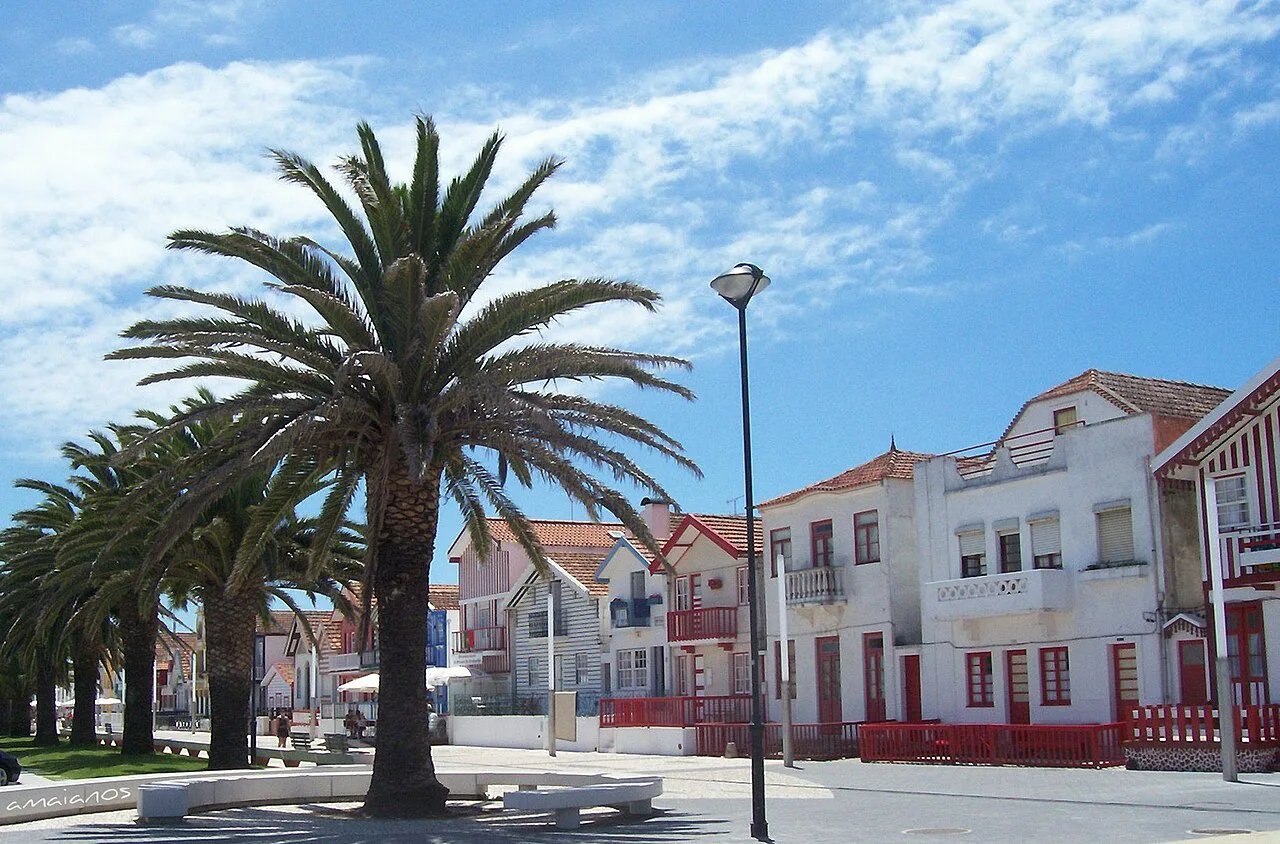
The best stretch to walk is the main promenade, Avenida José Estêvão, where the striped façades line up along the lagoon waterfront. Come early or late in the day if you want photographs without a crowd of backs in them, and keep in mind that these are homes and businesses rather than a museum row.
Who Costa Nova suits, and who it does not
Costa Nova suits travellers who want a compact, photogenic village plus a proper Atlantic beach, and who are happy to combine the two in a half day. The village sights take around an hour to cover, so the rest of your time is a choice between sand, seafood and the boardwalk rather than a checklist of monuments.
It suits beach-goers less well if you dislike wind, cold water or busy summer weekends, because the ocean side faces the full force of the Atlantic and the northern beach section fills first. If your priority is sand rather than stripes, Praia da Barra 2.5km north offers the same coastline with fewer people and more parking.
If you are weighing Costa Nova against time in the city itself, it helps to see how the centre is arranged before you commit a day to the coast. Beira-Mar, Aveiro holds the canalside heart of the city, while Rossio, Aveiro covers the shopping streets inland, so you can judge what you would be trading away.

The lagoon side: harbour, market and church
On the lagoon side, the Marina de Pesca Artesanal keeps the fishing identity visible, with small boats working the calm water of the Canal de Mira. Pair it with the Mercado da Costa Nova and the Igreja Matriz da Costa Nova, the parish church, which sit within the same compact centre and need no special planning to reach.
The village is small enough to cross quickly, so treat these as one short loop on foot rather than separate excursions. Opening arrangements for the church and market are not set out by the tourism authority, so build them into a walk past rather than a timed appointment.
For watersports, Riactiva hires out equipment on the lagoon side, which is the sheltered option when the ocean is rough. The lagoon is also where the light and reflections are calmest, making it the better half of the sandbar for an unhurried stroll.
Praia da Costa Nova: the Atlantic beach and dunes
Praia da Costa Nova runs for over 9km along the western side of the peninsula, a wide expanse of golden sand backed by protected dunes. Because it faces the open Atlantic, the waves are powerful and the surf crowd gathers here, while the sheer size of the beach means space is rarely the problem.
The northern section is the busiest part of the beach, closest to the village centre and the striped houses. Walk a few minutes further south for a quieter patch of sand, and stay off the dune system behind the beach rather than treating it as a path.
The striped waterfront and the beach together are what make the resort stand out, and the two sit a couple of minutes apart. If the surf is your main reason for coming, this stretch delivers without needing the village to justify the trip.
Walking the Passadiços Costa Nova to the Farol da Barra
The Passadiços Costa Nova is a modern boardwalk threading north through the fragile dunes with uninterrupted ocean views. It is the natural way to link the village to Praia da Barra and the Farol da Barra, and it removes any need to walk on the road.
The Farol da Barra is the tallest lighthouse in Portugal and has guided ships into the Aveiro lagoon since 1893. Visitors can climb its 288 steps for panoramic views, which makes the lighthouse the obvious turning point of a boardwalk walk rather than a detour.
Allow for the return leg when planning lunch, because the walk north and back adds real time to what otherwise looks like a one-hour village visit. If you would rather spend the day on the sand than on a boardwalk, Barra, Aveiro covers the same beach with a shorter journey from the city.
Eating in Costa Nova: seafood and the peak-season trade-off
Costa Nova has a strong seafood reputation, with named options including Dóri Restaurante, Marisqueira da Costa Nova, Praia do Tubarão and Bronze Seafood & Lounge Bar, plus Zé da Tripa in the village. These are the places to aim for if fish and shellfish are the point of your visit.
The trade-off is peak season: these restaurants get extremely busy, and if you are combining Aveiro with Costa Nova in one day, lunch in Aveiro is the more comfortable plan. Save Costa Nova for coffee, a late plate or an early dinner once the day-trippers have thinned out.
Booking policies and weekly closing days are not published by the tourism authority, so check directly with the restaurant you choose before building your day around it. Central Aveiro has the fuller spread of options if you want to eat before or after the coastal leg, and the things to do in Aveiro round-up shows how the city day fits around a meal.
Getting there: bus, car and the summer crush
Costa Nova lies 11km west of Aveiro and is connected to the city by a bus service that is often overcrowded at peak times. Driving is generally easier, with plenty of parking along the main road, though the spaces fill quickly in summer.
Bus frequency, journey times, fares and parking charges are not stated by the operator or tourism authority, so confirm current times at the Aveiro bus station before you set out. Allow slack at the end of the day, since the return service is where overcrowding bites hardest in high season.
If Aveiro is your base, the city's own geography is worth knowing before you plan the coastal leg. Aveiro Attractions covers the main sights, including the central canal area, so you can see what fits around a Costa Nova half day.
How long to allow: one hour, half a day or a beach stay
An hour covers the village itself: the palheiros along Avenida José Estêvão, the harbour, the market and the church. Add beach time on top of that, because the sand is the second half of the trip and the reason many visitors come at all.
A common pattern is a day trip to Aveiro with a Costa Nova stop bolted on, but the reverse also works: base yourself on the coast and visit the city for its canals and museums. A stop-off in Costa Nova is frequently added to extend a day trip to Aveiro, which leaves room for the coast in the same day.
If you plan to linger for a beach stay, Costa Nova has the restaurants and laid-back atmosphere to support it, and the broad beach rewards those who stay rather than dash. Accommodation is a separate decision from the sights, so treat the village as one candidate area among several in the Aveiro region.
Costa Nova or Praia da Barra?
If the beach is your whole reason for coming, Praia da Barra is the calmer choice: it lies 2.5km north, shares the same excellent sands, has fewer people and offers a larger choice of restaurants. Parking is easier there too, and the bus ride from Aveiro is shorter.
Costa Nova still wins on character, because the striped palheiros and the lagoon setting give it a look that Barra cannot match. A sensible compromise is to see the houses at Costa Nova, then walk the boardwalk north to Barra and the lighthouse for the rest of the day.
Is Costa Nova worth the 11km from Aveiro?
For most short-break visitors, yes, provided you expect a photogenic village rather than a sight-packed town. An hour of striped houses and lagoon waterfront, followed by optional beach time or the boardwalk to the Farol da Barra, is a well-balanced half day out of Aveiro.
Skip it if your priority is unbroken beach time in quieter surroundings, in which case Praia da Barra serves you better on crowds and parking. Either way, the trip is short enough to decide on the day, which is the advantage of a coast this close to the city.
Frequently Asked Questions
Is Costa Nova part of Aveiro or a separate place?
Costa Nova is a coastal village in the Ílhavo municipality, about 11km west of Aveiro, on a sandbar between the Ria de Aveiro lagoon and the Atlantic. It is not part of the city centre, so you reach it by bus or car rather than on foot.
Do I need a car to visit Costa Nova?
No, a bus connects Aveiro with Costa Nova, but it can be overcrowded at peak times, especially on the return. Driving is generally easier and there is plenty of parking along the main road, though spaces fill fast in summer. Confirm current times with the bus operator before you set out.