
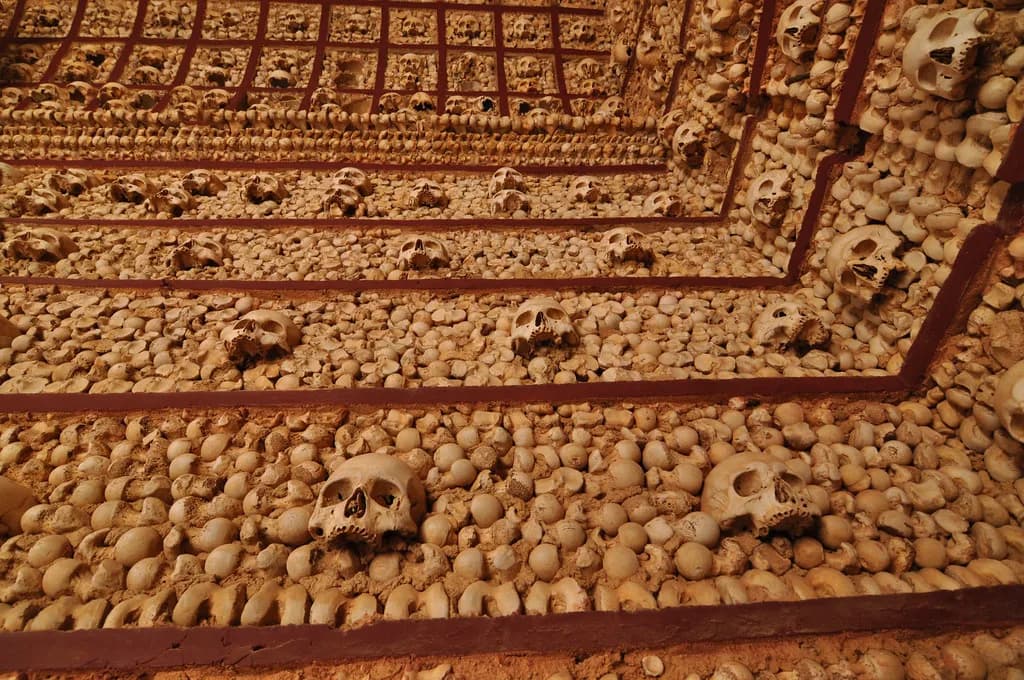
Capela dos Ossos, Faro: the Bone Chapel at Igreja do Carmo
Faro's Capela dos Ossos is a single small room in the back garden of Igreja do Carmo, and you can only reach it by passing through the church, so the two are one visit on one ticket. Allow around 20 minutes for both. It is a short, sober counterpoint to the gilded church rather than a half-day attraction, and this guide covers where it sits in the city, what is inside, when it opens and what to pair it with.
Note the scale before you plan around it: the chapel covers only 24 square metres, so a summer queue in a cramped space is the main practical risk. Go at opening time or late in the afternoon if you want room to look properly.
What the Capela dos Ossos actually is
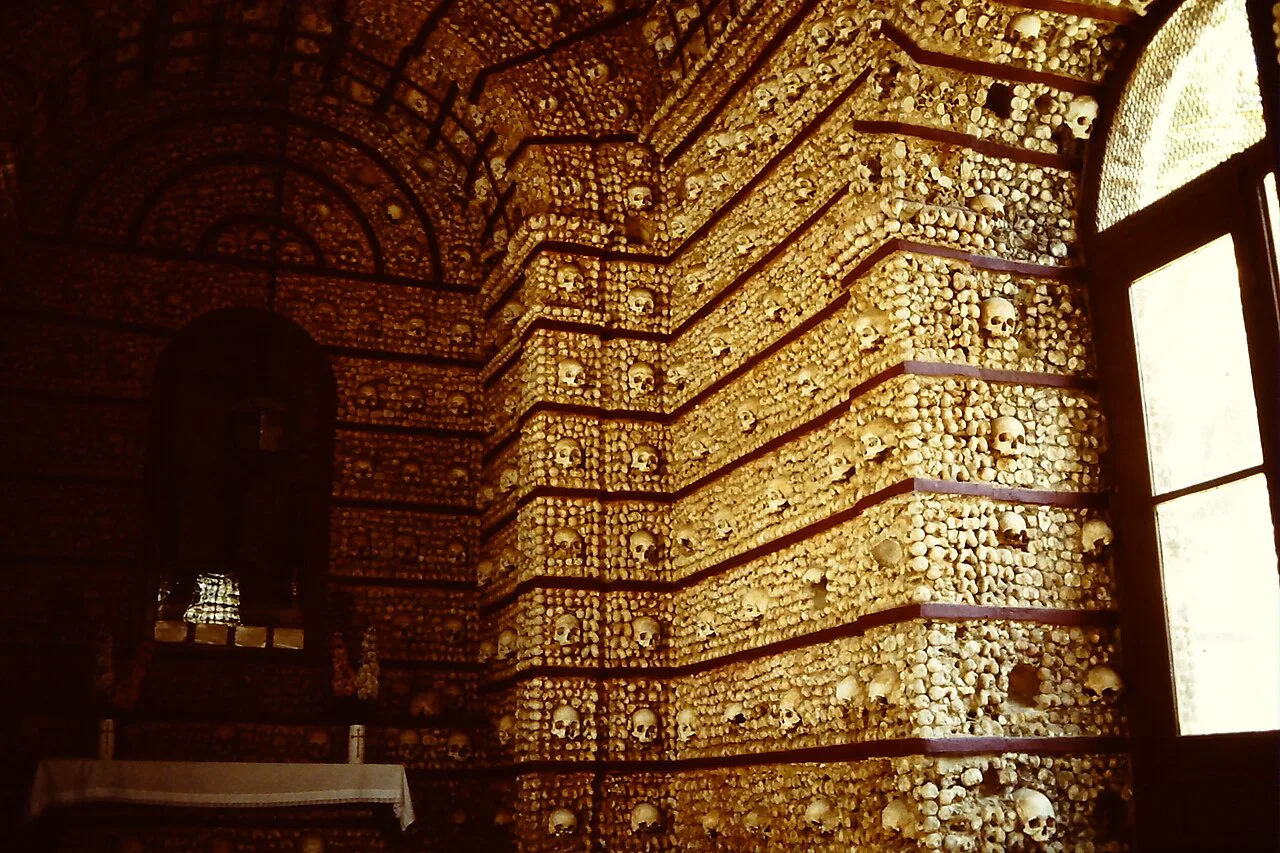
This is an ossuary: a chapel built to hold human remains, finished in 1816 when Faro's cemeteries were running out of room. The bones of more than 1,245 Carmelite monks were not simply stacked here but arranged deliberately to form the chapel's interior surfaces. It was conceived as a memento mori — a visual sermon on the brevity of earthly life — and it still reads that way.
The setting is what separates it from the bigger bone chapel at Évora: Faro's is a whitewashed annexe in a garden, bright and geometrically precise, not a dark cave-like hall. The rear garden was originally the burial ground of the Third Order, and it was from that ground that the bones were exhumed to build the chapel in 1816. An outdoor altar of bones stands in the garden, its skulls and long bones weathered by exposure.

Where it sits in Faro
Igreja do Carmo faces the Largo do Carmo on the northern edge of central Faro, roughly seven minutes on foot from the marina and the Jardim Manuel Bívar. The catch is orientation: the church sits on the opposite side of the city from the Cidade Velha (the old walled centre), so it is not on the way to the cathedral and you need to make a deliberate trip.
The square itself is paved in calçada portuguesa, the patterned black-and-white cobbles, which sets off the golden limestone of the façade. Because the church is entered from a public square and the chapel from inside, arrive intending to see both rather than turning up for the ossuary alone. For the rest of the city's sights, see the wider Faro Attractions collection.
The church that comes with the ticket
Igreja do Carmo is one of the Algarve's strongest rococo interiors, and its gilded carved woodwork (talha dourada) was paid for with wealth flowing into Portugal from Brazil in the eighteenth century. The single nave was designed so nothing blocked the congregation's view of the preacher, and the main altar's concave plan pushes depth into the chancel. That contrast — lavish gold on one side of a garden wall, bare bone on the other — is the reason to come.
The façade was begun in 1747 by the master mason Diogo Tavares and is built as a façade-retábulo, shaped like an altarpiece so the church seems to turn outward to the square. Twin bell towers with flame-shaped finials were completed later, in the late nineteenth century, and niches hold statues of Saint Elijah and Saint Teresa of Ávila. Look up inside at the painted ceiling above the eucharistic throne, a trompe-l'œil opening to the sky.
What you'll see inside the chapel
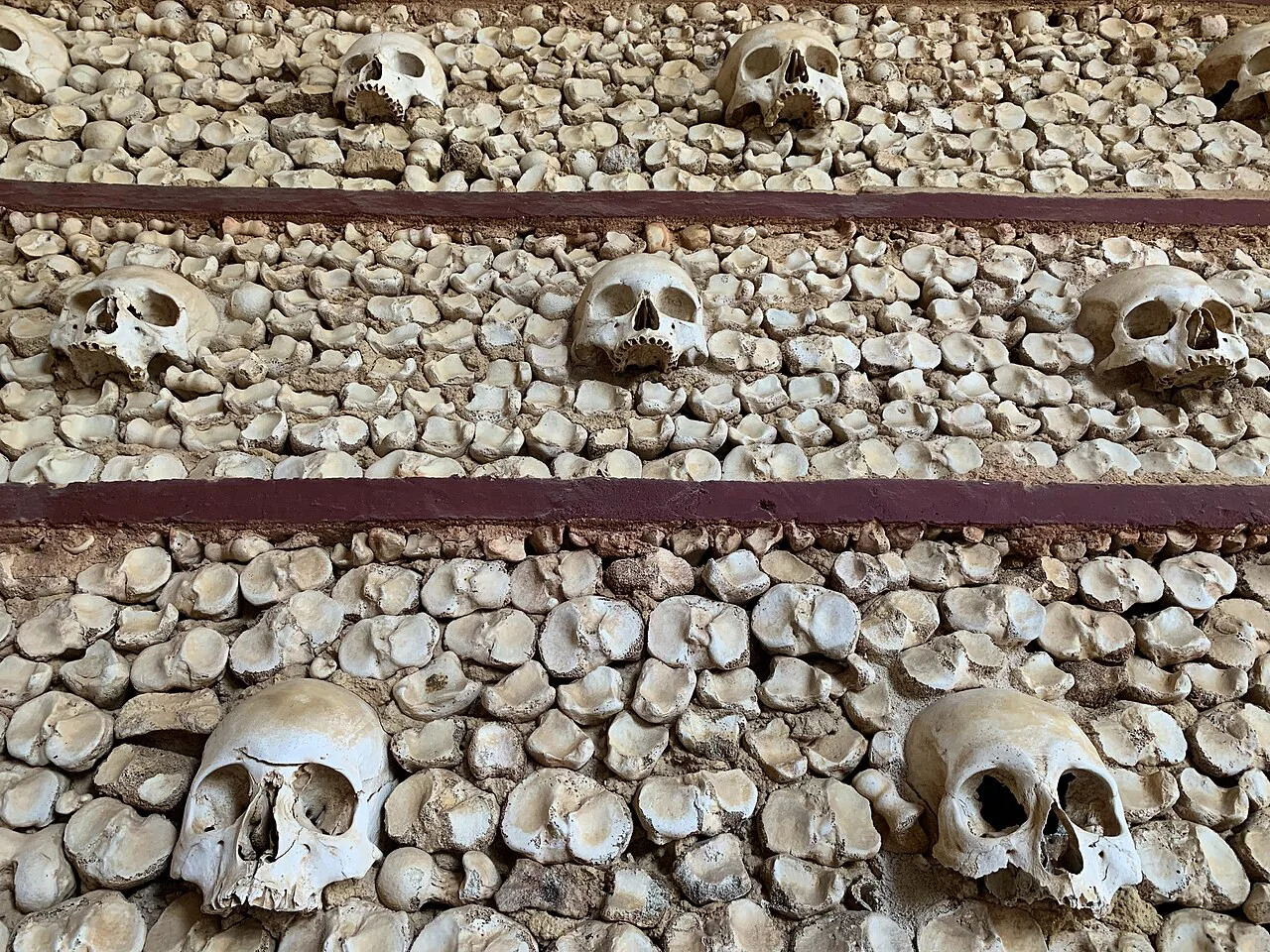
Skulls and long bones form ordered patterns across the walls and vault, a rigid geometry rather than the jumble of many ossuaries. The stone lintel carries an inscription in Portuguese urging the visitor to stop and consider that this state awaits them too — the memento mori message made explicit at the door. Read it before you go in; it frames everything you see.
On the way through you pass the sacristy, which holds unusual images of the Passion of Christ. Photography is possible in a space this small, but the room is not a museum with labels and displays: it is an active religious building, and quiet is expected.
How much time to allow
Around 20 minutes covers the church and the chapel together at a normal pace. The chapel's 24 square metres fill quickly when a coach group arrives, so the opening slot or the last session of the afternoon gives you the most breathing room, especially in summer.
Build the visit into a walk rather than making it your morning. Pair it with the Cidade Velha across town, or with the Arco da Vila, the eighteenth-century gateway on the Rua do Município that leads into the old centre, which gives the day a shape.
Opening days and times
The published schedule runs Monday to Friday, with Saturdays limited to the morning only and Sundays closed to tourists, open for mass alone. Because the chapel is reached through the church, visits pause during mass and services. The whole set shuts for a break, so an early-afternoon arrival will find the doors closed.
Entry covers both the church and the bone chapel; there is no separate chapel ticket to buy. That makes it one of the cheapest proper sights in the city, but check the times again before you set out, since religious buildings can change them around services.
Getting there and what to pair with it
From the marina and the Jardim Manuel Bívar, walk north for about seven minutes to reach the Largo do Carmo. Coming from the Cidade Velha you cross much of the centre, so treat it as a separate leg of the day rather than a stop on the cathedral circuit.
If you have a car or a spare afternoon, the Palácio de Estoi, a rococo palace with gardens in the village of Estoi outside the city, makes a natural companion for anyone interested in the same period of decorative excess. Otherwise keep it simple: the market and old centre are a comfortable walk away.
How Faro compares with the Capela dos Ossos in Évora
Évora's bone chapel is far larger and darker, closer to a cavern, and belongs to a different order of experience: a major monument rather than a garden room. Faro's stands out for precision and for the strange domestic setting behind a parish church. If you have seen Évora's, come here for the contrast and the gilded church, not for scale.

Is the bone chapel worth the walk?
Yes, if you accept it as a 20-minute stop paired with one of the Algarve's best rococo interiors, and if you go on a weekday morning or late afternoon rather than at midday. It is small, it is not a museum, and it closes for services. Plan it as a deliberate detour north of the centre, not something you stumble into between the marina and the old town.
Frequently Asked Questions
What does a Capela dos Ossos symbolise?
A Capela dos Ossos is a memento mori: a deliberate reminder of death and the brevity of life. Faro's chapel makes the point with an inscription over the door asking the visitor to consider that this same state awaits them, and with bones arranged into the architecture rather than hidden away.
Can you visit the chapel without entering the church?
No. The Capela dos Ossos sits in the rear garden of Igreja do Carmo and is reached through the church and sacristy, so the church visit is part of the same route and the same entry ticket.
Is the chapel suitable for children?
It is real human bone in a small religious space, and the mood is solemn rather than theatrical. Parents should judge for themselves; the room is only 24 square metres, so a short stop suits most families better than a long one.