
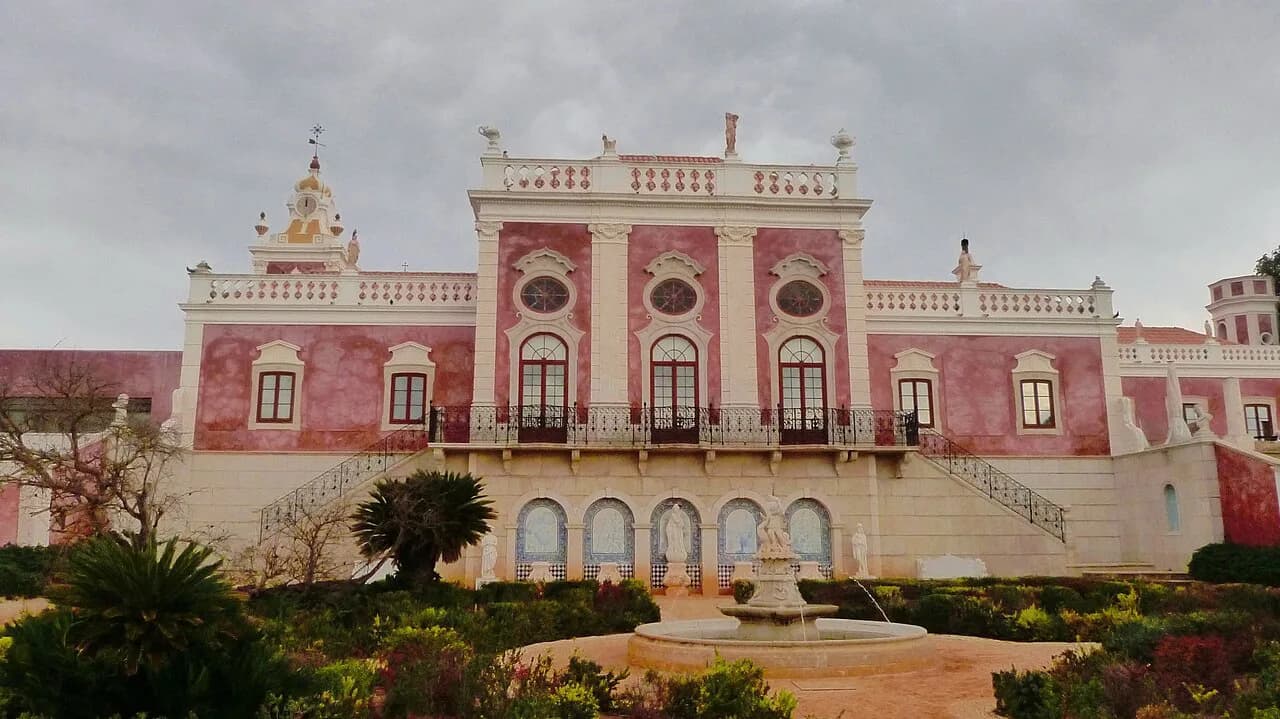
Palácio de Estoi: What to See at the Palace and Gardens

The Palácio de Estoi is worth a half-day from Faro: a dusty-pink Baroque palace with Versailles-style terraced gardens about 10 km from the city in the eastern Algarve. Day visitors can tour the palace halls, the restored chapel and the historic gardens for a small fee, while the modern hotel wing stays private. This guide covers where the palace sits in Estoi village, what you actually get to see, how long to allow and what to pair with it nearby.
What the Palácio de Estoi is
The building is officially the Palácio do Visconde de Estoi, the palace of the Viscount of Estoi, and it is more commonly called the Palácio de Estoi. Its story runs from an 18th-century noble estate through a 19th-century completion by Francisco José da Silva, the future viscount, whose grand opening was marked by a lavish three-day party. After a long decline it was bought by Faro's municipal authority in the late 1980s and restored.
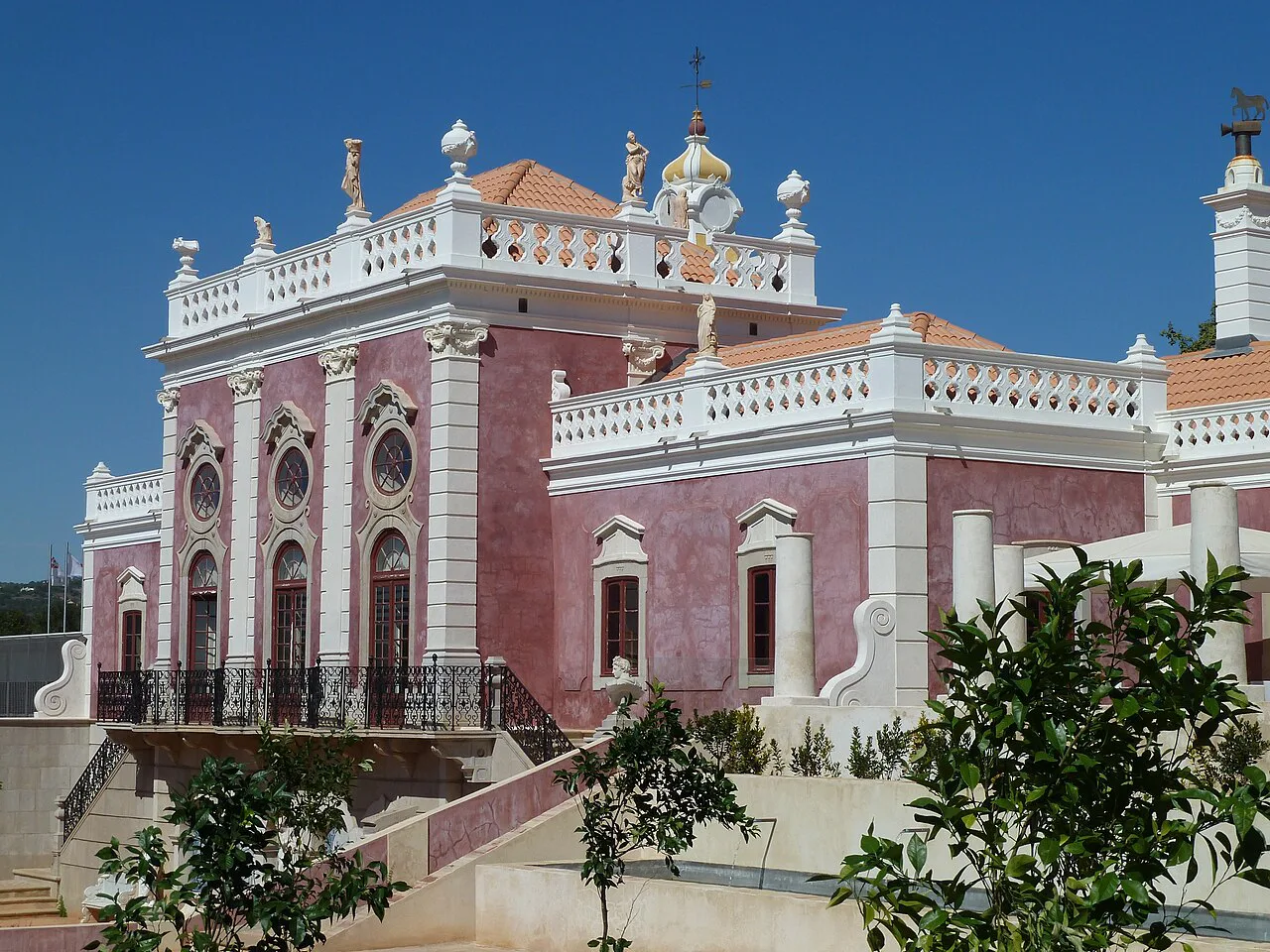
It reopened as a pousada, one of Portugal's historic buildings converted into hotels, on Easter 2009 and later joined Small Luxury Hotels of the World under the Pestana Hotel Group. The architecture mixes Italian Baroque, Rococo, Neoclassical and Romantic elements, which is why the interior feels more layered than a single-period stately home. Treat it as a historic house with a hotel attached rather than a museum with a fixed route.

Where it is and how to get there
Estoi sits roughly 10 km from Faro, close to the N2, but the final approach is along narrow rural roads, so a car with a working satnav makes the last stretch much easier. The palace cannot be seen from the road, and the entrance is the former chapel, a small doorway that reads more like a village museum front than a hotel door. Cars park diagonally along one side of the road outside.
If you are basing yourself in the city, the wider set of Faro Attractions: 4 Visitor Guides gives you the old town and waterfront sights to slot around this trip. Coming by taxi or car is the straightforward option for Estoi; the village is small and the palace is on its edge. Allow extra time on the approach rather than trusting a single glance at the map.
What you can see inside the palace
The palace rooms are the heart of a visit: frescoed halls, grand salons and a restored chapel that now doubles as the reception, with original altarpieces still in place. An exhibition area traces Estoi's Roman, Islamic and medieval heritage, which gives context for the Milreu ruins nearby. The chapel has unusual tiled floors, and original features and fixtures date to the time of the viscount.
Look out for small survivals that most grand houses lose: the original palace kitchens, with the old stove, chimney and sinks still in place and their tiles restored, now on the route into the breakfast room. The historic details reward a slow walk rather than a quick circuit. Public access covers the palace, gardens and exhibition room, not the hotel rooms, pools or spa.
The gardens and azulejo staircases
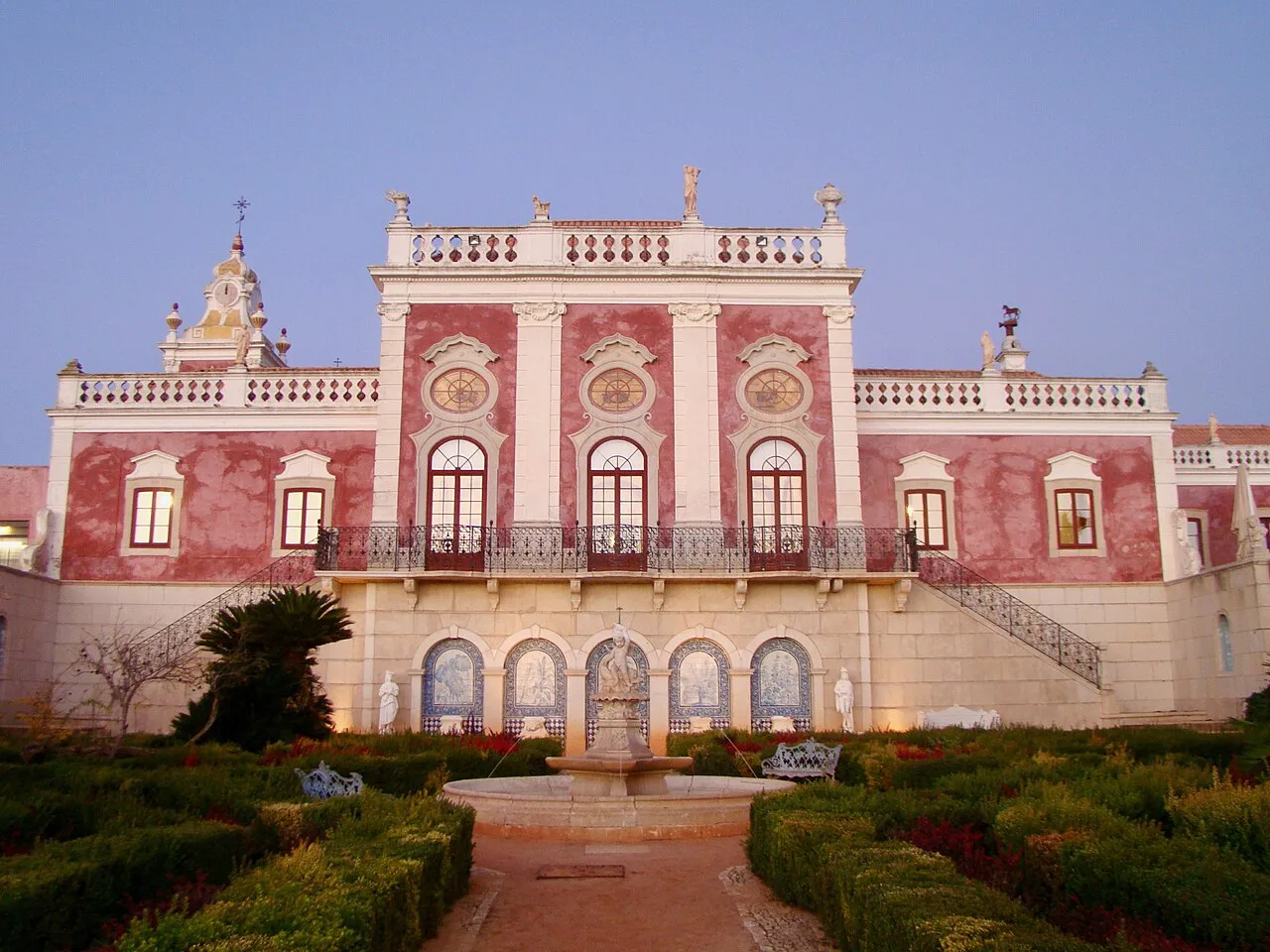
In front of the palace, a Versailles-inspired garden drops over two lower terraces, with classical statues, decorative fountains, clipped hedges and Algarve orange trees. Grand staircases link the levels, decorated with blue azulejos, the traditional Portuguese tiles. The lower garden levels are public and are reached through a gate in the lower village near the small church, not through the palace's ornate wrought-iron gate, which stays closed.
The terraces repay a proper wander: old tea houses, romantic fountains and the tiled staircases are the most photogenic part of the estate. That the public gate sits in the village rather than the hotel grounds is worth knowing before you set off. Hotel guests use the same village gate for the lower gardens.
The modern wing and what it means for visitors
A contemporary wing built in 2009 holds 63 rooms and suites alongside the spa and indoor and outdoor pools, a deliberately sleek contrast to the historic palace. The health club, spa, pools and guest rooms are not open to day visitors. The restaurant sits in the original palace kitchen and is open to the public by reservation; ask at reception rather than turning up.
Some travellers find the join between minimalist extension and Baroque palace jarring, while others treat the contrast as part of the story. Either way, the palace and gardens are the reason to come, and the modern side is background you pass on the way in. If a meal on the terrace appeals, book ahead through the hotel.
Tickets and opening times
Public entry involved a charge, paid at the hotel reception in the palace chapel, with certain days and hours applying. Treat the charge as the rate reported at the time of writing rather than a guaranteed current price, and ask at the chapel entrance or reception for the day's tours before planning your morning around them.
Hotel guests have complimentary access to the palace and gardens, so day visitors should expect to pay and to work around tour times rather than roam freely at any hour. Because the schedule is not fixed online, the sensible move is to check the day before you drive out. Combine that with a look at what else is on in the city using the Faro Attractions: 4 Visitor Guides page.
How long to allow and how to split the day
Give the palace and gardens two to three hours: enough for the halls, chapel, exhibition room and a slow lap of both garden terraces with their fountains and azulejo staircases. That fits neatly into a morning out from Faro, with the afternoon free for the village or the Roman ruins at Milreu, a five-minute drive away.
A sensible half-day runs palace first, while the light is good on the terraces, then a short hop to Milreu for the excavated 1st–4th century remains. If you are travelling without a car, a taxi from Faro covers the distance but fixed return times are easier to agree before you set out. Build in slack for the narrow approach roads.
What is nearby
Estoi village is small and walkable, with the neoclassical Igreja Matriz de Estoi and ornate local architecture a short uphill walk from the palace or reachable through the lower garden gate. Local pastries make a natural stop after the gardens. If you have time for one more sight in Faro itself, the Arco da Vila, Faro is the ceremonial gateway into the old town off the Rua do Município.
Where the visit fits on a Faro short break
On a one- to four-day Faro break, the Palácio de Estoi works best as a half-day escape rather than a full-day outing, paired with Milreu and the village. Keep the return to Faro for the old town, the waterfront and the Jardim Manuel Bívar, a central square that suits an evening stroll. If you are weighing up smaller sights in the city, the Capela dos Ossos, Faro is a compact, macabre stop that takes minutes rather than hours.

Is Estoi worth the drive from Faro?
Yes, if you want a historic house and garden rather than another beach afternoon, and you are happy with a short drive on narrow roads. Go early, ask at the chapel entrance about that day's tour times, and pair the palace with Milreu and the village church for a full half-day. If you would rather stay in the city, the Faro old town sights fill the time without the car.
Frequently Asked Questions
Can you visit the Palácio de Estoi without staying there?
Yes. Day visitors can tour the palace, the exhibition room and the historic gardens for a small fee paid at reception in the former chapel, while the hotel rooms, pools and spa stay private to guests. The restaurant is open to the public by reservation.
How do you reach the lower gardens?
The lower terraces are public but are entered through a gate in the lower village near the small church. The ornate wrought-iron gate from the hotel grounds stays closed, and hotel guests also use the village entrance.
What should I combine with the palace?
Pair it with the Igreja Matriz de Estoi up in the village and the Roman ruins at Milreu, about a five-minute drive away. Together they fill a half-day out from Faro comfortably.