
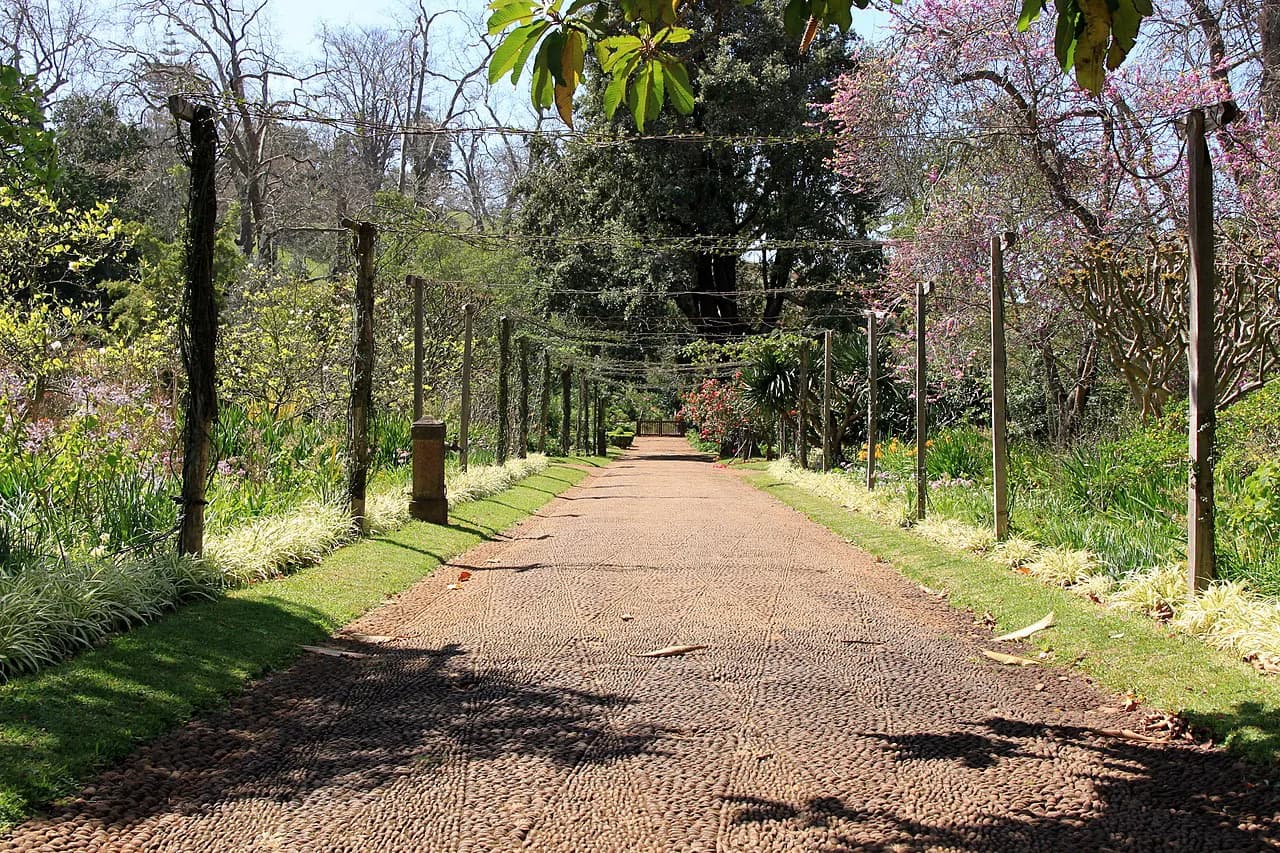
Palheiro Gardens (Jardins do Palheiro), Funchal: A Visitor's Guide

Palheiro Gardens (Jardins do Palheiro) repay a half-day above Funchal: a 19th-century quinta whose wooded slopes open onto a panorama over the city and the bay. The gardens are open every day, and the fixed 16:00 last entry is the detail that decides whether a late afternoon slot actually works. This guide covers where the estate sits, what tickets cost, how to get there, which garden rooms to seek out and how long to allow. For more on the city itself, see Funchal Attractions: 9 Visitor Guides.
What Palheiro Gardens are and why they earn a half-day
Palheiro is one of Madeira's historic quintas, a private estate turned garden that has been growing since the 19th century and is now part of the Palheiro Estate. It is a woodland garden rather than a formal parterre: springs channelled by levadas feed reservoirs and pools, and mature exotic trees stand among azaleas, camellias and clipped topiary.
That makes it a different proposition from Funchal's showier alternatives. If you want terraces, lakes and tile panels, Monte Palace Tropical Garden up the hill is the better fit; if you want shade, space and a view, Palheiro is the quieter pick. Pick one for a short break rather than trying to fit both into a single afternoon.
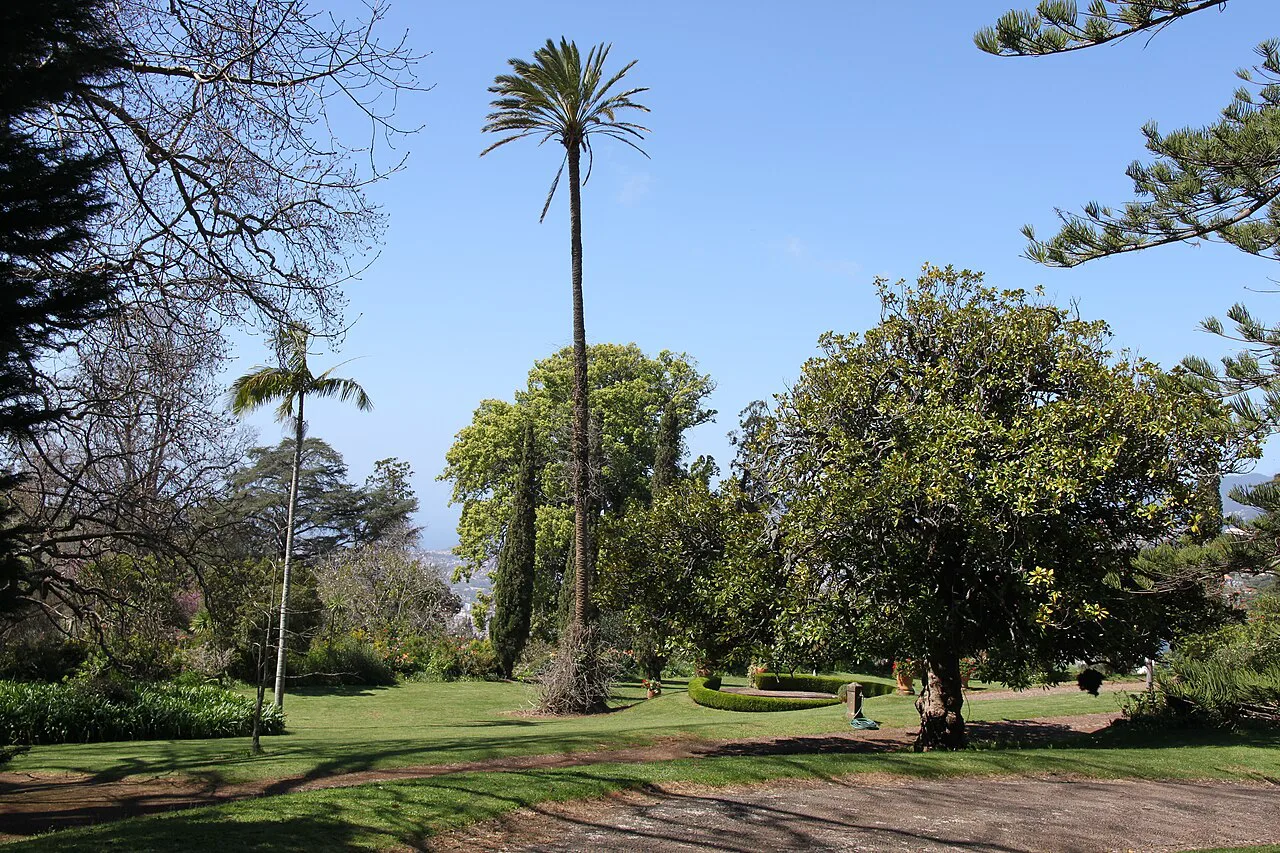

Where the gardens sit in relation to Funchal
The gardens lie on the slopes above Funchal, roughly 500 metres above sea level in the hills east of the city, with a panoramic view back over Funchal. Treat the altitude as a practical constraint: the estate is a hillside garden with paths that climb between the reservoirs, the grotto and the upper viewpoint, so the visit is not a flat promenade.
Opening hours, last entry and the two closure days
Palheiro Gardens open daily from 09:00 to 17:00, with last entry at 16:00, and close only on 25 December and 1 January. The 16:00 cut-off is the one to plan around: an arrival at or after 16:00 will not get you into the garden, so aim to be at the gate well before then.
An early or mid-morning start gives you the full range of the estate, including the upper viewpoint, without rushing the return leg. If your short break falls over Christmas or New Year, put Palheiro on a different day.

Ticket prices, child and resident rates, and the season pass
Adult entry is €11, children go free, visitors aged 15 to 17 pay €6, groups of five or more pay €10 each, and Madeira residents pay €6 on proof of residence. A 30-entry pass costs €150 and is valid for 12 months, which only makes sense if you are based on the island or returning; it covers garden entry but not Palheiro events and festivals.
Bring proof of residence if you intend to claim the resident rate, and check the terms on the gardens' own site before you set out.
Getting there from Funchal and the walking involved
Palheiro sits high in the hills east of Funchal, so the journey is a climb rather than a stroll along the seafront; arrange transport up and save your legs for the garden paths. The gardens publish directions on their own visit page, and the city's own transport pages are the place to confirm which services run and when.
Once inside, expect a steady series of slopes and steps between the reservoirs at the top of the property and the lower lawn at Jardim da Senhora. Wear proper shoes rather than sandals, carry water, and plan the steepest sections for when you are fresh. If you are combining transport with other uphill sights, the Funchal Cable Car (Teleférico do Funchal) to Monte shows how the city's high districts are reached.
The Tea House: hours and what it is for
The Tea House serves snacks and lunch from 10:00 to 17:00, run in partnership with Casa Velha do Palheiro, the Relais & Châteaux hotel on the estate. It works as a mid-visit pause rather than as a destination lunch.
Because it opens at 10:00, an early arrival should plan to walk first and eat later. It is not a substitute for a proper dinner in town, so keep Funchal's restaurants for the evening.
The Rustic Grotto and its pools
Water structures the whole garden: mountain springs are collected by levadas and funnelled into two large reservoirs at the top of the property. The Rustic Grotto celebrates that flow, feeding a bubbling pool and then a chain of lozenge-shaped pools edged with tritonias. It is a short stop, but a good first orientation point before you work downhill.
Centennial Trees and the araucaria specimens
The tree collection is the reason many visitors come. Forest species such as oak, beech, chestnut and cedar stand beside eucalyptus and araucarias, among them a towering Araucaria excelsa from Norfolk Island and an Araucaria angustifolia, the candelabra tree from Brazil. Look also for the Californian redwood, Sequoia sempervirens, and the pineapple-shaped cones on the Araucaria bidwillii.
Labels help but do not cover everything, so a garden with a good tree collection rewards slow walking and a second look upward. Allow longer here than you think you need.
The Sunken Garden and the Rose Garden
The Sunken Garden is planted with bright gazanias and lampranthus, with freesias, ixias and nerines self-seeding freely, and rockeries of agaves, aloes and dieramas around it. The Rose Garden was made in 2007 by Christina Blandy around stone rings salvaged from Banger's Pillar, a 1798 Funchal waterfront landmark demolished in 1939, and is planted with old-fashioned roses trained up the arches.
These two garden rooms sit close together and make a natural pairing, so save them for a single sweep rather than doubling back. Flowering varies through the year, so judge the visit by structure and foliage as much as by bloom.
Jardim da Senhora and the viewpoint over the bay
The lower garden is clipped into topiary that reads as clusters of peahens with fantails, and the gardens describe it as perhaps the most visually impressive part of the quinta, with benches placed for resting. Save it for the end, when you are ready to sit down.
The viewpoint over Funchal bay was the area worst hit by the 2012 fires, and replanting has brought the surrounding forest back, with endemic Madeira plants such as estreleira, maçaroco and figueira-do-inferno set around the benches. Come here last for the panorama rather than first, so the climb is behind you.
How long to allow and the right pace
Two to three hours covers the reservoirs, grotto, tree collection and the viewpoint without hurrying, and the Tea House sits neatly in the middle of that window. A shorter visit works if you concentrate on the sunken garden, rose garden and the lower topiary. Because the last entry is 16:00, a mid-afternoon start leaves little margin.
Pairing Palheiro with something else
Palheiro stands on its own hillside, so pairing it with a second sight means factoring in another climb or a trip back down into the city. The Madeira botanical garden at Bom Sucesso is the other big garden above Funchal and works as an alternative rather than an addition on a short break. In town, the Zona Velha seafront is the easiest place to end the day.
Is Palheiro worth a half-day of your Funchal break?
Yes, if you want trees, shade and a view rather than formal beds and tiles. Budget a morning or early afternoon, arrive well before the 16:00 last entry, bring a layer for the altitude and keep the Tea House for the midpoint. If you would rather have a garden with a lake and formal structure, choose Monte Palace Tropical Garden instead and keep Palheiro for a return visit.
Explore more Funchal guides
Frequently Asked Questions
Do you need to book Palheiro Gardens in advance?
The gardens publish their ticket prices and opening times on their own site, with no advance-booking requirement stated; tickets cover garden entry and are not valid for Palheiro events and festivals. Check the current terms on palheirogardens.com before you go, especially for group and resident rates, which need proof of residence at the garden.
Are the gardens suitable for visitors who find hills difficult?
The estate is laid out on a slope roughly 500 metres above sea level, with climbs between the reservoirs, the grotto and the viewpoint. A slow route taking in Jardim da Senhora and the lower garden rooms involves less climbing than pushing straight to the top.
What happens if it rains during a visit?
The garden is outdoors, so wet weather means waterproofs and shorter time among the trees; the Tea House is the main sheltered stop. Plan for flexible timing rather than relying on a dry spell.