
Forte de São Tiago: Funchal's Old Town Fortress
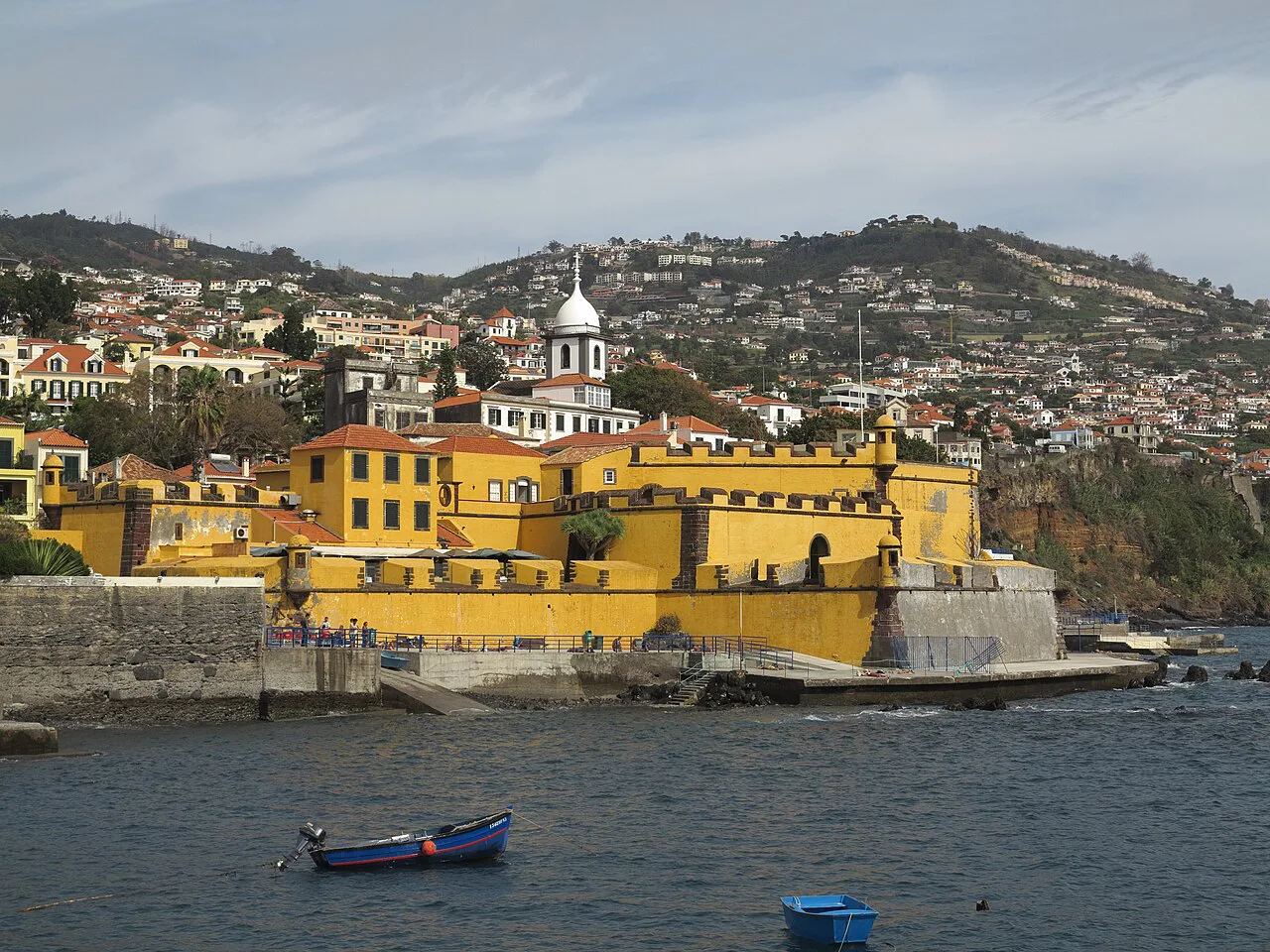
Forte de São Tiago is a short stop rather than a half-day sight: a low coastal fortress at the eastern edge of Funchal's old town, now a restaurant and cultural space, with the sea on three sides. Budget 20 to 40 minutes for the walls and setting, and longer only if you eat there. This guide covers where the fort sits, how to walk to it, what you see and how to fit it into an old-town morning.
The fort anchors the eastern end of the Zona Velha, Funchal's old town, so it works best as the last stop on a wander through the old streets rather than a separate outing. Its position at the water's edge means the approach is as much about the view back along the coast as the building itself.
What Forte de São Tiago is
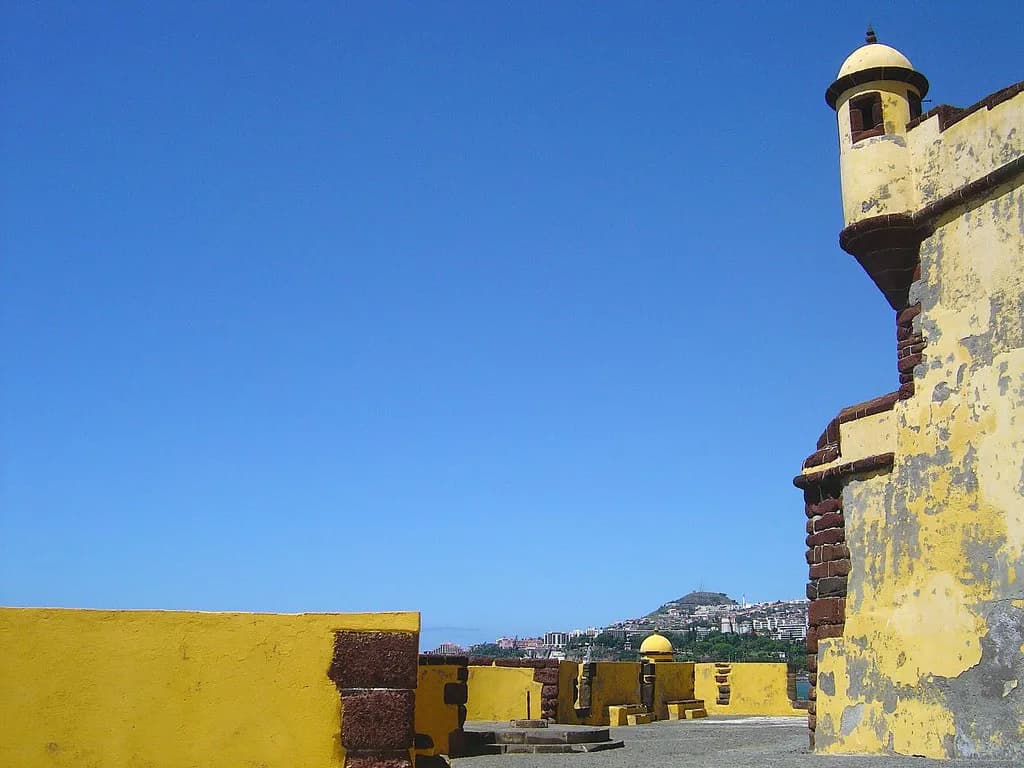
This is a former coastal defence fort, not a museum with a set route through it. The old fortress building at the edge of the old town now houses a restaurant and a cultural space, and the sea wraps around three of its sides. Expect weathered stone walls and a sea-level position rather than interpretive displays in every room.
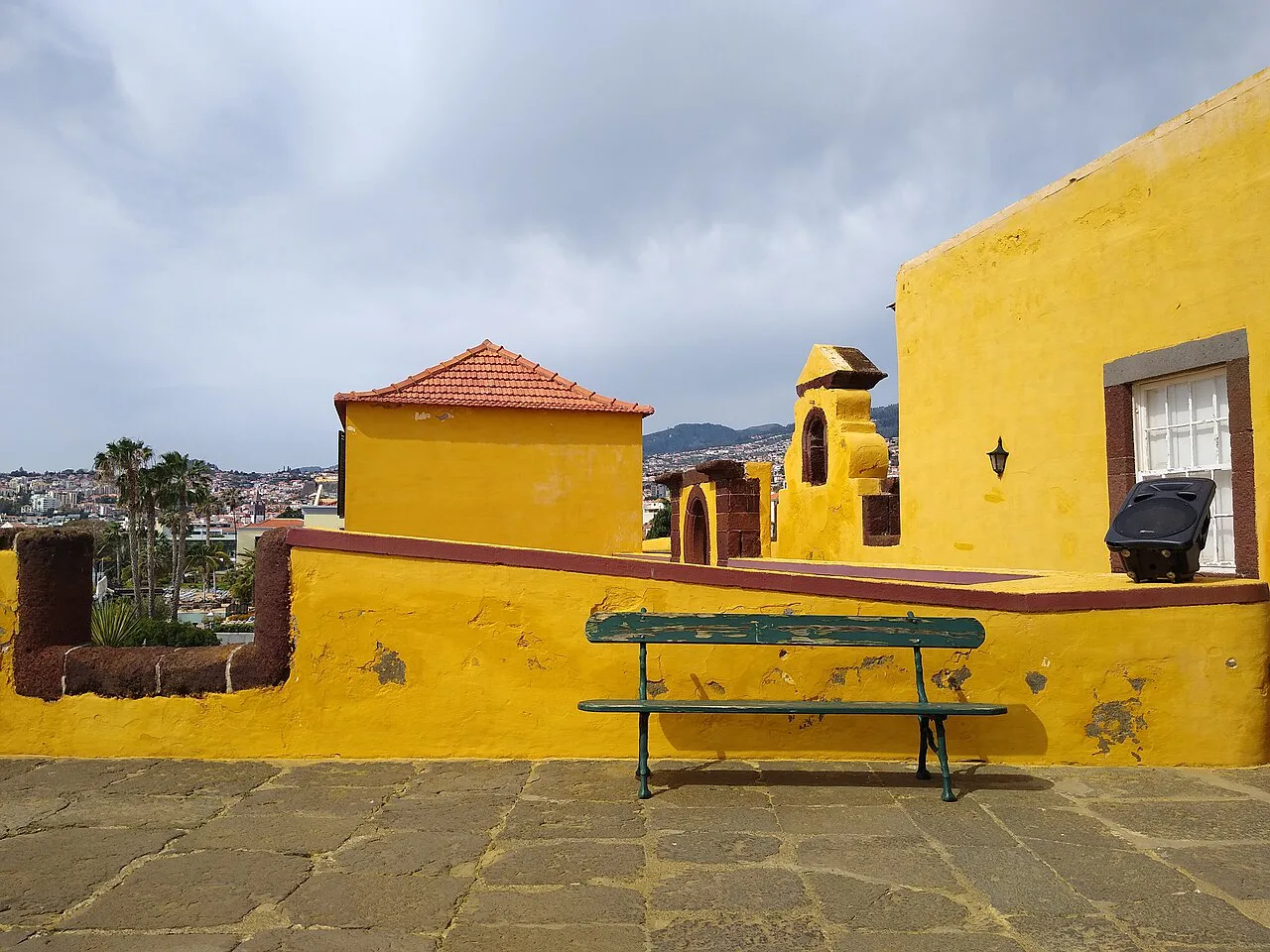
Because the building is in working use, the pleasure is mostly exterior: the bulk of the walls, the colouring against the blue water and the way the fort closes off the eastern end of the seafront.

Where it sits in Funchal
Forte de São Tiago stands on the old-town waterfront at the far eastern end of Rua de Santa Maria, the narrow lane of bars and restaurants that runs through the Zona Velha. If you start at the Mercado dos Lavradores end and walk east, the street delivers you almost to the fort's door.
The fort sits low by the water, with the paved promenade and the rocky shore in front and the wooded slopes of the city rising behind. It is on the eastern edge, so it is a 15- to 20-minute walk from the marina area and rather further from the western hotel zone.

Getting there on foot through the old town
Walking is the sensible way to arrive. From the Mercado dos Lavradores, head south to the seafront and then follow Rua de Santa Maria east; the fort appears where the street meets the water. Allow 15 to 25 minutes for the stroll, longer if you stop for coffee or to photograph the painted doors.
The old-town lanes are cobbled and narrow, with uneven surfaces underfoot, so wear shoes you can walk in. If mobility is a concern, the flat seafront route along the promenade is easier than threading through the interior streets.
Arriving by car or taxi
Treat the fort as a drop-off point, not a parking base. The old town's lanes are tight and pedestrian-heavy, and a taxi can set you down near the eastern end of the Zona Velha, leaving a couple of minutes on foot. Drivers should leave the car elsewhere in the city and walk in.
If you are combining the fort with the upper city, the cable car runs from near the marina up to Monte, so you can do the old town and fort on foot first and ride up afterwards rather than driving between the two.
What to see: walls, sea and setting
The main sights are the fortifications themselves: thick stone walls, a bastion jutting into the sea and the low, solid profile of a building designed to take a pounding from the Atlantic. Walk the outside perimeter slowly; the sea-facing side gives the clearest sense of why the site was chosen.
Inside, the fortress functions as a restaurant and cultural venue, so what you can see depends on what is open and on when events are running. Ask at the entrance what is accessible that day and plan on the exterior being the reliable part of the visit.
Eating at the fortress
The restaurant occupying the old building is the reason many people stay longer than ten minutes. Eating inside a fort with the sea directly outside is the draw, and the setting over the water is the point as much as the cooking. Booking ahead is wise for dinner in high season.
If you would rather keep the fort as a quick look and eat elsewhere, the surrounding Zona Velha has plenty of small restaurants and snack bars, and Madeiran cooking rewards ordering the local staples: espetada skewers, bolo do caco flatbread with garlic butter and grilled limpets. Portuguese dinner service generally starts around 19:00.
How much time to allow
For the walls, the exterior and a few photographs, 20 to 40 minutes is realistic. Add an hour or more if you sit down for a meal. On a two- or three-day Funchal break, the short version fits neatly at the end of an old-town morning.
The trade-off is straightforward: as a photo stop the fort is quick, but it will not fill an afternoon. For a longer old-town day, pair it with the market in the morning and a slow lunch on Rua de Santa Maria.
Combining it with the old town and market
A sensible sequence starts at the Mercado dos Lavradores, Funchal's main market, where the fruit and fish stalls are busiest in the morning. From there, drift south and east through the Zona Velha along Rua de Santa Maria, ending at the fort for the sea view.
For a fuller day, add the cable car from the marina up to Monte, where the Monte Palace Tropical Garden makes a strong pairing with the views back over the city.
Tickets, opening hours and access to the interior
Access to the interior varies with what is running in the restaurant and cultural space, so check at the entrance or with the venue before building a day around going inside.
The exterior walls and the waterfront approach are the dependable part of any visit and need no ticket. Come for the position and the architecture, and treat anything inside as a bonus.
Is the fortress worth it?
Yes, as a 20- to 40-minute stop tacked onto an old-town walk, and yes again if you want a meal with the sea on three sides. It is not worth a dedicated trip across the city on its own, and anyone expecting a museum-style tour of the ramparts will be disappointed. It is a good supporting sight rather than a headline one.
If you have only one day, the fort earns its place at the end of the Rua de Santa Maria wander, before you head up to Monte or back along the promenade. If you have three days, keep it as a relaxed lunch stop.
Fort or lunch stop?
Decide what you want from Forte de São Tiago before you set out. For the walls, the sea position and a few photographs, walk east through the old town, spend half an hour and carry on to the promenade. For a meal in the old building with the Atlantic outside, book a table and give it an evening instead.
Either way, it slots most naturally into a morning that starts at the market and follows Rua de Santa Maria east. Keep the rest of the day for the cable car and the gardens above the city, and the fort becomes a pleasant punctuation mark rather than a detour.
Explore more Funchal guides
Frequently Asked Questions
Is Forte de São Tiago free to visit?
The exterior walls and the waterfront approach can be seen without buying anything, and there is no single published ticket for a self-guided tour of the whole building. Because the fortress is used as a restaurant and cultural space, what is open inside varies. Ask at the entrance on the day if you want to go beyond the walls.
How long does it take to see the fortress?
Allow 20 to 40 minutes for the outside walls, the sea-facing position and a few photographs. If you stay for a meal in the restaurant, add an hour or more.
What is near Forte de São Tiago?
It sits at the eastern end of Rua de Santa Maria in the Zona Velha, so the old town's lanes, bars and restaurants are immediately behind you. The Mercado dos Lavradores is a short walk west, and the marina and cable car are further along the seafront.