Funchal Old Town: What to See on a Short Break
Plan a wander through Funchal old town: Rua de Santa Maria's painted doors, the Mercado dos Lavradores, Sé Cathedral and the cable car up to Monte.
On this page
Funchal old town is a half-day walk, not a day of queuing. The old town, known locally as the Zona Velha, sits east of the port and is small enough to cross on foot, with the painted doors of Rua de Santa Maria, the Mercado dos Lavradores and the Sé Cathedral all within a compact circuit. This guide sets out how the centre is laid out, which named sights to chain together, and where the walk turns into a full day if you add the cable car up to Monte.
Where the old town sits in Funchal
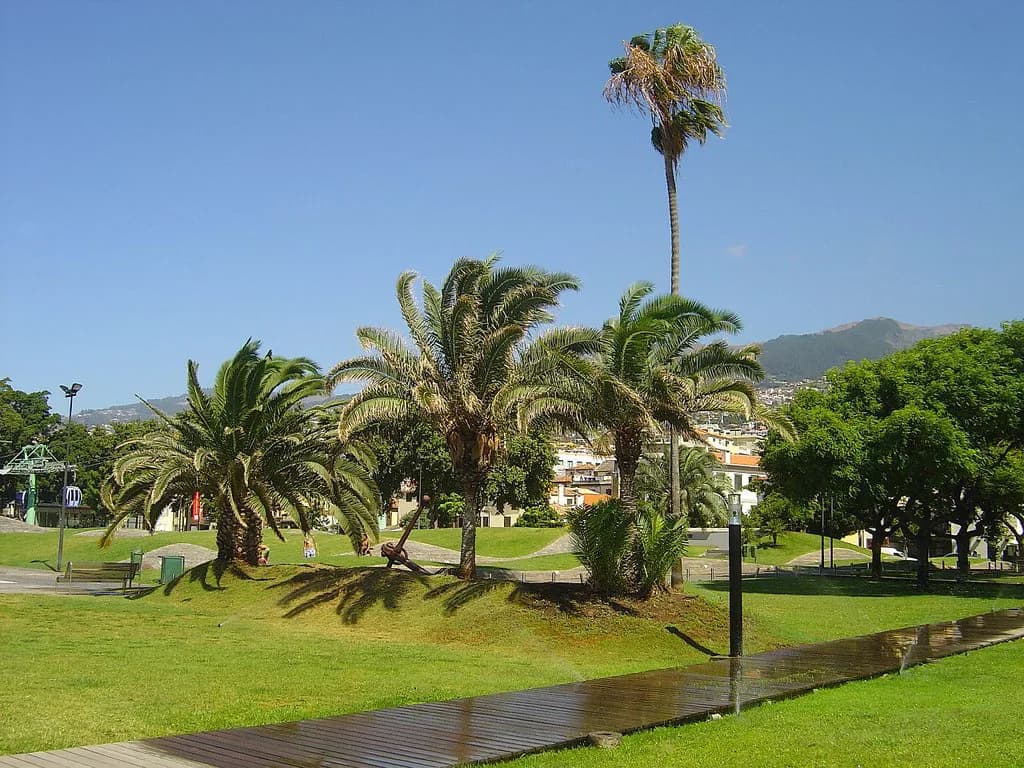
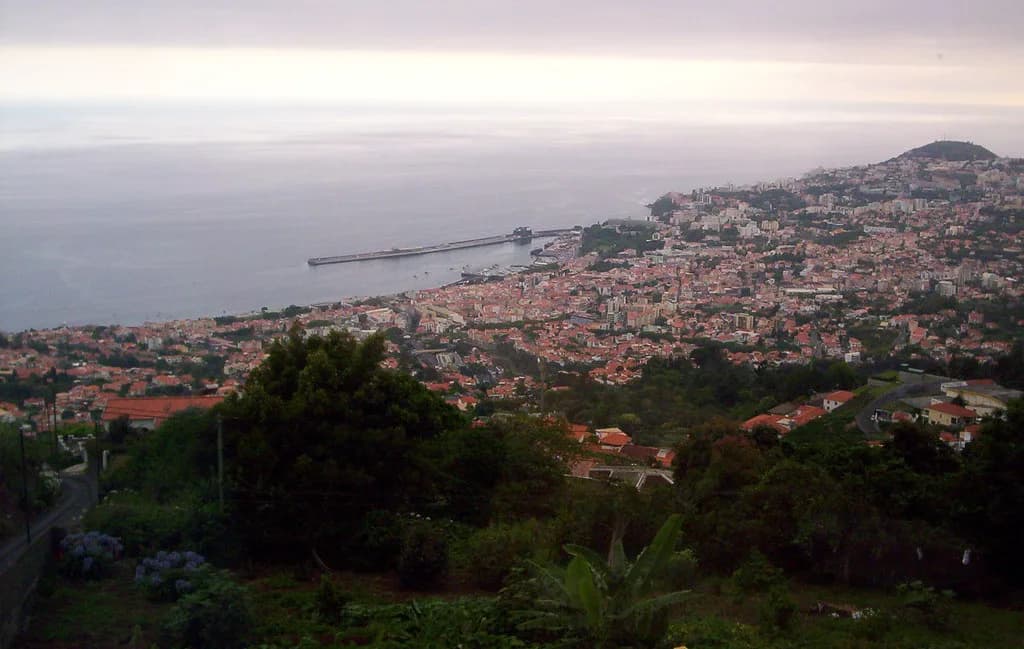
Funchal is the capital of Madeira, the Portuguese island in the Atlantic, and the old town occupies the eastern stretch of the seafront above the marina. The natural start is the cruise port and Praça do Mar, a public square along the Avenida de Sá Carneiro that was inaugurated on 7 October 2011 and runs from the port to the Funchal Marina. If you arrive by sea, you step off almost at the old town's edge; if you come from the west, the walk east along the front is the simplest way in.
Treat Praça do Mar as a gateway rather than a sight: it was designed as a gathering place and a gate into the centre, and it gives you a clean line to the marina before the streets narrow. From there the old town's market sits a short walk inland, with the Sé Cathedral beyond it. For a wider list of what the city holds beyond this district, keep the Things to Do in Funchal overview to hand.
How the old town is laid out
Think of the centre as two halves. The downtown core, west of the old town proper, holds the Jardim Municipal and the shopping streets; the old town itself, east around Rua de Santa Maria, holds the market, the Sé and the painted doors. That split matters because it stops you zigzagging: walk one half in the morning and the other on the way back, or save the downtown gardens for the end of the day.
The market sits in the heart of old-town Funchal, while the Jardim Municipal sits in the heart of downtown, so the two share no doorstep. A sensible route therefore starts at the port, takes in the old town's streets and market, then crosses into the centre for the gardens and shopping streets. If you would rather have the structure laid out step by step, a Funchal walking tour pairs neatly with this circuit.
Rua de Santa Maria and the painted doors
Rua de Santa Maria is the spine of the old town, and its main draw is the Arte de Portas Abertas programme, which turned the street into a permanent outdoor gallery by displaying more than 200 works by guest artists, painted on the doors of the houses along it. You walk it, you look, and you keep moving.
Because the doors are artworks in their own right rather than signage for shops, give the street a proper unhurried pass instead of racing through it on the way to the market. The same street sits at the centre of the Zona Velha, so a slow loop here, then inland to the Mercado dos Lavradores, keeps the walking logical. A free things to do in Funchal list is useful company if you want to balance the paid sights against the street-level ones.
Mercado dos Lavradores
The Mercado dos Lavradores, the farmers' market, was inaugurated in 1940 to give the island a central place to buy and sell local produce, and it remains the most concentrated burst of colour and noise in the centre. It is a building to walk through rather than a sight to study: stalls, aromas and the everyday business of a working market. If you want to build your morning around it, check the market's current opening days at the market itself first.
Put the market early in the walk if fresh produce and an unhurried wander are the point; a market rewards a morning visit more than a late-afternoon one. Food tours and self-guided food walks also start here, but the market repays a plain visit first. Read the Funchal market guide if you want to know which stalls and products to look for.
Sé Cathedral
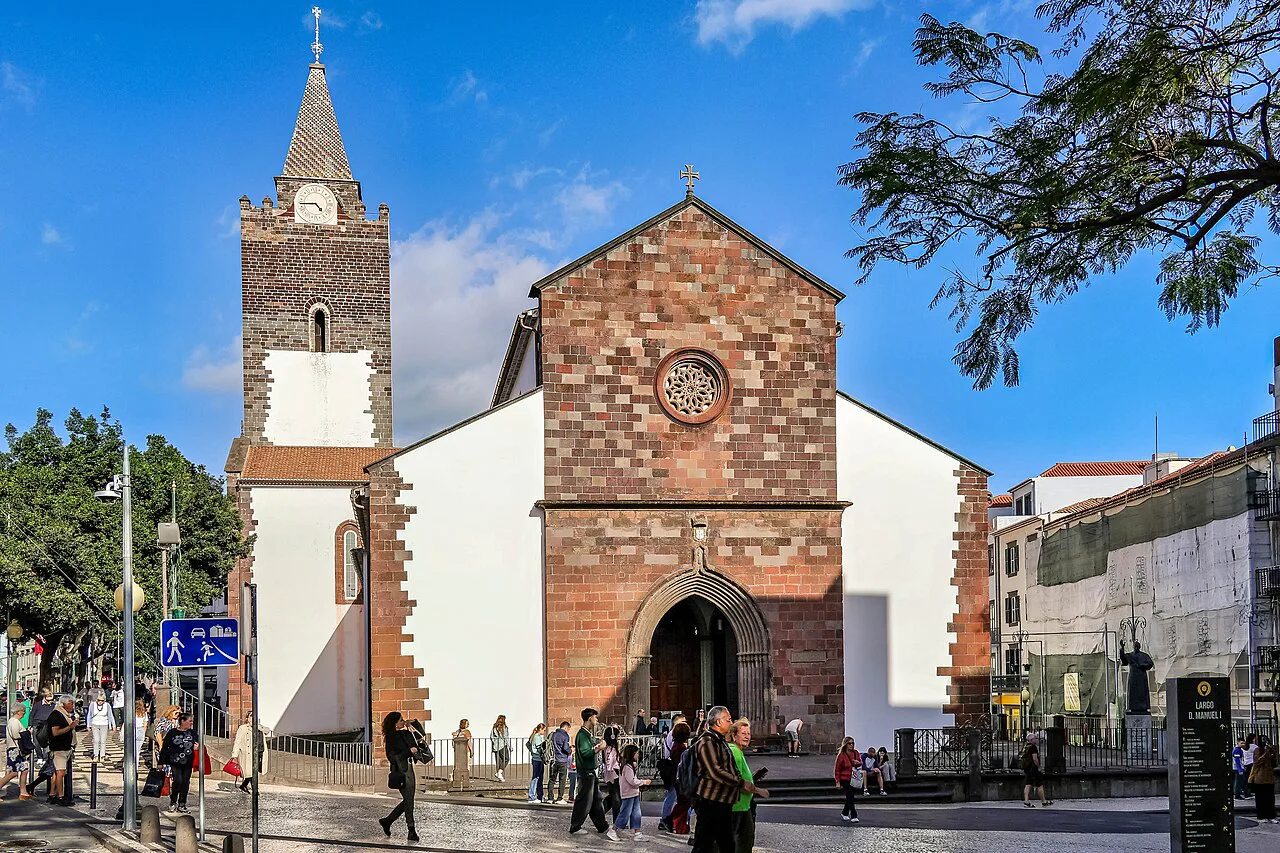
The Sé Cathedral, the city's cathedral, is the old town's anchor monument. Construction began in 1493 by order of King Manuel I on land he donated, was completed in 1514, and the building was consecrated in 1517, with the spire of the bell tower and finishing details wrapped up in 1517–1518. That sequence explains the fabric you see: an early Manueline church with later touches rather than a single clean date.
Visit it as part of the walking order rather than as a separate trip: it sits between the old-town streets and the downtown core, so it makes the natural hinge of the route. Check current visitor opening times at the door before you count on going inside; the exterior and the surrounding square need no appointment. For the wider story of the city around it, the Funchal history pages fill in the background.
Downtown core: gardens, theatre and the old department store
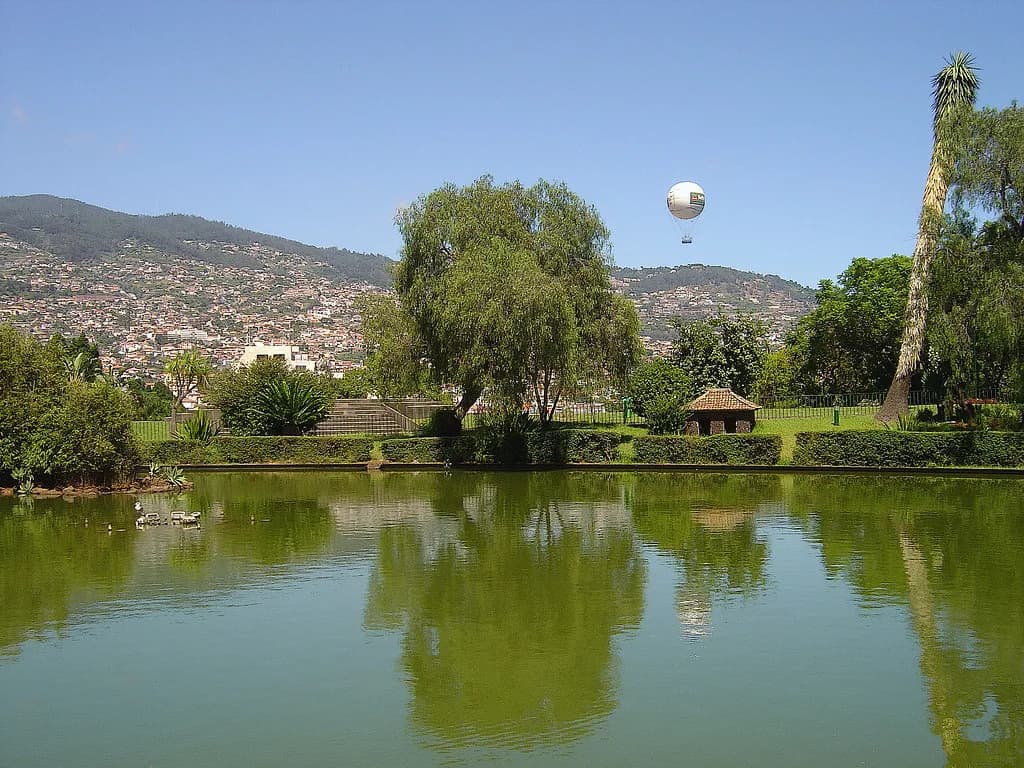
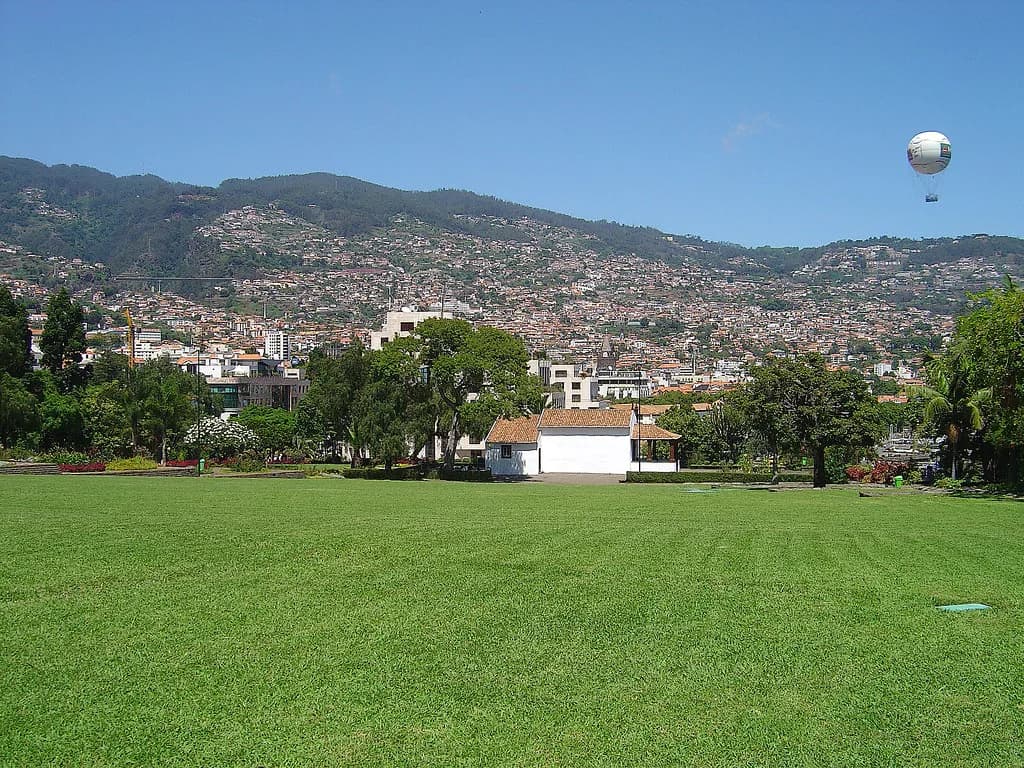
West of the old town, the Jardim Municipal, also called the Dona Amélia Garden after the late queen, sits in the heart of downtown Funchal and makes an easy pause between the market and the shopping streets. Nearby stands the Teatro Baltazar Dias, a neoclassical theatre built in the late nineteenth century by the architect Tomás Augusto Soler. Both are quick stops that reward a few minutes rather than an hour.
The Bazar do Povo is the third piece of the downtown trio: an emblematic department store built decades ago in the heart of the centre and left virtually untouched, so its original exterior still stands. Step inside for the atmosphere of an old-fashioned shop rather than for a particular purchase. If retail is a priority, the shopping in Funchal guide sets out the wider picture beyond this one street.
Rua Dr. Fernão Ornelas and the shopping streets
Rua Dr. Fernão Ornelas is one of Funchal's main shopping streets, lined with shops selling most of what a visitor might be looking for, and it has had a colourful facelift intended to revive the street's liveliness. Walk it as a link between the downtown gardens and the old town rather than as a destination in itself: the value is in the street life and the shopfronts, not a single sight.
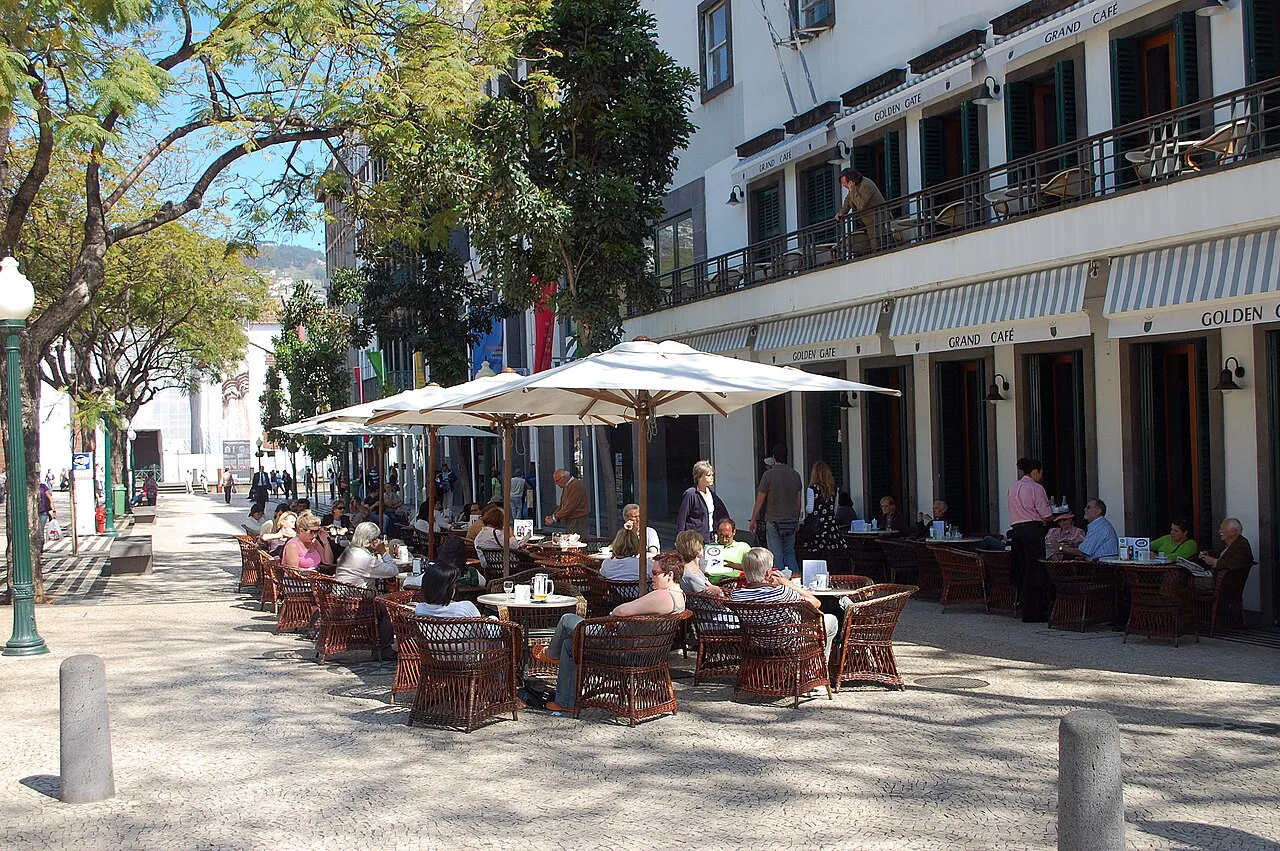
Two downtown addresses are useful resting points on this stretch. The Golden Gate Café, in the historic centre, is a nineteenth-century-inspired café and restaurant that draws both locals and visitors, and the Madeira Wine Museum, the Núcleo Museológico da Madeira, occupies one of the oldest wine cellars in Funchal and covers the tradition and history of Madeira wine. Both are worth treating as stops on the way past.
Madeira Story Centre
The Madeira Story Centre occupies a former cinema in old-town Funchal and takes the opposite approach to a hushed museum: it is interactive, built around looking, touching and hearing, and it sets out the story of the Madeira archipelago. It is the obvious indoor option when the weather turns or when you want context for the streets you have just walked.
Check opening days and ticket price at the desk or on the centre's own page before you go, and do not build a tight schedule around an assumed time. If the weather is the reason you are indoors, the Funchal on a Rainy Day guide gives you alternatives to weigh against it.
A half-day walking route
Start at the cruise port and Praça do Mar, walk east along the front, then turn inland into the old town and take Rua de Santa Maria slowly for the painted doors. From the street's eastern end, work back to the Mercado dos Lavradores, then to the Sé Cathedral, and only then cross into the downtown core for the Jardim Municipal, the Teatro Baltazar Dias and the Bazar do Povo. Finish along Rua Dr. Fernão Ornelas or with a coffee at the Golden Gate Café.
That order avoids backtracking because it moves from the waterfront to the old town, then west into the centre, with the cathedral as the hinge. It also puts the market at the point in the morning when it is most alive, and leaves the gardens for the part of the day when sitting down is welcome. If you want the same ground covered with commentary, a free walking tour of the centre is a reasonable trade-off for the self-guided version.
Finishing at the Monte cable car
The Monte cable car runs from the lower town up to Monte, and the downtown Funchal walk suggests it as the continuation once you have covered the centre. Treat it as a separate extension rather than part of the old town: the ride takes you out of the streets entirely and up to a different part of Funchal. Check fares and running times at the ticket office before you commit the afternoon.
The trade-off is time. If you have one day in Funchal, the old town plus the downtown core already fills a comfortable half day, and adding Monte turns the day into a longer, more spread-out outing with less time in the streets. One traveller's TripAdvisor note on Funchal describes the island as quiet and well suited to chilled-out holidays with a lot of walking — that fits this kind of day rather than a packed one.
How much time the old town needs
For the painted doors, the market, the Sé and the downtown gardens, allow half a day at an unhurried pace; that is the honest budget for the named sights in this guide. Push to a full day only if you add the Madeira Story Centre properly, spend time in the market, and take the cable car up to Monte. If you have a single day, skip the shopping streets first, since Rua Dr. Fernão Ornelas and the Bazar do Povo are pleasant links rather than headline sights.
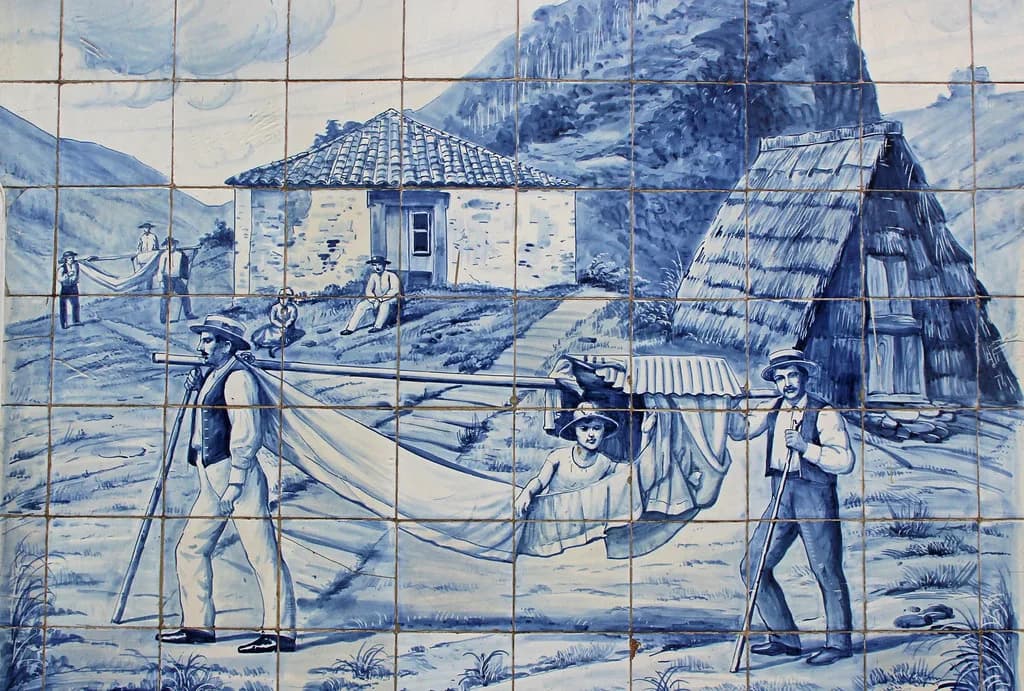
The other useful filter is indoor versus outdoor. The Story Centre and the wine museum give you rain cover; the painted doors, the market and the gardens want dry weather. If you collect tiles and glazed façades, the azulejos in Funchal pages will tell you where to look beyond the old town's streets, though the doors of Rua de Santa Maria are paint rather than tile.
Old town, or up to Monte?
Choose the old town circuit if you have half a day or less: painted doors, the market, the Sé and the downtown gardens fit together on foot without a single booking. Choose the version with Monte only if you have a full day and are happy to trade street time for the cable car and a different view of the city. Either way, start at the port end and let the streets carry you west.
Explore more Funchal guides
Frequently Asked Questions
Which country is Funchal in?
Funchal is the capital of Madeira, a Portuguese island in the Atlantic, so it is in Portugal. The old town sits on the eastern side of the city centre, within walking distance of the cruise port and the marina.
What day is market day in Funchal?
The Mercado dos Lavradores is a permanent market building rather than a once-a-week street market, so it does not have a single market day. Confirm its current opening days and hours with the market before you plan a morning around it, since those change.
Can you pay by card on the Funchal buses?
Bus fares, payment methods and timetables are not covered by this guide, and they change. Check the operator's own information or the ticket machine before you board rather than assuming cash or card will work.
How long does the old town walk take?
Allow half a day for the painted doors, the market, the Sé Cathedral and the downtown gardens at an unhurried pace. Add the Madeira Story Centre and the Monte cable car and you should plan for a full day.
Sources
Notes for your next Portuguese break
Optional updates to our town guides.
You might also like
Continue reading
More guides you'll find useful