Funchal Cathedral (Sé): What to See Inside the Sé Catedral
Funchal Cathedral, the Sé Catedral, is the city's Gothic and Manueline church on Praça do Município. Here is what to see inside and how long it takes.
On this page
Funchal Cathedral, the Sé Catedral, deserves 30 to 45 minutes of a short Funchal break: long enough to sit under the carved ceiling and look properly at the gilded altars, short enough to fit between the market and the old town. It stands on Praça do Município in the old centre, a short walk from the marina, so you pass it without planning a trip around it.
This guide covers what the Sé looks like from the square, what is worth your attention inside, how to slot it into a one- to four-day visit, and which other churches and streets to pair with it on the same walk.
Where Funchal Cathedral is and how to reach it
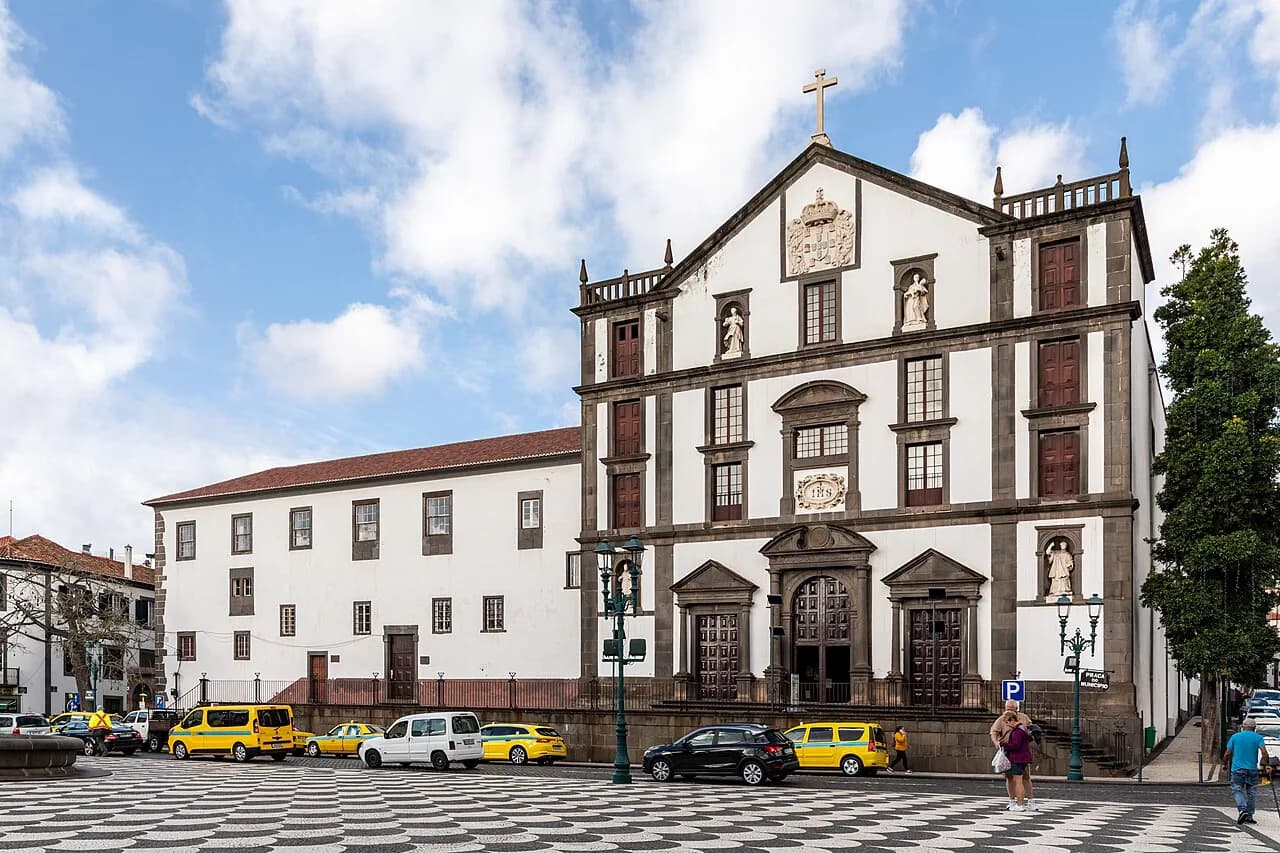
The Sé sits on Praça do Município, in the flat lower part of the centre, within easy walking distance of the seafront and the marina. Coming from the harbour, you climb a street or two inland and the square opens up in front of you, with the church façade closing one side. Because it is on the level rather than up the hillside, it works well as the first stop of a morning before your legs get tired.
Anyone staying in or near the Funchal old town can treat the cathedral as a landmark on the way to somewhere else rather than a separate outing. It also makes a natural anchor for a Funchal walking tour of the centre, since the surrounding streets lead on to the market and the painted doors of the Zona Velha, the old quarter.
Inside the Sé: the Mudéjar ceiling and gilded altars
The interior is the reason to go in. The Sé is known for its Mudéjar ceiling and rich interior, with intricate woodwork and gilded altars that reward a slow look rather than a snapshot from the door. Travellers who have walked in describe the façade as striking and the inside as full of carved character, with the gilding doing most of the work.
Give the nave and side chapels ten or fifteen minutes on their own. Look up first, then work along the altars at eye level, where the gilding and carving carry the detail. Keep your voice down and dress as you would for any working church, since this is a place of worship rather than a museum room.
If church interiors and tilework are what you came for, the other churches and chapels Funchal holds will keep you busy for an afternoon, and the Sé is a good first lesson in what to look for.
Gothic and Manueline outside
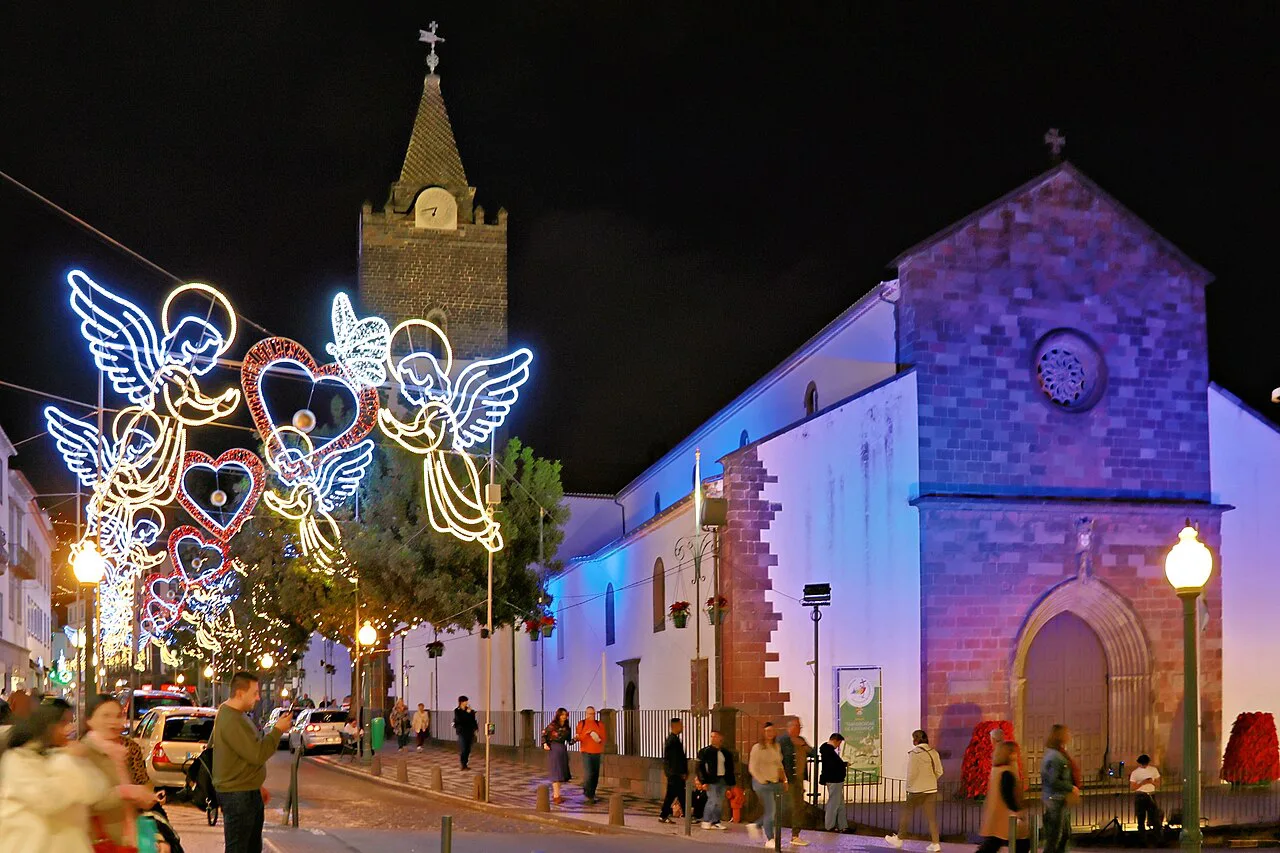
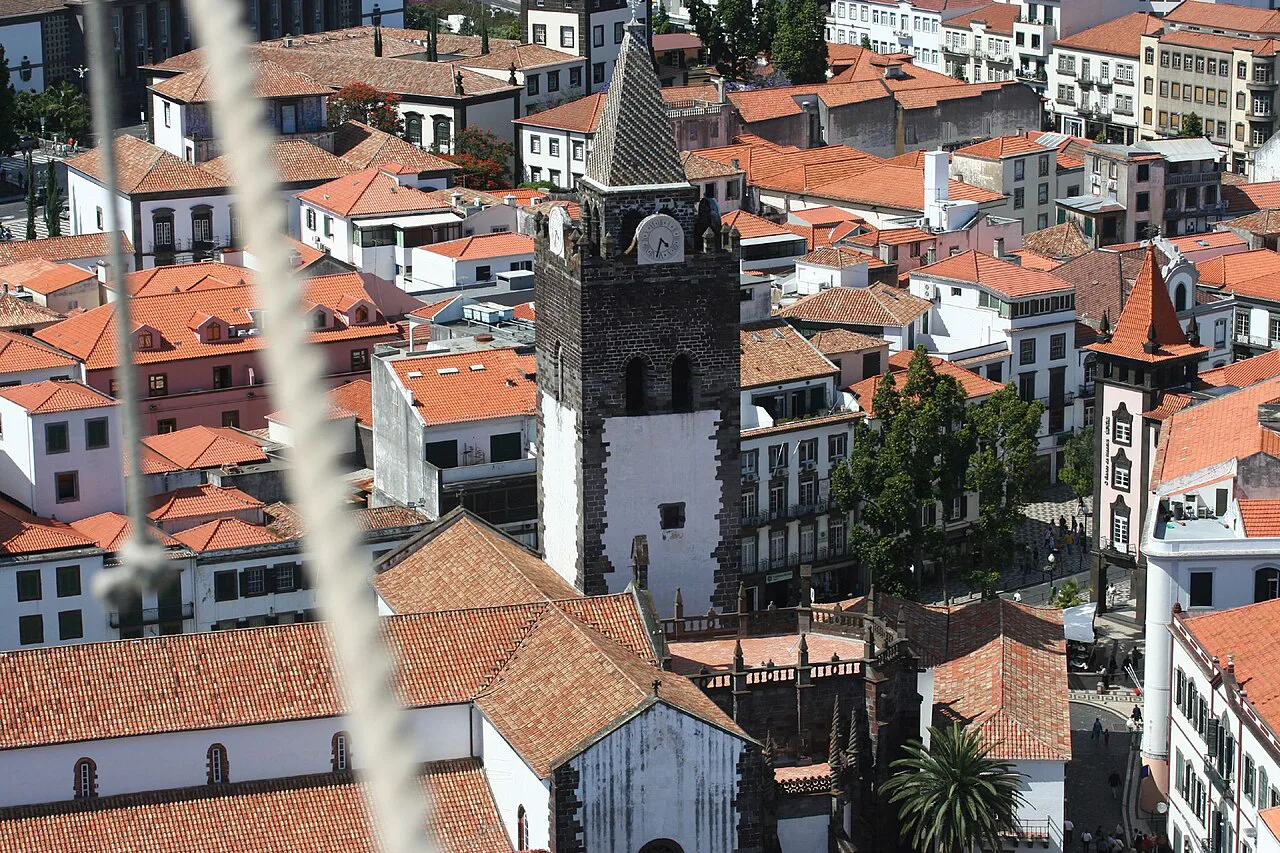
Approaching from the square, the façade reads as a sober blend of Gothic and Manueline architecture, the Portuguese late-Gothic style named after King Manuel I and marked by carved stonework. It is a beautiful example of the two styles meeting, and the tower gives the square its vertical marker.
Walk a full circuit of the exterior before going in. The stonework is easier to read in the morning light from the square side, and you will spot details at ground level that most people miss while heading straight for the door.
How long to allow and where it fits in a short break
Budget half an hour if you are short of time and up to three quarters of an hour if the interior holds you. On a one-day visit, put the Sé early, then continue to the Funchal market and the old town streets while the centre is still quiet. On a longer break, treat it as a ten-minute pause on a wander rather than a scheduled sight.
The surrounding centre has enough to fill the rest of the day without a car, which is why the cathedral works best as part of a loop rather than a destination in itself. For a wider shortlist of what to see while you are in the city, the Funchal Attractions: 9 Visitor Guides collection sets out the options by area.
Visiting around services
The Sé is an active parish church, so visiting is arranged around services rather than around a fixed sightseeing timetable. Step in quietly, stay behind any cordoned area, and be ready to leave if a service is starting. The interior is not somewhere to shelter from rain with a coffee or to talk through your plan for the afternoon.
Opening arrangements for the interior change with the liturgical calendar, and the cathedral does not publish a visitor timetable that can be relied on from a distance. Check current details on the door or with the parish before making a special trip, and treat the façade and square as the part you can always see.
Entry and what it costs
No fixed admission charge is cited for the Sé, so treat it as a working church you step into rather than a ticketed monument. If a charge matters to your budget, confirm it at the door on the day rather than assuming a figure, and carry a little cash in euros in case there is a donation box at the entrance.
Other churches in Funchal to add nearby
A short walk from the Sé, the Igreja de São João Evangelista do Colégio is the other interior that rewards a detour, with a lavish gilded nave that makes an instructive contrast with the cathedral's timber ceiling. Pair the two in one morning and you have seen the range of Funchal church decoration without leaving the centre.
If your interest is the city's religious buildings more broadly, the museums in Funchal include former convent and charitable foundations with their own chapels, which are easier to visit in unsettled weather.
For the story of how the cathedral fits into the city's growth from a harbour settlement, the Funchal history pages give the background the building itself cannot.
Pairing the Sé with the market and Rua de Santa Maria
From Praça do Município it is a short walk north-east to the Mercado dos Lavradores, the covered market where the fish and flower halls give you a very different slice of the city. Go early, before the tour groups arrive, then loop back through the old town.
Finish on Rua de Santa Maria, the narrow lane whose doors are painted and signed by artists, which is the liveliest free sight in the centre. The walk from the cathedral square to the market and on to this street makes a natural half-day with the Sé in the middle of it.
Two practical notes for the centre: the streets near the Sé are calçada, the Portuguese cobble, so wear shoes with grip, and individual Madeiran restaurants may be closed on their own chosen day, so a place you had picked out could be shut when you pass.
Two practical notes for the centre: the streets near the Sé are calçada, the Portuguese cobble, so wear shoes with grip, and Madeiran restaurants keep their own closing days rather than a city-wide rota, so a place you had picked out may be shut when you pass.
Is the Sé worth a stop on your Funchal itinerary?
Yes, as a half-hour stop rather than a headline sight. The cathedral earns its place through the Mudéjar ceiling and gilded altars inside, and through its position on the flat between the marina, the market and the old town.
Build your morning around that triangle: the Sé first, the market next, then the painted doors, and you will have used the centre well without paying for a single ticket. Check the interior opening before you go, and do not plan the day around a set admission price.
Explore more Funchal guides
Frequently Asked Questions
What is there to see inside Funchal Cathedral?
The interior is the reason to go in: the Sé is known for its Mudéjar ceiling and a rich interior with intricate woodwork and gilded altars. Give the nave and side chapels ten to fifteen minutes of slow looking rather than a snapshot from the door.
How long should I spend at Funchal Cathedral on a short break?
Allow 30 to 45 minutes in total: a circuit of the Gothic and Manueline exterior from the square, then the ceiling and altars inside. It sits on the flat of the old centre between the marina, the market and the old town, so it fits easily as a stop on a morning loop.
Where is Funchal Cathedral?
The Sé Catedral stands on Praça do Município in the flat lower part of Funchal's centre, a short walk inland from the marina and close to the market and the old town.
Sources
Notes for your next Portuguese break
Optional updates to our town guides.
You might also like
Continue reading
More guides you'll find useful