Best Restaurants in Funchal: Where to Eat and What to Order
A candid guide to Funchal restaurants, from tascas serving limpets and espetada to seafood rooms and wine bars, plus what to order and how meal timing works.
On this page
Funchal rewards eating by dish rather than by list: decide whether you want espetada, grilled limpets, espada or a slow seafood lunch, then pick the room that does it well. This guide groups the city's restaurants, tascas and wine bars that way, adds a short hop to Câmara de Lobos for skewered beef, and covers meal timings, service and tipping.
Madeiran cooking leans hard on the Atlantic, with African and Mediterranean threads running through it, so fish, cornmeal, sweet potato bread and beef cooked over coals turn up again and again. Expect lunches to run long and dinners to start around seven in the evening rather than at six.
Funchal restaurants at a glance: the dishes to order and the places known for them
The dishes worth building a Funchal trip around are espetada (beef cubes grilled on a long skewer and served hanging from a hook), bolo do caco (a flat sweet-potato bread spread with garlic butter), prego especial (a steak sandwich built on that bread), grilled limpets, espada (black scabbard fish) and octopus. Each has a handful of places associated with it, and the rest of this guide works through them one by one.
Order a couple of small plates first, then one main between two if you are not especially hungry, because portions of grilled fish and skewered meat are generous and the bread is filling. Bolo do caco usually arrives before you have asked for it, so treat it as part of the meal rather than a free extra.
Espetada: where to eat Madeira's skewered beef, and how it is served
Espetada is believed to have originated in Câmara de Lobos, where beef is cut into large cubes, seasoned with salt, pepper, garlic and bay leaf, speared and grilled over coals before being hung from a hook at the table. Some kitchens now skewer chicken, squid, prawns or fish the same way, but beef is the traditional version.
In Funchal, Infinito Wine Bar serves espetada without a printed menu, showing the meat and fish available and talking you through the choice, while Restaurante Santo Antonio in Câmara de Lobos specialises in it and is regularly ranked among the island's best.
The Câmara de Lobos specialist Santo Antonio also appears on local restaurant lists under its Estreito de Câmara de Lobos address, where the surrounding parish is known for skewer houses. If you want the full production, the short hop west of Funchal is the place to do it; for the drink that goes with it, see our guide to poncha.
Further west, Restaurant O Lagar sits up a fairly steep hill above Câmara de Lobos rather than in the bay, so it is walkable for many visitors but a taxi makes sense if mobility is limited. The kitchen turns out traditional Madeiran plates including chicken and beef skewers, the chicken working well with a spicy piri-piri sauce, and dinner can come with folk dancing in costume.

Bolo do Caco and prego especial: the cheap eats that anchor a Funchal lunch
Bolo do caco started as a workaround for scarce wheat, with bakers adding sweet potato to the dough, which gives the round loaf its dense, chewy crumb. It is traditionally baked on a hot stone over embers, though a cast-iron pan on the hob is common now, and it is cut lengthways, spread with garlic butter, sprinkled with parsley and toasted.
Two Funchal addresses are regularly named for the bread: Casa do Bolo do Caco and Bolo do Caco, Gelados. The first, on Rua Dr. Fernão de Ornelas, is also a strong pick for a prego especial, the steak sandwich layered with garlic butter, thin-sliced steak, lettuce, tomato, cheese, ham and bacon, with a fried egg if you want it.
For a more local version, Bela 5 Snack Bar turns out prego especial in a small, hot, often crowded room, and every bite justifies the squeeze. These are the places to keep in your back pocket for a late lunch when a full sit-down meal would eat into the afternoon.
If you want a proper sit-down breakfast or a bakery stop rather than a sandwich, plan it separately: Madeirans eat breakfast lightly, usually between six and nine in the morning, and late brunch is not the local habit.
Grilled limpets and espada: the seafood to seek out, and where
Limpets, called lapas, are a Madeiran speciality: cone-shelled molluscs seasoned with butter, garlic, lemon and paprika, served hot in their shells and usually eaten with bread. They are an appetiser or a mid-afternoon snack with a glass of wine rather than a main course.
Tas'ca Principal, a garden-and-alley setup, is one of the better Funchal addresses for local flavours, and the limpets are a good place to start. Restaurante Taberna Ruel on Rua de Santa Maria is another typical Madeiran restaurant rated for its grilled limpets, and it is also a useful marker for the old-town eating strip.
Espada, the black scabbard fish, is ugly enough to be memorable and is the fish most associated with the island. For the wider picture of Madeiran dishes, including how espada is served, see our Madeira food guide.
Octopus, tuna and fish stews: the seafood restaurants worth booking
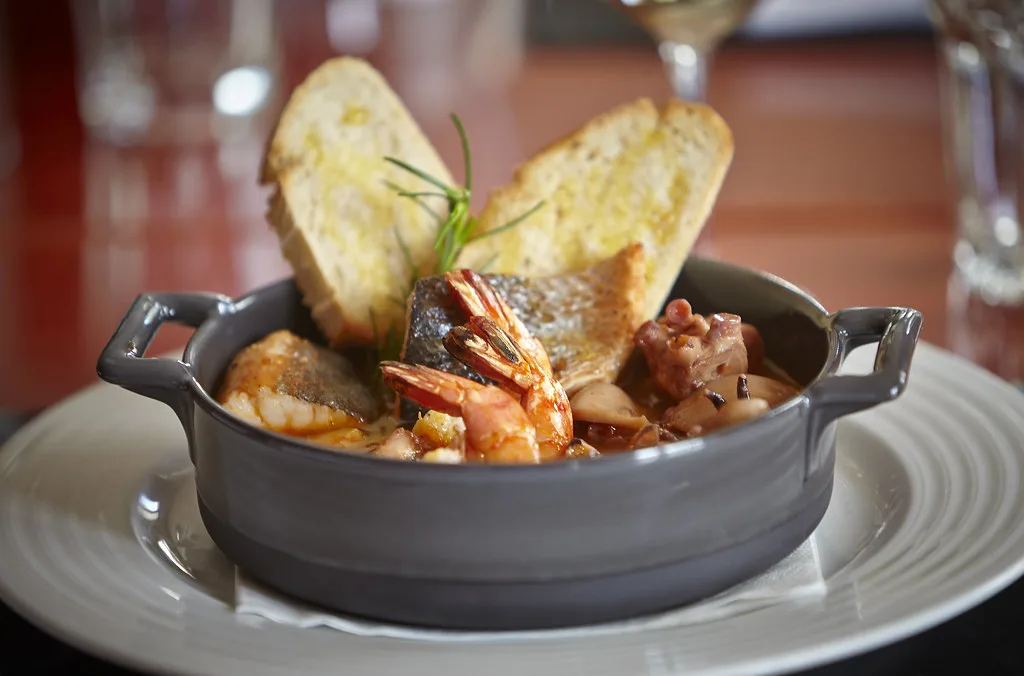
Octopus and tuna are the two dishes most likely to convert a sceptic. A lot of tuna in Madeira is cooked through rather than left pink, which appears to be a deliberate local preference, so ask how the kitchen serves it before ordering if you like yours rare.
Outside Funchal, the octopus rice at Restaurant & Grill Muralha Terrace in Ribeira Brava arrives in a cauldron alongside grilled octopus and goes well with a Portuguese white. In Calheta, Essência do Atlântico serves a tuna steak with peppers in a paprika-heavy sauce, on a terrace that mixes sun and shade.
At Porto Moniz on the north-west tip, Sea View Restaurante serves seafood with the waves breaking outside the window, and a fish soup is a good-value way in. A Pipa at Porto da Cruz, a wooden chalet of a snack bar, turns out grilled bacalhau in butter with new potatoes, though its fragateira fish stew needs 24 hours' notice if you want it.
Inside the city, Barra Azul, Lareira Portuguesa and Marisqueira, Sete Mares (which has a Funchal branch alongside its Câmara de Lobos one) and Lá ao Fundo all appear on local recommendations for seafood and Madeiran cooking. Treat them as shortlist candidates and match them to whichever dish you actually want that day.
Madeira wine and wine bars: drinking with a meal in Funchal
Madeira wine is the obvious thing to try, though a glass of Portuguese white does just as well with grilled fish and octopus. Infinito in Funchal blurs the line between wine bar and restaurant, which is useful when you want a plate of meat or fish without a formal menu.
Poncha, the citrusy rum drink, belongs to Câmara de Lobos rather than Funchal, so make it part of a skewer run to the west of the city rather than a city-centre plan; our poncha guide has the detail.
Old town and Rua de Santa Maria: what kind of eating you find there
Rua de Santa Maria is the old town's eating spine, and Restaurante Taberna Ruel is the address there that the local guides rate for grilled limpets. The surrounding lanes reward wandering rather than booking: menus are displayed outside, so you can see whether a kitchen is doing fish or skewers before you commit.
The old town is also where the city's snack culture concentrates, with prego especial and bolo do caco competing with full plates for your appetite. If you are eating here at lunchtime, go earlier than you think: the local lunch window runs from about half past twelve to three, and kitchens slow right down after it.
Câmara de Lobos and Estreito de Câmara de Lobos: the short hop for espetada
The short run west to Câmara de Lobos is the best reason to leave Funchal for dinner, with three reasons to go: the espetada heritage, the poncha, and the hillside restaurants. O Lagar sits above the bay rather than in it, so the climb is part of the evening.
Further inland, Estreito de Câmara de Lobos is where Santo Antonio runs its skewer operation, while the Câmara de Lobos branch of Sete Mares gives you a seafood option on the same excursion. Sort out your journey back before the last course, since the roads up and down are not pleasant to walk after dark.
When Funchal eats: breakfast, lunch and dinner timings, and how service works
Breakfast is a light meal taken between six and nine in the morning, and brunch is not really a thing. Lunch, the biggest meal of the day, runs from about half past twelve until three at a leisurely pace, while dinner starts around seven and most restaurants do not open their doors until then.
Service is slower and less attentive than British or American diners expect, not because it is bad, but because meals are meant to be taken slowly: nobody will bring the bill until you ask for it. That is the single most useful thing to know before you sit down at a Funchal restaurant. If the bread-and-sandwich end is more your budget, see our Funchal Food guide.
Tipping in Funchal restaurants: what is expected
Tipping is not included, and there is no set percentage, but a tip is common and appreciated when the food is good and the service friendly. Staff wages in Portuguese restaurants are among the lowest in the country, and tips matter to them.
A round-up on a card machine works fine, but leaving it in cash lets the staff who looked after you keep it more directly. If you are a group, agree on the tip before the bill arrives rather than dividing it under pressure at the table.
How much a meal in Funchal costs: what to check before you book
Funchal covers a wide range of prices, from snack-bar sandwiches to several-course seafood lunches, and the sources consulted for this guide do not give consistent figures for individual restaurants. Rather than rely on a number that may already be out of date, look for the menu outside the door or ask for it before you sit down.
Two things drive the bill more than the venue: whether you drink wine or beer with the meal, and whether you order fish by the kilo. Ask the price per kilo before ordering, since a whole fish can easily become the most expensive item on the table.
If you are budgeting for a short break, plan for one proper seafood lunch and one snack-bar meal per day, then decide where the budget goes. Our Seafood Restaurants in Funchal guide covers the fish end of the spectrum and our cheap eats guide the bread, sandwich and tasca end.
Which restaurant should you book first?
Book your seafood meal for the day you arrive and keep the old town for a lunch of bolo do caco, prego especial or limpets rather than a full evening. Save one evening for the run west to Câmara de Lobos and its espetada houses, which is the one meal in the Funchal area worth leaving the city for.
If you are continuing to other Portuguese cities, compare notes with our Aveiro restaurants guide and our pick of the best restaurants in Cascais, since the tasca and seafood cultures are close cousins.
Explore more Funchal guides
Frequently Asked Questions
Where can I eat in Funchal if I want a sit-down seafood meal rather than a snack?
Barra Azul, Lareira Portuguesa and Marisqueira, Sete Mares and Lá ao Fundo are all shortlisted locally for seafood and Madeiran cooking, and Taberna Ruel on Rua de Santa Maria is rated for its grilled limpets. Match the venue to the dish you actually want, and ask to see the menu before you sit down.
Do I need to book ahead for fish stew in Madeira?
The fragateira fish stew at A Pipa in Porto da Cruz needs 24 hours' notice, according to a food writer who ate there. If you have other slow-cooked fish stews on your list, telephone the restaurant the day before to ask rather than assuming.
What should I order at a Funchal restaurant on a first visit?
Start with bolo do caco and grilled limpets, then choose between espetada, espada and octopus for the main. The bread and limpets give you a feel for Madeiran cooking without committing to a large plate, and you can order a second main if you are still hungry.
Is it normal to wait a long time for the bill in Funchal?
Yes. Local service is slower and less attentive than UK or US diners may expect, and the bill is not brought until you ask for it. Ask when you are ready and you will not be waiting an hour.
Sources
Notes for your next Portuguese break
Optional updates to our town guides.
You might also like
Continue reading
More guides you'll find useful