
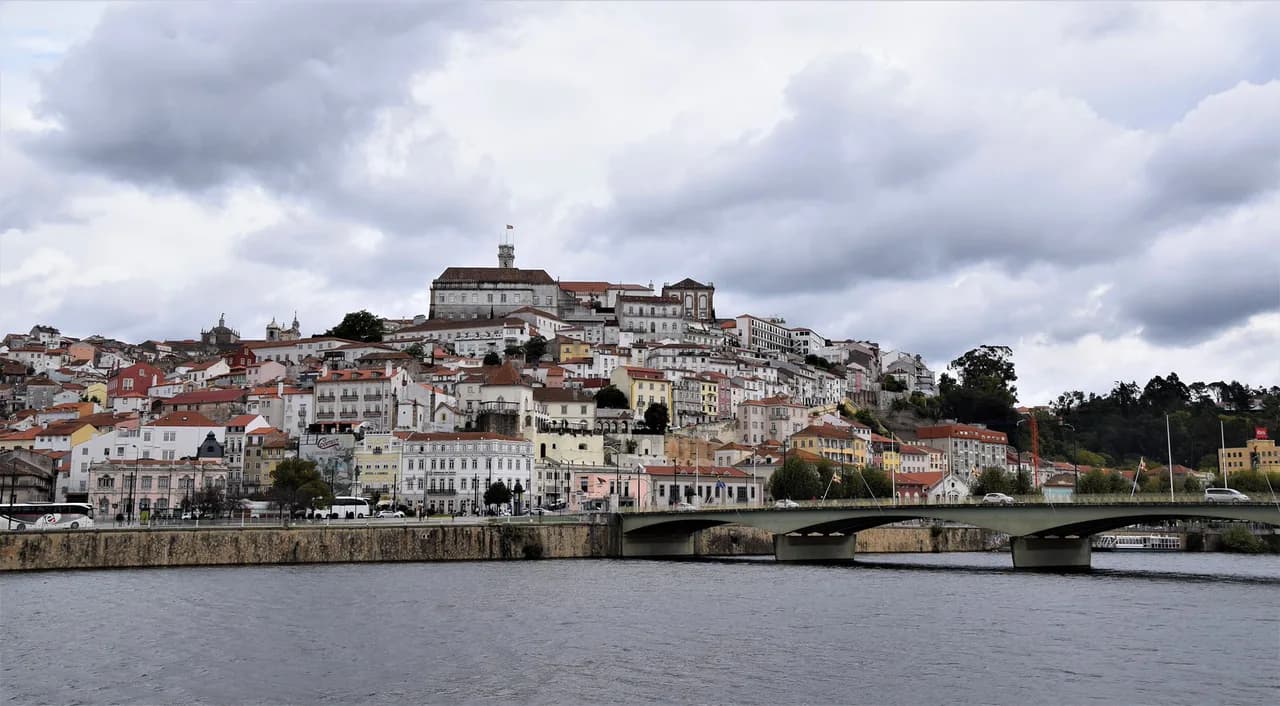
Alta Coimbra: the old town on the hill
Alta Coimbra is the upper town on the hill, the historic quarter gathered around the Universidade de Coimbra and rising above the Baixa by the Mondego. It is the side of Coimbra to choose if you want to walk out of your door onto calçada lanes and reach monuments on foot. This guide stays within the district: its character, its sights, where to eat up high and how to weigh staying in the Alta against staying below.
The trade-off is simple. The Alta gives you views, old walls and the university on your doorstep, but almost everything involves a gradient. Anyone wanting flat ground, step-free routes or an early, quiet night should look at the lower town instead.
What Alta Coimbra is, and where it sits
Think of Coimbra as two layers. The Baixa is the lower town by the river, level and easier to cross; the Alta is the upper town, climbed from the Baixa and wrapped around the university. The two are minutes apart on foot but feel like different places: the Baixa is broad and commercial, the Alta narrow, stone-built and steep.
For orientation across the city's districts, from the Alta and Baixa to the far bank, the wider set of Coimbra Neighbourhoods guides shows how the quarters fit together. Santa Clara Coimbra, on the opposite bank, is reached by crossing the Mondego and is a separate base with its own character.

Who the Alta suits, and who it does not
The Alta suits travellers who plan their short break around walking: people happy to climb between sights, eat up high and use the district as a base for a day or two. It is also the natural choice for anyone whose main reason for visiting Coimbra is the university and the old streets immediately below it. For the full shortlist of what else the city offers, see the things to do in Coimbra guide.
It does not suit everyone. If limited mobility, a pushchair or heavy luggage makes stairs and cobbles a problem, the lower town is the more practical base and you can still visit the Alta by another route. Nor is it the place to book if you want silence: the centre of an old university quarter is busy through the day.

The character of the district
The Alta is defined by its fabric: steep calçada lanes, stone stairways, old city walls and small squares that open suddenly onto a view. Look for the miradouros, the viewpoints over the Mondego and the Baixa, which are the district's reward for the climb. The Sé, Coimbra's cathedral, belongs to this upper town rather than the riverside.
Pieces of the old wall survive in unexpected places, including inside buildings. One restaurant in the district, Terraço da Alta, states on its own site that the largest visible stretch of the old Coimbra wall forms part of its interior decoration. That detail is a fair illustration of how the Alta layers its medieval past into ordinary rooms.
What to see in the Alta, in walking order
Start high at the university and work downhill, which is easier on the legs than the reverse. The Universidade de Coimbra and its historic buildings anchor the top of the district; from there, drift down through the old streets toward the Sé and the viewpoints over the river. Save the climb back up for the end of the day or take it in stages with a stop for coffee.
Because the Alta is small, a single unhurried half-day covers the university core and the lanes below it, with time left for a miradouro. For the monuments themselves, from the university buildings to the cathedral, the individual visitor guides set out what each one involves; deciding which to enter and which to admire from outside is the main planning choice. Opening days vary between sites, so confirm times for the days you plan to enter buildings rather than assuming a uniform pattern.
Where to eat in the Alta
Terraço da Alta, on Rua da Couraça Apóstolos, is the district's rooftop option: a terrace and lounge looking over the Mondego and the Baixa, plus an indoor dining room serving regional cooking. It works for a drink and petiscos on the terrace or a full meal inside, and the view makes it a sensible end-point for a downhill walk through the old town.
Its own site publishes current opening hours: Monday to Thursday from 12h00 to 00h00, Friday and Saturday from 12h00 to 01h00, and Sunday from 12h00 to 23h00. That wide spread means a late-afternoon or early-evening stop is realistic. The site also lists a phone number and a reservations email for booking.
Terraço da Alta's own site gives its address as Rua da Couraça Apóstolos, 49, and lists a phone number and a reservations email (reservas@terracoalta.com) alongside the online booking link, so a table on the terrace is worth arranging ahead at busy times rather than turning up on spec.
How many days the Alta needs
For a one-day Coimbra break, give the Alta the morning and early afternoon: the university, the lanes down to the Sé, one viewpoint and lunch. Two days lets you split the city cleanly, with the Baixa and the river on the second day and a return to the Alta in the evening for the terrace. On a three- or four-day stay, the Alta becomes your base and the other quarters the excursions.
The Praça da República area, Coimbra, is a natural hinge between the Alta and the streets around it as you move across the upper town. Use it to break up the walking rather than treating it as a separate outing.
Getting up to the Alta
The climb from the Baixa into the Alta is short in distance and steady in gradient, made up of streets and stone steps rather than a single path. Wear shoes with grip, since calçada and worn steps are slippery when wet, and carry only what you need for the day if you are based below. In hot weather, climb early and descend in the afternoon.
If you are staying in the district, arrange your arrival with luggage in mind. The lanes are narrow and stepped, so a heavy case is the wrong companion for the last stretch; a small bag makes more sense. Once you are up, the university, the Sé and the viewpoints are all reachable on foot without returning to river level.
Where to stay in the district
Staying in the Alta means trading level ground for position: you wake among the monuments and viewpoints, but every errand involves a slope or a stairway. It suits a short break built around walking and sightseeing, where being close to the university matters more than easy access. It is a poor fit for anyone who wants to step out of a door onto flat pavement.
The lower town is the alternative: level walking, easier luggage and a short climb whenever you want the Alta, which is why many travellers split a break between the two. If you prefer the upper town but want a flatter immediate area, the streets around the Praça da República, Coimbra, are less steep than the lanes dropping toward the Sé.
Should you base yourself in the Alta?
Yes if your short break is built on walking, monuments and views, and you accept stairs and cobbles as part of the day. No if you need flat ground, step-free routes or easy luggage handling; base yourself in the Baixa Coimbra instead and climb up for the sights.
Whichever side you pick, treat the Alta as a half-day at minimum and end it high, on a terrace or at a viewpoint, so the climb pays you back. Check opening days for the specific monuments you intend to enter before you go.
Explore more Coimbra guides
Frequently Asked Questions
Is Alta Coimbra worth visiting?
Yes, for the university, the old lanes, the cathedral and the viewpoints over the Mondego. It is the historic core of Coimbra and the reason most travellers come, provided you are comfortable walking on slopes and cobbles.
How do you get up to Alta Coimbra?
On foot, from the Baixa, by a combination of streets and stone steps. The climb is short but steady, so wear shoes with grip and travel light if you are carrying luggage.
What is the difference between Alta and Baixa in Coimbra?
The Alta is the upper town on the hill, steep and historic, gathered around the university. The Baixa is the lower town by the Mondego, level and easier for walking, luggage and daily errands.