Peniche History: What Shaped the Town You See Today
Peniche's history runs from fishing settlements to a fortress town and a political prison. See which periods shaped the streets you walk today.
On this page
Peniche's history comes down to a peninsula fishing town defended by a sea fort that later became a political prison. The defensive story and the prison story share one site, the Fortaleza de Peniche, which is why it repays a slow visit rather than a photo stop. This guide traces the periods that shaped the streets you walk today and points you to the fabric of each one.
The town began as two separate settlements, Peniche de Cima on the higher ground and Ribeira down by the water, and that split still explains the layout you meet on foot. The fortress above Ribeira grew through the sixteenth and seventeenth centuries, and its walls, bastions and gate are the most legible historical layer in town. For the wider set of sights beyond the fortress, the things to do in Peniche pick up where this history leaves off.
The peninsula and the sea: two settlements, one town
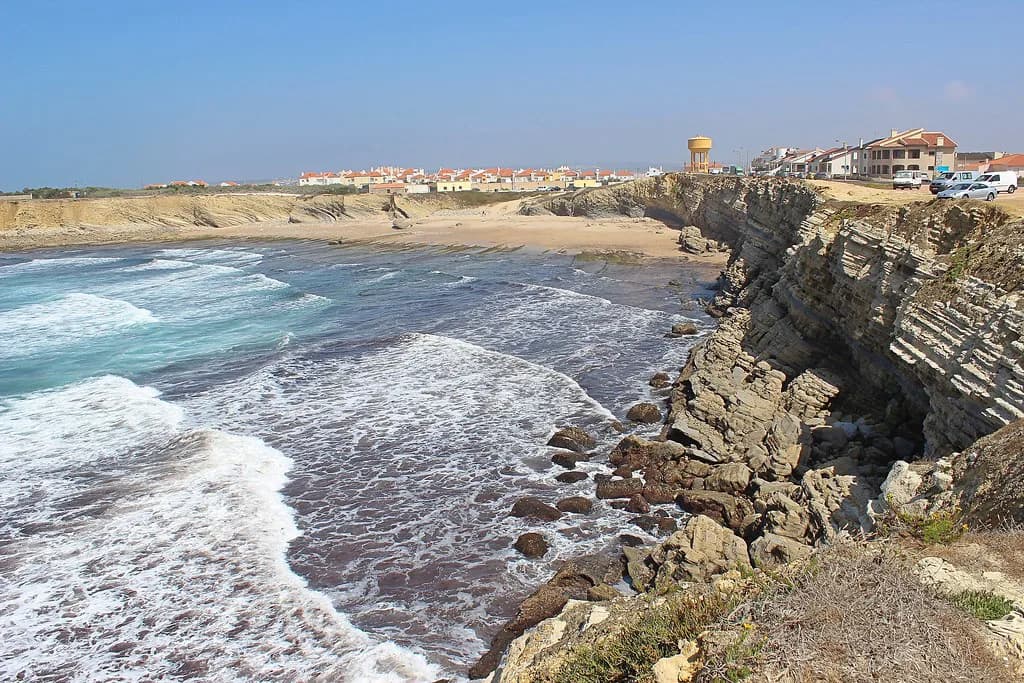
Peniche sits on a rocky peninsula that made it a natural watch point over the coastal approach, and the town's early shape followed the ground rather than a single planned core. Census data commissioned by King João III in 1527 counted 47 households in Peniche de Cima and 44 in Ribeira, which gives a sense of two modest shoreline settlements rather than one town. Ribeira, the lower settlement by the port, was the working waterfront; Peniche de Cima held the higher ground.
Walking between the two today, the change in level is the clearest reminder of that early split: the upper lanes feel like a village centre, while the lower streets turn towards the harbour and the fortress. Peniche only gained formal status later, when King Filipe III elevated it to a village and county seat on 12 November 1609. That promotion followed decades of fortification work, so the town's administrative rise and its military build-up ran together.
Keep this two-part geography in mind when you plan a walk, because the old town and the fortress sit at different levels and the connecting streets are steep in places. It is the single most useful fact for understanding why Peniche does not have one tidy historic core.
Why the site mattered: the sixteenth-century fortification
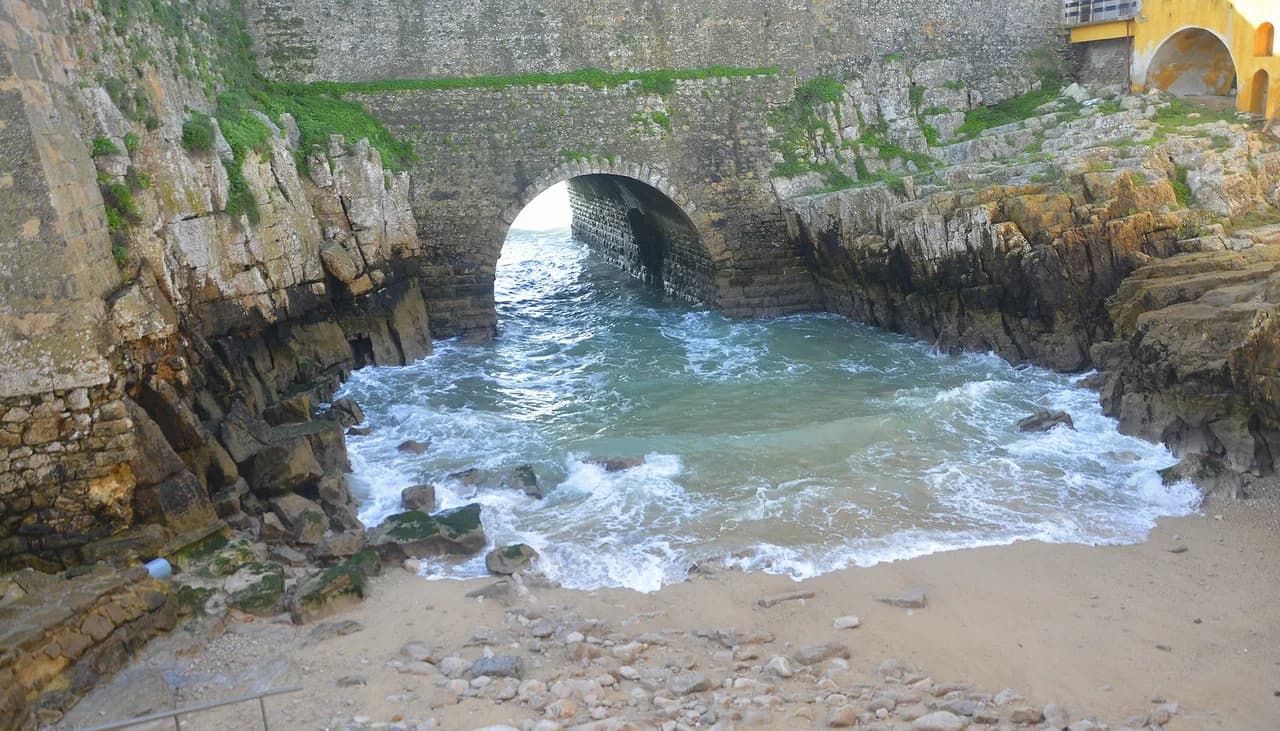
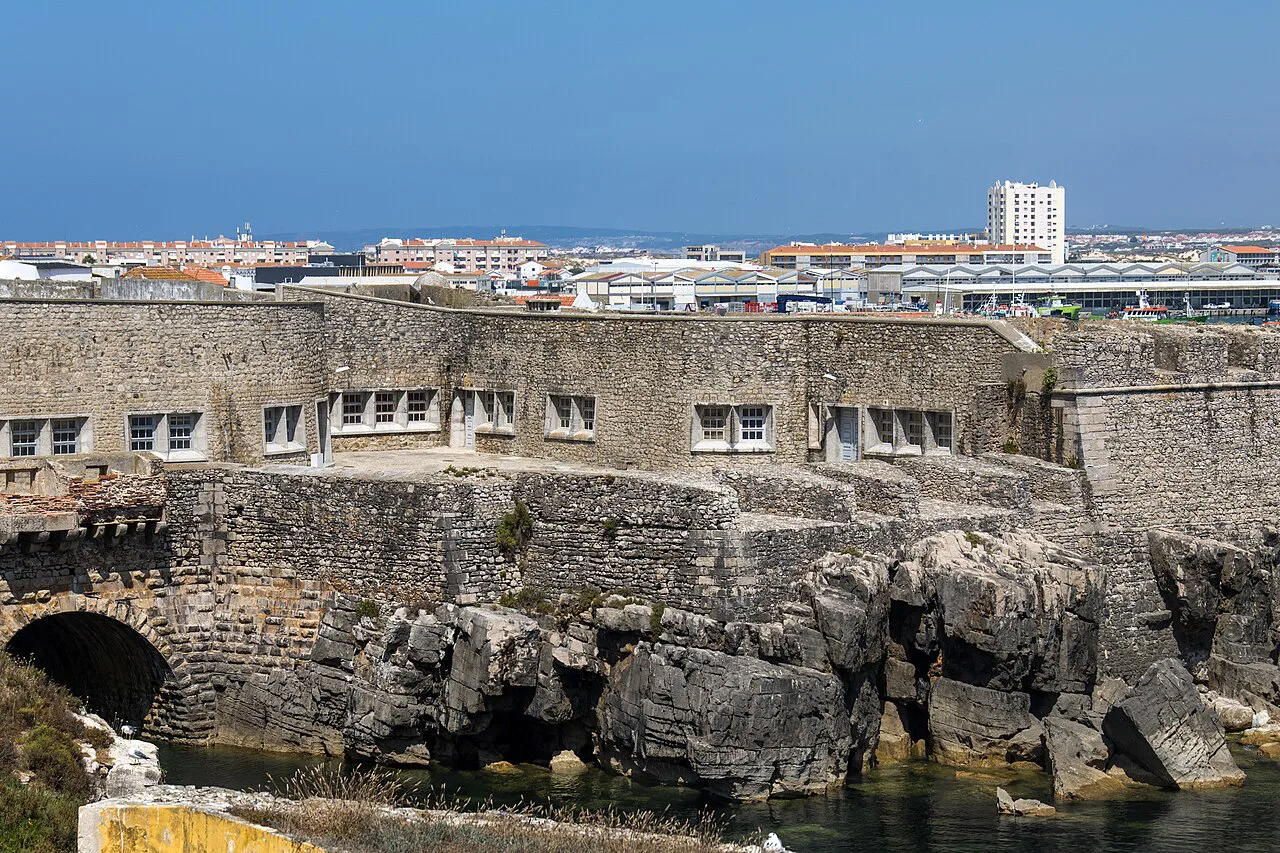
The fortification began in earnest in 1557, when King João III ordered D. Luís de Ataíde to build a bastion with a tower on the Alto da Vela site. The Round Bastion was finished the following year, attributed to Diogo Teles and showing the influence of English strongholds such as Pendennis Castle. The choice of a round, low form was deliberate: it presented a curved face to naval gunfire rather than a flat wall.
A second phase of fortress works started in 1572 under the master of works Gonçalo de Torralva, interrupted in 1578 when Luís da Ataíde left for India as Viceroy. Under King Filipe II, the military engineer Filippo Terzi was sent to Peniche in 1589 to consolidate the Round Fort and the walls and to study improvements. What you see today is therefore the product of several campaigns rather than one build, which is why the masonry and the angles change as you walk the perimeter.
The strategic logic was the sea approach to Lisbon. A 1642 Council of War record describes Peniche as the main gateway to the kingdom from the sea, which is the clearest statement of why the crown kept paying for walls here. The works were certified complete in 1645 by an inscription on the fortress door, and the walled section of the military square followed by 1671.
The fortress through war and politics
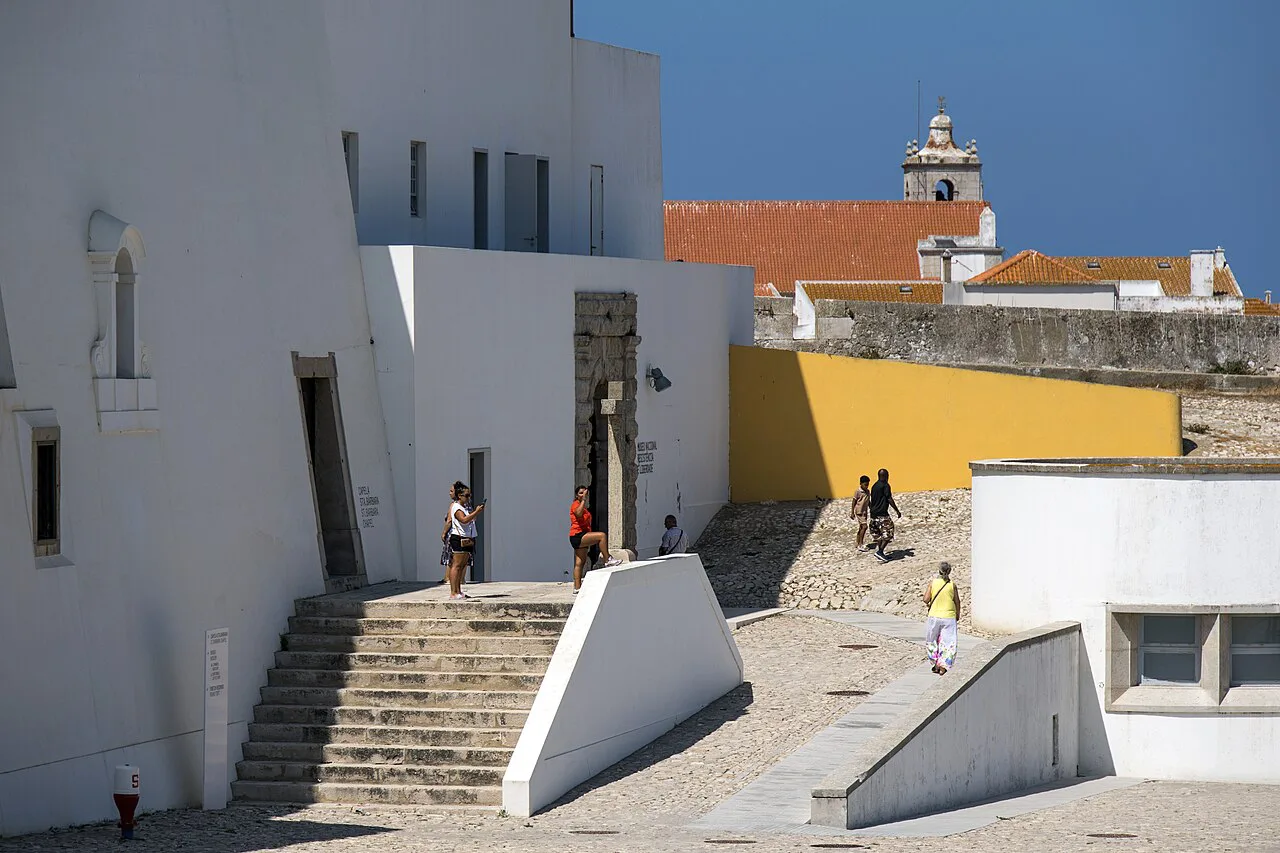
The fortress's later history is a run of occupations and prisoners. On 26 May 1589 a Luso-British naval force of about 155 ships and 6,500 men landed with the aim of placing D. António Prior do Crato on the Portuguese throne, taking the fortress before heading for Lisbon. In December 1807 a Franco-Spanish contingent under General Thomières occupied the military square and installed itself in the fortress, and in 1809 English and Portuguese forces under General Richard Blunt retook it.
In 1824 a hundred Liberals, including General Bernardo Correia de Castro Sepúlveda and the Marquis of Fronteira, were transferred to the fortress from the Castelo and Limoeiro jails in Lisbon. This is the period that first marks the site as a place of political detention rather than only a military installation. An explosion and fire in one of the armouries on 19 October 1837 destroyed the seventeenth-century Governor's Palace, which is why parts of the interior today read as rebuilt rather than original.
The Estado Novo years and the prison story
The Estado Novo dictatorship used the fortress as a political prison for opponents of the regime, and Álvaro Cunhal's escape from it is the episode most often told. That prison chapter is what gives the site its second identity, layered on top of the defensive one. The memorial and museum now on the site exist precisely to hold that history rather than bury it.
Treat the two stories as separate when you visit and the site makes more sense: the walls, bastions and gate belong to the military town, while the cells and the memorial belong to the prison years. The fortress timeline gives you the defensive sequence in detail, from the 1544 warning about French corsair attacks to the 1645 completion inscription.
The National Museum of Resistance and Freedom today
The fortress now houses the National Museum of Resistance and Freedom, with a political prison memorial and collections on the site. The museum publishes its own opening times, ticket information and advance reservation arrangements on its visit page, so check those directly before you set a day around it.
If your interest runs to collections and displays rather than the walls themselves, the wider set of museums in Peniche is worth mapping before you go. Build the fortress in as the anchor of a half-day and let the other sights fill the rest.
Fishing, bobbin lace and the sea economy
Fishing has long been the main economic activity here, sustaining generations of families and shaping the harbour quarter and its daily rhythm. Peniche's fishermen worked the Atlantic for sardines, octopus and other species, and that catch still defines the local table. Bobbin lace is the other craft tradition, passed down through generations and still practised in the area.
For a sense of that economy as it operates now rather than as folklore, spend time around the harbour and the fish end of town in the morning. A walk through the Peniche market shows the working side of the town more directly than any display case.
What to look for in the town itself
Start at the citadel gate and the Round Fort, then follow the walled front of the old military square. The Ataíde coat of arms was removed in 1759 during the Távoras case and is now displayed at the Round Fort and the entrance gate of the citadel. The chapel of Santa Bárbara inside the fortress was remodelled in 1773, which gives you a small interior to look at alongside the ramparts.
Look at the wall line rather than only the buildings: the geomorphology forced the wall backwards towards the north during the seventeenth-century campaigns, so the enclosure does not sit quite where an engineer would have wanted it. Reading that compromise on the ground is the most rewarding part of a fortress walk.
Pair the fortress with the streets below, where the old town's lanes give you the everyday counterpoint to the military architecture above. The Peniche old town guide covers the streets and squares in walking order.
How long the history sights need on a short break
Give the fortress and museum a half-day and the town streets another half-day, and Peniche's history fits comfortably inside a one- or two-day stop. The fortress alone rewards an unhurried hour or two if you read the interpretation rather than walk straight through.
If you want the sea and the natural side as well, the Berlengas Islands from Peniche are the obvious extension, and the crossing depends on weather and season rather than on any fixed daily service.
Is the fortress worth building your day around?
Yes, if you want the one site that carries both of Peniche's histories at once: the seventeenth-century defensive build and the twentieth-century political prison. Skip it only if your short break is purely coastal, in which case the town's lanes and the harbour give you the fishing story without the ticket queue.
Either way, walk the citadel gate and the wall line on foot before deciding how long to spend inside, because what you can see from outside tells you whether the interior interests you. Check the museum's own visit page for opening times, tickets and advance reservation before you go.
Explore more Peniche guides
Frequently Asked Questions
What is Peniche famous for?
Peniche is known for its fortress, which now holds the National Museum of Resistance and Freedom, for its fishing economy and bobbin lace, and for its Atlantic waves and the nearby Berlengas Islands.
How do you pronounce Peniche?
In Portuguese the stress falls on the second syllable, roughly peh-NEE-she, with a soft sh sound at the end rather than a hard ch.
Was the fortress always a prison?
No. It was built from the sixteenth century as a coastal defence covering the sea approach to Lisbon, and it later served as a political prison, most associated with the Estado Novo period.
Sources
Notes for your next Portuguese break
Optional updates to our town guides.
You might also like
Continue reading
More guides you'll find useful