Vegan Setúbal: Where to Eat and How to Order
A practical guide to eating vegan in Setúbal, from a Mexican-Turkish spot with labelled vegan dishes to how Portuguese tascas handle meat-free orders.
On this page
Setúbal has one clearly named address for vegan eaters: Picante on Rua da Velha Alfândega, a small Mexican and Middle Eastern-style counter that labels its vegan items. Beyond that, the city rewards travellers who order carefully in ordinary tascas rather than hunting for dedicated vegan menus. This guide covers Picante honestly, the Portuguese dishes that are naturally meat-free, the ones that quietly contain fish or stock, and the phrases that make a meat-free order land.
What vegan eating in Setúbal actually looks like
Setúbal is a working fishing and ferry port, not a plant-based hub, so expect to assemble meals rather than order them whole. The practical pattern is one reliable labelled-vegan counter for a quick meal, plus vegetable dishes, beans, rice and bread from everywhere else. Plan your days around the fact that a meat-free lunch is easier to find than a meat-free dinner in a traditional restaurant.
The wider restaurant landscape leans hard on fish and seafood, which shapes how you read a menu here. Knowing where the conventional seafood places sit helps you judge which kitchens will happily do a plain vegetable plate and which are built around the catch, so browse our guide to Setúbal restaurants before you book a table.
Outside dedicated venues, Portuguese cooking itself supplies the backbone of a vegan day: caldo verde without chouriço, grilled vegetables, salads, olives, bread and fruit. The risk is not a lack of options but invisible additions — a sprinkle of chouriço, a spoon of fish stock, butter finished into vegetables. Ask before assuming a vegetable dish is clean.

Picante: the named spot for labelled vegan fast food
Picante sits at Rua da Velha Alfândega 24 in Setúbal and runs separate Mexican, Middle Eastern and Turkish-style menus rather than a single fusion kitchen. It serves meat but labels vegetarian dishes that can be made vegan on request, and it also lists a vegan chilli.
The listing records opening from 12:00 to 22:00 daily, and the venue describes itself as wheelchair accessible with outdoor seating, free Wi-Fi and card payments. Treat those details as a starting point rather than gospel: the entry was last updated years ago, so the sensible move is to ring ahead on the number the restaurant publishes before making it your dinner plan.
Its role in a short break is straightforward: a fast, central, meat-free meal when you have a ferry to catch or a museum slot to hit, not a slow dinner to build an evening around. If you want Setúbal's fried cuttlefish instead, keep that as a separate meal and treat Picante as the vegan fallback.
What to order at Picante
Regulars describe a short, clearly marked vegan selection: a vegan chilli bowl, a vegan burger, vegan 'chicken' nuggets and falafel-based items. Portions and quality vary by dish — the chilli has been called tasty but small for the money in one account, while the burger draws fewer complaints. Order two smaller items if you are hungry rather than one main.
One recurring frustration is worth knowing before you order: several Middle Eastern menu items have turned out to be falafel under different names, so a shawarma order may not deliver what you expect. If a particular dish matters to you, point at the labelled vegan line on the menu rather than ordering by name.
Staff have repeatedly been described as friendly and English-speaking, which makes the ordering conversation easy for visitors with little Portuguese. That matters more than it sounds in a fast-food counter where the menu sits behind glass and the queue moves.
Trade-offs at Picante: fast food, noise and portion size
Be clear about what Picante is: a small, quick-service counter with a fast-food atmosphere, not a restaurant for a leisurely vegan dinner. Several reviewers flag loud music that makes conversation hard, and one notes that some items arrive without proper plates or cutlery. If you want a calm sit-down meal, this is not the address.
A reviewer also reported no alcohol being served at the time of their visit, which surprises some visitors expecting a beer with a burger. None of this makes Picante a bad choice — it makes it a specific one. Use it for a fast, reliable, labelled vegan lunch and spend your sit-down meal budget elsewhere.
Portuguese dishes that are naturally meat-free — and the traps
Several Portuguese staples are vegan by default if you ask for them plain: bread, olives, rice, boiled or grilled potatoes, salads and fruit. The pastel de nata is not vegan — its custard is built on eggs and milk — so it belongs to a coffee stop rather than a vegan breakfast. Caldo verde, the kale and potato soup, is often vegetarian but frequently includes chouriço and sometimes a meat stock base, so it needs a question.
The genuine traps are fish and seafood: bacalhau in all its forms, fish stock used to loosen vegetables or rice, and the local fried cuttlefish that anchors most menus. A plate of grilled vegetables may still be finished with butter. If a dish is central to your meal, say the restriction out loud rather than trusting the description.
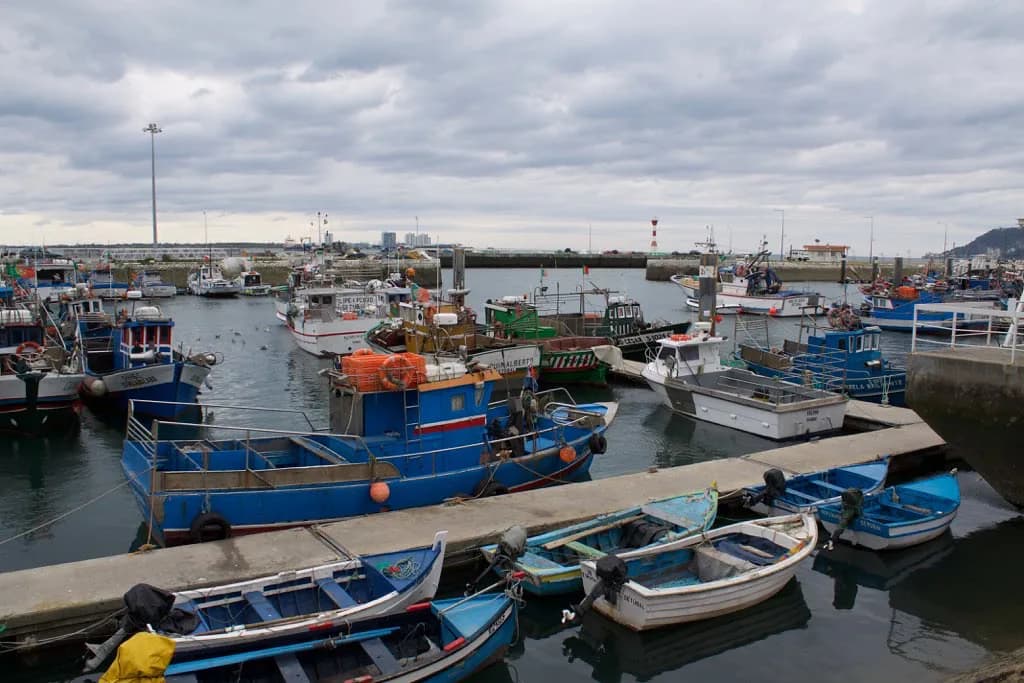
Setúbal's food identity is built on the Sado estuary and its catch, which is exactly why you should read menus with care here.
If you are travelling with a mixed group, the workable compromise is a fish restaurant where you order the vegetable dishes, rice and salad while everyone else eats the catch. The city's fish kitchens know how to serve plain vegetables alongside, and it avoids splitting the table across two venues.
How to order vegan in a tasca or pastelaria
In a tasca, the phrases that do the work are short: 'sem carne, sem peixe' (no meat, no fish), 'sem chouriço' (no sausage), 'tem caldo de carne ou de peixe?' (does it have meat or fish stock?) and 'tem leite ou manteiga?' (does it have milk or butter?). Say them once, clearly, and point at the dish you mean — it is faster and less ambiguous than a long explanation.
At a pastelaria, breakfast is the easiest vegan meal of the day if you stick to bread, olive oil, tomato, fruit and coffee, since the pastries are built on eggs, milk and butter. Ask for a plain toasted sandwich without butter or cheese rather than assuming one exists on the menu.
If a sit-down brunch matters to you more than a quick counter meal, it is worth checking which places in the centre serve a proper morning plate before you set out.
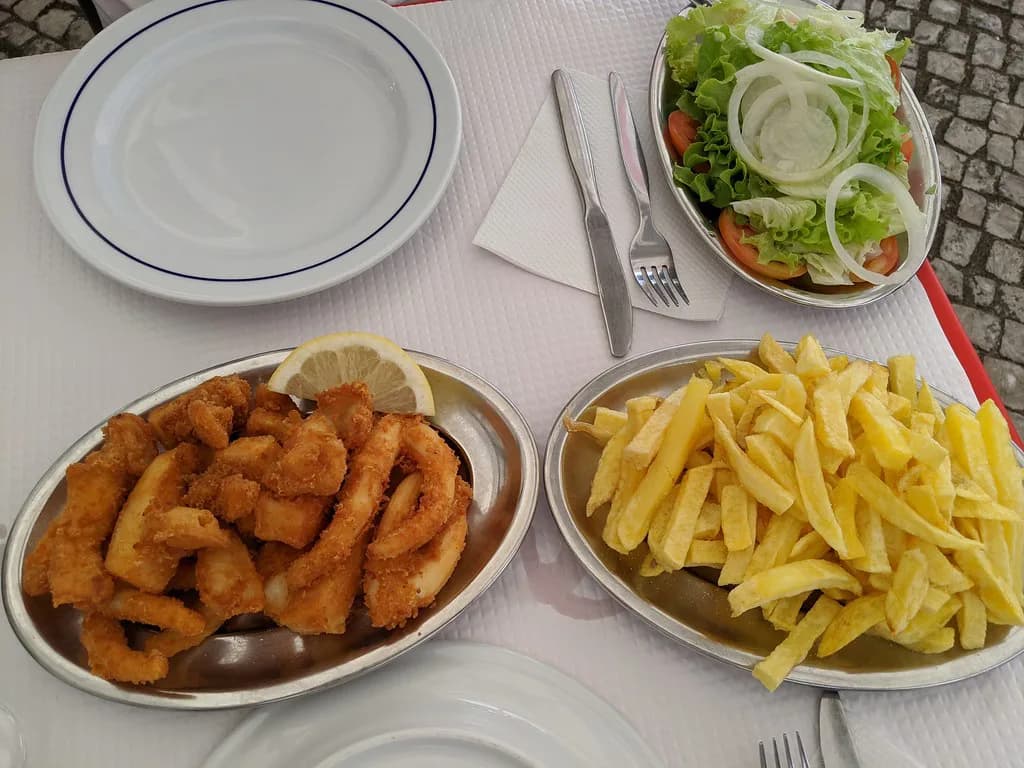
One dish worth understanding before you order is choco frito, the fried cuttlefish that defines the city's tables. Knowing how it is served and eaten helps you spot it on menus and steer around it, or plan a table where the rest of your party can enjoy it without you.
Breakfast and snacks: pastelaria options and what to check
A typical Portuguese pastelaria will give you bread with olive oil, a tomato salad or a piece of fruit, plus coffee, and that is a genuinely good vegan breakfast. What it will not usually give you is a vegan pastry, because the pastel de nata and most cakes rely on eggs and milk. Ask for a plain pão com tomate and specify no butter.
For a midday snack, the supermarket route is reliable: bread, olives, tinned beans, fruit and nuts travel well for a ferry trip or a walk along the waterfront. Smaller neighbourhood shops are easier to navigate than large out-of-town stores if you are on foot.
If you want the fuller picture of how the city eats — the markets, the tascas and the dishes locals actually order — that sits alongside the vegan question rather than replacing it.
Should you build a day around Picante?
No. Build your Setúbal days around what the city does well and treat Picante as a dependable labelled-vegan pit stop, useful on arrival or before a ferry, not a destination in itself. Ring ahead if you plan to rely on it for an evening meal, since the published hours may have shifted.
The rest of the trip works if you lead with Portuguese vegetable dishes, ask about stock and butter, and keep a mixed party together at one table rather than splitting the group. Mixed groups do best at the seafood addresses, where the non-vegan half of the table eats well.
Sources
Notes for your next Portuguese break
Optional updates to our town guides.
You might also like
Continue reading
More guides you'll find useful