Azulejos in Setúbal: Where to See the Town's Painted Tiles
A short walk through Setúbal's azulejos, from the Mercado do Livramento's tiled panels to church interiors and tiled façades, with what each one shows.
On this page
Setúbal's azulejos are not a single sight but a scatter of them, and half a day on foot covers the main ones. The richest set sits inside the Mercado do Livramento, the city market on Avenida Luísa Todi, where figurative panels by Pedro Jorge Pinto run above the fish and produce stalls. Beyond the market, tiles turn up on church interiors, onordinary façades around the Baixa and, if you have a car or patience with local buses, at a working tile factory in Azeitão. This guide puts them in a walkable order and says what is actually worth looking up for.
The market is also the one tile sight with firm opening hours to plan around.
What azulejos are and why Setúbal has them
Azulejos are the glazed, usually blue-and-white ceramic tiles that cover Portuguese churches, stations, markets and house fronts. Setúbal's example follows the national pattern: the tiles are storytelling surfaces as much as decoration, and the ones worth seeking out here are pictorial panels rather than plain repeats. The city's wealth came from fishing, canning and the Sado estuary trade, and its public buildings carry tiles that celebrate exactly that working life.
For a short break the practical point is that Setúbal's tiles cluster in the flat Baixa, close to the market and the main avenue, with one outlier at Azeitão. You do not need a specialist interest to enjoy them, but you do need to look up inside buildings, because several panels sit high on walls above eye level.
The Mercado do Livramento: the tiled panels inside Setúbal's market
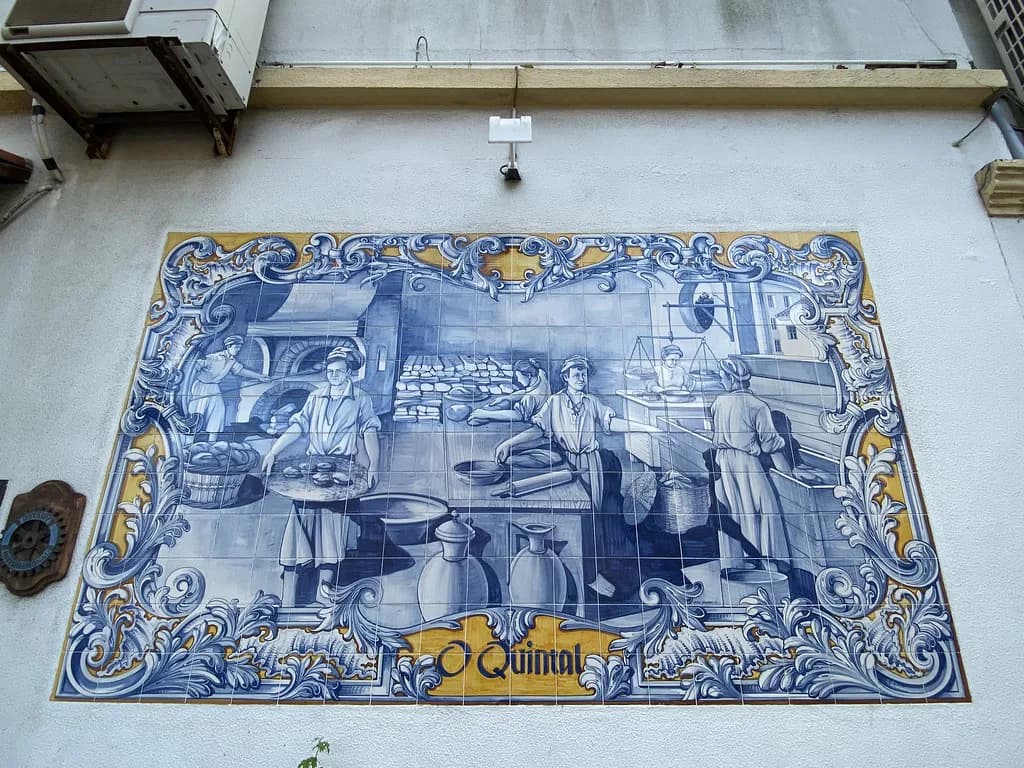
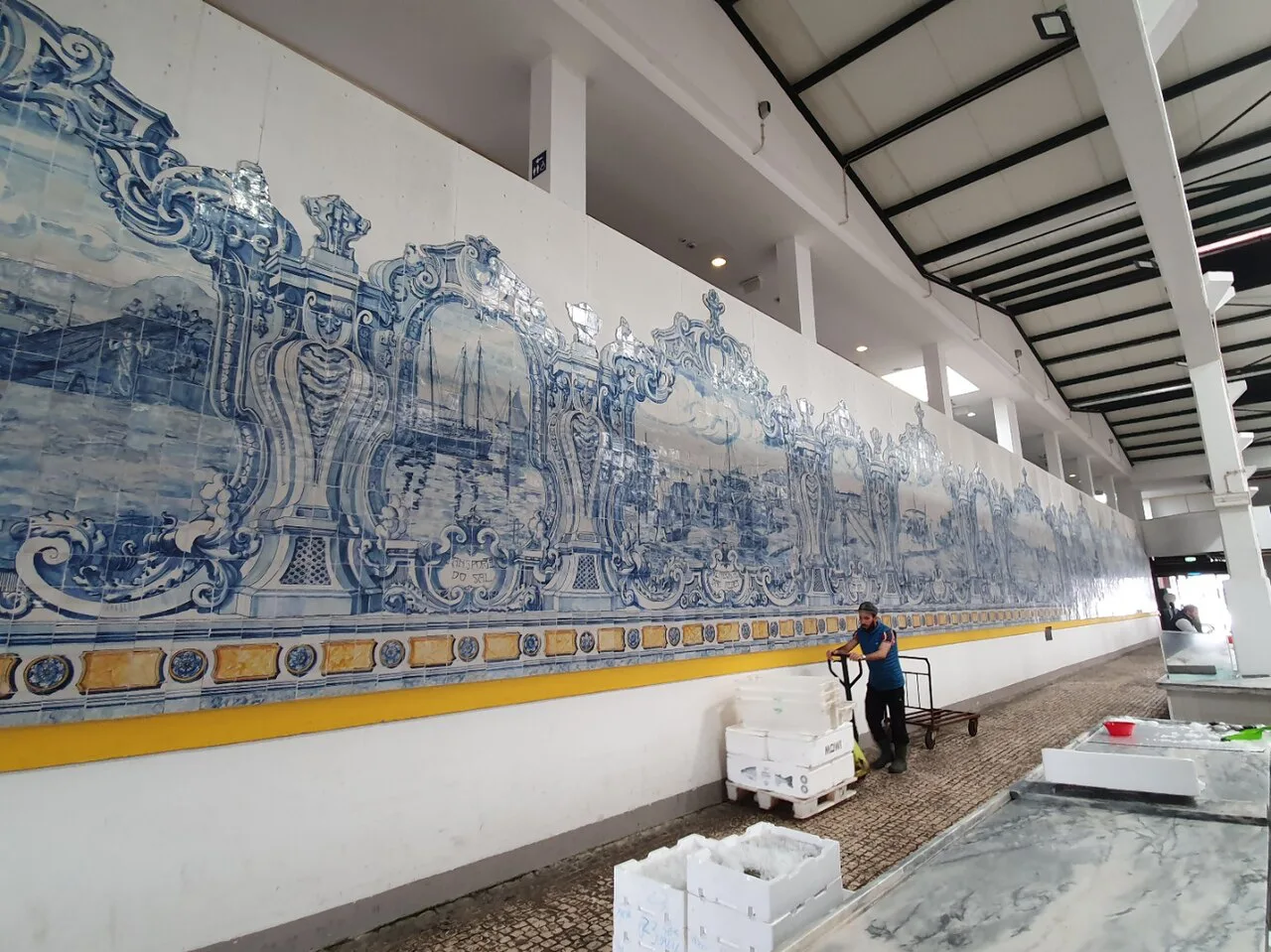
The Mercado do Livramento on Avenida Luísa Todi is the single best place in Setúbal to see azulejos, and you get a working market thrown in. Figurative panels by Pedro Jorge Pinto are set into the market's walls, depicting scenes tied to the city's fishing and market life rather than abstract patterns. Walk the perimeter aisles rather than the central fish hall if you want the panels, and give yourself time to pick out the individual scenes.
The market opens Tuesday to Sunday from 7am to 2pm. Those hours are the reason to put the market first thing in your day: by early afternoon it is shutting, and a Monday visit finds it closed. The same source gives the address as Avenida Luísa Todi 163, which puts it on the main avenue a short walk from the ferry terminal and the old town.
Inside, the panels share wall space with the produce: Azeitão cheese, honey, regional bread and a serious fish counter. That mix is the appeal, since you are looking at tiles above stalls that are still doing the trade the tiles commemorate. Come early if you want photographs without crowds and without getting in the way of shoppers.
Church interiors in the centre: where to look for tile panels
Setúbal's central churches are the second strand of the tile trail, and the rule is to step inside rather than judge from the façade. The São Julião church on Praça de Bocage is the one to start with, sitting as it does on the square that anchors the Baixa. Portuguese church interiors commonly carry tiled dado panels low on the walls, so once inside, look along the base of the nave and the chapels rather than at the ceiling.
The honest trade-off is that these are working parish churches, not museums, and interiors can be dim, small or partially screened by pews. Expect to find a handful of tiled surfaces rather than an all-over scheme, and treat any panel you find as a bonus. Some churches in Portugal close over the lunch period, so aim for mid-morning or late afternoon and accept that a locked door is part of the game.
If church tiles are the reason for your trip, the wider set of things to do in Setúbal puts the ecclesiastical sights in context alongside the market and the waterfront.
The Sé and the Praça do Bocage: tiles around the cathedral square
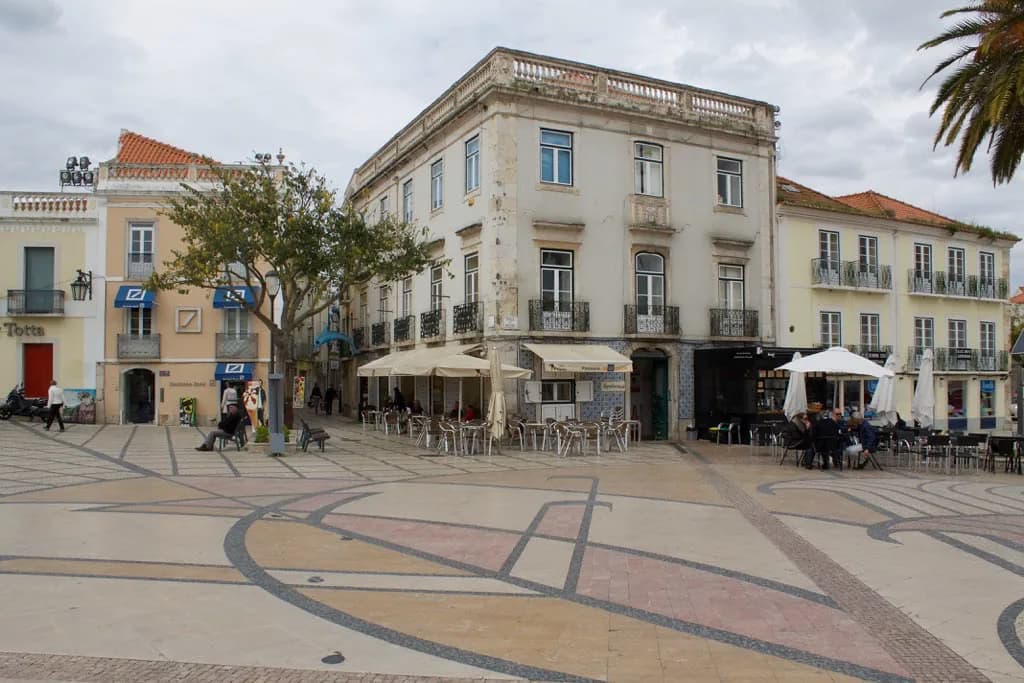
The Praça do Bocage is the natural hinge for a tile walk: São Julião faces it, the Baixa streets fan off it, and the Sé de Setúbal sits a few minutes away. Use the square as a meeting point and a coffee stop rather than a destination in itself, then work outwards. The streets running north and east off the square are where you find the ordinary tiled façades that make the Baixa photogenic.
Around the cathedral, look at the buildings opposite and alongside rather than only the church: nineteenth- and twentieth-century commercial fronts often carry tile cladding on the upper storeys, and these are free to look at at any hour. The square and its lanes are covered in more detail in the Setúbal old town guide if you want to extend the loop.
Tiled façades along the Baixa and Avenida Luísa Todi
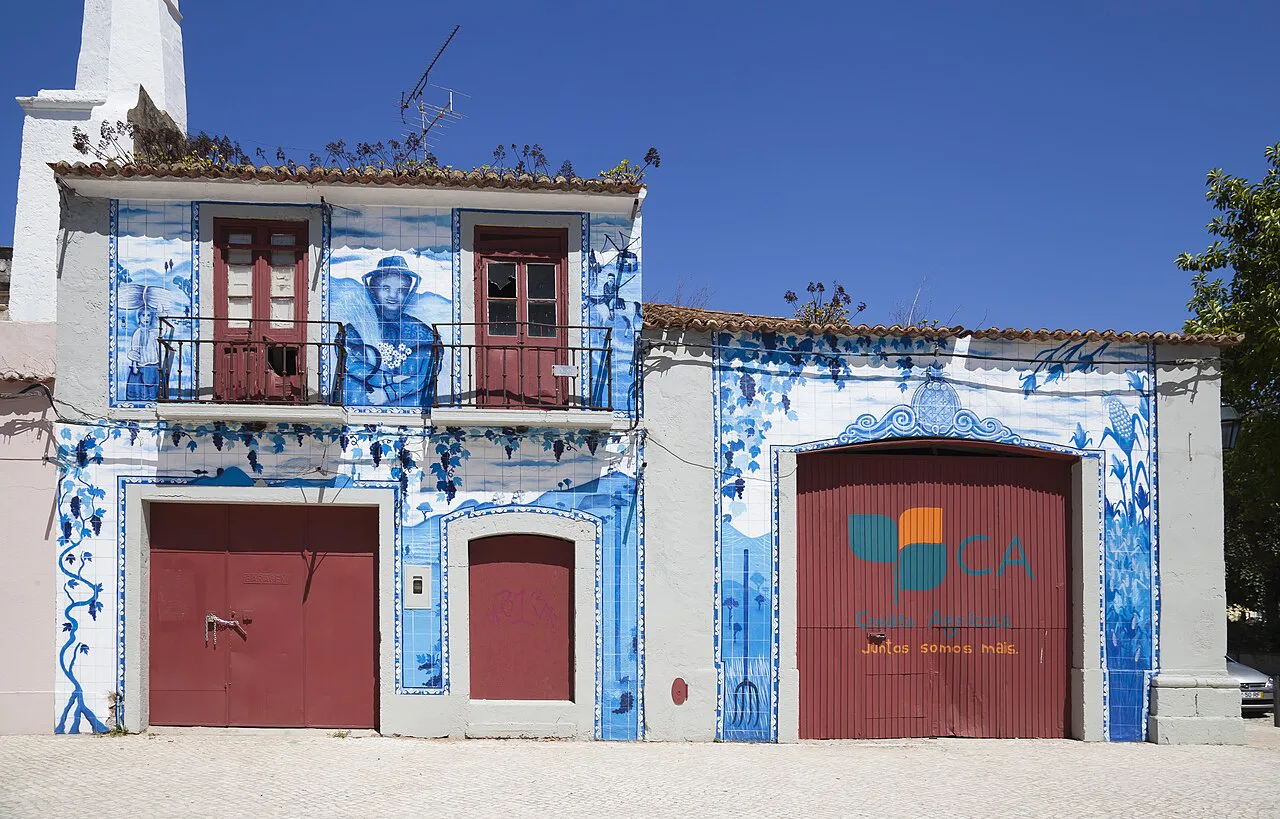
Avenida Luísa Todi is Setúbal's main artery, named after the eighteenth-century singer born in the city, and it is where restaurants, shops and the market line up along the water. As a tile walk it works because you can combine the market panels with a façade-spotting stroll without any detour. Look above the shopfronts on both sides of the avenue for tiled upper walls, and glance down the side streets towards the docks.
The docks end of town adds a different kind of surface: street art and painted walls alongside the working port. It is not azulejo in the historic sense, but it makes the point that Setúbal has always used its walls to say something. The city-centre walk through the squares, gardens and market is mapped out in the things to do in Setúbal guide if you want a longer route.
The Convent of Jesus and the Setúbal Museum
The Convento de Jesus is the city's great Manueline building and now houses the Setúbal Museum, which makes it the logical place to combine architecture with a collection. The convent's twisted columns and carved stonework are the headline, and the museum setting means you can look at decorative detail at leisure rather than peering into a dim nave. Check the museum's current opening days before you build a day around it, since Portuguese museums often close one day a week.
There is a second, less expected museum for anyone interested in the city's working past: the Michel Giacometti Labour Museum on Largo Defensores da República, housed in a former canning factory. It keeps the original industrial architecture and tells the story of the workers who made Setúbal a canning town, which is the background to the market panels. The Museums in Setúbal guide covers the rest of the city's collections.
Azulejos de Azeitão: seeing tiles made
Azulejos de Azeitão is the one place near Setúbal where you can join a visit to a working tile workshop rather than just look at finished ones. The workshop in Azeitão runs visits and hands-on painting sessions, so you leave with a sense of how much work sits behind a single panel.
Practicalities are thin on the ground: the contact details published for the workshop are a phone number and an email in Azeitão, with no fixed tour timetable given. Book ahead by phone or email rather than turning up, and ask what a visit involves and how long it takes before you commit a morning to it. The Azeitão area itself is known for its wines, cheeses and sweets, so the excursion pairs naturally with a longer half-day out of the city.
Getting there without a car means local buses or a taxi from Setúbal, and the journey eats into a short break. With one to four days in the city, the factory is the first thing to drop if time is tight; the market and the Baixa panels give you the essence without leaving town.
A short walking route linking the market, the squares and the churches
Start at the Mercado do Livramento on Avenida Luísa Todi as soon as it opens, and give the panels twenty to thirty minutes before the stalls get busy. From the market, walk inland along the avenue to the Praça do Bocage, which is a few minutes on foot, and use the square for coffee and a look at São Julião. Then wander the lanes around the Sé de Setúbal, looking up at tiled façades as much as at church walls.
Finish at the Convento de Jesus and the Setúbal Museum, which rounds off the walk with the city's best architecture and a proper collection. Allow half a day in total at an unhurried pace, or a couple of hours if you skip the museum. The Setúbal walking tour route covers the same ground with more streets and stops if you want to stretch it out.
Practical trade-offs: closures, light and how much time to allow
The main constraint on a tile walk is that the best interiors keep limited hours. The market's Tuesday-to-Sunday, 7am-to-2pm pattern means Monday is out and afternoons are short, and church and museum timetables shift with the season and with services. Plan the market as your fixed point and let the rest of the route flex around it.
Light matters more than you would expect: tiles in a dim church interior are hard to read, and glazed surfaces reflect windows and phone torches. Mid-morning is usually the best compromise between open doors and usable light. Carry a small torch or use your phone sparingly and politely.
Finally, be realistic about scale. Setúbal is not a tile museum town like Lisbon or Aveiro, and a dedicated azulejo hunter will exhaust the centre in half a day. The reward is that the tiles come with a working market, a Manueline convent and a waterfront, so the walk stands up even for a companion with no interest in ceramics.
Should you build a day around the tiles?
Build half a day, not a whole one. The Mercado do Livramento panels, the Praça do Bocage churches and the Convento de Jesus make a coherent morning, and the Azeitão factory adds a genuine craft stop only if you have a car or spare time. If you are weighing up whether Setúbal deserves a slot in your trip at all, the honest take on whether Setúbal is worth visiting covers what the town does well.
Pair the walk with the castle and the estuary if you want to fill a full day: the Forte de São Filipe above town gives the panorama that makes sense of the geography you have been walking through. After that, the tiles are a detail rather than the main event, which is the right way round.
Explore more Setúbal guides
Frequently Asked Questions
Do I need a guide to see Setúbal's azulejos?
No. The main panels sit in a public market and in churches you can enter on your own, and the walk between them is short and flat.
What do the Mercado do Livramento tiles show?
The market's figurative panels are attributed to Pedro Jorge Pinto and show scenes tied to the city's fishing and market life; some of the tilework has suffered damage over the years.
Sources
Notes for your next Portuguese break
Optional updates to our town guides.
You might also like
Continue reading
More guides you'll find useful