Dolphins in Setúbal: Where to Watch and Boat Trip Costs
Bottlenose dolphins live in the Sado Estuary year-round. Where to watch them from land in Setúbal, what a catamaran trip costs and how to behave on the water.
On this page
You can watch the Sado Estuary's bottlenose dolphins from the Setúbal shoreline for free, but sightings are never guaranteed; a paid catamaran trip puts you closer for longer. The pod lives at the estuary mouth year-round rather than passing through on migration, so any month can work and timing comes down to tide, daylight and luck. This guide sets out where the animals actually live, which land viewpoints are worth the walk, what one operator charges, and how to watch without adding to the pressure on a very small population.
Where the Setúbal dolphins actually live
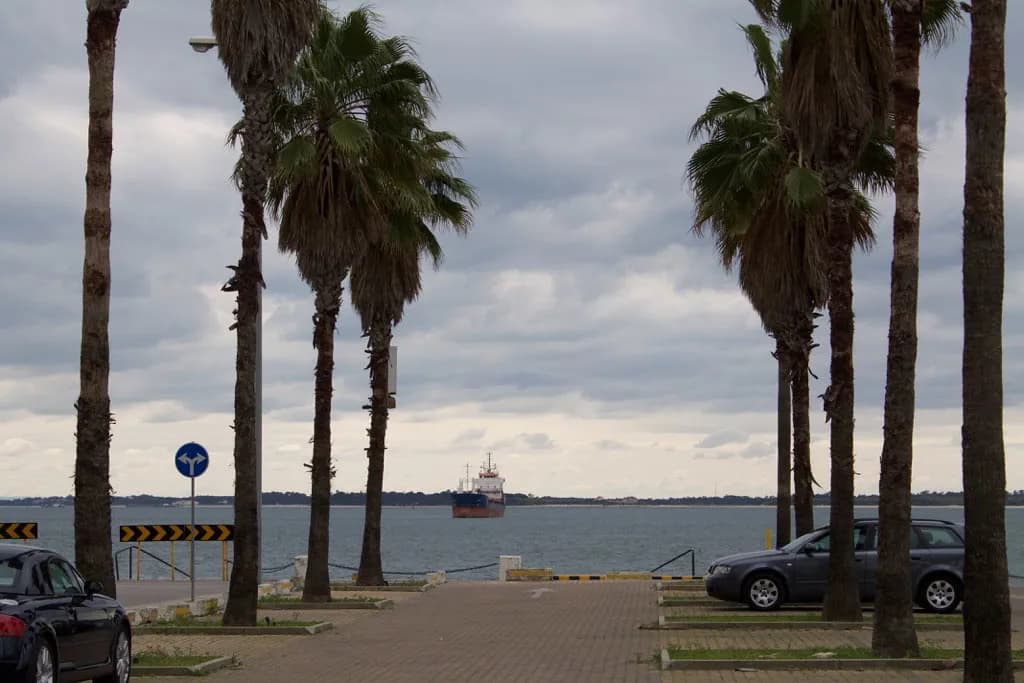
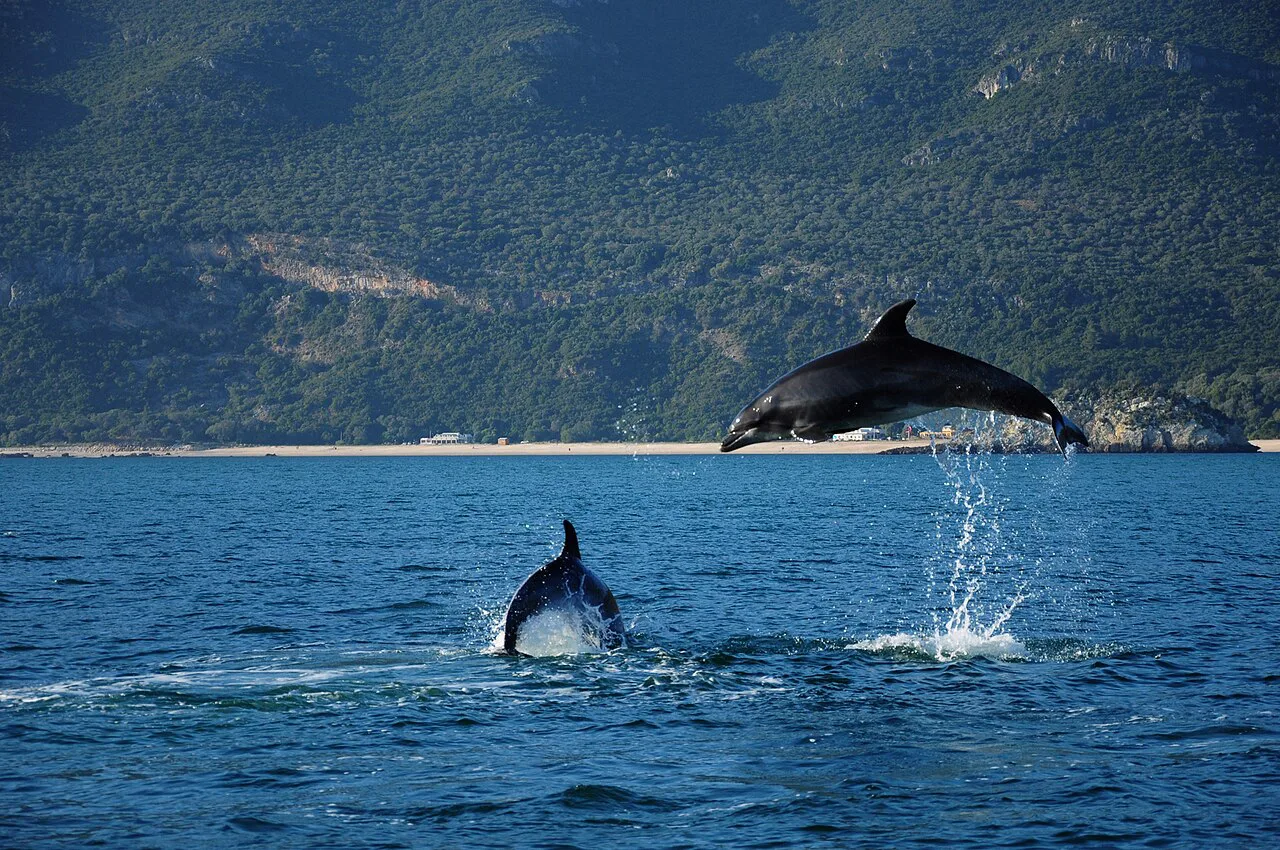
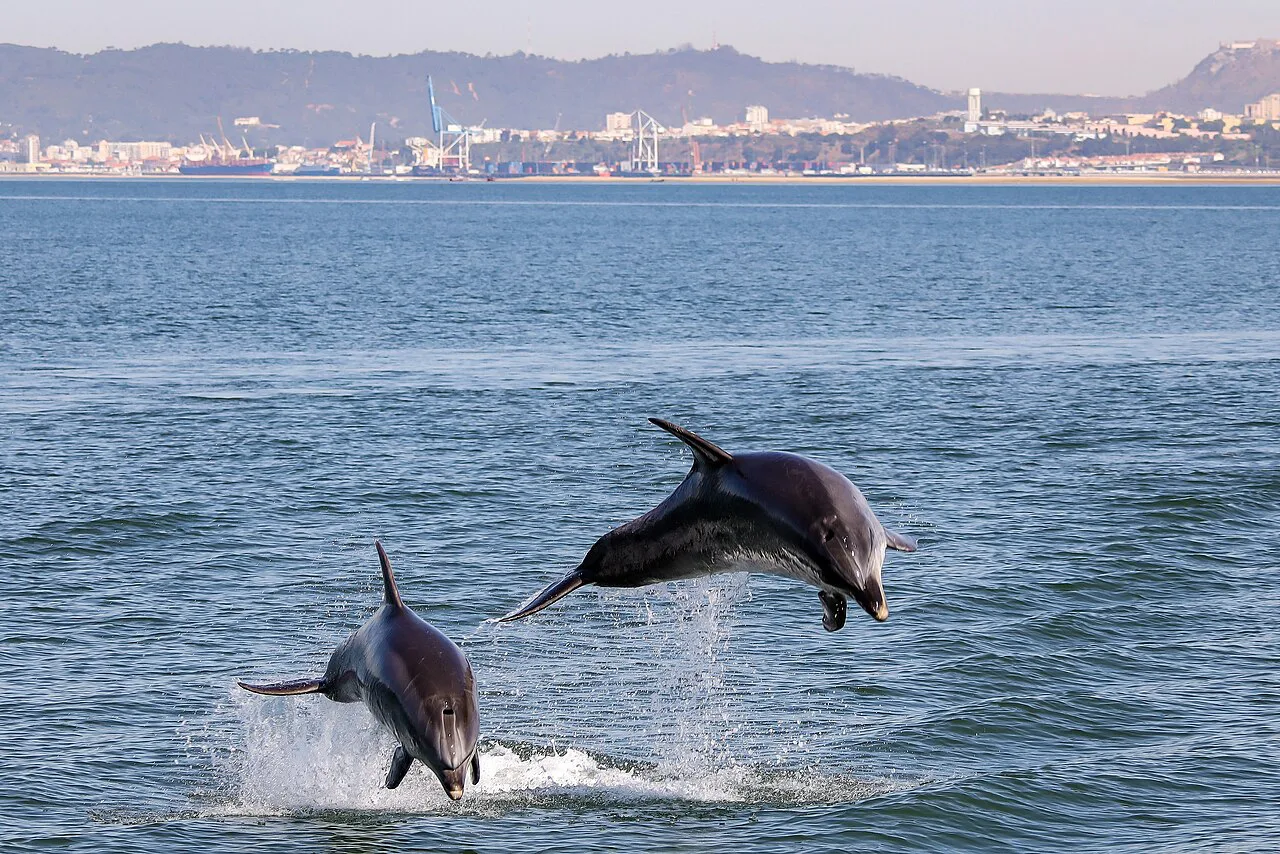
The dolphins belong to the mouth of the Sado Estuary, the channel between Setúbal and the Tróia peninsula, not the open Atlantic beyond it. They work the deeper water on the southern side, moving between the river mouth and the eastern end of town by the industrial port, and often stay in the area for a couple of hours at a time. Understanding that layout is what makes shore watching realistic: you are looking across a working estuary, not out to sea.
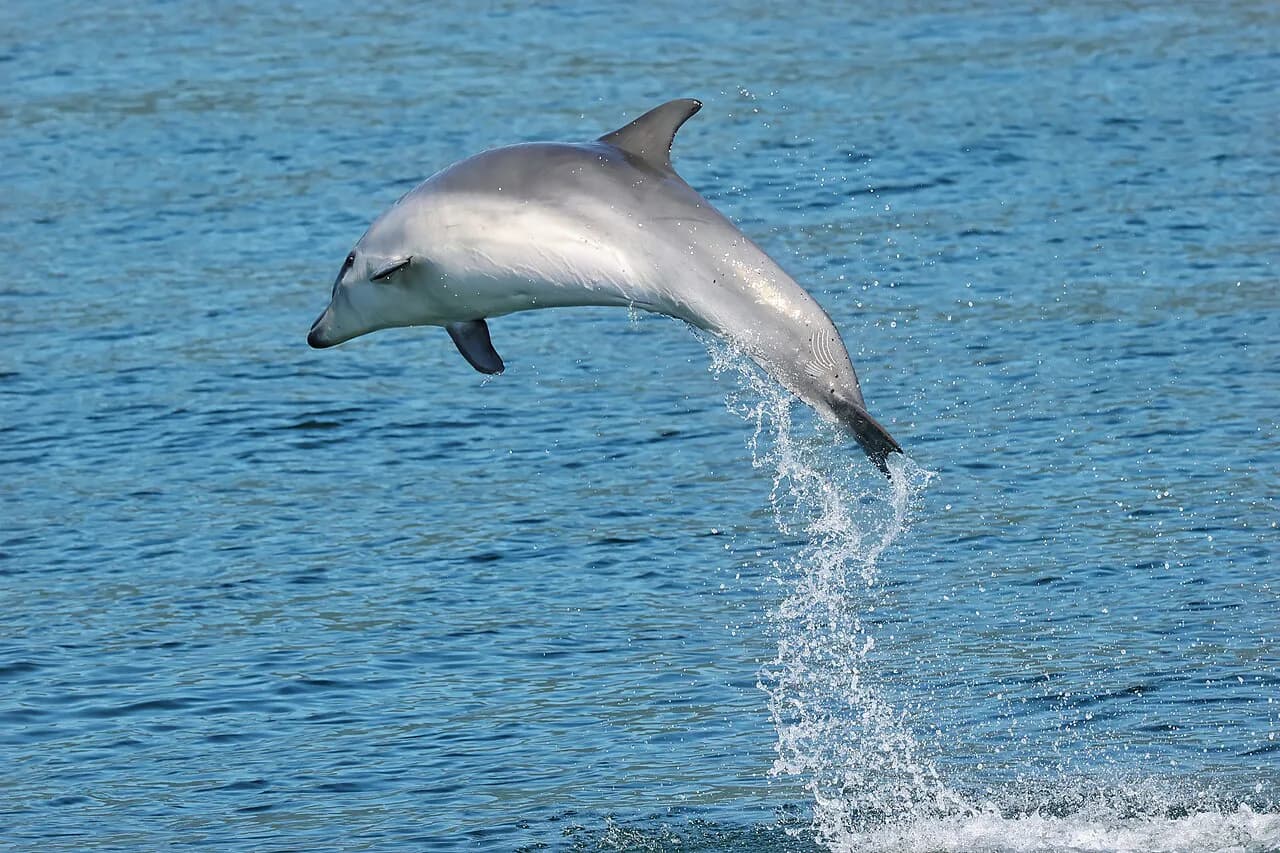
These are bottlenose dolphins, roaz-corvineiro in Portuguese, and they are large and dark with a prominent dorsal fin that bends slightly backwards. Once you have spent a few days around the waterfront you will see how the pod's routines shape the town's relationship with the water, which sits alongside the wider list of things to do in Setúbal.
How many dolphins are left in the Sado Estuary
The population is small and shrinking. A study running from 1981 to 1986 recorded a reasonably stable group of around forty animals between Sines and the Tagus, and researchers could identify twenty-six of them individually from scars and dorsal-fin shape, with numbers later falling to roughly twenty-five individuals and calves becoming rare.
Researchers put the decline down to an ageing population, low genetic diversity in a pod isolated from other Iberian groups, and disturbance from the growing number of boats running dolphin trips. This is the reason to choose an operator carefully rather than simply the cheapest ticket: the estuary is still the only regular home for these dolphins in Portugal.
The best free spots to watch from land
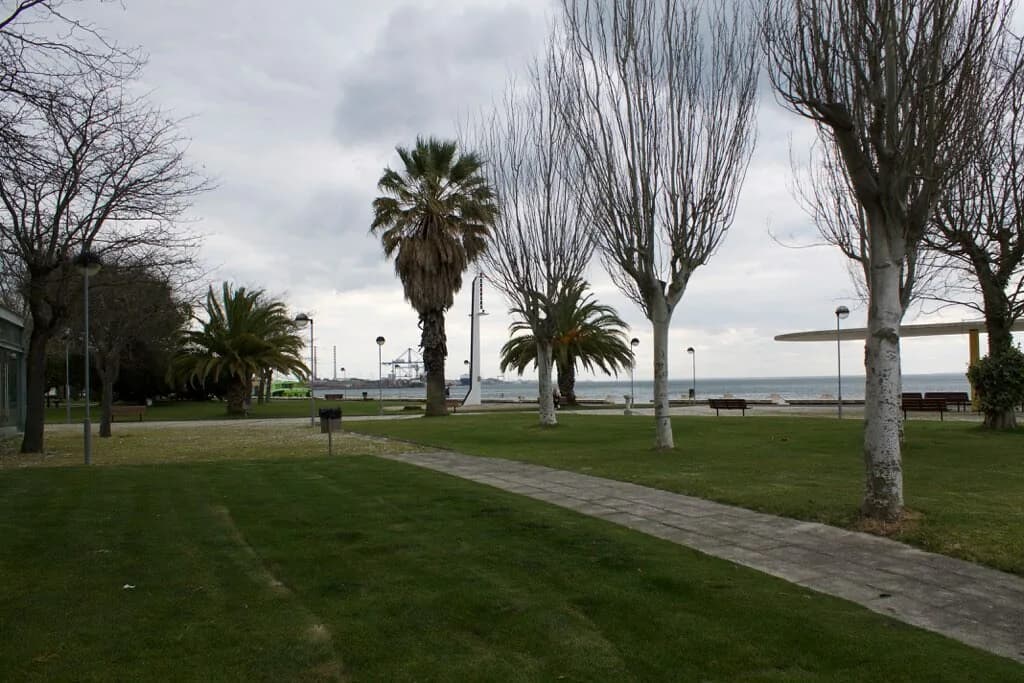
Parque Urbano de Albarquel is the obvious starting point, a green strip on the western edge of town between the built-up area and the Forte de Albarquel, with a promenade along the water. Binoculars make a real difference here, because the animals mostly show only a dorsal fin and a slice of back.
Give yourself at least an hour on the promenade rather than treating it as a quick stop, and scan the deeper channel to the south. A pair of binoculars is worth packing; without one, a distant fin is easy to mistake for a buoy, so the free option rewards patience over a quick look.
Dolphin-watching boat trips from Setúbal and what they cost
Dolphin Bay runs an eco-catamaran dolphin-watching trip from Setúbal, published at €40 for adults and €20 for children aged 4 to 12. Treat those as that operator's fares on the day you book rather than a town-wide standard, and confirm the current figure on the operator's page before paying.
The operator's page does not set out departure times, trip length or how often sailings run, so ask those questions directly when you book. Other operators sell trips in the same waters, so compare what each one publishes about group size and approach before choosing.
If a dolphin trip is only part of what you want from the water, compare it with the wider range of Setúbal Boat Tours, which includes other ways of seeing the estuary and the Tróia shore.
When to go: time of year, tide and time of day
There is no migration season to plan around. During the 1981–86 study the dolphins were present in the estuary at any time of year, day or tide, and they used it for feeding, resting and travelling rather than as a seasonal stop. That makes a short break in any month a reasonable bet, though it does nothing to improve your odds on a given morning.
The same study found they favoured deep water on the south side of the channel, so your attention is better spent there than on the busy eastern port end of town. Calm, flat water makes fins easier to pick out, and a bright morning gives the best light for scanning.
How the boats should behave around the pod
Local councils and researchers agreed a code of conduct in 2013 aimed at reducing disturbance and pollution in the estuary, and that framework covers how watching boats should operate around the animals. Ask any operator how they apply it before booking; a crew willing to explain is a better sign than a cheap fare.
A responsible skipper keeps a respectful distance and doesn't chase or cut across the pod, which is exactly what the code asks for. On the water, that can mean watching from further off than you expected; the alternative is more pressure on a pod of roughly twenty-five animals.
Watching dolphins without a boat: practical trade-offs
Land watching costs nothing and you can leave whenever you like, but it depends on the pod coming close enough to the Setúbal side of the channel to be seen from the promenade. A boat trip buys you time on the water and a chance to watch behaviour at close range, at the price of that ticket and a fixed schedule.
Several days in town give you repeated chances from the shore, which is also the pattern of an unhurried short break built around the Setúbal old town and the waterfront. If you only have one morning, a booked trip is the more efficient use of it; if you have three, the free viewpoint plus patience is a perfectly good plan.
What the dolphins do at the surface
You will usually see two or three short dips of under fifteen seconds followed by a longer dive of up to three minutes, then a return to the surface that often comes with a visible blow. Sometimes an animal breaches clear of the water, showing a pale belly before it falls back with a splash.
Groups with animals of two distinct sizes are usually mothers with calves, which stay with the mother for two or three years; same-sized groups are more likely to be males. Knowing this stops you reading every fin as a separate dolphin, and it also explains why calves have become such a rare and notable sight.
Boat trip or the Albarquel promenade?
Book the catamaran if you want close viewing and only have a morning to spare; walk the Albarquel promenade if you would rather spend nothing and can give the estuary a few hours across several days. Either way, an operator that follows the 2013 code of conduct deserves your money over one that doesn't.
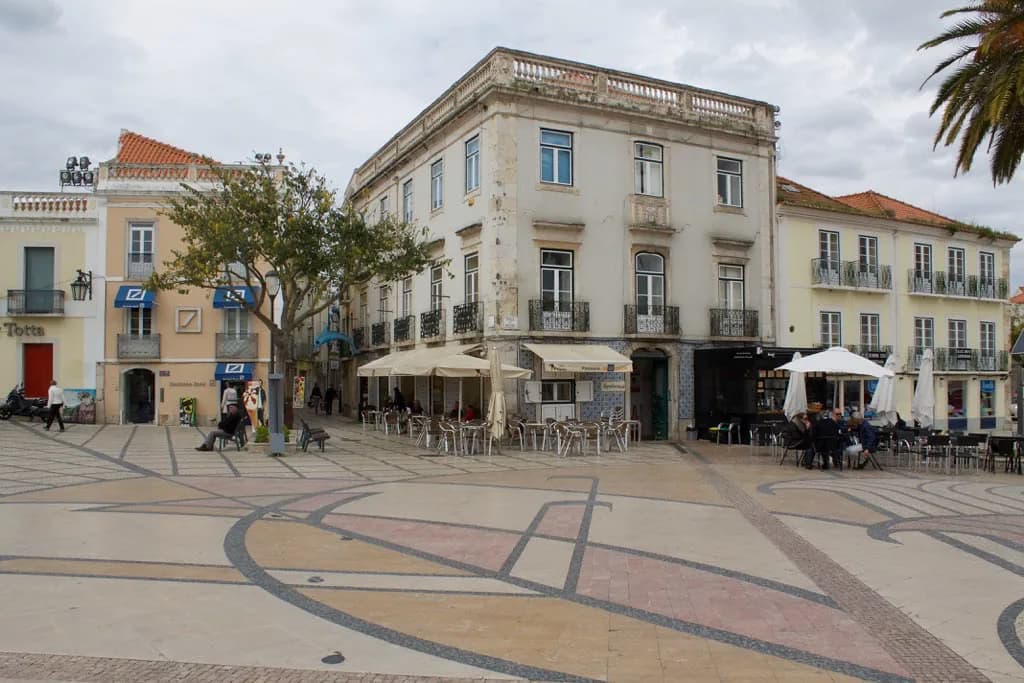
Build the rest of the break around the Setúbal old town, the market and the waterfront rather than around one dolphin sighting, and the estuary becomes a bonus rather than the whole plan.
Explore more Setúbal guides
Frequently Asked Questions
Are there dolphins off the coast of Portugal?
Yes, several species occur in Portuguese waters, but the Sado Estuary pod is unusual because these bottlenose dolphins are resident at the mouth of the estuary rather than passing along the coast. That is why Setúbal is the practical base for watching them.
Is there a ban on dolphin watching in the Sado Estuary?
What exists is a code of conduct agreed in 2013 between local councils and researchers to reduce disturbance and pollution, and operators are expected to work to it. Ask any skipper how they apply it before you book.
Sources
Notes for your next Portuguese break
Optional updates to our town guides.
You might also like


Continue reading
More guides you'll find useful