Setúbal Old Town: What to See and How to Walk It
Setúbal old town is compact and walkable. Here is what to see in the historic centre, from Praça do Bocage to the fishing port, plus a route through it.
On this page
Setúbal old town is compact and walkable: you can cover the historic centre, the Manueline church, the tiled market and the fishing docks in about half a day at an easy pace. Give it a full day if you want to add the climb to the Fortaleza de São Filipe and a long seafood lunch. This guide sets out how the centre is laid out, a single walking order that links the main sights, and the trade-offs that decide whether you go for the market at its busiest or keep the pace gentle.
How the old town is laid out and how long it takes
The centre sits between the Sado estuary and the first slopes of the Serra da Arrábida, so almost everything you want is on flat ground near the water. The walkable core runs from Praça do Bocage, the central square in the old town, down through the grid of shopping streets to Avenida Luísa Todi and the docks. Half a day covers the square, the church, the market and the port without rushing; add two hours or so for the fort on the hill above.
Setúbal has long drawn day visitors from Lisbon, less than an hour away by road or rail, and it works as a base for the peninsula around it, from Palmela's hilltop castle to the coves of the Parque Natural da Arrábida. For a short break of one to four days, the old town is the part you walk, not drive: park once and do the rest on foot. If you are weighing up whether the city suits your trip at all, our guide to things to do in Setúbal widens the picture beyond the centre.
Where to start: Praça do Bocage and the surrounding streets
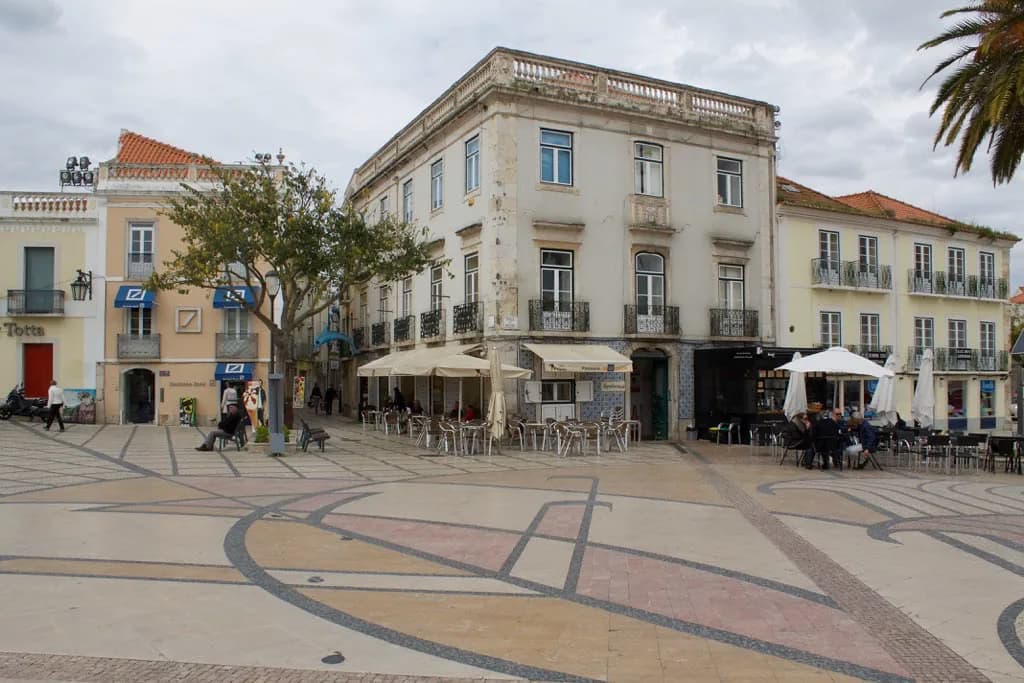
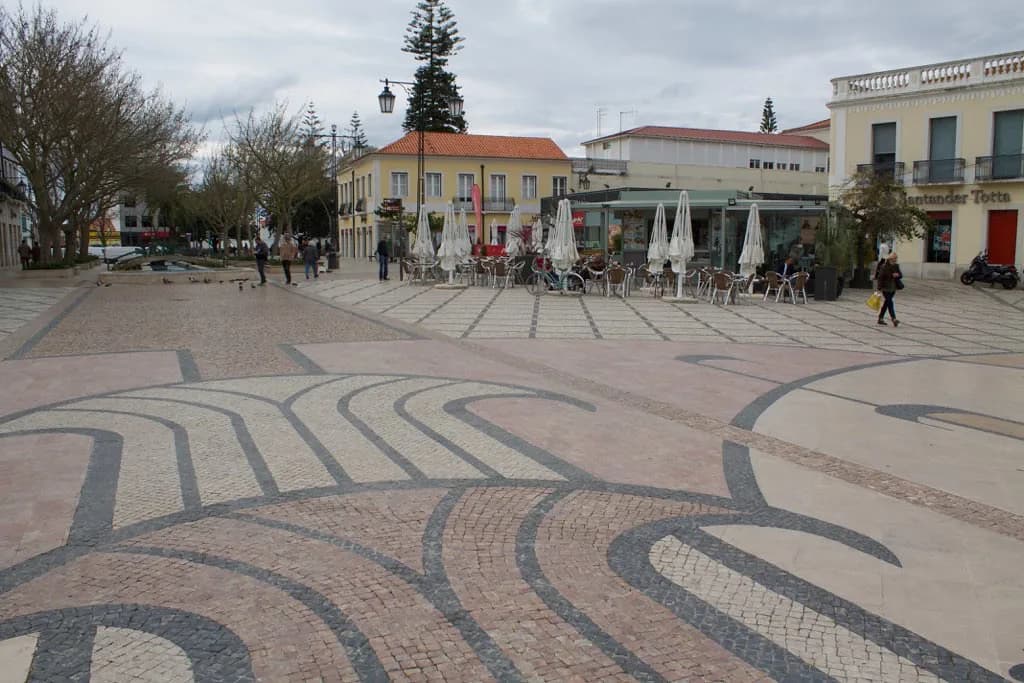
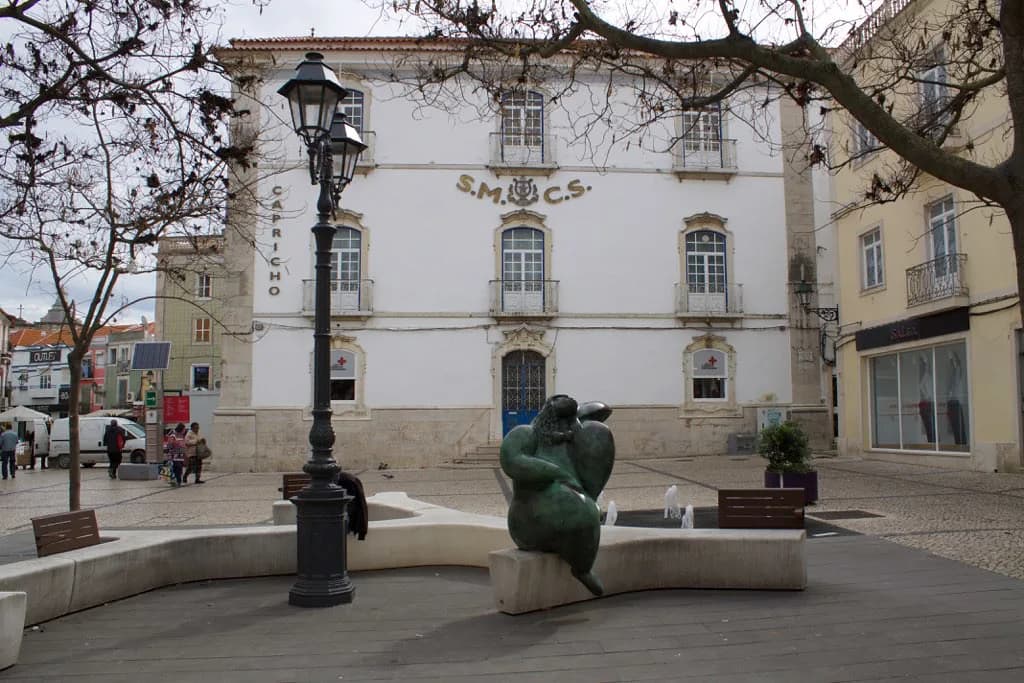
Start at Praça do Bocage, the central square named after the poet Manuel Maria Barbosa du Bocage, who was born in Setúbal in 1765. It is a natural orientation point: cafés spill out around it and the old commercial streets radiate from it. Come here first, get your bearings, then head downhill towards the water rather than uphill.
The streets immediately around the square are where the old town's churches, chapels and grand townhouses are packed together, so the best approach is to wander rather than march between pinpoints. Allow an hour for this first loop before you commit to a route. Our Setúbal walking tour sets the same sights in a timed order if you would rather follow a fixed line than improvise.
The streets to wander: Rua Álvaro Castelões and Avenida Luísa Todi
Rua Álvaro Castelões is the street to take for the everyday old town: traditional buildings, old mansions and small shops, with the life of the city rather than its monuments. Walk it slowly and look up at the tiled façades; the azulejos on ordinary houses here are as good a reason to come as any museum. It feeds naturally down towards Avenida Luísa Todi, the city's main avenue, which runs along the waterfront lined with more traditional buildings and old mansions.
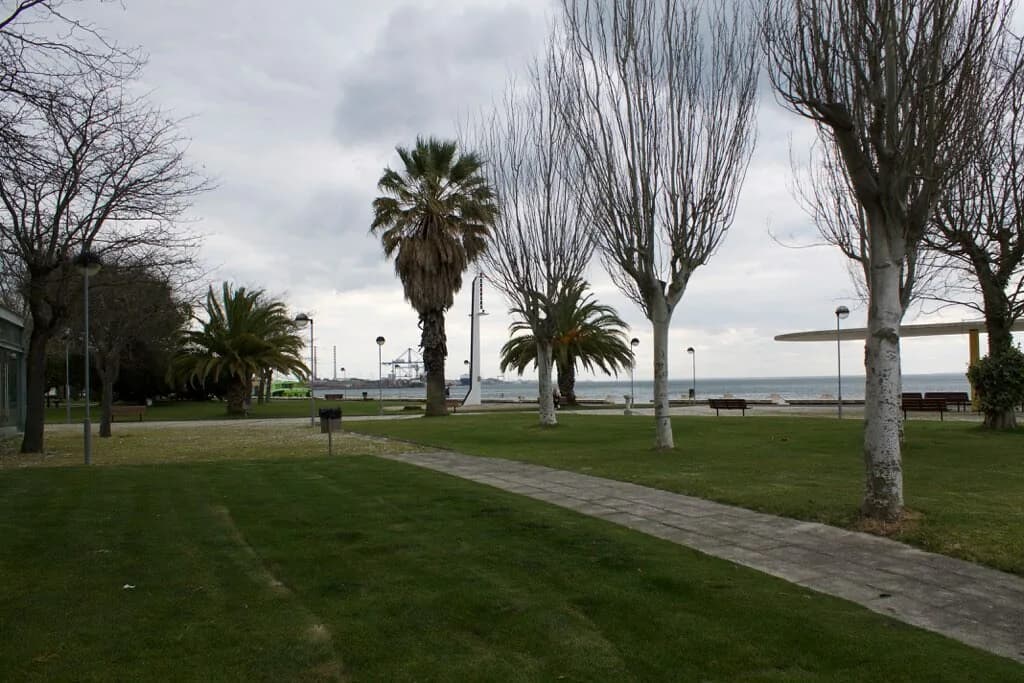
The avenue is the spine of the visit: shops and museums on one side, the fishing port and its docks on the other. Use it as your return leg rather than your first move, because it is the longest flat stretch and works best when you are heading back towards the square for lunch.
Igreja de Jesus: the Manueline church that anchors the centre
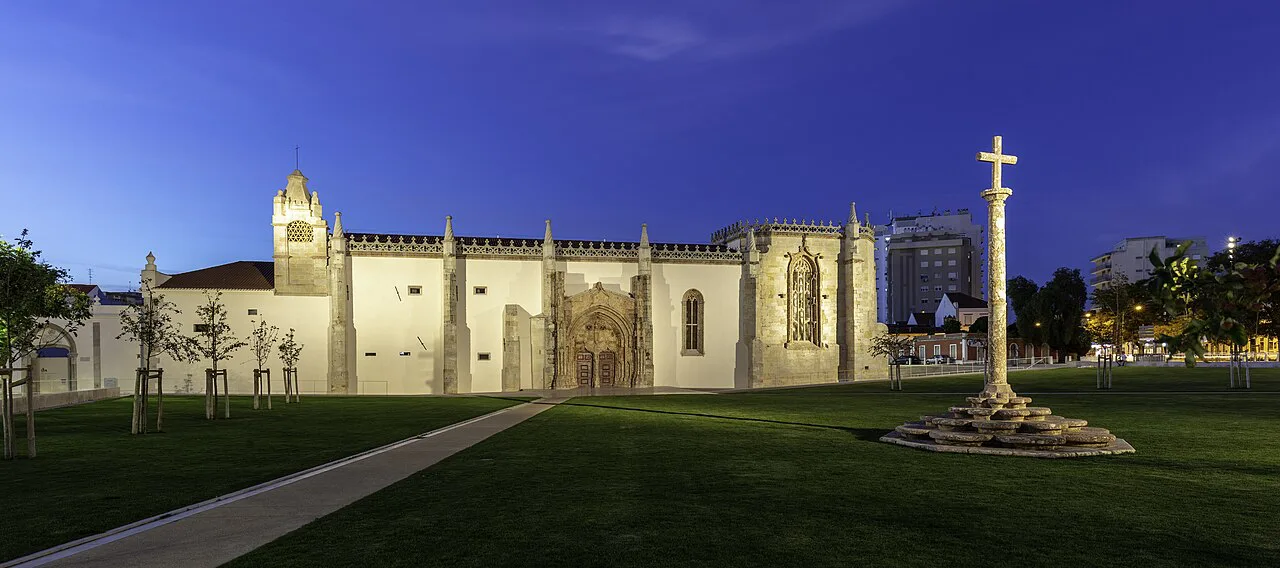
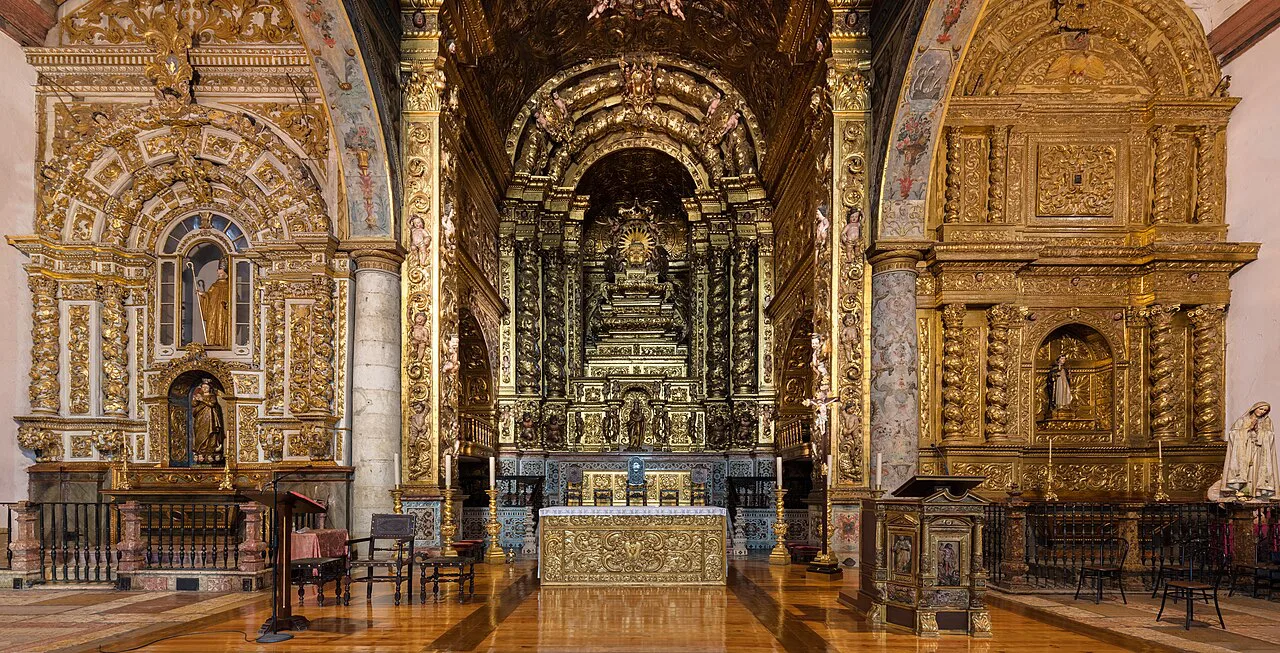
The Igreja de Jesus, a 15th-century church designed by Boitac, who also worked on the Jerónimos Monastery, is Setúbal's star attraction and the one interior not to skip. Its columns are carved to look like twisted rope, the signature of the Portuguese Manueline style, and the effect is unlike anything else in the old town. It sits at the edge of the historic centre, so it slots neatly between the shopping streets and the market.
The church is attached to the Convento de Jesus, the former convent whose name the complex also carries, and together they are the reason many visitors come to Setúbal in the first place. Treat the pair as one stop of around forty-five minutes. If religious interiors are your main interest, our guide to museums in Setúbal covers the city's collections.
Mercado do Livramento: the tiled market and when to go
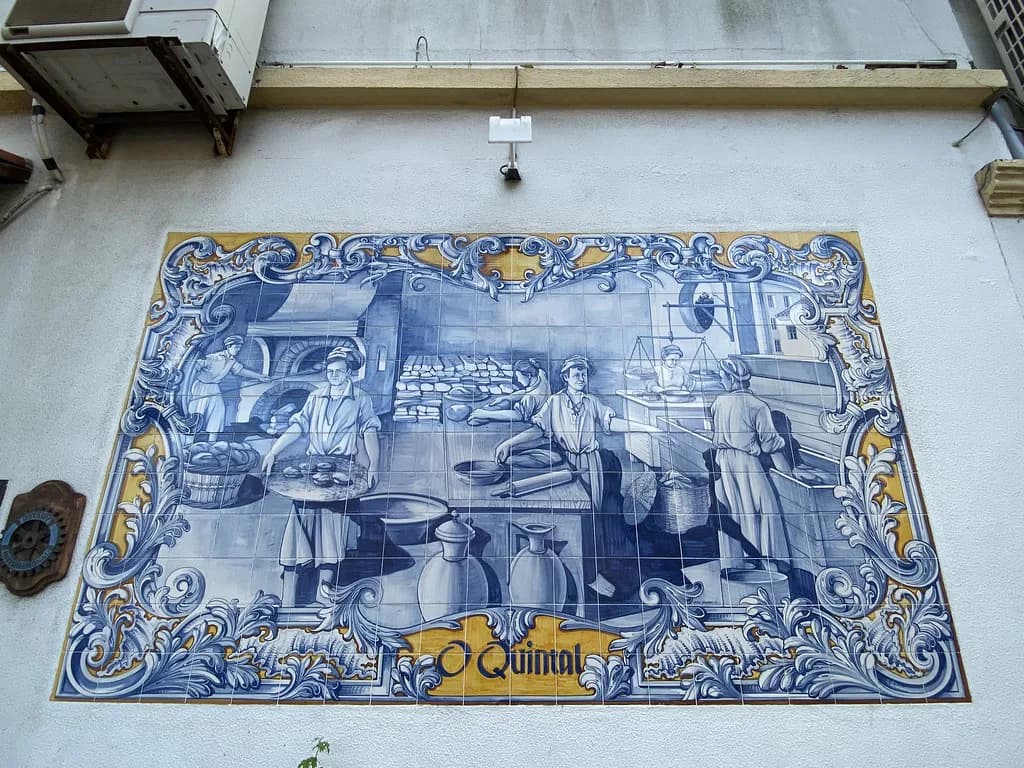
Mercado do Livramento is the morning anchor of any old town walk, and it is widely regarded as one of the best markets in Portugal for fish and fresh produce. Its walls are covered in azulejos that tell the story of Setúbal, so even a quick loop is worth it for the tiles alone. Go early and go hungry: the fish counters are the point, and the displays of fruit and vegetables are part of the spectacle.
There is a real trade-off here. Arrive at the busiest hours and you see the market working as it should, with the fish trade in full swing; arrive late and it is calmer but far less interesting. If you only have half a day, take the market first and let the church and port follow, rather than the other way round.
The fishing port and Doca dos Pescadores
From the market, walk down to the fishing port, where small colourful wooden boats line the docks and the working life of the city is on show. Doca dos Pescadores is the stretch to aim for: fish restaurants sit right on the quay, with sardines and fresh seafood the obvious orders. Late afternoon and sunset are the best light for photographs along the water.
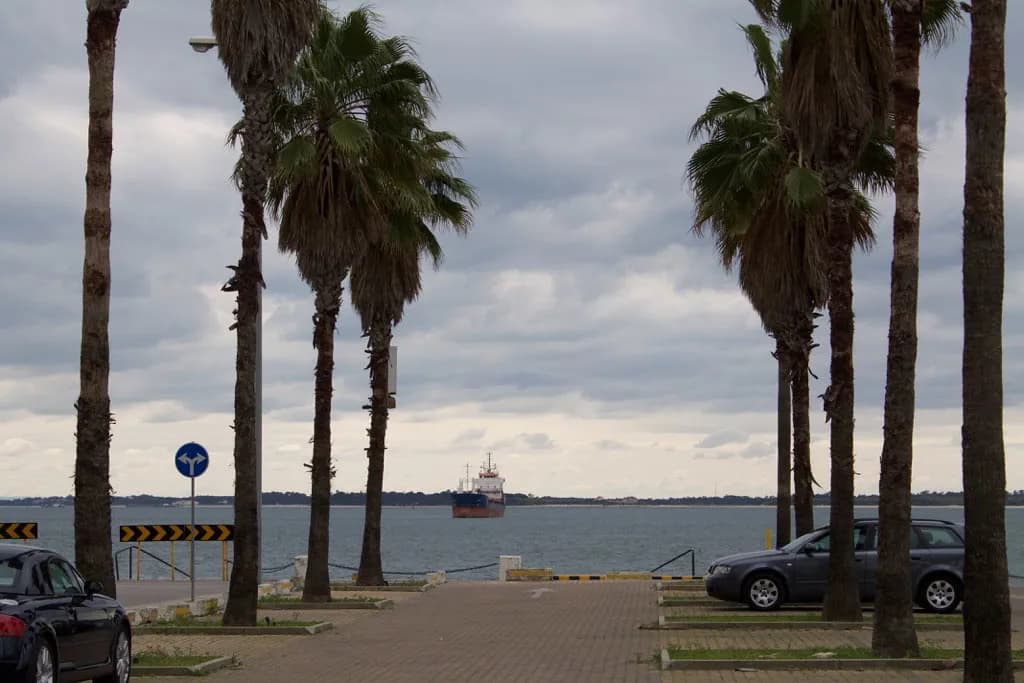
This is also where the Sado estuary opens up, the nature reserve that separates Setúbal from the Tróia peninsula on the far side. Dolphins live in these waters and are best seen from a boat rather than the shore. If that appeals, our guide to dolphins in Setúbal explains the options; book it as a separate outing rather than squeezing it into the walking day.
Fortaleza de São Filipe above the town
The Fortaleza de São Filipe was built in the 16th century on the orders of King Dom Filipe I, a star-shaped fortress raised to defend the Sado estuary from pirates and raiders from North Africa. From the ramparts you get the best view in the city, over the rooftops to the estuary and the Tróia peninsula beyond. There is a café up there; it is reason enough to make the climb in the late afternoon and stay for a glass of Setúbal Moscatel as the light drops.
The climb is the trade-off: it is uphill and away from the flat old town walk, so it suits a full day rather than a half day. Wear shoes that cope with cobbles and go when you still have energy, not after a long lunch. Our guide to Setúbal castle covers the fort in more detail if you want to build the visit around it.
A walking order that links the square, church, market and port
Put it together like this: start at Praça do Bocage, wander the church-and-townhouse streets around it, then walk Rua Álvaro Castelões down to the waterfront. Take in the Igreja de Jesus next, then Mercado do Livramento while the fish trade is at its busiest, and finish at Doca dos Pescadores for the boats and the seafood restaurants. That is the flat half-day loop, and it flows one way without doubling back.
If you have a full day, walk the flat loop in the morning, have a long lunch, then climb to the Fortaleza de São Filipe in the late afternoon and stay for sunset over the estuary. Keep the fort for last so you are not walking back down and up again. Readers who want the same round without decision-making can follow our guide from Lisbon to Setúbal to sort the journey first, then the walking tour once you are in town.
Choco frito and where to eat in the old town
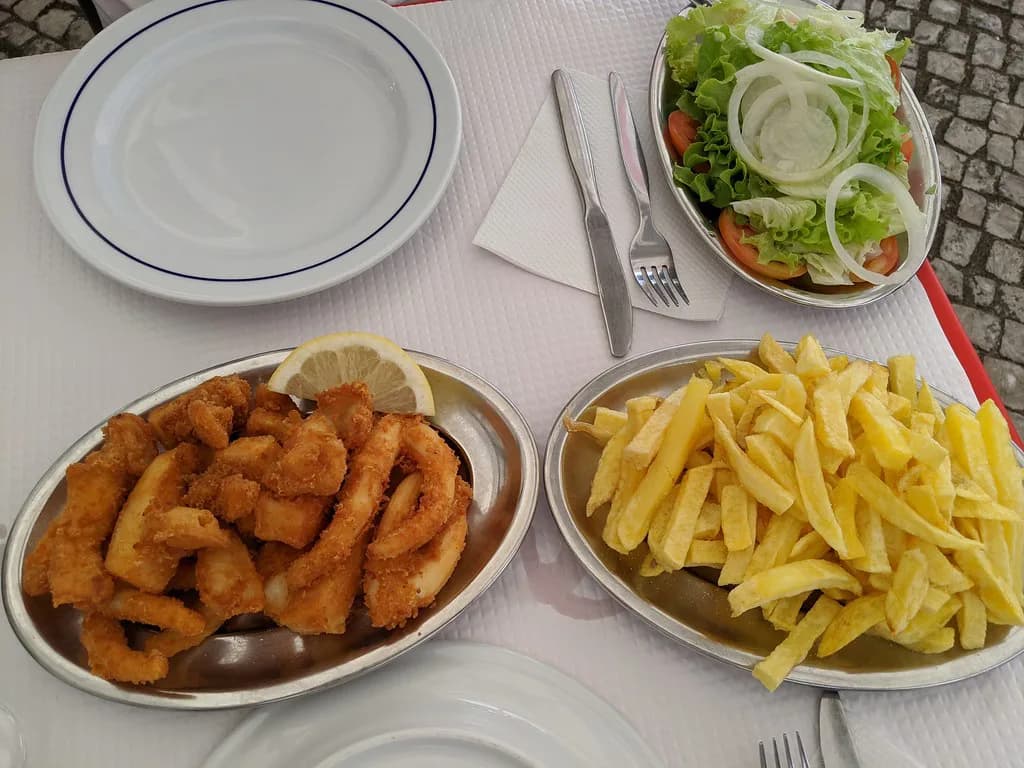
Choco frito, fried cuttlefish, is the dish to plan lunch around, and Setúbal takes it seriously. Casa Santiago on Avenida Luísa Todi is credited with creating the dish in 1974, and still serves it in thin strips fried with pork bacon; eat it on bread, as the locals do. Xtória on Rua Guilherme Gomes Fernandes builds a menu around local products and seasonality, changing it as the seasons turn.
Tasca do Zé Maria is the unfussy option, a shellfish tasca where the menu is written on a board on the wall and the speciality is fried cuttlefish eggs. Pick between them by appetite: a full seafood lunch at Casa Santiago or a light, standing-room tasca plate at Zé Maria. European restaurants this small usually keep one closing day a week, so a quick look at the door on the morning you plan to eat is the sensible precaution.
Old town practicalities
The old town is flat and easy on foot, but the cobbles and the squares are uneven, so comfortable shoes matter more than distance. Many Portuguese churches close for lunch and many museums and monuments shut on Mondays, so treat the middle of the day as market-and-food time and save interiors for the mornings. If a particular interior is the reason for your visit, check its times before you travel and build the walk around it.
Setúbal's weather is mild all year round, so the walk works in any month, with the trade-off that summer afternoons on the quay get hot and crowded. Carry water and aim to be at the fort or the market, not the open avenue, in the early afternoon. Our list of free things to do in Setúbal helps if you want to keep the walking day light on the wallet.
Half day or full day in Setúbal?
Take the half-day loop if you want Setúbal as a day trip from Lisbon: Praça do Bocage, the streets around it, the Igreja de Jesus, the market and the fishing docks. Take the full day if you want the Fortaleza de São Filipe at sunset and a proper choco frito lunch at Casa Santiago. Either way, do the flat centre on foot and leave the hill for the end.
Explore more Setúbal guides
Frequently Asked Questions
How do you pronounce Setúbal?
The stress falls on the second syllable: se-TOO-bal, with a soft, shortened final vowel. Locals run it together quickly, so listen once at the market and you will have it.
Is Setúbal worth visiting?
Yes, for a compact old town, a Manueline church, a serious fish market and a waterfront that still works for a living. It rewards travellers with a day or two who want a real Portuguese city rather than a resort.
Sources
Notes for your next Portuguese break
Optional updates to our town guides.
You might also like
Continue reading
More guides you'll find useful