
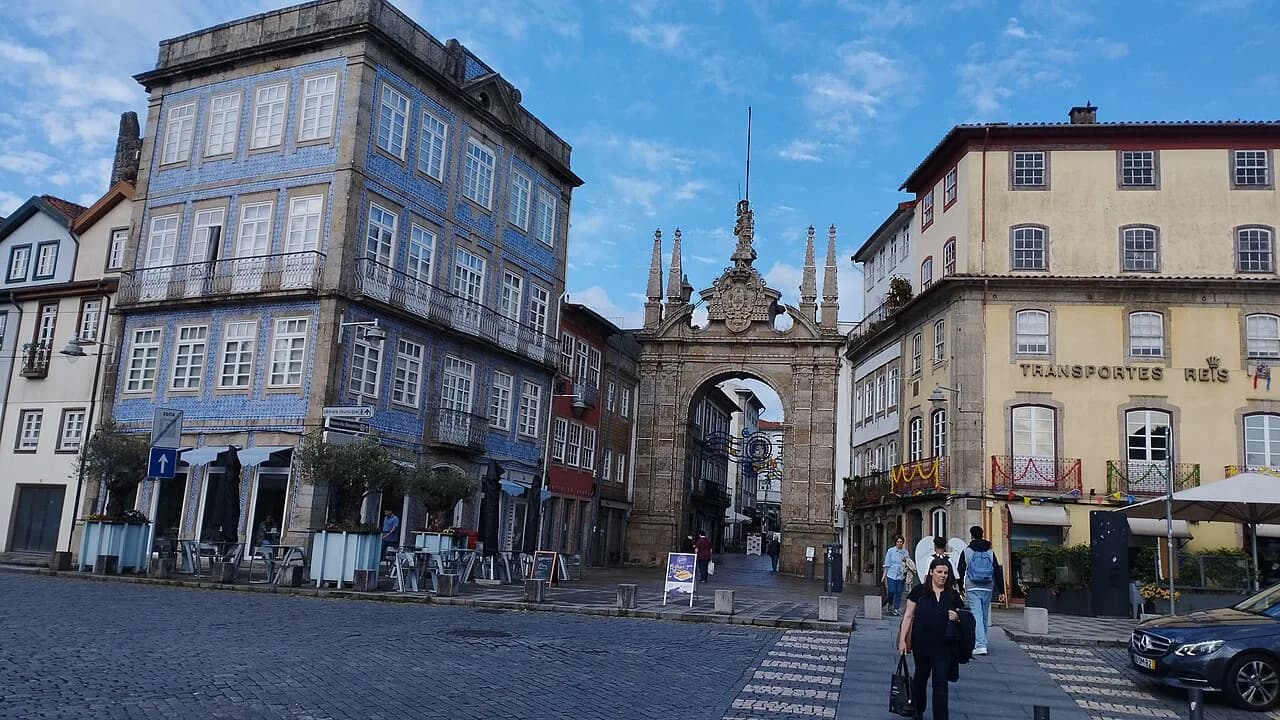
Arco da Porta Nova: Braga's Old City Gate

Arco da Porta Nova is Braga's baroque city gate, and it is free to walk through at any hour. Treat it as a five-minute waypoint on a walking loop through the historic centre, not as a sight that fills an afternoon. This guide covers where to find it, what to look at and how to pair it with the museums nearby, starting from the Braga Attractions: 9 Visitor Guides hub.
What Arco da Porta Nova is
The arch is a ceremonial gateway in the baroque manner, the kind of ornamented door that once marked the line of Braga's defences. It stands on a working street rather than in a closed square, so you meet it as pedestrians and traffic pass through. That is part of its character: this is a city gate still doing a gate's job.
Expect a piece of street architecture, not a museum. There is no ticket office or exhibition inside, so the pleasure comes from looking up at the structure and reading its position against the surrounding rooftops.
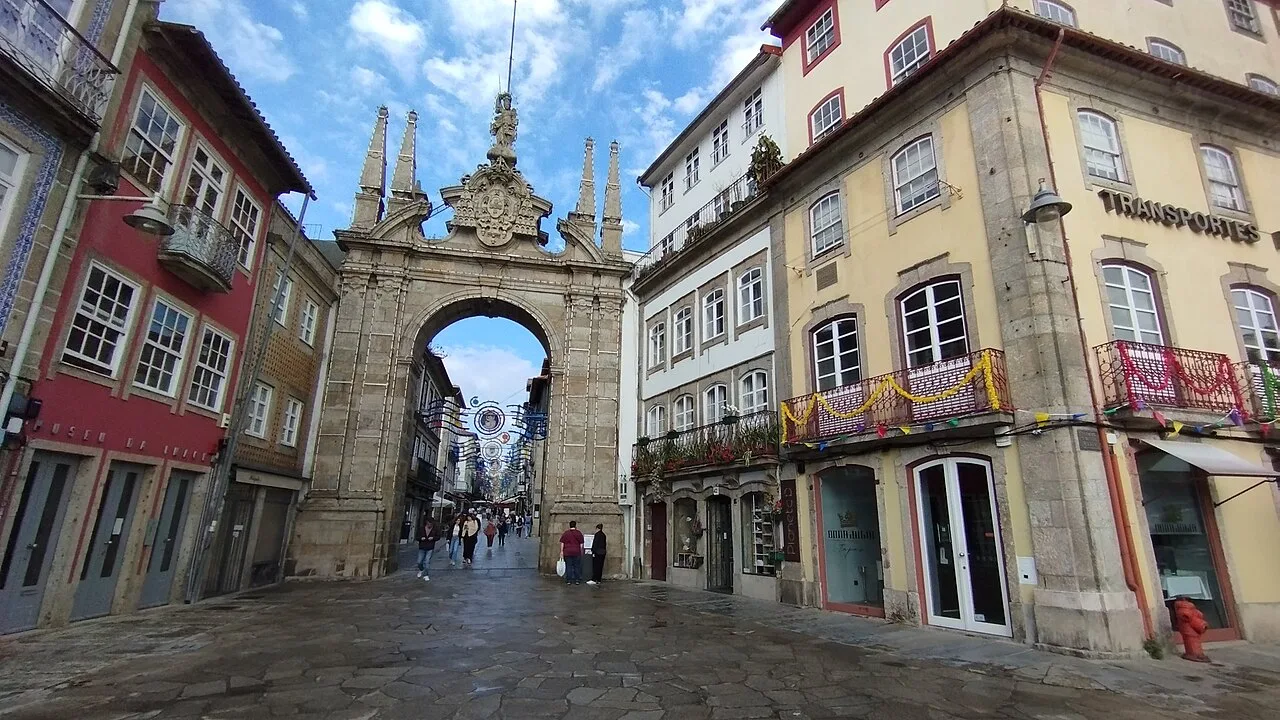

Where the arch stands in Braga
The gate sits at the edge of the historic centre, close to the Rua dos Biscainhos and the mansion that houses the Museu dos Biscainhos. That puts it on a natural route between the cathedral end of town and the quieter streets to the north-west. Use the Biscainhos house as your landmark and the arch is a short walk away.
The immediate setting is ordinary Braga rather than a manicured monument zone, with shopfronts and steep lanes around it. That makes the arch a useful pin in your mental map, but do not expect a quiet viewing platform.

How to get there on foot
The arch works best as part of a walk, because Braga's centre is compact and the gate sits on the way between several sights. Approach from the direction of the cathedral or come down from the Biscainhos side, and you will pass through it naturally. There is no need to plan a separate trip. If you want a wider picture of Roman Braga before you start, the Dom Diogo de Sousa museum is the natural first stop.
From Braga railway station the arch is a straightforward walk into the centre, but the route climbs and the surface changes as you enter the old streets. Wear shoes with grip rather than smooth soles. If you are arriving by train and want a fuller plan, the things to do in Braga guide is the place to start before fixing a route.
What to look at when you arrive
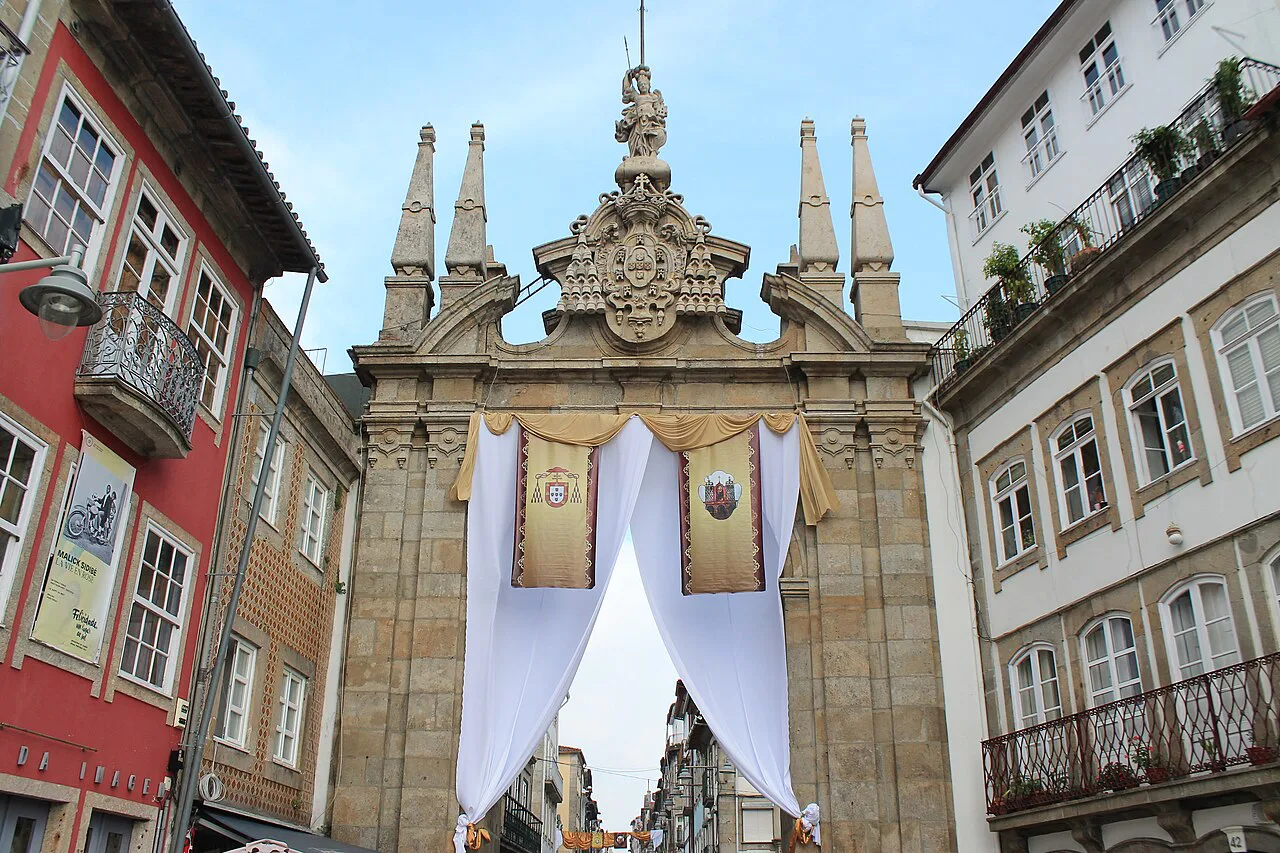
Stand back on the street side and look at the whole composition rather than peering through the opening. The arch's proportions, its crowning details and the way it frames the street beyond are the point. Then walk through it and turn around: the view back towards the old town is the one most visitors miss.
Read the stonework together with the surrounding buildings, because the gate's effect depends on contrast with the plainer facades around it. There is no interpretation panel, so bring your own curiosity about how a walled town controlled movement through a gate like this.
How long to allow
Give the arch a few minutes, not a half-day. That is enough to look at the structure, pass through and take a photograph from both sides. Budget the extra time for the walk that connects it to the museums and squares nearby, because that is where the substance of a Braga morning lies.
If you are building a one-day route, slot the arch between two sights rather than at the start or end. It makes a natural hinge between the cathedral quarter and the Biscainhos area. Travellers with limited mobility should note that the surrounding lanes are steep and paved with calçada, so the approach matters more than the arch itself.
When to go
Because the gate sits on a street used by traffic, early morning is calmer than the middle of the day. Daylight also shows the stonework to better effect than evening light, which flattens the details. Plan around your other visits rather than around the gate.
Pair the arch with a museum morning or afternoon so the walk has a purpose. If you want to see how Braga's baroque architecture plays out on a grander scale, Bom Jesus do Monte in Braga is the city's best-known religious ensemble and makes a natural companion excursion.
Nearby sights worth the detour
The Museu dos Biscainhos occupies a noble townhouse on the Rua dos Biscainhos, with interiors of azulejo panels and painted ceilings that illustrate life in a Portuguese aristocratic house of the seventeenth and eighteenth centuries. Its garden is part of the visit. The museum is run with the national museums and monuments service, so check its official page for current opening arrangements and admission charges.
For the city's Roman layer, the Termas Romanas do Alto da Cividade on the Rua Dr. Rocha Peixoto are the only public Roman baths known in Braga and are classed as a national monument. They open Monday to Friday from 9.30 to 13.00 and 14.00 to 17.30, and on Saturdays from 11.00 to 17.30, closing on Sundays and public holidays. A combined ticket with the Fonte do Ídolo costs €3.70, normal admission is €2.05, with reductions for students, seniors and other eligible visitors and free entry for children up to fourteen. These hours and prices apply to this site, not to other Braga museums.
If the Biscainhos interiors leave you wanting more tilework, Braga's churches hold some of the best examples, and the city council's page on azulejaria explains how the archdiocese attracted leading tile artists in the baroque period. The body of the church of the Salvador and the chapel of São João da Ponte are named there. Treat them as a short extension of your walk rather than a separate day.
Two further stops sit comfortably on the same loop. The Museu D. Diogo de Sousa, the city's archaeology museum, holds the collections that give context to the Roman baths and is worth an hour if you have the time. Farther out, the Sameiro Sanctuary gives the hilltop side of Braga.
Free and always accessible: what to expect
The arch is a street monument: no entrance fee, no turnstile and no closing time, and visitors describe it as free and open around the clock. That makes it ideal for a first evening stroll or a gap between museum visits. It also means no facilities, no guided interpretation and no shelter, so plan accordingly.
Do not expect a visitor centre or a shop at the gate itself. The nearest sources of information are the museums and the city's tourism office. The arch rewards a little background reading more than a long stay, so arrive knowing what you are looking at.
Practical points for the old-centre lanes
Braga's historic centre is paved with calçada, the small granite setts that look handsome and feel unforgiving underfoot. Wear shoes with proper soles, especially after rain, when the stones become slippery. The lanes around the arch also rise and fall, so pace yourself if you are carrying bags or travelling with children.
Traffic passes through the gate, so keep to the pavement and look before stepping out for a photograph. Check each museum's own page for opening days before you build a day around it. The Santa Barbara garden and the Palácio do Raio are two further stops in the same quarter.
For a longer stay, the Theatro Circo adds a restored early twentieth-century theatre in the centre, which suits a two- or three-day visit alongside the arch and the museums. Use the Braga hub to decide which of these deserve your limited hours.
Should the arch be on your Braga walk?
Yes, but as a waypoint rather than a destination. Walk through Arco da Porta Nova on your way between the cathedral quarter and the Biscainhos museum, look at it from both sides, and give it five minutes. The reward comes from the route around it, especially the azulejo interiors of the Museu dos Biscainhos and the Roman baths on the Alto da Cividade.
Plan the arch into a half-day loop, check the museums' own pages for the days they open, and wear shoes that cope with calçada. If you have a full day, add Bom Jesus do Monte and the city's other baroque sights. That way the gate becomes the hinge of a proper Braga walk rather than a stop in itself.
Frequently Asked Questions
Is Arco da Porta Nova free to visit?
Yes. The arch is an open street monument with no ticket office, and visitors describe it as free and accessible at any hour. There are no facilities or guided displays at the gate itself.
How long should I spend at Arco da Porta Nova?
A few minutes is enough to look at the structure, pass through and take photographs from both sides. Treat it as a stop on a walking loop between the cathedral quarter and the Museu dos Biscainhos rather than a sight in its own right.