
Termas Romanas do Alto da Cividade: Braga's Roman Baths

The Termas Romanas do Alto da Cividade are the only public Roman baths known in Braga, and they make a compact 30 to 45 minute stop rather than a headline sight. The excavated complex sits inside a walled archaeological area on the Alto da Cividade, north-west of the historic centre, and has been a Monumento Nacional since 1986. This guide covers where the baths are, how to walk there, what you actually see, the opening hours and ticket prices, and how to pair the visit with nearby sights.
What the Alto da Cividade baths are
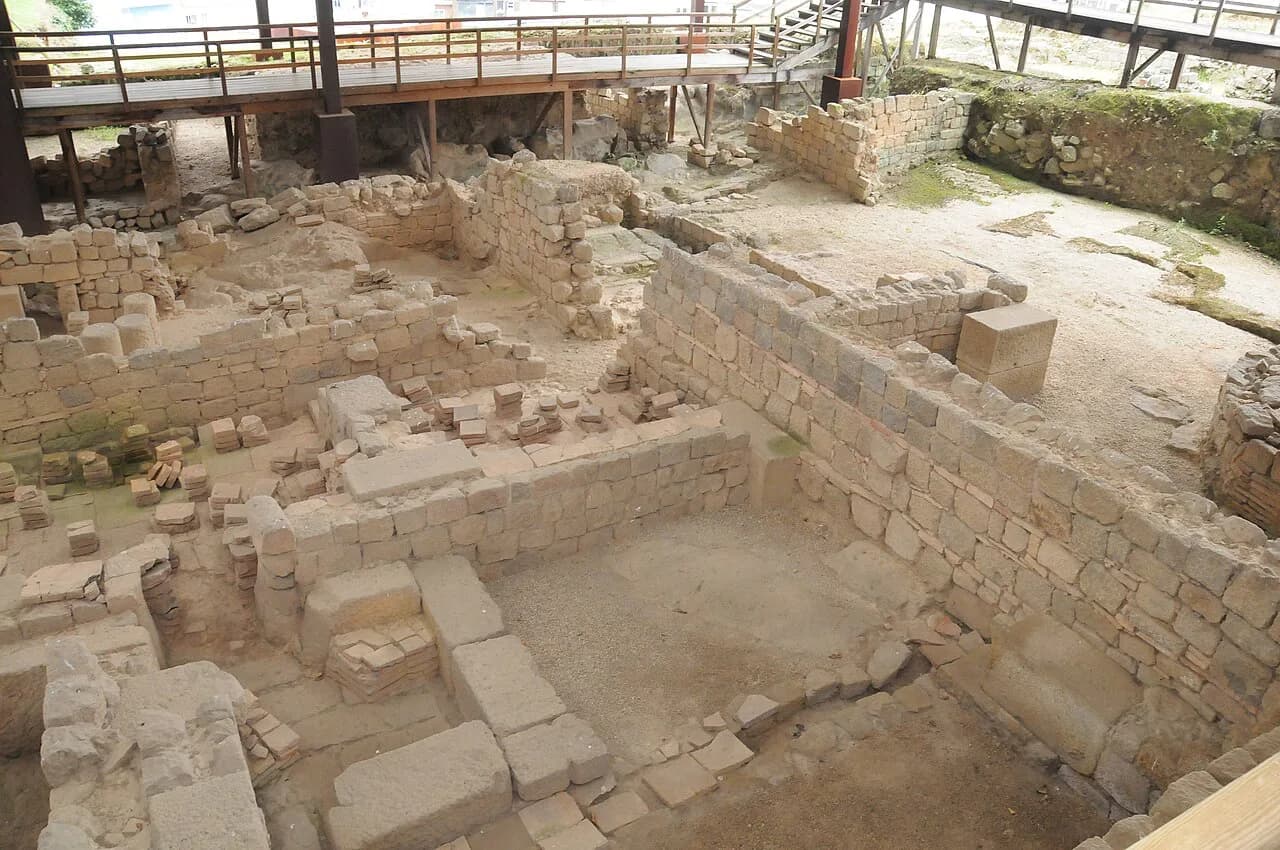
These are the remains of a Roman public bathing complex, discovered during excavations in 1977 and later protected as a national monument. The site was musealised and reopened to the public in November 2004, with a shelter over the archaeological remains and a reorganised area around them. The work was carried out by Braga's municipal council with the Universidade do Minho's archaeology unit and the Museu Regional de Arqueologia Dom Diogo de Sousa.
Do not confuse this site with the Termas de Maximinos, a separate set of Roman bath ruins in Braga that appears in search results and review sites. The Alto da Cividade complex is the one on Rua Dr. Rocha Peixoto, inside the fenced archaeological area, and that is the address to give a taxi driver or to enter into a map app.
The baths belong to Roman Bracara Augusta, the settlement beneath modern Braga, which gives the visit its context: you are looking at civil engineering from the town that became the provincial capital of Gallaecia. Read the panels before walking the circuit, because the masonry alone is not self-explanatory.

Where the baths sit and how to reach them
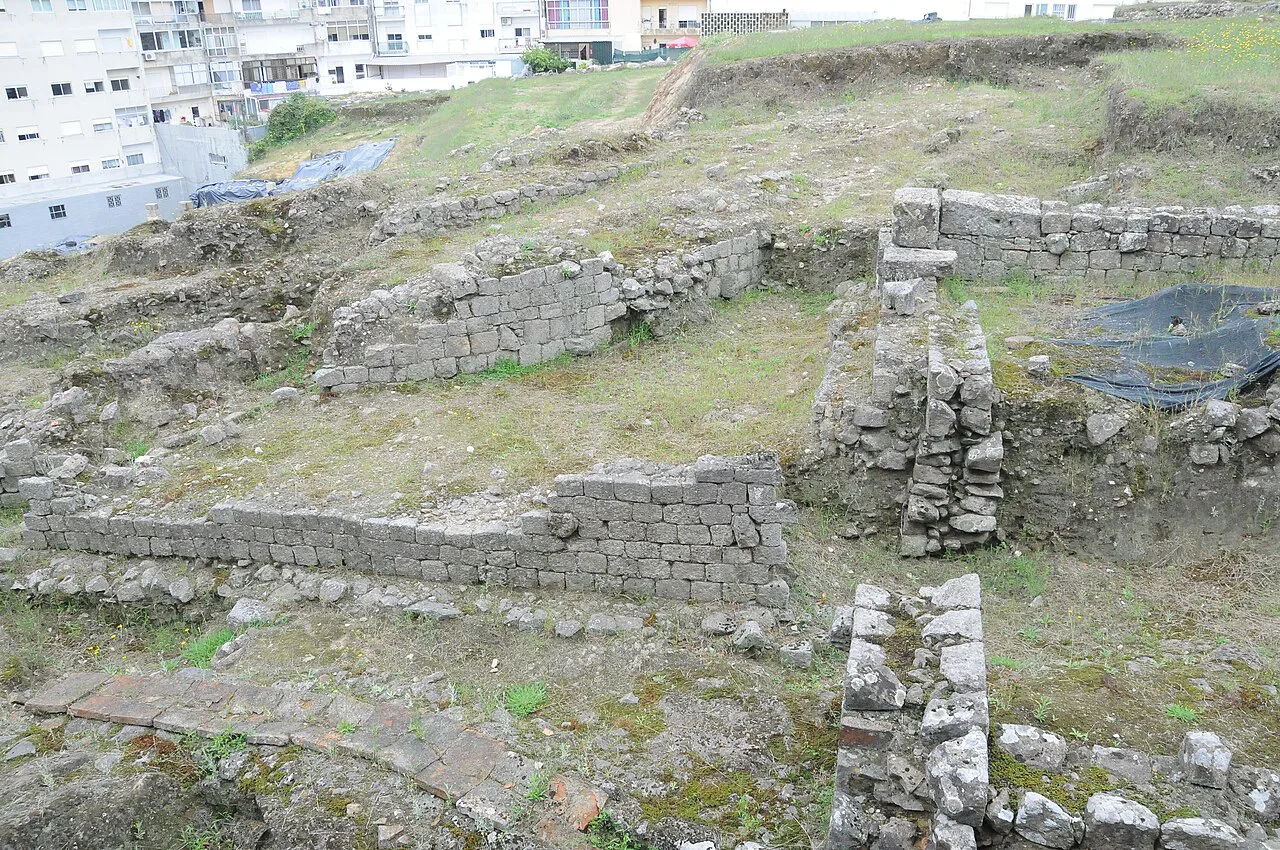
The site stands on the Alto da Cividade hill, in a protected archaeological zone north-west of the old centre. It is a manageable walk from the Sé and the Praça Municipal rather than a trip out of town, and the approach is uphill for the last stretch. Allow around 15 to 20 minutes on foot from the cathedral, or take a taxi if the climb does not appeal.
Walking is the sensible option because the streets between the centre and the hill are part of the point: calçada pavements, ordinary neighbourhood buildings and a couple of small squares. Wear shoes with grip, since Braga's granite setts are slippery after rain. If you are building a day around the centre, see the other Braga Attractions: 9 Visitor Guides for what else sits within the same walking radius.
Opening hours and ticket prices
The site opens Monday to Friday in two blocks, 9h30 to 13h00 and 14h00 to 17h30, and on Saturdays from 11h00 to 17h30. It closes on Sundays and public holidays, and the midday gap on weekdays is the detail that catches people out, so plan the visit for the morning or after 14h00. Hours are set by the municipality and can change, so confirm them for your dates before travelling.
A standard ticket costs €2.05, and a combined ticket covering both the Termas Romanas do Alto da Cividade and the Fonte do Ídolo costs €3.70. Concessions at €1 apply to students, teachers, visitors aged 65 and over, retirees, young-card holders and disabled visitors with a companion, while children up to 14 go free. The same page lists exemptions for archaeology, museum, tourism and journalism professionals and for officially arranged school groups.
Buying one combined ticket for both sites is cheaper than paying twice, and the two are close enough to do back to back. Concessions require identification, so carry the card or document that proves your status.

What you actually see inside
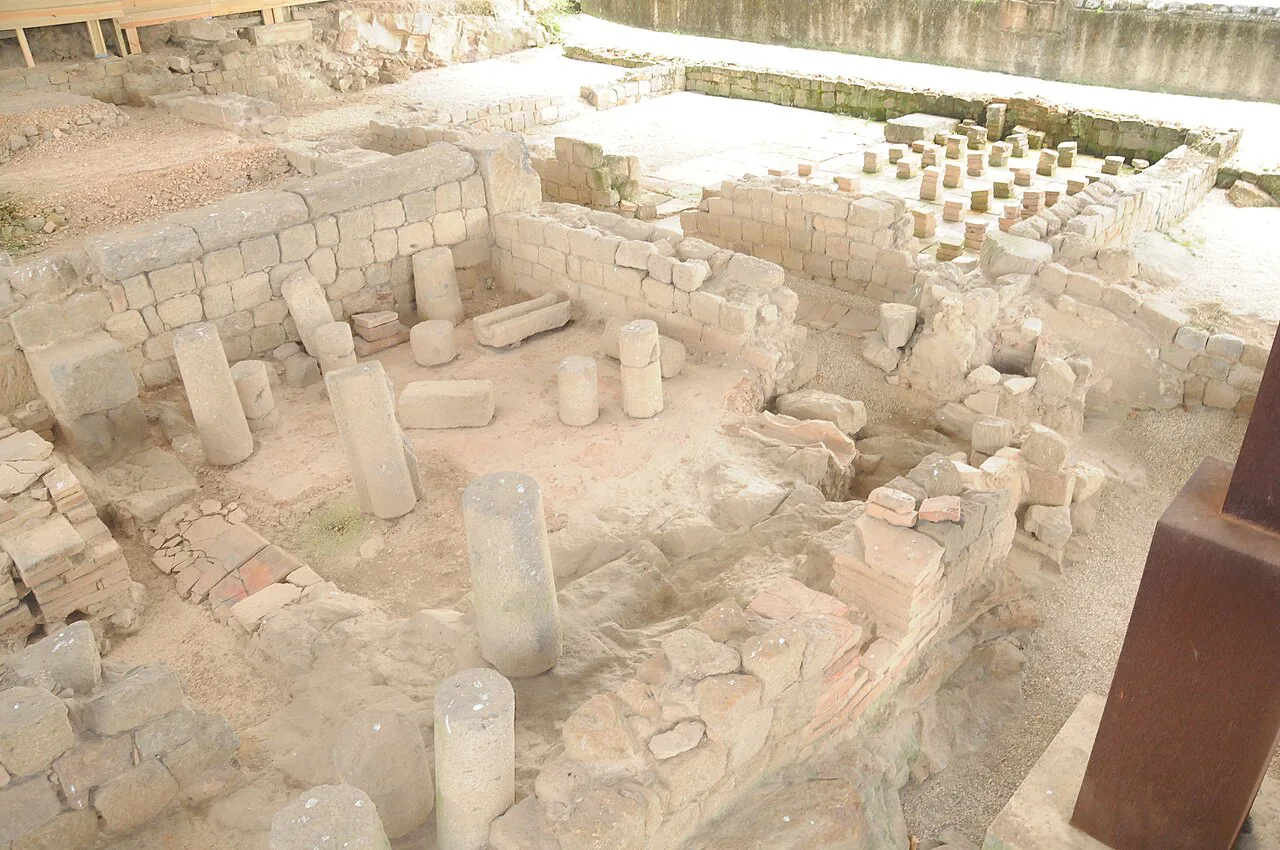
The visit is a short circuit around excavated foundations under a protective structure, with the layout of the bathing rooms legible in the stone. Interpretation panels explain the sequence of cold, warm and hot rooms that structured a Roman bathing routine. The remains were left in place rather than reconstructed, so expect low walls and floor levels rather than standing architecture.
A protective structure covers the excavated remains, which makes this a more sheltered archaeological stop than Braga's open-air sites — useful in a city with regular Atlantic showers. Because the site is small, the interpretation panels do most of the storytelling work and there is limited to see beyond the masonry itself. If you want objects rather than structures, the Museu D. Diogo de Sousa is the natural next stop.
How long to allow
Budget 30 to 45 minutes: enough time to read the panels, walk the circuit and take in the setting without rushing. It works as an add-on to a morning in the centre rather than a destination in its own right, and it is a poor fit for anyone hoping for a half-day attraction. Pair it with the Fonte do Ídolo on the combined ticket to make the walk worthwhile.
Time the visit for the opening block, not the end of one, because the weekday closure from 13h00 to 14h00 applies to the whole site. Arriving at 12h40 gives you twenty minutes at best.
Is it worth it?
The honest trade-off is this: the baths are small, and if your short break in Braga allows only a handful of sights, the Sé, the centre's churches and the Museu D. Diogo de Sousa will fill your time more densely. Come here if you are interested in Roman Bracara Augusta specifically, or if you want a quiet, sheltered stop away from the main tourist flow.
It is also a good wet-weather option, which makes it easy to justify as a twenty-minute detour on the way to somewhere else. If your priority is the city's later architecture and azulejo interiors, spend the time elsewhere and come back to the Romans on a longer trip. The wider Braga Attractions: 9 Visitor Guides sets out the alternatives.
Nearby sights to pair with the baths
The Fonte do Ídolo, a Roman rock-cut sanctuary, is the obvious companion and shares the combined ticket, so the two form a natural Roman-themed pair. The Museu D. Diogo de Sousa, Braga's archaeology museum, holds the collections that give the ruins their context and lies on the same side of the centre. Check that museum's own hours and admission separately before setting out.
If you are staying in the centre, the Arco da Porta Nova and the Palácio dos Biscainhos are easy to fold into the walk back down the hill. Both are better treated as separate stops than as a single circuit with the baths.
For something on a completely different scale, the Bom Jesus do Monte in Braga is a baroque sanctuary and pilgrimage site reached by its famous staircase, and it makes a half-day contrast to these low Roman walls.
Practical points before you go
The site is a short walk from the centre but uphill, and the protected area is fenced, so follow the signed entrance rather than looking for a gap in the wall. Bring a rain jacket rather than an umbrella if you are combining the visit with the Fonte do Ídolo, since the walk between them is on open streets.
The municipality publishes a contact email and telephone number for the baths, which is the route to take if you need to confirm access arrangements. Prices and hours above reflect what the official archaeology page lists; reconfirm them close to your visit, especially around public holidays, when the site closes.
Is the Roman bathhouse worth half an hour of your Braga trip?
Yes, if you want Roman Braga and a sheltered, inexpensive stop; no, if your one or two days are already full of churches and museums. The combined ticket with the Fonte do Ídolo is the sensible buy, and the weekday lunchtime closure is the one timing detail to respect. Go in the morning, allow under an hour and walk back down into the centre with the rest of the day intact.