
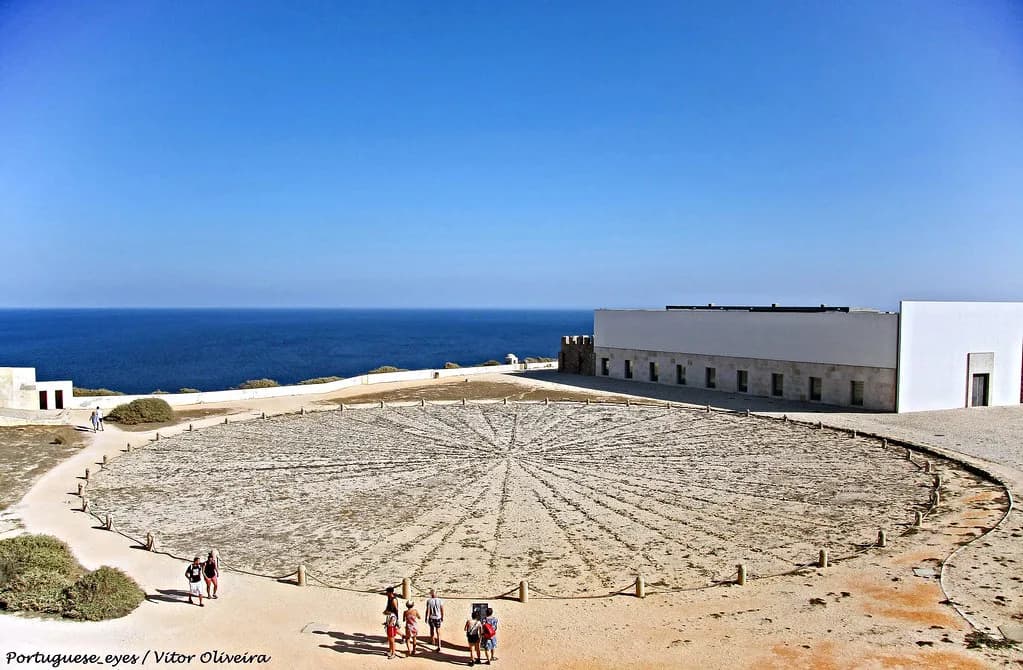
Sagres Fortress (Fortaleza de Sagres): what to see and how long to allow
The Fortaleza de Sagres is a walled fortress on a clifftop headland at the south-western edge of the Algarve, and it rewards a slow hour of walking rather than a quick photo stop. The circuit of its ramparts, gates and seaward cliffs is the main event, with enormous views west and south over the Atlantic. This page covers where the fortress sits, how to reach it from Sagres village, what to look for inside, how long to allow and how it fits alongside the rest of the headland.
What the Fortaleza de Sagres is
This is a coastal defence work built to guard the approaches to the Algarve's south-western tip, and its scale is best understood on foot: thick walls enclose a broad, wind-scoured headland rather than a compact building. The fortress is presented as a symbol of Portugal's Age of Discoveries and as a key historical coastal defence, which tells you what to expect: landscape, stone and outlook rather than rooms of exhibits. Arrive expecting a walk around a walled promontory and you will enjoy it far more than if you arrive expecting a furnished palace interior.
The setting does most of the work. The walls sit at the edge of massive cliffs, and the seaward side gives you the long, bare Atlantic horizon that makes this corner of the Algarve feel so different from the sheltered beaches further east. Bring a windproof layer even on a bright day, because the exposure on the headland is part of the experience.

Where it is and how to reach it
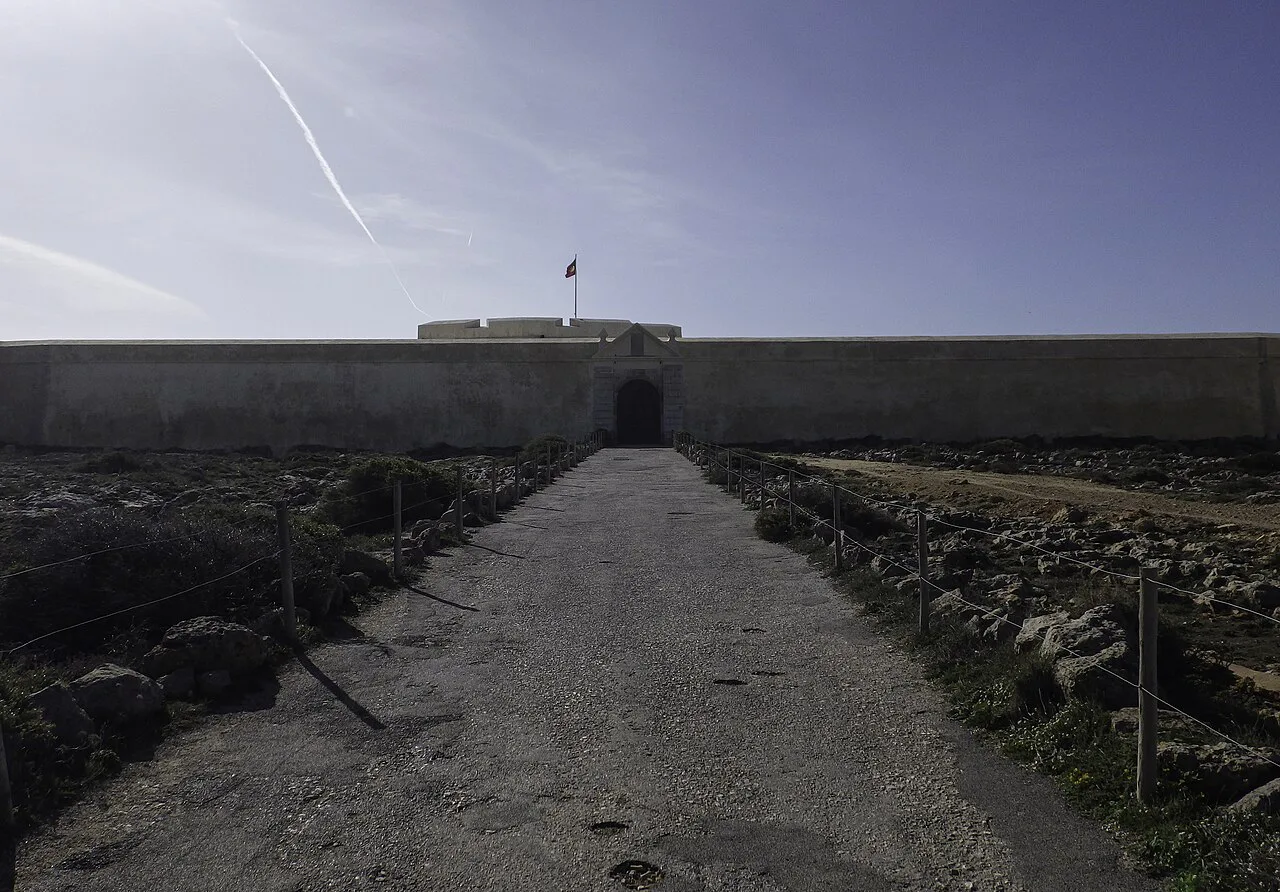
The fortress stands on the Ponta de Sagres, the headland immediately west of Sagres village, and the walk from the village centre to the entrance is short and straightforward on foot. If you are driving, the road continues past the village to the headland and there is parking near the fortress, which makes it easy to combine with the lighthouse and the western cliffs in one outing. Walking is the better choice in high season, when the small car parks around the headland fill quickly.
Sagres itself is a small, spread-out place with a working harbour and a handful of streets, so treat the fortress as one stop on a headland circuit rather than a separate excursion. The broader picture of what else is within walking distance is set out in our guide to things to do in Sagres, which helps you sequence the fortress, the cliffs and the village in a single half-day.

What to see inside: walls, gates and the seaward cliffs
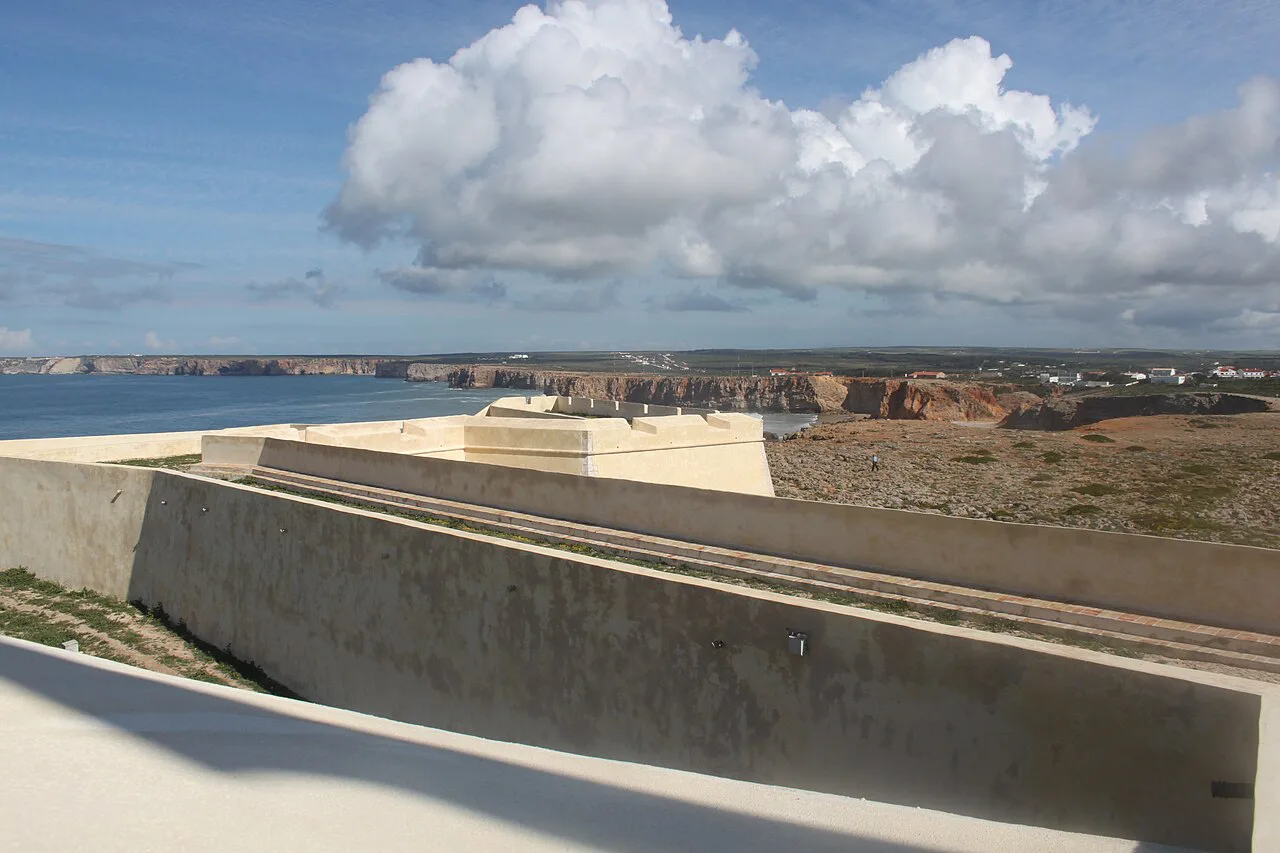
Inside the walls, the pleasure is in the wandering. Walk the ramparts where you can, look back at the gatehouse and the line of the defensive wall, and then follow the path out towards the seaward edge, where the rock drops away and the Atlantic fills the frame. The fortress is a place to look out from as much as to look at, so give yourself time at the outer points instead of hurrying back to the entrance.
One honest caveat: this is a walled clifftop headland treated as a coastal defence and a symbol of the Age of Discoveries, and the sources describe it in terms of its cliffs and outlook rather than its contents. Go for the setting — stone, wind and ocean — and the visit works; go expecting a museum of artefacts and it will not.
How long to allow and how to pace the circuit
Allow roughly an hour for the fortress itself: long enough to walk the circuit, stop at the seaward viewpoints and read the occasional panel, but not so long that you run out of energy for the rest of the headland. If you are photographing or simply sitting with the view, add another half-hour. The circuit is not strenuous, but the ground is uneven in places and the wind can make the exposed sections feel harder than the distance suggests.
Pace it as the first stop of a half-day: fortress first, while you are fresh, then the short walk out to the cliffs and the lighthouse, then back into the village for a late lunch. That order works well because the fortress has the most enclosed ground to cover and the outer headland is mostly about standing and looking. If the wind is up, do the walled sections first and save the most exposed edge for last.
Tickets, opening hours and closures
Ticket prices and opening hours for the Fortaleza de Sagres are set locally and change with the season. Confirm them with the site operator or the official Cultura Algarve listing before you set out, and check any concession for children or families at the point of sale.
The same applies to opening days and any seasonal closures, which are not fixed from year to year. Check the official listing for the day you plan to visit, especially outside the summer months and on public holidays, and have a fallback plan if the gates are shut: the headland paths and the area around the lighthouse are outdoors and do not depend on the fortress being open.
Nearby: the rest of the headland and the coast
The headland itself is the main companion to the fortress. The Ponta da Atalaia, west of the fortress along the same stretch of coast, is a wilder clifftop viewpoint with a quite different atmosphere, and it makes a natural second stop if you have a car. Our guide to Ponta da Atalaia sets out what to expect there.
Back towards the village, the Baleeira fort is a smaller, quieter defensive work above the harbour, and it is a good contrast to the scale of the main fortress. It suits a short stop on the way in or out rather than a dedicated trip.
If you want a beach, the coves around Sagres are close at hand, but the water here is cold and the Atlantic swell is real, so treat a swim as a bonus rather than the plan. The fortress, the cliffs and the lighthouse are the reasons to come to this corner; the sand is what you do afterwards if the wind drops.
Common mistakes to avoid
The most frequent error is arriving without checking opening times and finding the gates closed, particularly out of season. The second is expecting a museum: this is an outdoor monument, and the experience depends on the weather and on your willingness to walk the walls and look out to sea. Check the official pages the day before you go, then give the fortress the hour it deserves and save your energy for the cliffs beyond.
Is the fortress worth an hour of your half-day?
Yes, provided you go for the setting rather than the exhibits. The Fortaleza de Sagres gives you a walled clifftop circuit, big Atlantic views and a sense of the scale of Portugal's maritime past, all within a short walk of the village. Pair it with the cliffs and the lighthouse, check the official opening details first, and it slots neatly into a half-day in Sagres.
Frequently Asked Questions
Why is Sagres called the end of the world?
Sagres sits at the south-western corner of the Algarve, where the coast turns and the Atlantic stretches west with nothing beyond it until the Americas. That geography, rather than any official designation, is behind the old end-of-the-world reputation, and it is best appreciated from the cliffs around the fortress and the lighthouse.
Is Sagres worth a visit?
Yes, if you want dramatic coastal scenery and a sense of Portugal's maritime history rather than a resort town. The fortress, the headland viewpoints and the lighthouse make a solid half-day, and the village has a working harbour atmosphere. It is a long way from the eastern Algarve, so build it into a western-Algarve itinerary rather than a day trip from Faro.
Is there a star fort in Portugal?
The Fortaleza de Sagres is a walled coastal defence on a headland, and its layout is shaped by the land it stands on rather than by a textbook star plan. Visitors looking for a geometrically perfect star fort should check the official Cultura Algarve descriptions of the site before travelling, since the fortress is presented mainly as a coastal defence and a symbol of the Age of Discoveries.