
Igreja do Carmo, Tavira: Visiting the Carmo Church

The Igreja do Carmo, formally the Igreja de Nossa Senhora do Carmo, is a short stop on a Tavira short break: the kind of church you read from the street and step into for a few quiet minutes, not a morning in itself. Treat it as one stop on a loop through the old town that takes in the castle hill and the riverfront rather than a destination in its own right. This guide covers where the church sits, how to walk to it from the Gilão, and how to fit it into a one- to three-day visit.
What the Igreja do Carmo is and why it is worth a stop
The Carmo is one of several historic churches packed into central Tavira, and its dedication is what distinguishes it from the Misericórdia, Santiago and Santa Maria do Castelo nearby. Its appeal for a short-break visitor is scale: a single church you can absorb quickly, set among streets you will already be walking. On a limited schedule, see it as a satisfying bonus rather than the headline. Our overview of Tavira Attractions: 7 Visitor Guides shows how it fits alongside the other sights in the centre.

Where the church is: which part of Tavira it sits in
Tavira's centre is compact and split by the river Gilão, with the old bridge as the obvious crossing point. Set aside a short walk and use the river and the bridge as your compass: the centre's churches are close together, so allowing time on the ground to look up at façades is more useful than a rigid route.

How to reach it on foot from the Praça da República and the Gilão
Start at the Praça da República, the riverfront square most visitors cross on their way into the old centre, and walk into the streets behind it. The route is flat and short, so it works as the first stop on a morning loop before the day heats up. Use the Ponte Antiga in Tavira, the old bridge that anchors the river crossing, as your landmark to return to.
From the eastern bank, the old bridge is the simplest link, and from there the walk stays within the compact centre rather than climbing. Wear shoes you can walk in on calçada, the Portuguese cobbles that are uneven underfoot, and watch for traffic in narrow streets where pavements are thin. The whole church circuit is walkable within the centre; for how the pieces connect, see things to do in Tavira.
What to look for on the exterior: façade, doorway and setting
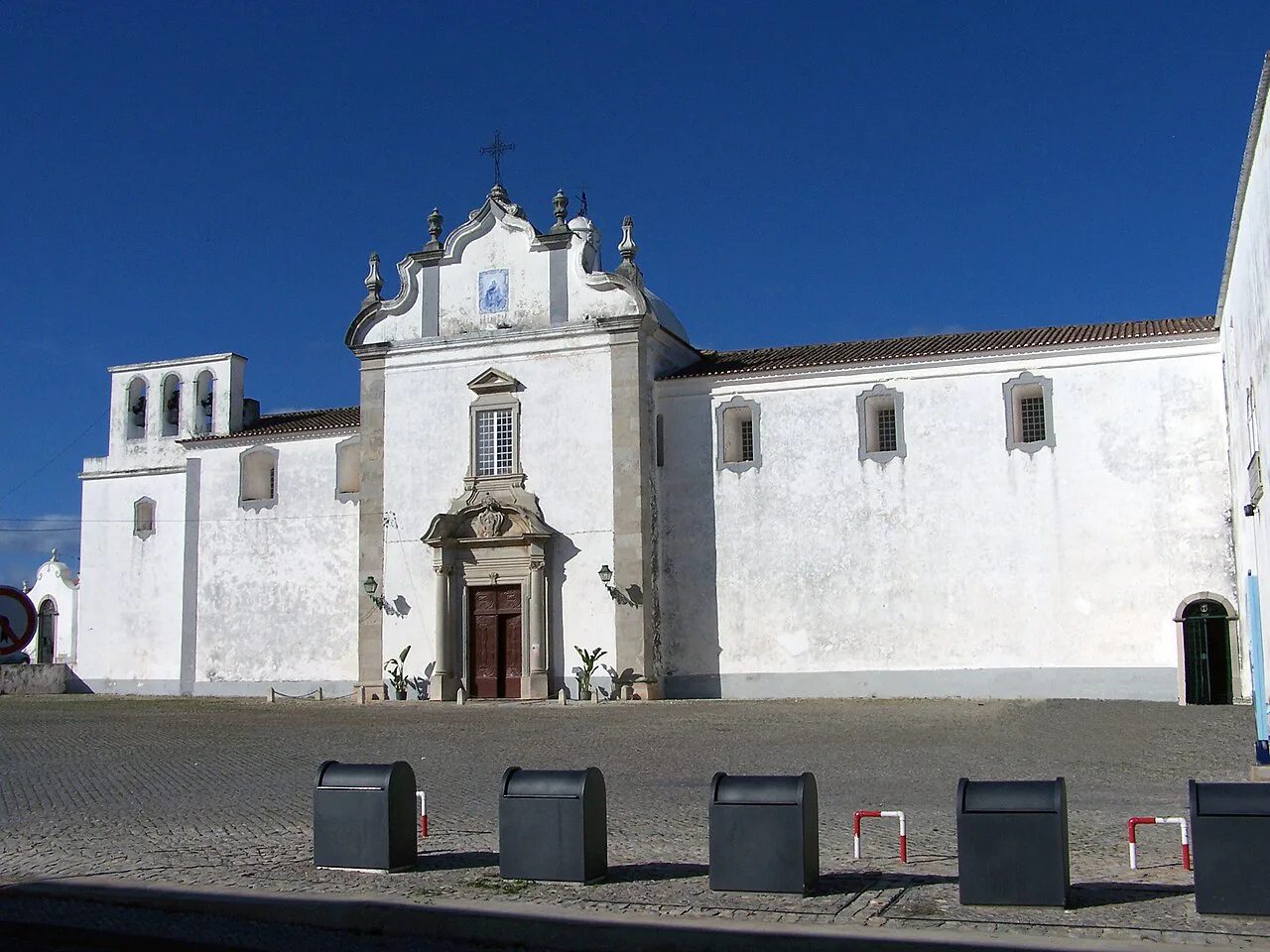
Read the Carmo as an architectural exercise rather than a checklist. Look first at the massing against the neighbouring houses, then move to the doorway and the way the entrance is framed. A stock photograph of the Do Carmo Church, Tavira, Algarve, Portugal gives a sense of the exterior and its streetscape, though it shows the building as photographed in 2012 rather than its present condition.
Portuguese church façades often carry more than first appears: niches, mouldings, a clock or bell arrangement, and plaster finishes that shift colour in strong light. Stand back across the street for the whole front, then close in for detail at the door. Early morning and late afternoon give the most forgiving light and the quietest streets.
What to see inside: nave, altarpieces and azulejo panels
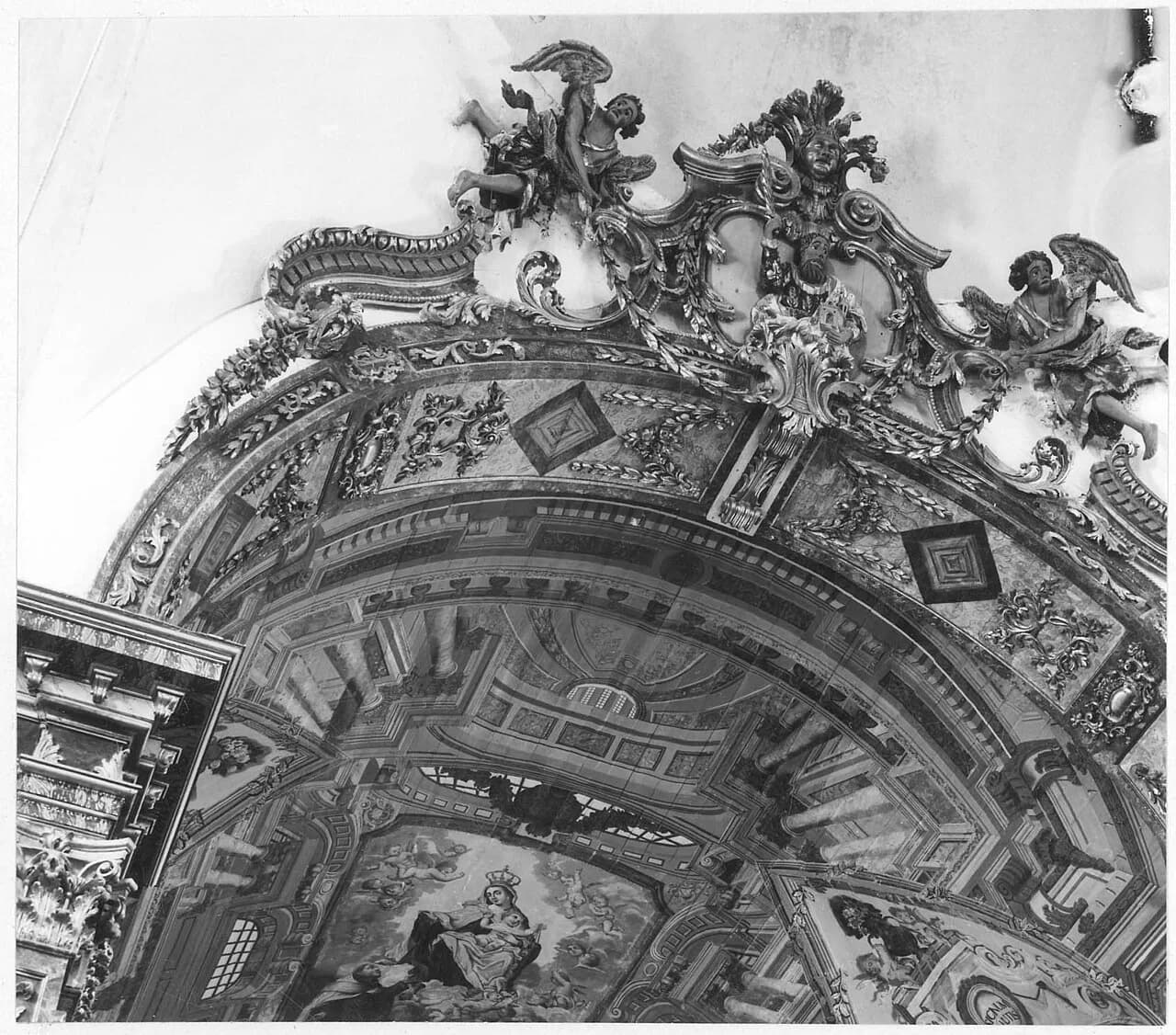
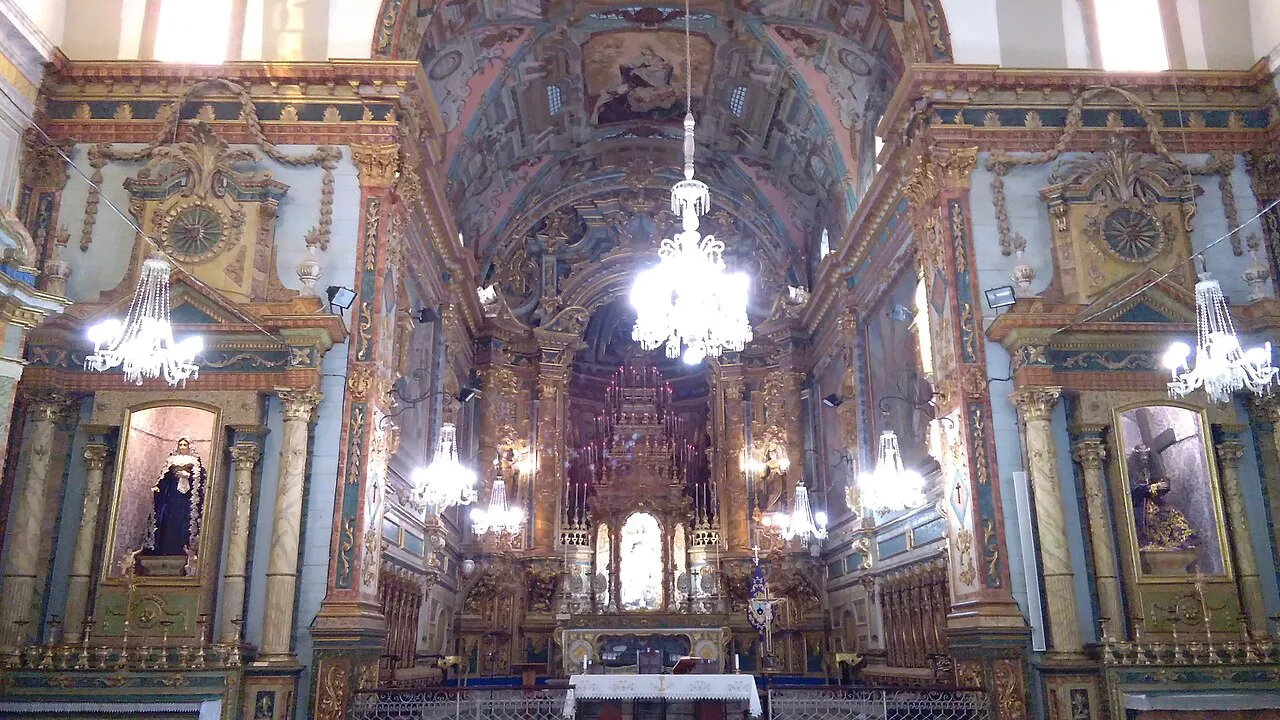
Inside, work through the church in a fixed order so you do not miss the best of it: the body of the nave first, then the chancel, then the side chapels and any tile panels. That sequence moves from the big volume of the space to the fine detail, which is how most church interiors are designed to be read. Whether the Carmo holds particular altarpieces or azulejo panels is best confirmed on site rather than assumed; for a tile-focused walk, our Igreja da Misericórdia, Tavira guide covers another interior in the same old town.
Keep your voice low and your camera discreet: these are working churches, and services take priority over visitors. If a Mass is in progress, wait outside or come back later rather than walking the aisle.
How much time to allow and when to slot it in
Allow a short window rather than a fixed schedule: long enough to read the exterior and look inside if the door is open, short enough that a closed church does not derail the day. That fits a half-day loop taking in the castle hill, the Igreja de Santa Maria do Castelo, Tavira and a coffee by the river. On a one-day visit, slot the Carmo mid-morning; on a longer break, save it for the softer afternoon light.
If time is genuinely tight, see the exterior and skip the interior; the façade and the walk there are worth the detour even on a 20-minute schedule. Three churches in one morning is a sensible ceiling before the details blur, so pair the Carmo with the Misericórdia and the riverside rather than adding a museum as well.
Opening hours and admission: what to confirm before you go
Church opening hours and any admission charge can change, so check the current position at the church door or the local tourist information point rather than relying on a figure you read online. Visit Portugal, the national tourist board, is a sensible starting point for regional visitor information before you travel.
Church doors can be shut one morning and open the next, so put the Carmo in the middle of a walking loop: a closed door then costs you nothing but a few steps.
Nearby stops to pair with the Carmo
The strongest pairing is the castle hill: the castle walls and Santa Maria do Castelo sit above the old town, giving you a climb, a viewpoint and another interior in one move. Come down towards the river and the centre's small public gardens make a civilised place to sit between stops. Add the Palácio da Galeria Tavira, which houses part of the Tavira municipal museum, for art and archaeology after all that stonework.
For food, break the walk on the surrounding streets rather than adding another sight. Eat early to keep the afternoon free, and look for places where the day's fish and petiscos are on offer; the Tavira restaurants guide covers the town's tables in more detail.
Should the Carmo make your Tavira shortlist?
Yes, if you are already walking the old town: the Carmo is a short, low-cost stop that sits naturally between the river, the castle hill and the Misericórdia. No, if your Tavira time is a single rushed afternoon, in which case prioritise the castle walls and one major interior and see the Carmo's exterior in passing.
Plan the church as part of a loop rather than a solo expedition, and check opening times at the door on the day, since that is the one variable that can undo a carefully built morning.
Explore more Tavira guides
Frequently Asked Questions
Is the Igreja do Carmo in Tavira free to enter?
Admission is not confirmed, so check at the door when you arrive. Portuguese churches vary widely, so it is worth having a fallback stop in mind either way.
How old is the Igreja do Carmo in Tavira?
Its construction date is not established here, so check the information displayed at the church if the history matters to you. Its main interest for a short-break visitor is its setting in Tavira's old town.
Does the Igreja do Carmo hold azulejo panels inside?
Azulejo tilework is common in Algarve churches, but whether and where the Carmo holds tile panels is best confirmed when you are inside rather than assumed from another building. Look at the lower walls of the nave and the side chapels, and at any panelled chancel.
What is the difference between the Igreja do Carmo and Igreja de Santa Maria do Castelo in Tavira?
Santa Maria do Castelo sits on the castle hill and pairs with the walls and the viewpoint, while the Carmo sits among the lower old-town streets and fits more naturally into a riverfront walk. Do both on the same loop: the climb first, the Carmo on the way back down.