
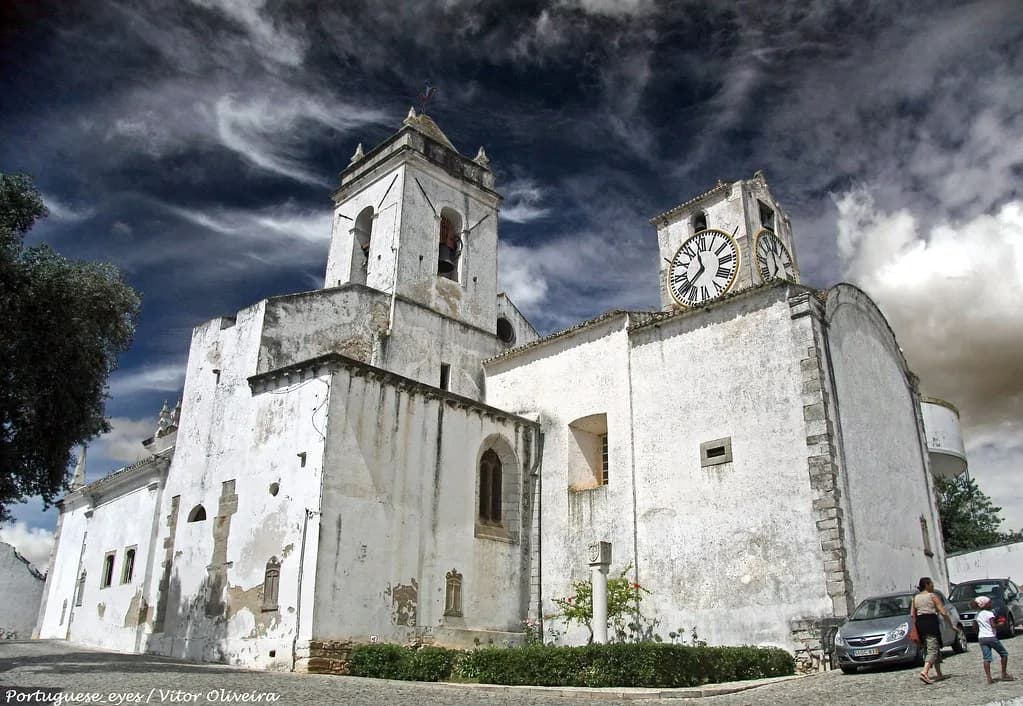
Igreja de Santa Maria do Castelo: Tavira's Church by the Castle
The Igreja de Santa Maria do Castelo is Tavira's castle-hill parish church, reached on foot in a few minutes from the riverside. It is the focal point of the old town's religious quarter and the natural first stop on any walk through the old town. This guide covers where the church sits, how to approach it, what to look for inside and how to pair it with the castle and nearby sights.
What the Igreja de Santa Maria do Castelo is
Santa Maria do Castelo is the church of the parish of Santa Maria and Santiago, the parish that holds much of Tavira's religious heritage. The church stands on the hill beside the castle, at the heart of the old town rather than on the riverside front. It is one of the buildings that earned Tavira its reputation as a city of churches, with dozens of sacred buildings once recorded across the town.
After the Reconquista of Tavira in 1242, by D. Paio Peres Correia and the Ordem de Santiago, a Gothic church was raised on the site of an earlier mosque. The building carries Gothic origins with later Manueline and Baroque layers, so read it as a palimpsest rather than a single-period monument. The 1242 date and the Gothic rebuilding are the firm historical anchors.

Where the church is in Tavira
The church sits inside the old castle walls, on the hill above the Gilão. From the Ponte Antiga, the seven-arched bridge over the river, the approach is a short climb through the old streets. The Ponte Antiga, often called the Roman bridge though it was probably rebuilt in the Moorish period, is the obvious landmark for orienting yourself before the ascent.
Once you cross the river, the streets narrow and the gradient steepens on the way up to the castle hill. You are walking on calçada, the Portuguese cobbled pavement, so wear shoes with grip rather than smooth soles. The church stands at the top of the climb, close to the castle walls.
How to get there on foot
Tavira's centre is compact, and the walk from the riverside to the church takes only a few minutes at an easy pace. Start at the Ponte Antiga and follow the lanes uphill towards the castle; the church tower is visible above the rooftops as you climb. Allow a little extra time if you are carrying bags or visiting in the heat of the day.
The surface is uneven in places, with steps and sloping cobbles on some lanes. If you have mobility concerns, the climb is manageable but slow, and the reward is the cluster of sights at the top rather than a single door. Combine the church with the castle walls and the miradouro so the ascent earns more than one stop.
What to see inside
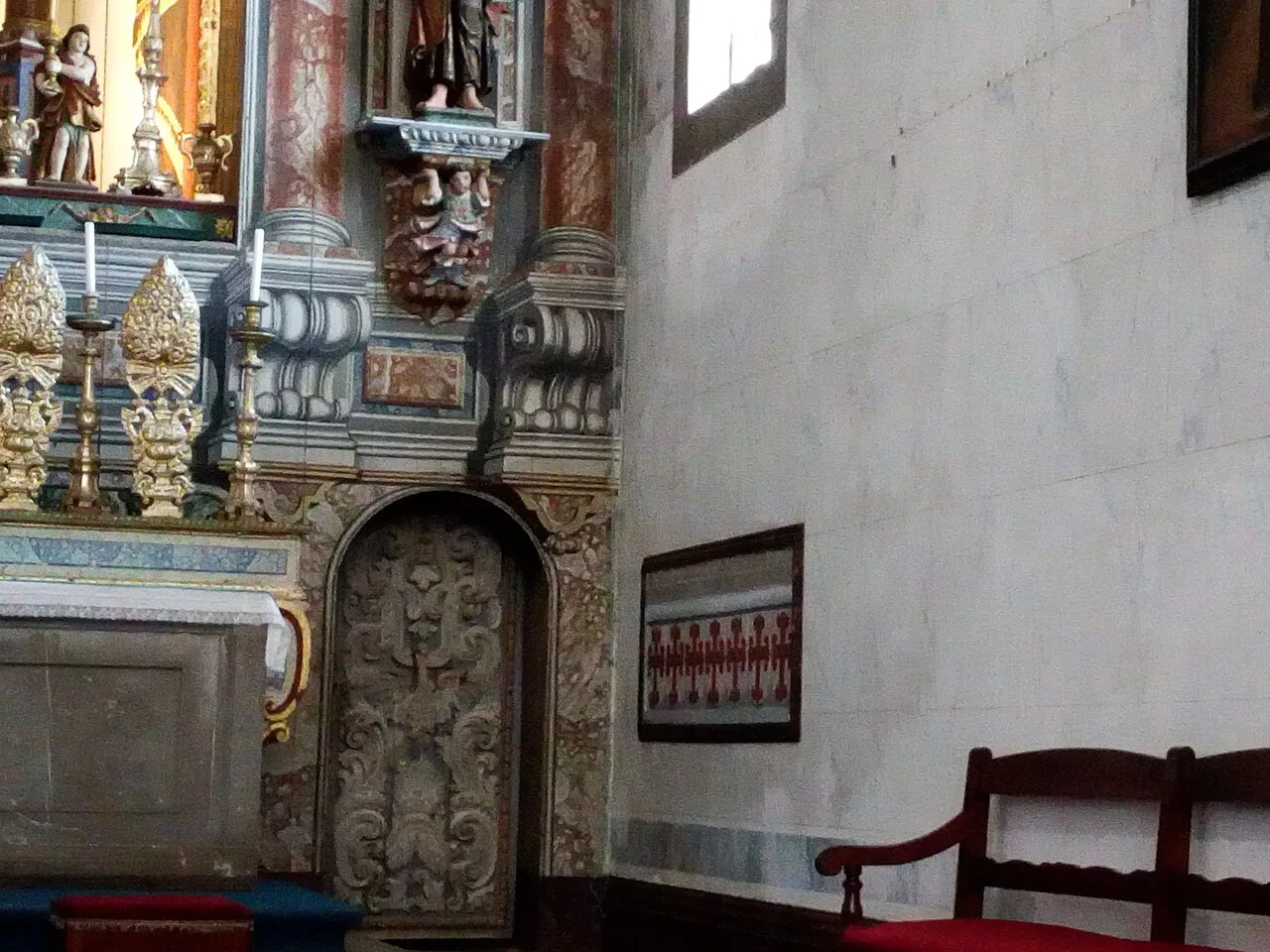
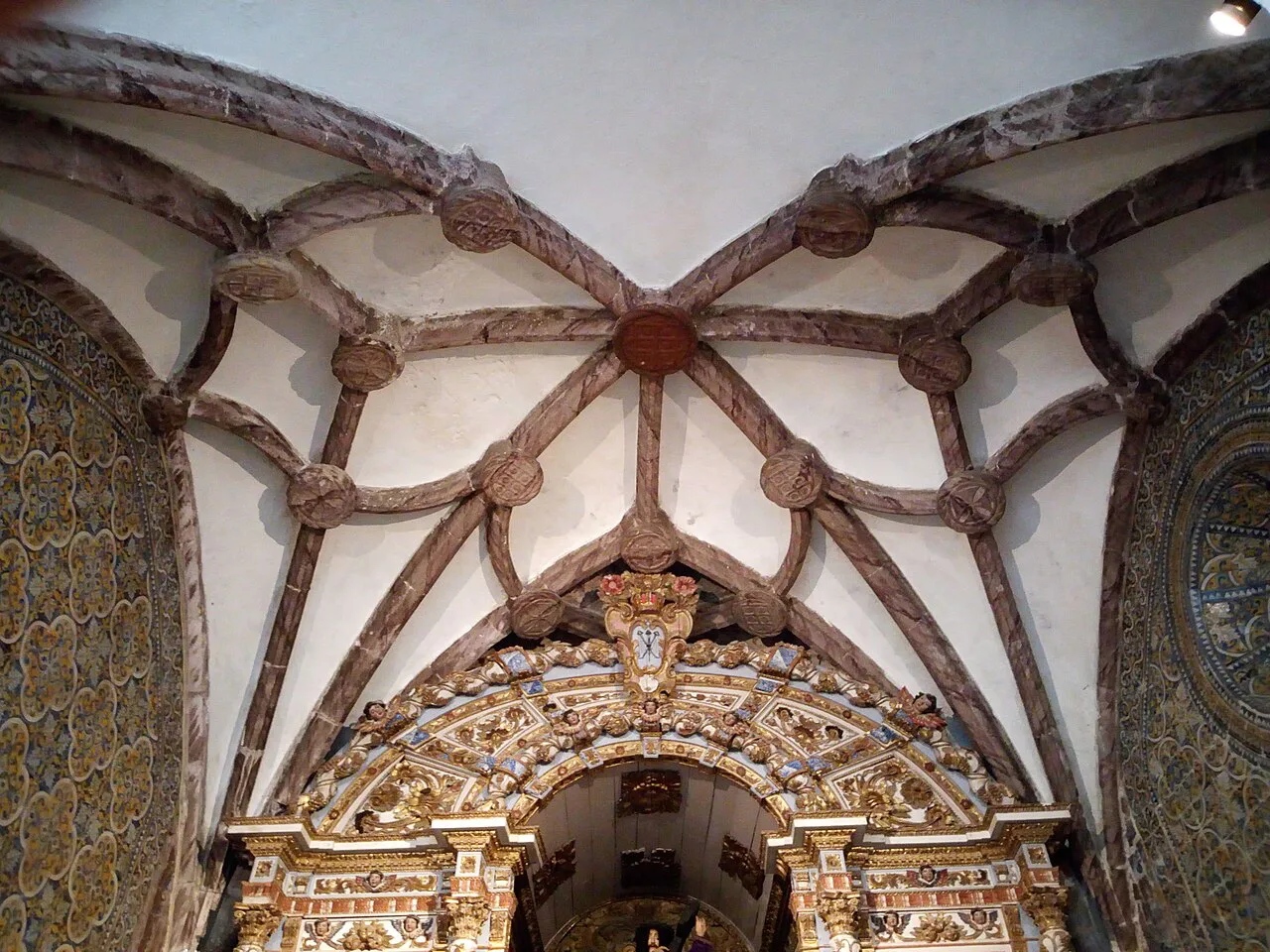
Inside, the church reflects its long history: Gothic bones with later Manueline and Baroque reworking. The interior is modest in scale compared with the great monastic churches of the Algarve, which makes it easy to read in a single visit. Look for the structural evidence of the Gothic rebuild rather than expecting a single unified decorative scheme.
The azulejo tradition that defines Tavira's churches is best seen elsewhere in town; the blue-and-white panels illustrating the Works of Mercy belong to the Igreja da Misericórdia, not to Santa Maria. Visit Santa Maria for its architecture and its place in the town's history, then cross to the Misericórdia for the tile work. That pairing gives you the full picture of Tavira's religious art without conflating the two buildings.
The tomb tradition of D. Paio Peres Correia
Local tradition holds that the remains of D. Paio Peres Correia and seven knights who died in combat rest inside the church. Historians dispute the exact truth of this claim, so present it as tradition rather than established fact. The story matters because it ties the church to the Reconquista and to the Ordem de Santiago, the military order that took Tavira in 1242.
How much time to allow
Plan on twenty to thirty minutes inside the church if you read the panels and sit for a moment. Add ten minutes for the climb and another twenty for the castle walls and the view, so the church hill fills about an hour. If you are building a two-day Tavira plan, this is a natural morning stop before the heat builds.
Opening times, tickets and closure days
This guide does not set out opening hours, ticket prices or closure days for the Igreja de Santa Maria do Castelo. Check the parish and municipal listings before you climb the hill, particularly around public holidays, and do not assume the church follows the Monday closures common to some Portuguese museums and monuments.

Nearby: the castle, Santiago and the Palácio da Galeria
The castle walls and the miradouro are steps from the church, giving you a rooftop view over Tavira's tiles and the Gilão. The Igreja de Santiago stands nearby and serves as the starting point for the Caminho Nascente pilgrim route towards Santiago de Compostela. Together with Santa Maria, these three stops make a compact castle-hill circuit.
Down in the centre, the Palácio da Galeria displays ceramics, fragments and everyday objects that trace Tavira's Islamic past. It is a useful counterweight to the Christian monuments on the hill and helps explain the Moorish street pattern you walked through. Pair it with a wander through the old lanes to see the horseshoe arches and twin chimneys.
For a wider view of the town's religious buildings, the Igreja do Carmo and the Igreja da Misericórdia are both worth adding to a longer Tavira itinerary. The Jardim do Coreto offers a shaded pause between stops if you are walking the centre on a warm day. These are separate visits rather than part of the castle-hill cluster.
Practical points for the climb
The approach is steep and cobbled, with limited shade on some lanes. In summer, aim for the morning or late afternoon rather than the middle of the day. Bring water and wear shoes that grip the calçada; the descent can be slippery when the stones are polished or wet.
If the church is closed when you arrive, the castle walls and the view still justify the climb. Use the visit as a chance to see the old town's layout from above before descending to the riverside for a coffee. The town's compact scale means you can return later without losing much time.
Is the climb to Santa Maria worth it?
Yes, if you treat it as part of the castle-hill cluster rather than a standalone monument. The church's Gothic origins and its place in Tavira's religious history give the climb context, and the castle walls and miradouro complete the visit. Check the opening details before you go and build the stop into a morning walk from the Ponte Antiga.
Explore more Tavira guides
Frequently Asked Questions
Is the Igreja de Santa Maria do Castelo free to enter?
The sources consulted do not state an entry price for this church. Check the parish and municipal listings before your visit rather than assuming it is free.