
Ponte Antiga in Tavira: What to See on the Old Bridge
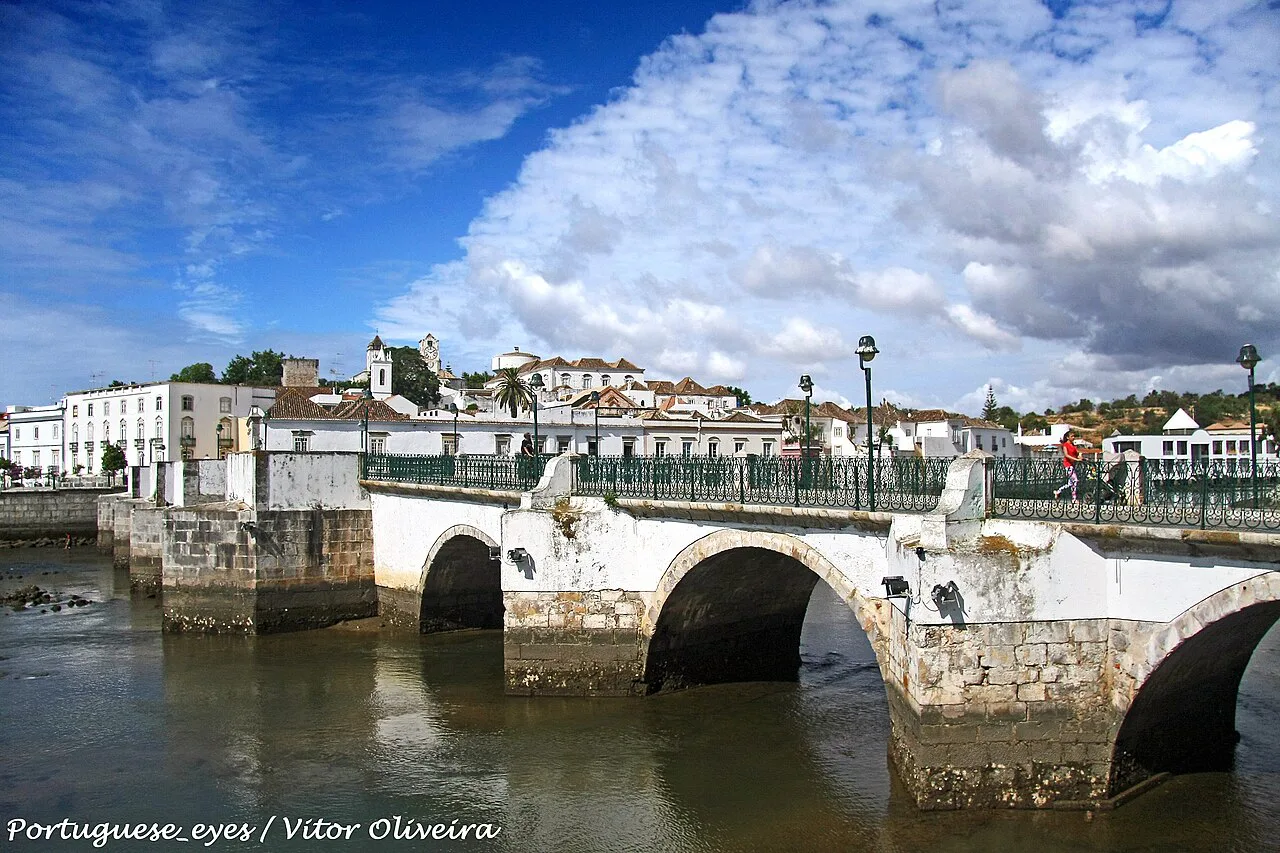
Ponte Antiga is Tavira's old bridge over the Gilão: seven arches, 86 metres, pedestrian only and freely accessible, so there is no ticket and no closing time. It joins the two halves of the town centre, with the Santa Maria hill on the western bank and the eastern waterfront facing it. This page covers what you are actually looking at, where the bridge sits in town, what to spot while crossing and how it fits a short break.
A seven-arch crossing at the centre of town
The bridge carries pedestrians across the Gilão between the bank below the Santa Maria hill and the eastern side of the old centre, so any walk between the two halves of town passes over it. It is a working piece of the street plan rather than a sight behind a barrier: you cross it on the way to somewhere else and then come back for the view. Because it is freely accessible and open at any hour, the bridge suits an early start or a late wander when other sights are shut.
Expect a short crossing, not an excursion. Walking straight over takes a few minutes, and the honest time budget for the bridge alone is under half an hour including a stop in the middle; the longer you spend, the more it is about looking back at the banks rather than at the bridge itself.

Where the bridge sits and how to reach it
The bridge sits at the heart of the old centre, linking the Santa Maria hill side with the eastern bank, and it is the natural seam for a walking loop of the town rather than a destination you travel to. You reach it on foot from the surrounding streets; there is no separate entrance, gate or ticket desk to find. Coming from the Santa Maria side, the Igreja de Santa Maria do Castelo, Tavira sits above the bridge and makes a sensible pairing before or after you cross.
From the eastern bank the bridge is the obvious way back towards the castle hill, so build it into a route that takes in one or two churches on the western side rather than treating it as a photo stop in isolation. The whole old centre is compact enough to cross the bridge more than once in a day without noticing the effort.

Why it is called the Roman bridge
Everyone in town calls it the Roman bridge, but the name is a story rather than a fact. The oldest firm evidence is a 13th-century mention in the chronicle of the conquest of the Algarve, and the historian Daniel Santana suggests a 12th-century build after the castle had secured the ford. A Roman road ran along this coast and the Roman town of Balsa lay west of Tavira, which makes a Roman bridge tempting but unconfirmed.
The name stuck because the story is better than the record, so treat the label as local shorthand rather than archaeology. Knowing this changes what you look for: not imperial masonry but a medieval crossing rebuilt repeatedly, with the town's coat of arms and the title page of the Foral Novo of 1504 still carrying its image.
What to look for while crossing
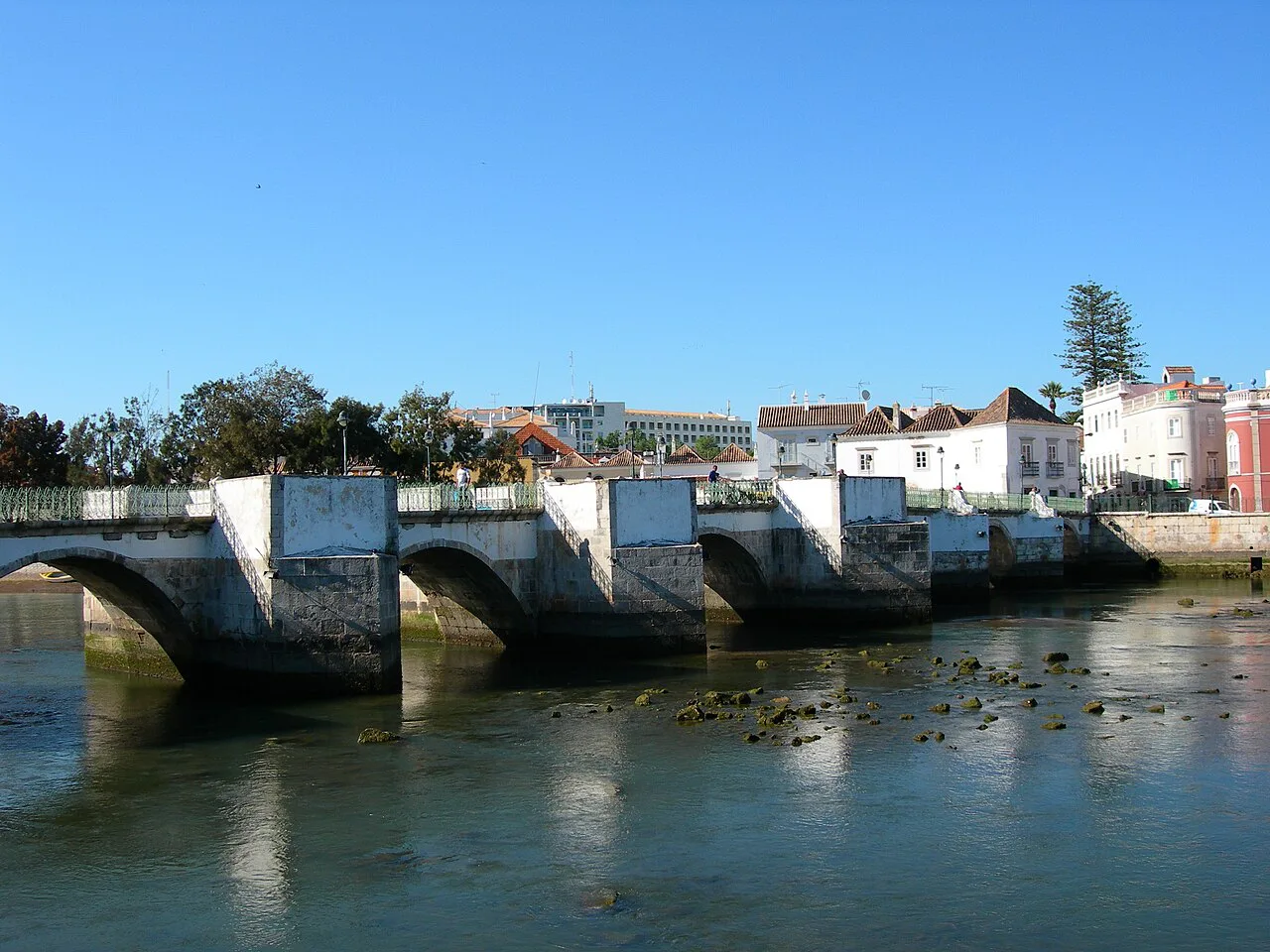
Start on the bank and count the arches from the water's edge; from the side you can see how the spans sit in the river and spot where older stonework meets later repairs on the piers. In 1600 the chronicler Henrique Fernandes Sarrão noted houses on the bridge where people lived, and a Torre do Mar once stood at the western end until it was demolished in 1886. Those structures are gone, but the piers still show the bridge as a patched survivor rather than a single build.
At the entrance to the bridge, an azulejo panel commemorates the battle fought on it during the succession crisis of 1383-85, and it is easy to walk past. Stop for it on the eastern approach before you step onto the stone. The panel is the one piece of interpretation on the bridge itself, so read it first and the crossing makes more sense.
Collapses, floods and rebuilds
The bridge has been rebuilt more than once. In 1655 the bridge collapsed from one of the southern arches, the contract for rebuilding was signed in Lisbon the same year, and the architects Mateus do Couto and Pedro de Santa Colomba finished the work in 1656-57, with four of the seven arches dating from then. After that the bridge held for three centuries.
On the night of 3 December 1989 the river burst its banks, a cutwater was almost completely destroyed and arches four and five were so badly damaged they had to be rebuilt, cutting the town in two for five days. Emergency shoring came in 1991 and the bridge was back by early 1993, now for pedestrians only. That recent history explains the visible mix of stone on the piers and why the deck feels wider and plainer than the arches below.
Séqua above, Gilão below
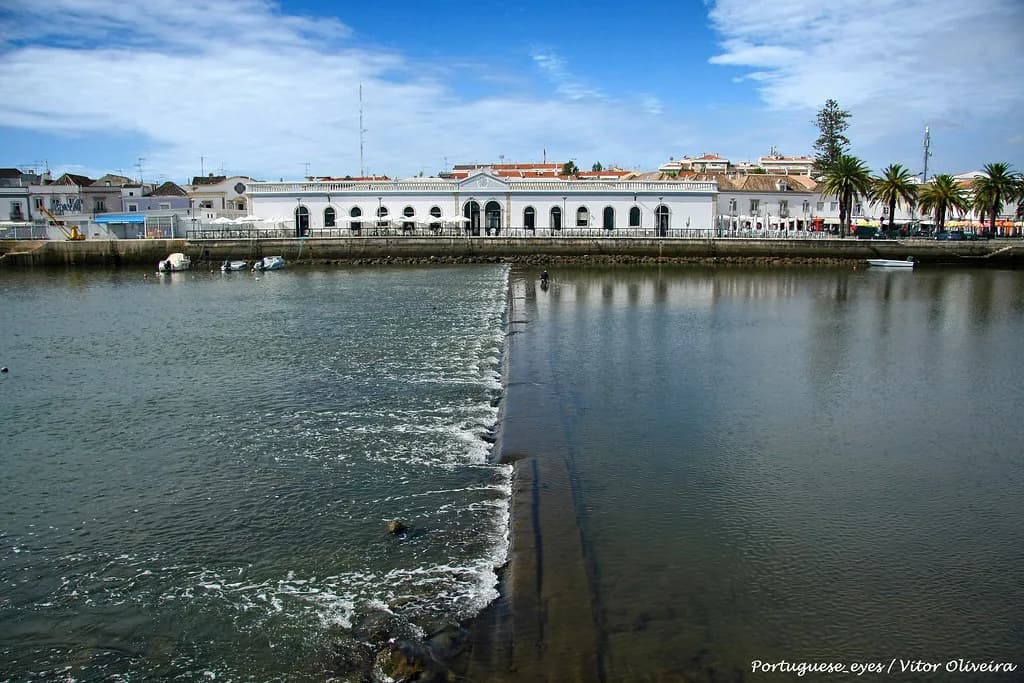
The river changes name at the bridge: it is the Séqua upstream and the Gilão downstream. A local legend explains the split with a Christian knight, Gilão, and a Moorish princess, Séqua, discovered on the bridge by the two armies and leaping into the water, each to their own side. There is no historical basis for it, but it is the explanation you will hear in town, and it makes sense of the two names on local signage.
Best light and how long to allow
Stand in the middle of the bridge late in the day, when the sun hits the facades on the eastern bank, and look down the Gilão towards the lagoon. The light is the reason to linger rather than the bridge's own architecture, so plan the crossing as the last or second-to-last stop of an afternoon walk. A slow look from both banks, plus the panel and a pause mid-span, is a comfortable half-hour; a straight crossing is minutes.
If you only have one day in Tavira, cross the bridge in the late afternoon after the churches and before dinner, and use the western bank as the place to look back from. Two banks means two angles, and the eastern waterfront is the one the light favours.
The bridge is pedestrianised and free, with no gate to miss; the only timing consideration is the light and whether the places you pair it with are open. Museum and church hours nearby follow their own patterns, so fix those first and let the bridge fill the gap between them.
Nearby on each bank
On the western side, the Igreja da Misericórdia, Tavira is a short walk from the bridge and worth adding to the same loop for its interior rather than its exterior. Pair it with the Santa Maria hill above the bridge and you have a compact western-bank circuit that starts and ends on the water.
The Igreja do Carmo sits further into the town and works as a third stop if you are building a church-focused morning; it is close enough to reach on foot from the bridge without a detour. The Palácio da Galeria and the Museu Municipal de Tavira give you an indoor option for the hotter or wetter part of the day, both within the same central web of streets.
If you want green space rather than stone, the Jardim do Coreto is a short walk from the bridge and a natural place to sit between sights. Treat the bridge as the hinge of a half-day walk: churches on one bank, a museum or garden on the other, and the crossing in the middle when the light is right.
Practical points before you cross
There is no ticket and no opening hours to plan around, because the bridge is freely accessible and pedestrians only. That makes it the most flexible sight in Tavira: it works before breakfast, between museum visits or after dinner. Any time-sensitive detail about the places you pair with it should be confirmed with the venue directly on the day.
Wear shoes that cope with uneven stone, since the deck and approaches are historic surfaces rather than a smooth promenade, and expect the bridge to be busier at the hours when the light is best. None of this needs booking. For the wider set of sights around it, the Tavira Attractions: 7 Visitor Guides covers the churches, museums and gardens within walking distance of the river.
Is the old bridge worth a stop?
Yes, but as a ten-to-thirty-minute pause folded into a walk, not as a standalone sight. The value is in the arches seen from the bank, the repaired piers, the azulejo battle panel and the evening light on the eastern facades, all of which reward a slow crossing over a quick one. Skip the stop entirely if you are short of time and the churches are open; come back at dusk if you can.
Frequently Asked Questions
Is the Roman bridge in Tavira actually Roman?
No Roman bridge here is confirmed. The oldest firm evidence is a 13th-century mention in the chronicle of the conquest of the Algarve, and the historian Daniel Santana suggests a 12th-century origin after the castle had secured the ford. The Roman label is local shorthand for a medieval crossing rebuilt several times, most recently after the 1989 flood.
How long is the Ponte Antiga in Tavira?
The bridge runs 86 metres across the Gilão on seven arches. Walking straight over takes only a few minutes, and a slow look from both banks with a pause mid-span fits comfortably into half an hour.
Can you walk across the Ponte Antiga?
Yes. The bridge is pedestrian only and freely accessible, so there is no ticket and no closing time. It links the Santa Maria hill side with the eastern bank of the old centre.