
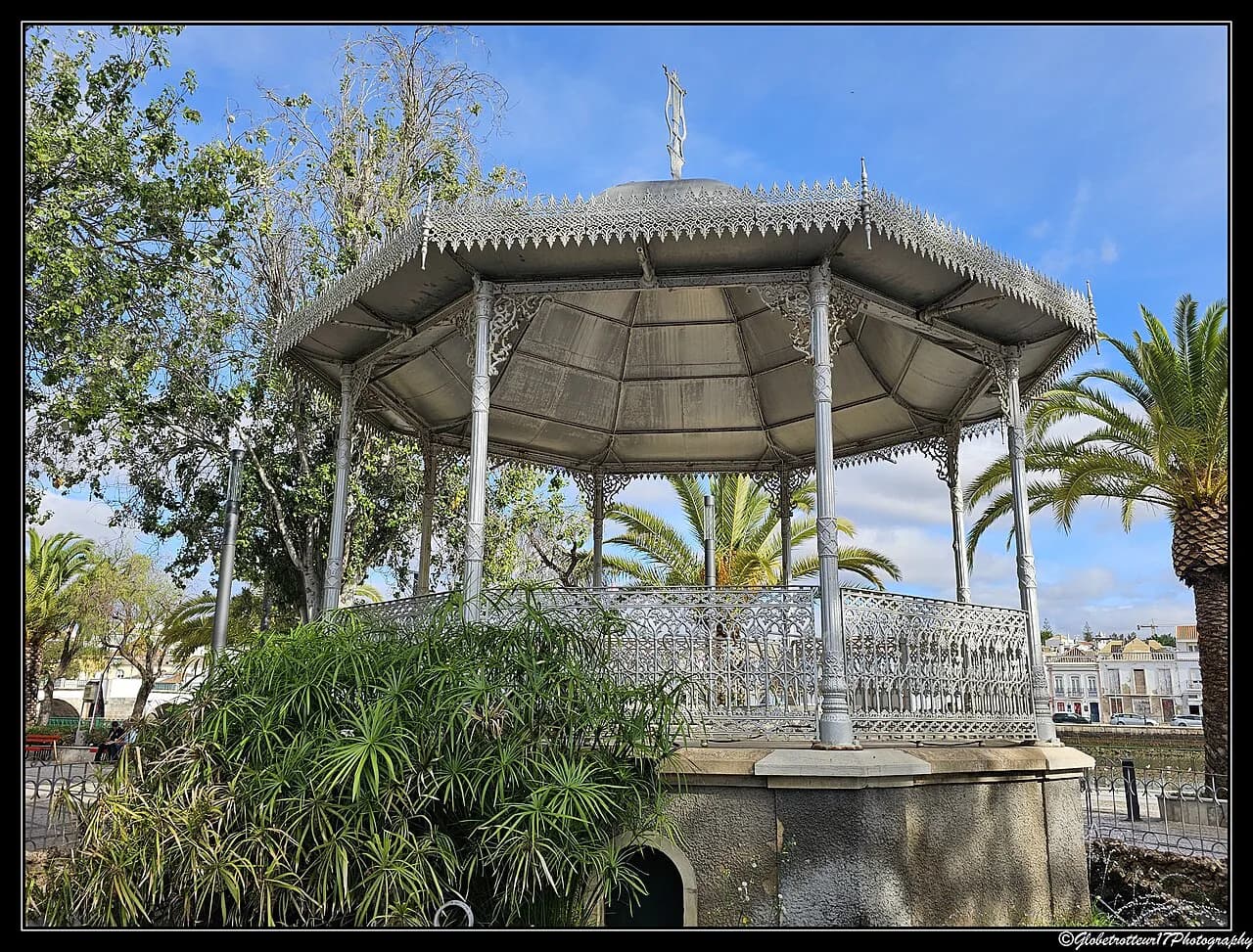
Jardim do Coreto: Tavira's Oldest Garden by the River

Jardim do Coreto is a small public garden on Tavira's riverfront, and twenty minutes there is the right amount of time. Come for the shade, the azulejo benches and the iron bandstand, then carry on along the river. This page covers where the garden sits, how to reach it on foot, which details are worth hunting for and what lies within a minute of the gate.
What Jardim do Coreto is and why it's worth a stop
Tavira's oldest public garden dates from the late nineteenth century and still keeps its old-world fittings: wrought-iron lamps, a vintage coreto (bandstand) and enough foliage to throw real shade on a hot afternoon. The benches have been repainted and the flower beds rotate with the seasons, but the garden never feels over-manicured.
The honest trade-off is scale. This is a pocket of green between the river and the market, not a botanical garden, and there is no café inside it. Treat it as a pause in a riverside wander rather than a sight that justifies a trip across town, and it rewards you accordingly.
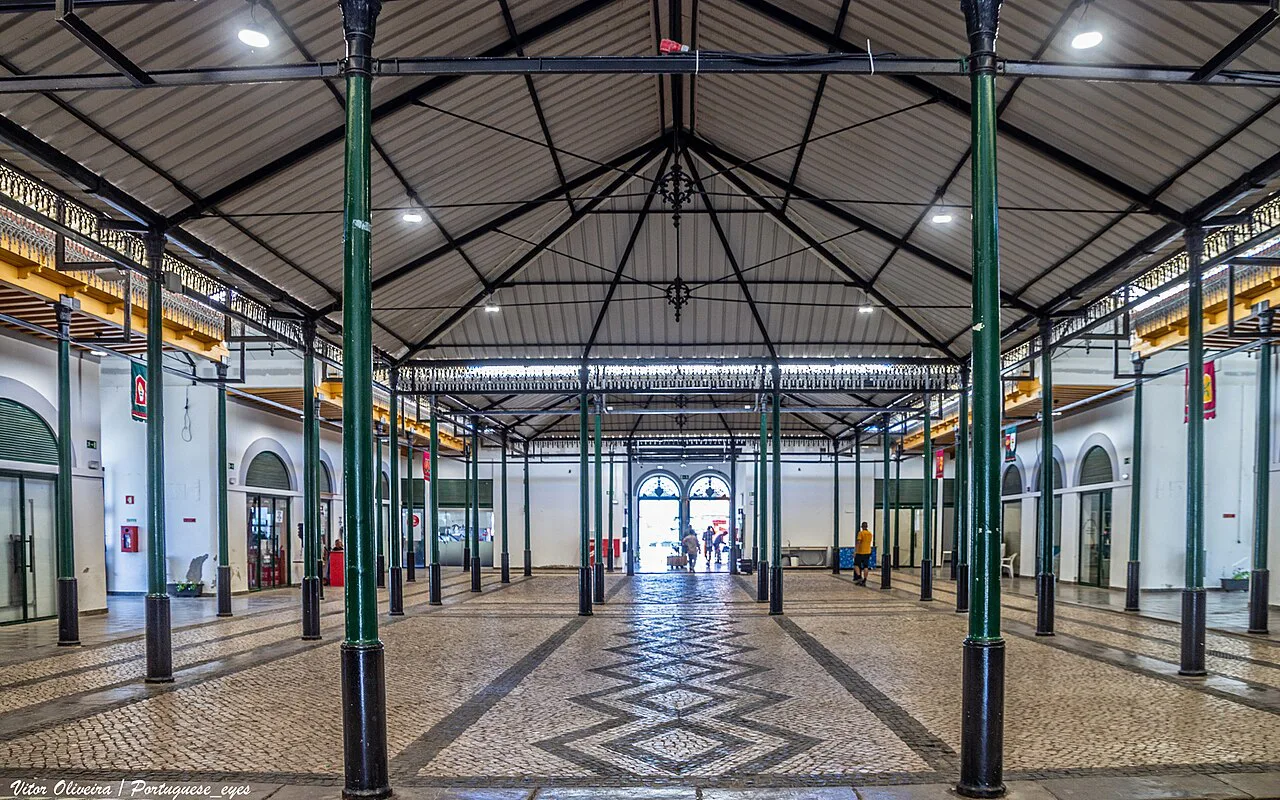

Where it is: Largo José Pires Padinha, facing the Mercado da Ribeira
The garden's address is Largo José Pires Padinha, the little square that runs along the riverfront. It faces the Mercado da Ribeira, Tavira's market hall, and sits within a minute's walk of Praça da República.
That position makes it easy to place precisely: market on one side, the broad Praça on the other, and the River Gilão curving past the end of the garden. If you are working through the wider Tavira Attractions: 7 Visitor Guides, this is the green link between the market and the main square rather than a standalone stop.
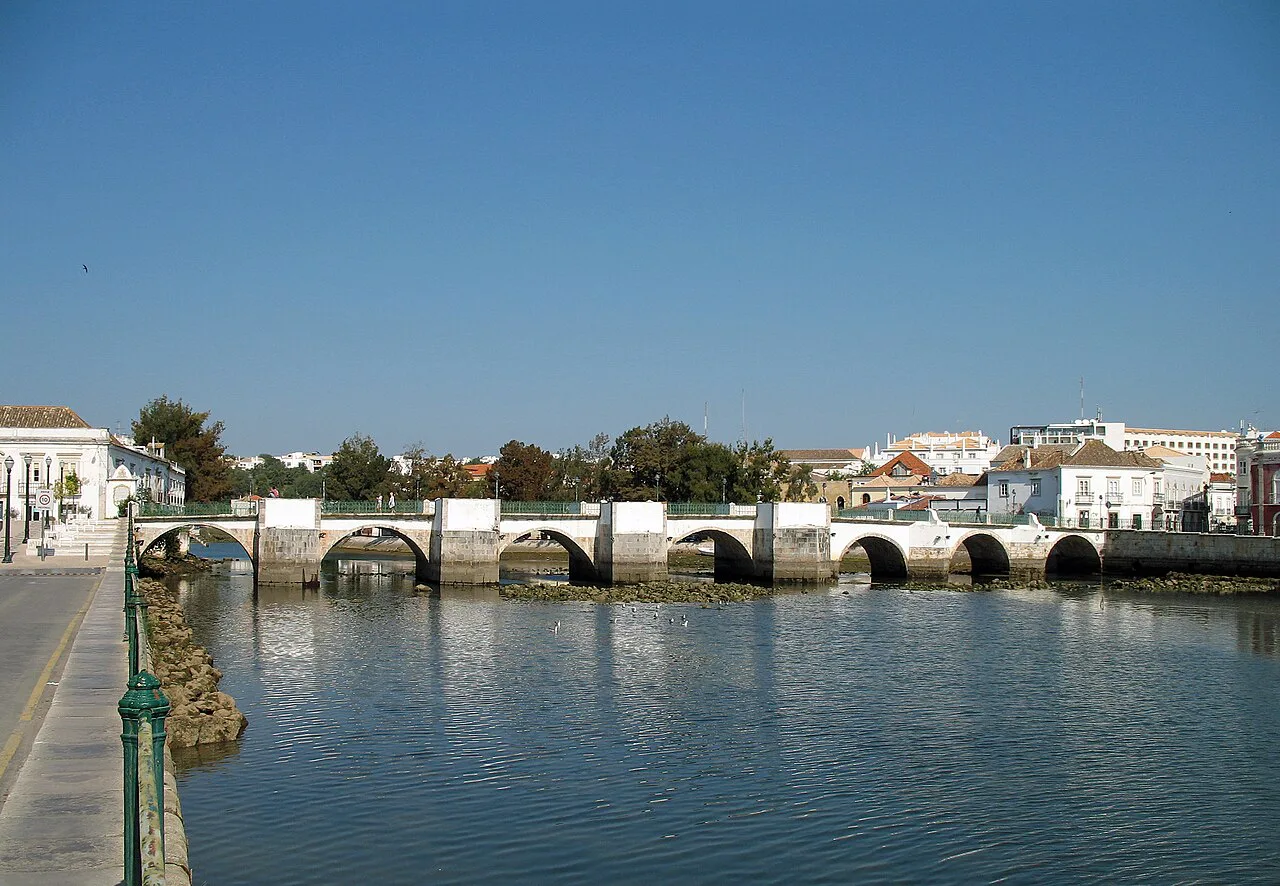

How to get there on foot from the Ponte Romana and the riverfront
From the Ponte Romana, the old bridge over the Gilão, cross to the market side and follow the riverside path along Avenida Dr. Mateus Teixeira de Azevedo. The garden opens up on your left within a couple of minutes, opposite the market frontage.
Everything here is level and paved, so it folds easily into a flat riverfront walk rather than a climb. If you are arriving from the castle side of town, drop down through the streets to Praça da República and the garden is immediately beyond it.
What to look for: bandstand, azulejo benches and the hidden fountain
The coreto itself is the centrepiece, an iron bandstand that still gets used for open-air music and dancing in the warmer months. Cultural programming in the garden runs in season, from fado evenings under the bandstand to spring showcases with folk dancing and accordion acts, though the calendar shifts from year to year.
Slow down at the benches. Their azulejo panels are the detail most visitors walk past: some show rural scenes, others the sea, with anchors and ships worked into the designs as a nod to Tavira's fishing past. Look along the seating rather than at the bandstand and you will find them.
Between the palms and pines there is a small fountain that is easy to miss, and the far end of the garden catches the curve of the Gilão. Wrought-iron lamps, freshly painted benches and seasonal flower beds carry the nineteenth-century layout through the whole space.
Best time of day: early morning quiet or late-afternoon golden light
Early morning is the quietest stretch, when the garden belongs to locals with their coffee and the shade is at its coolest. Late afternoon is the other good window: the low sun catches the river at the end of the garden and turns the whole spot golden, which is when the photographers arrive.
Midday in high summer is the time to skip unless you want the shade itself, since the benches fill and the light is flat. If you are planning the rest of the day, pair an early visit with the market and save the late-afternoon slot for a river walk.
How long to allow and how it fits into a Tavira wander
Allow ten to twenty minutes: enough to find the azulejo panels, sit under the trees and walk the length of the garden to the river edge. It is a natural break between the market and the Praça rather than a sight that needs its own morning.
Build it into a simple loop: market hall first, garden second, Praça da República third, then across the Ponte Antiga or up towards the castle quarter. The Igreja da Misericórdia, Tavira's decorated mercy church, sits close enough to the riverfront to fold into the same walk.
Nearby: Mercado da Ribeira, Praça da República and the riverside miradouros
The Mercado da Ribeira is directly opposite, which makes the garden a sensible place to wait while the rest of your group shops the stalls. Praça da República is less than a minute away, and the garden sits between two of the best river-facing viewpoints (miradouros) in the centre, so you can take in the Gilão from either side.
For a longer history stop, the Igreja de Santa Maria do Castelo and the Palácio da Galeria are both within the old centre, the latter a converted palace now used for exhibitions. Neither is in the garden itself, so check each one's own page for opening days before you build them into the same afternoon.
Practical notes: public WC, cafés and bakeries steps away
There is a public WC at the market exit and another on the Praça, handy given the garden has no facilities of its own. For coffee or a snack, Padaria Vila Doce and A Casa are both a few steps away, good for a pastel de nata to eat on a bench.
The garden is a public space with no ticket desk, so treat entry as free and unticketed unless a sign at the gate says otherwise; any special programming in the bandstand is organised separately by the town. There are no official opening hours displayed for the garden, so check locally if you plan to visit early or late in the day.
Should you add Jardim do Coreto to your Tavira walk?
Yes, if you are already on the riverfront: it costs nothing, sits between the market and the Praça, and gives you shade, azulejo benches and a bandstand in the space of twenty minutes. Skip it only if your time in Tavira is down to a single hour and the castle quarter is still unvisited.
Go early for quiet or late for the light on the Gilão, look for the anchors and rural scenes on the benches, and treat the garden as the pause it is rather than a sight in its own right. Then carry on along the river.