Faro to Tavira: Train or Bus, Times and Fares
How to get from Faro to Tavira by train, bus or car, with journey times, approximate fares, the two Tavira stations and which option suits a short break.
On this page
Take the train. It is the quickest straightforward link between Faro and Tavira, covering the roughly 28 km in about 35 to 45 minutes depending on the service, and it drops you at one of two stations on the edge of town. Buses run the same corridor in about 45 minutes and can be slightly cheaper. This guide compares the two, adds the driving and airport picture, and explains where each Tavira station leaves you for the walk to the centre.
Which is the best way to get from Faro to Tavira?
The train wins on speed and frequency: aggregator schedules show departures through most of the day, with the fastest trips around 35 minutes and the average nearer 43. Fares are low by UK standards, with the cheapest quoted ticket around €3.68 and an average nearer €3.94, though those figures come from a Canadian-dollar quote and should be treated as approximate.
The bus is the alternative when the rail timetable does not fit or you are starting from a part of Faro away from the station. Journey time is about 45 minutes, and tickets have been quoted from about €4, so the saving over the train is marginal. If you are weighing up whether the town justifies the trip at all, our guide to whether Tavira is worth visiting sets out what it does well and who it suits.
Faro to Tavira by train: journey time, fare and station
Trains on this stretch are regional services, and the aggregator times are averages rather than a published timetable. Schedules shift with the season and with engineering work, so check the current times on the day you travel.
For a day trip, the last departure back to Faro matters more than the outbound train. Indicative schedules show evening services running until around 22:16, which leaves room for dinner before returning, but confirm the final service on the day, as it is the one detail that can strand you. If you are coming from further afield, the Lisbon to Tavira train brings you onto the same Algarve line.
Faro to Tavira by bus: journey time and fare
Buses cover the same ground in about 45 minutes, which makes the coach competitive with the train on time and slightly cheaper on fare. Frequency is the weak point: the quoted pattern is a departure roughly every four hours, so a bus that does not suit your arrival can cost you half a day. Treat the train as the default and the bus as the backup when you are starting from the bus station side of Faro.
Driving and taxis from Faro to Tavira
Driving gives you freedom to stop along the way and to reach Tavira's outlying beaches, but parking in the centre is limited and the old streets are not built for cars. Taxis exist for the run, though fares vary with time of day and luggage, so ask the driver for an estimate before you get in rather than assuming a fixed price. For a one to four day break based in Tavira, a car is a cost you can usually skip.
Where the Tavira stations leave you in town
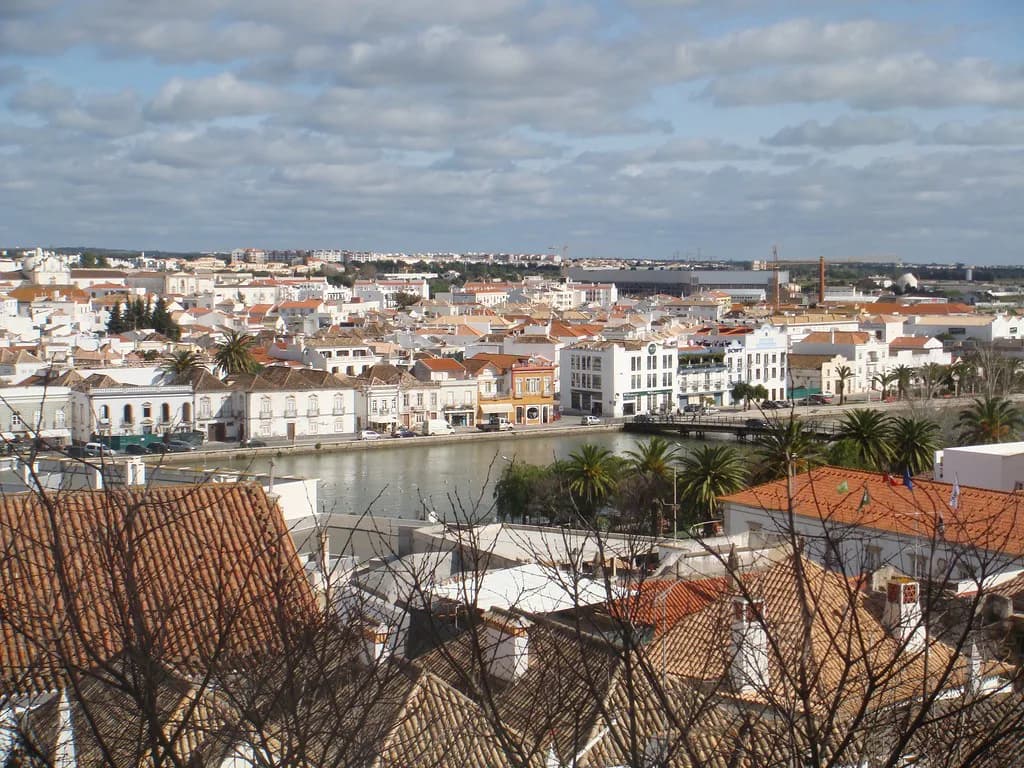
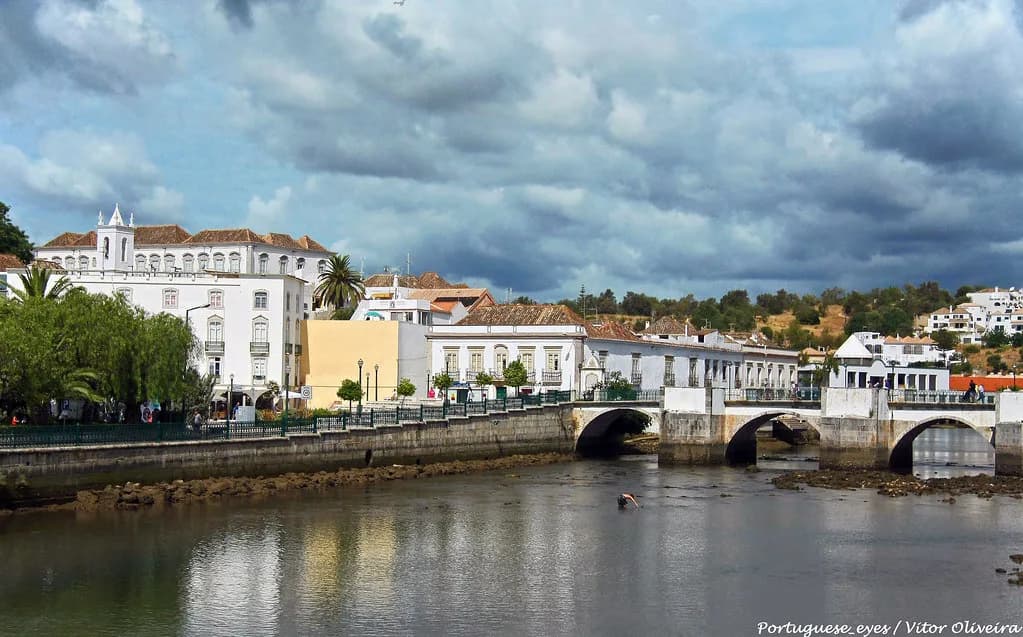
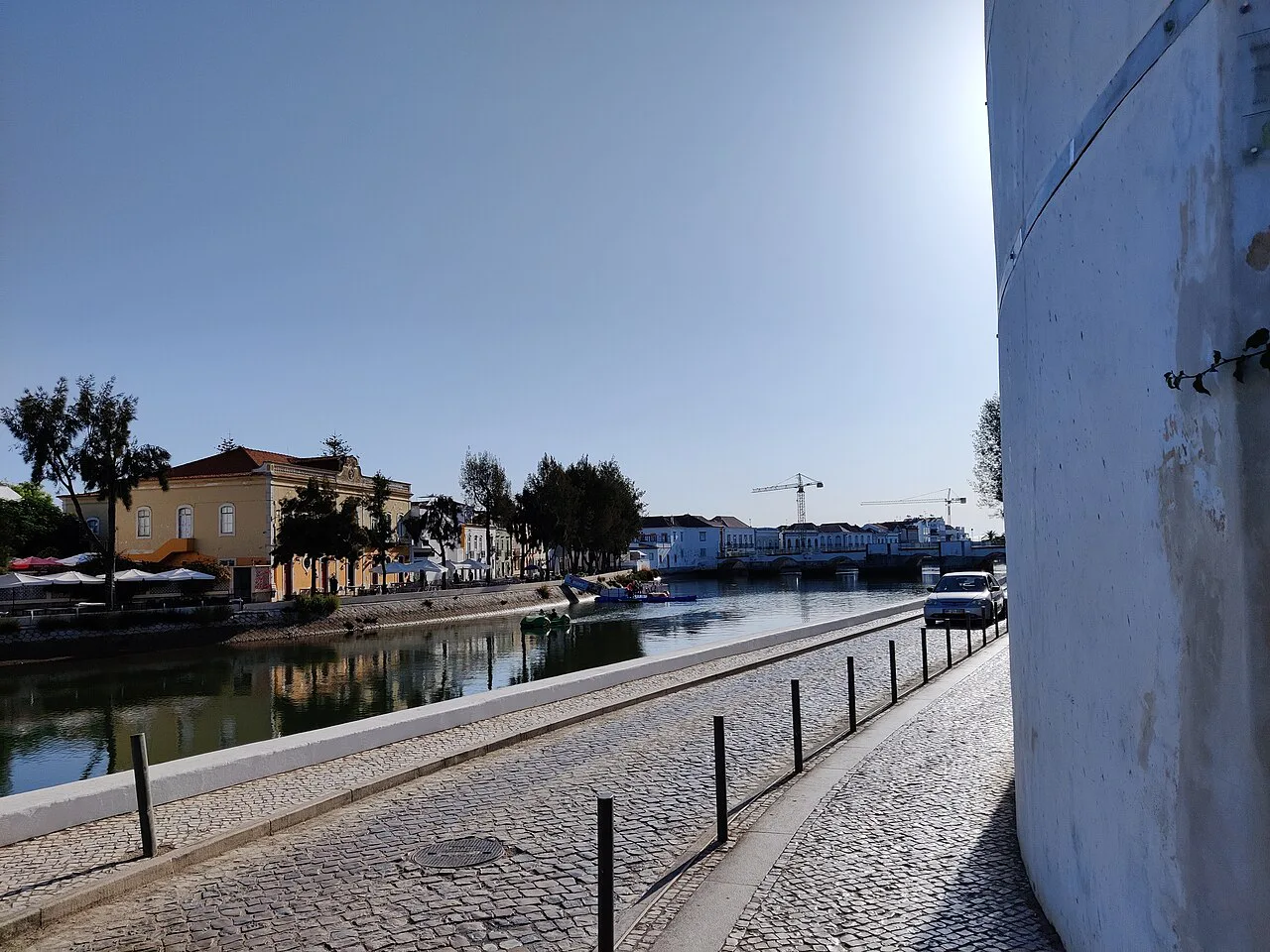
Tavira has two stations, and they sit on opposite banks of the Rio Gilão: the station called Tavira and Porta Nova. The side you arrive at shapes which bridge you cross and the walk to the centre, so check which station your service uses before you set out, especially if you are meeting someone or heading straight to a specific address.
Once you are across, the centre is compact and made for walking: the riverside, the old streets and the squares are all within easy reach of each other. Our one day in Tavira plan assumes you arrive on foot and works through the town in a loop, which is the most efficient way to use a short stay. If you have longer, the full Tavira itinerary spreads the sights across two or three days.
Faro Airport to Tavira: what to expect
Faro Airport is a separate starting point from Faro city, so plan a connection rather than a single hop. You first reach Faro's transport hubs and pick up the train or bus from there. Build the connection time into your plan rather than counting on stepping off a flight and straight onto a Tavira service.
Faro or Tavira as a base for a short break
Base yourself in Tavira. It is the smaller, quieter town with the river, the old centre and the island beaches within reach, and it makes a better anchor for a short break than using Faro as a dormitory and commuting. Faro works as the transport hub and the airport gateway, but it is not the reason to come. Our Tavira attractions hub lists the sights worth building your days around.
Budget is the other deciding factor: Tavira is not an expensive town by Algarve standards, but accommodation and restaurant prices vary by season. If you want the numbers before you commit, our piece on whether Tavira is expensive sets out what a short break realistically costs. Weigh that against how you would use your days, since a base in Tavira saves you the daily train fare.
Which option should you book?
Take the train from Faro unless your starting point or timing makes the bus easier. It is quicker, runs more often, and the fare is low enough that the marginal saving on a coach is not worth the wait. Whichever you choose, note which Tavira station you arrive at, because the two sides of the Rio Gilão mean different walks into town.
Explore more Tavira guides
Frequently Asked Questions
How far is Tavira from Faro Airport?
The airport sits outside Faro city, so the airport run is a separate journey from the city-to-city hop, not the same 28 km. You first travel into Faro and pick up the train or bus from there. Build the connection time into your plan.
Is it better to stay in Faro or Tavira?
Tavira suits a short break better: it is compact, walkable and quieter, with the old centre and river as the focus. Faro is the transport hub and the airport gateway rather than the destination. Staying in Tavira also saves you the daily return fare.
How much is a taxi from Faro to Tavira?
Taxi fares vary with time of day and luggage, so ask the driver or a local operator for an estimate before you set off. For a short break, the train or bus is far cheaper and we would only use a taxi for late arrivals or heavy bags.
Sources
Notes for your next Portuguese break
Optional updates to our town guides.
You might also like

Continue reading
More guides you'll find useful