Azulejos in Tavira: Where to See the Town's Painted Tiles
A short walking route to the azulejos of Tavira: tiled churches, façades and fountains, what the panels show, and how long the loop between them takes.
On this page
Tavira's painted tiles are best seen as a short loop rather than a checklist, taking in the churches of the old town and the tiled façades and fountains of the streets around them. Allow half a day, and build in a coffee stop because doors close and services interrupt the day. This guide explains what azulejos are, how the stops sit around the Rio Gilão, what the panels show, and how to string them together on foot.
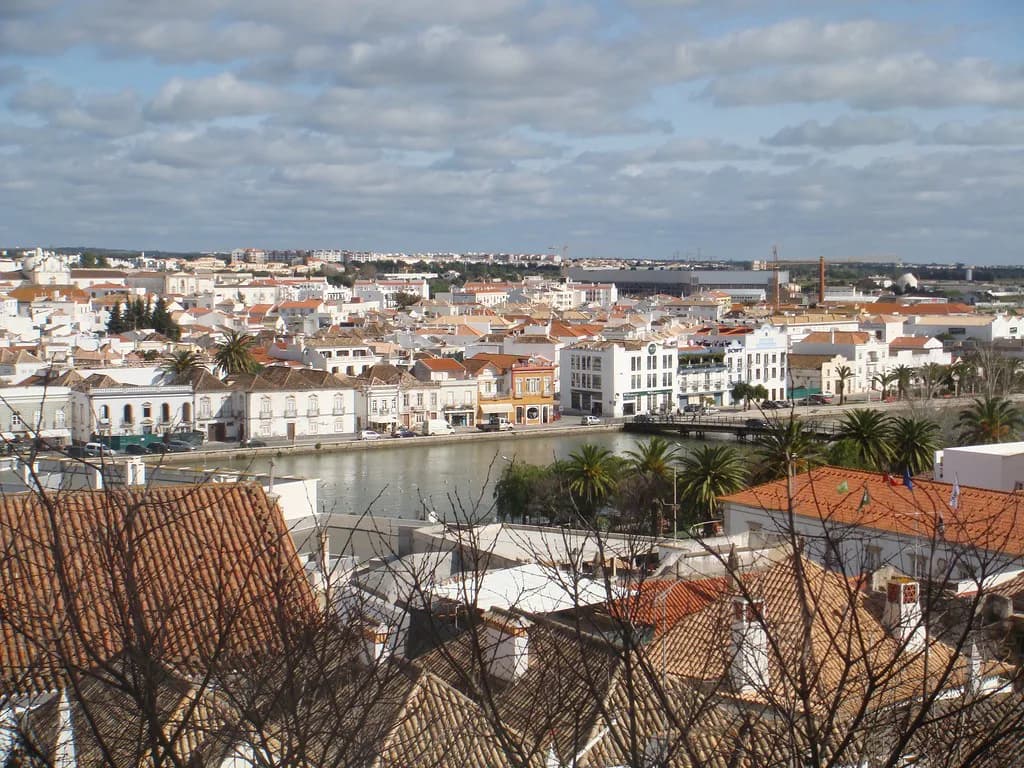
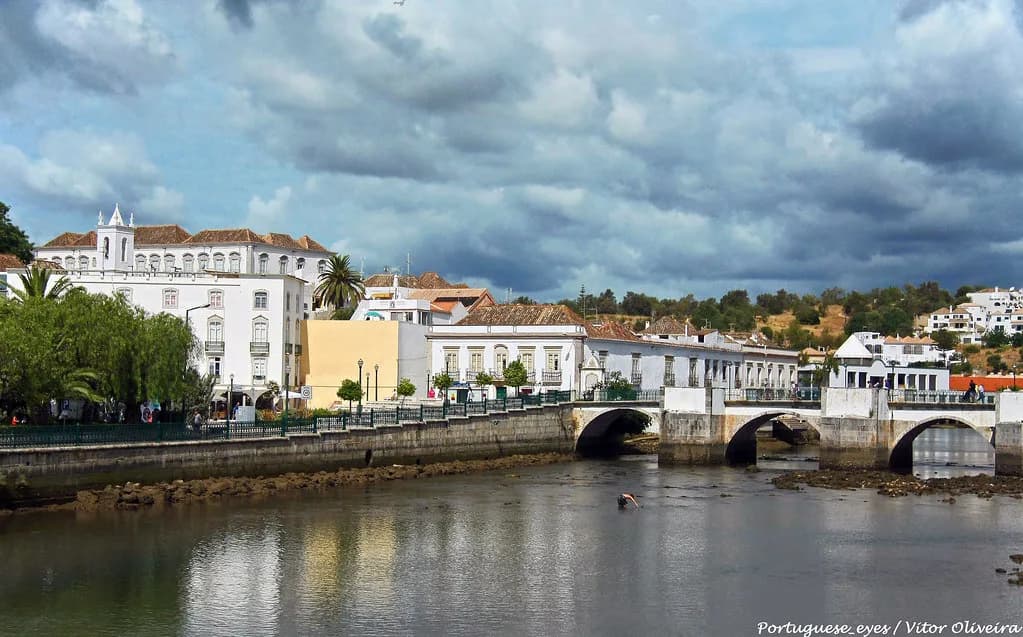
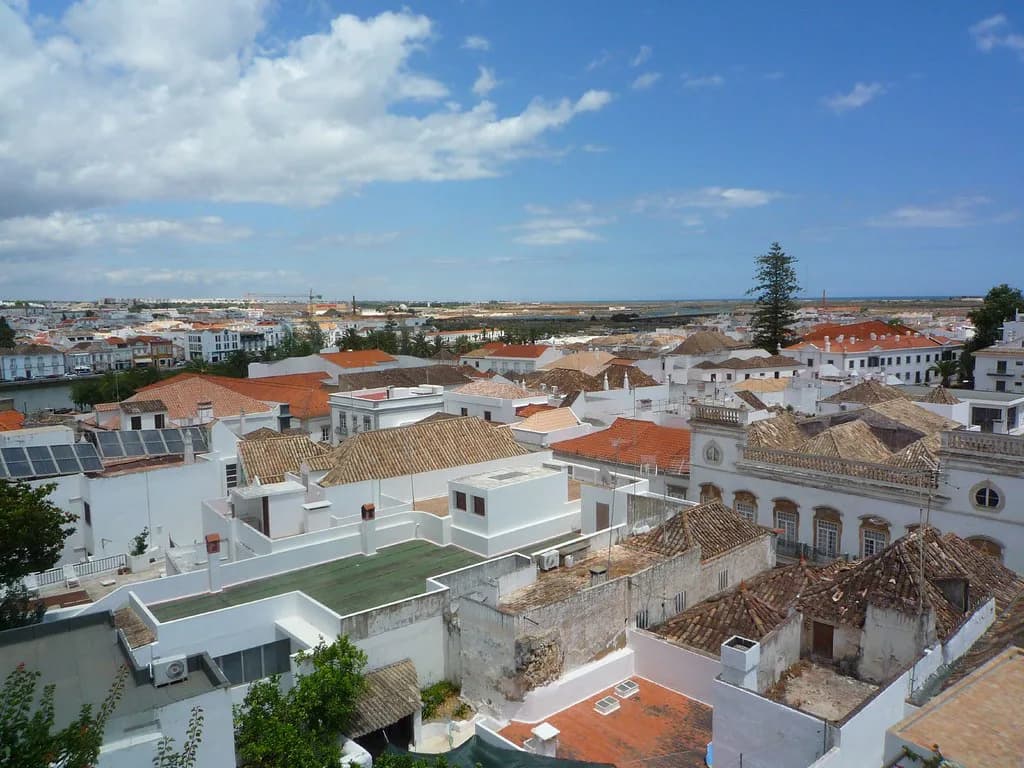
It helps to start with the town's shape. Tavira's centre sits on both banks of the Rio Gilão, with the older streets climbing towards the castle on the north side and the shopping streets spread out behind them. Almost everything tiled can be walked in one unhurried morning or afternoon, which makes it a good bad-weather plan and a good first orientation exercise.
What azulejos are and why Tavira's are worth seeking out
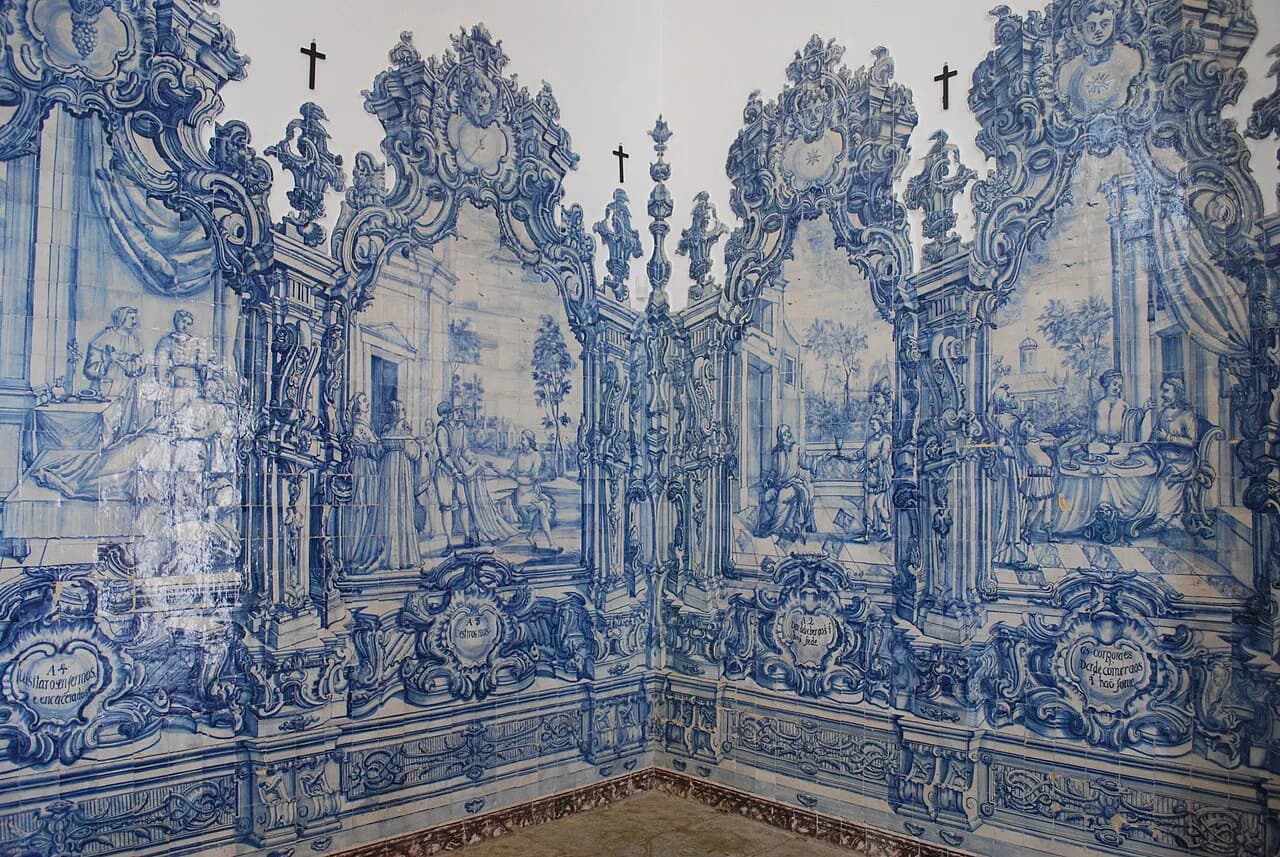
Azulejos are glazed ceramic tiles, usually square, painted and fired with a tin glaze that carries the colour and seals it. Portugal adopted them wholesale from the sixteenth century onwards, first as geometric patterns and later as the blue-and-white narrative panels that cover church walls, staircases and entrance halls. Those blue-and-white scenes, often religious or allegorical, are what most travellers mean by azulejos today.
Tavira's appeal is that its tiles are not corralled into a single museum. They appear on church interiors, on the faces of ordinary houses, on doorways and around civic water features, so the town itself works as a gallery you walk through. The pleasure is in spotting them: check the first two metres above street level and again about five metres up, where façades are most often clad.
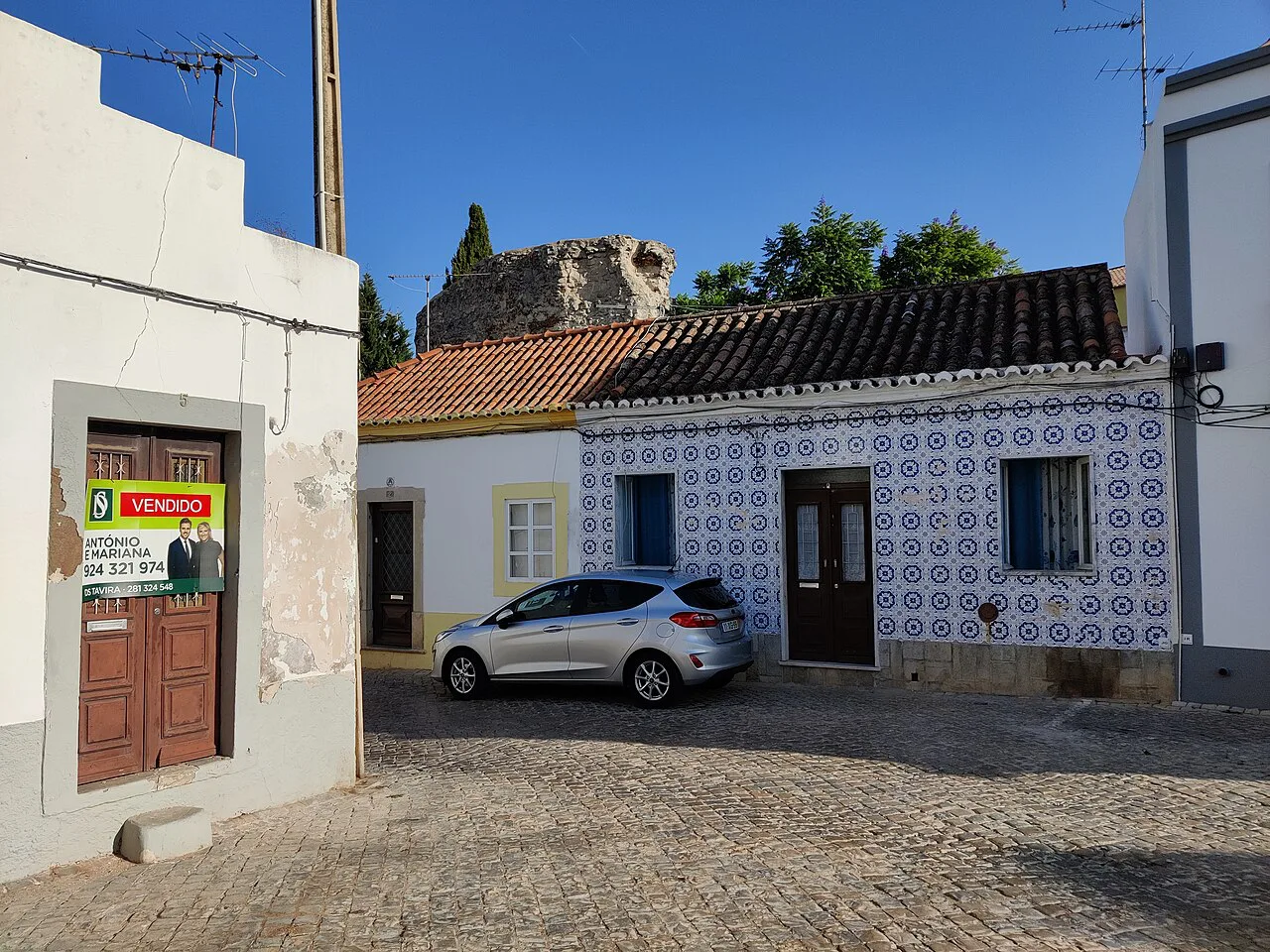
How the tiled sights sit in relation to the centre and the river
This matters for tiling because the density of decorated façades is highest in the lanes just behind the riverfront and thins out as you move away from the centre. A sensible plan is to do the churches first while your legs are fresh, then wander the back streets without a fixed route, letting the façades do the work. Our guide to things to do in Tavira covers the wider sight list if you want to fill the rest of the day.
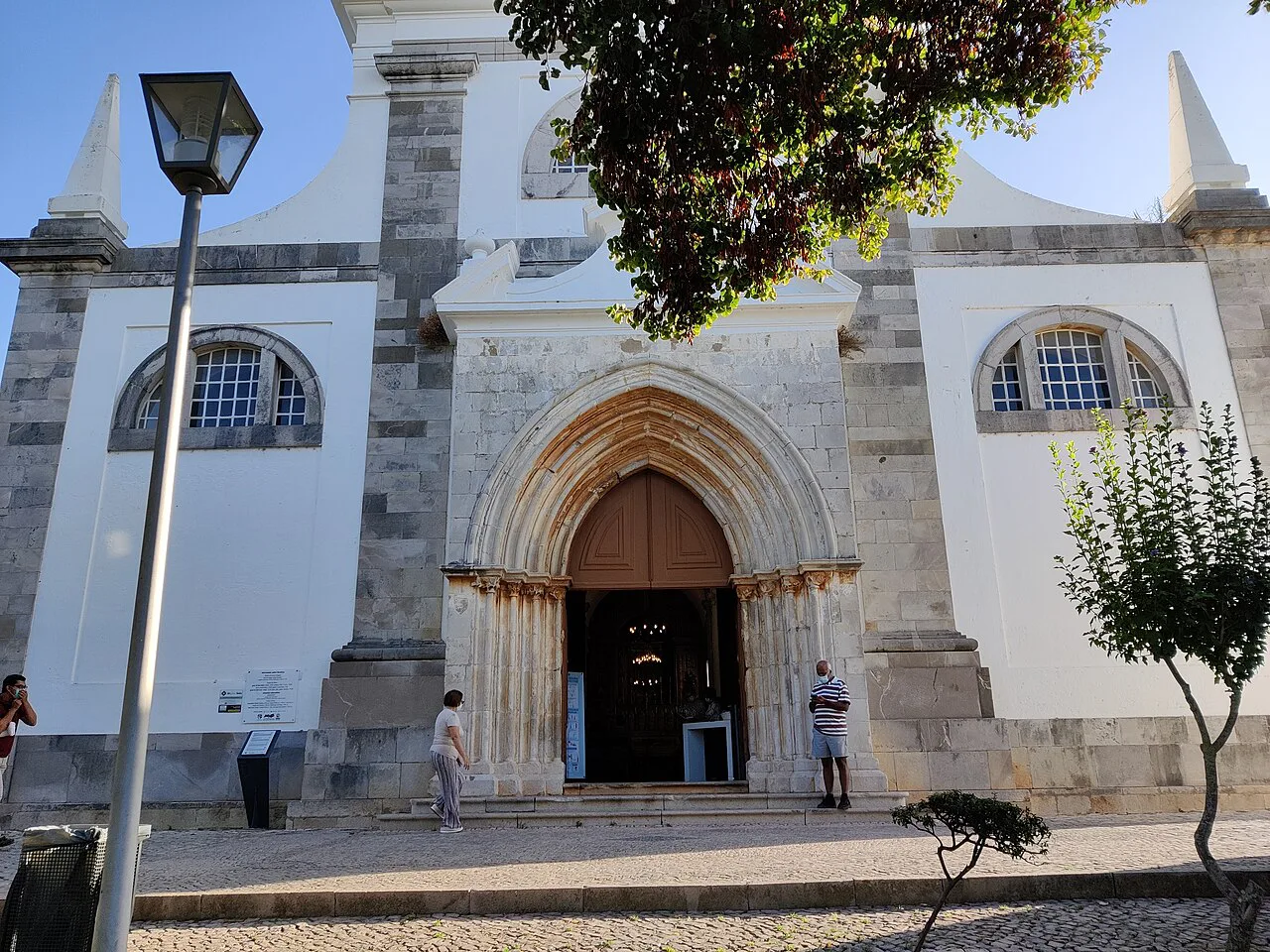
First stop: the churches of the old town and their tile panels
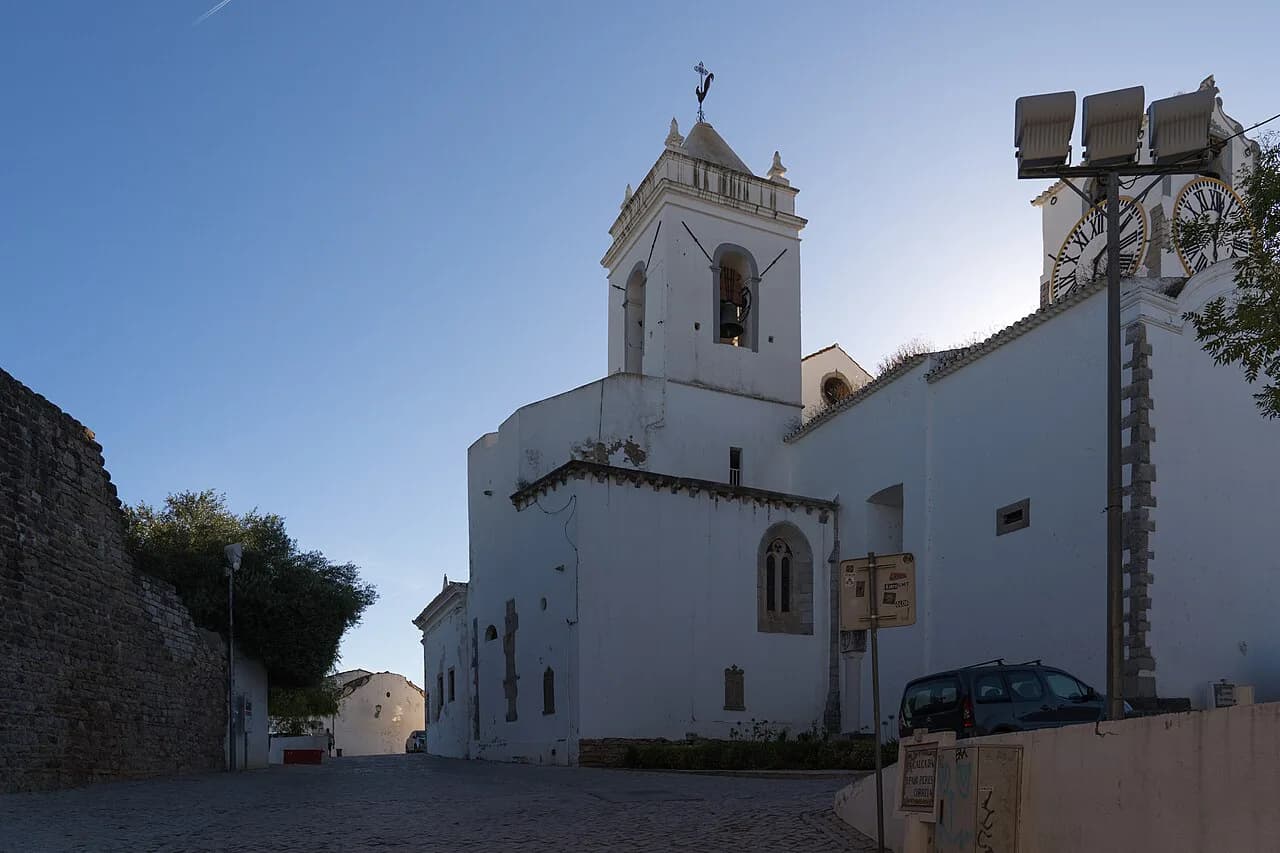
Church visiting in Portugal has its own rhythm, and Tavira follows the general pattern rather than a fixed timetable you can rely on. Many churches keep limited daytime hours and close around lunchtime, and services take priority over tourists whenever they are on. Dress respectfully, keep your voice down, and step out if a service is starting. For a door-by-door rundown of which buildings are open when, see our guide to churches in Tavira.
If you want the historical frame around those panels, the town's story runs from Phoenician and Roman roots through the Moorish period to the earthquake of 1755, which reshaped much of the Algarve. Tiles survived where walls did not, so the interiors you see today often sit inside rebuilt shells. Tavira history is worth half an hour of reading before you go, because it explains why the decoration is concentrated where it is.
Tiled façades and doorways along the back streets
Aimless wandering works, but a structured route is faster. A Tavira walking tour can point out the façades and doorways you would otherwise miss, and it also gives you an excuse to cover the old town in one go. If you prefer to go alone, start at the main square and take the narrowest lane leading away from it, then loop back through the parallel streets.
The concentration of these façades is one reason the old town rewards slow walking. The lanes behind the Praça da República are short, shaded and full of small details that disappear if you march through. Give yourself forty minutes for this stretch alone and you will see more than a hurried hour on the main drag.
Fountains and civic tiling
Treat these small features as punctuation between bigger stops rather than destinations in themselves. A tiled fountain gives you a natural pause, a place to check the map and a reason to look at a street you might otherwise walk past. They also cluster near the squares, so they fit naturally into a route that follows the river.
A short walking route between the main tiled stops
Two landmarks anchor the route: the castle on the hill above the old town and the market on the riverbank. The Castelo is a useful high point to aim for because it gives you a view over the rooftops you have just walked under, while the Mercado Municipal de Tavira is a natural place to finish. Our page on the Tavira castle explains what is up there; the Tavira market covers the riverside end of the walk.
If you have time spare, the Roman bridge and the riverbanks make a gentle extension, and the ferry pontoons towards the Ria Formosa sit close by. A boat trip is a pleasant way to round off a morning of tiling, though it has nothing to do with azulejos. Keep it as an optional extra rather than part of the core route.
How much time to allow and where to break for coffee
Coffee stops are part of the experience rather than an interruption. Portugal's pastelarias serve a bica and a pastel de nata at the counter for a small sum, and the ritual of standing at the bar is worth adopting. Prices vary by venue, so check the board or ask before ordering if you want to keep to a budget; a coffee at the counter is almost always cheaper than at a table.
If you want to combine tiling with indoor visits, the town's museums make good wet-weather substitutes. Tavira museum collections cover local archaeology and fishing history rather than tiles specifically, but they fill an hour and sit close to the route. Museums in Tavira are worth checking before you set out, since local museums often keep shorter hours than national ones.
Practical notes on visiting churches in Tavira
Etiquette is simple and consistent across Portugal. Cover shoulders, remove hats, keep phones silent, and do not walk in front of people who are praying. If a mass is in progress, wait outside or come back later; churches are working buildings first and visitor attractions second.
Opening hours for individual churches vary and change with the season, and many close for lunch or open only for services. Rather than guess, check locally on the day at the door or at the parish office, or ask at your accommodation. The same applies to any tiled interior that is part of a museum or monument, where ticket desks publish their own times.
For supplies, the town's shops and the market between them cover most needs, from water to picnic food. Tavira shops are concentrated in the streets behind the riverfront, so pick things up before you start the loop rather than doubling back.
Tiles in Tavira and tiles sold under the name
The word Tavira has been borrowed by tile retailers outside Portugal: you can buy marble-effect porcelain floor tiles and hand-painted squares under the name, priced in pounds per tile or per square metre on UK retail sites. Those products are decorative wall and floor coverings sold for British homes, not old azulejos from the town. If you want the real thing, look at Portuguese-made pieces in the town's shops and ask the seller where they were made.
Should you walk the tiled route first?
Yes, if it is your first morning in Tavira. The loop gives you the town's shape, its landmarks and its decorative character in one pass, and it costs nothing beyond coffee. It also works in either direction, so you can adapt it to wherever you are staying.
If you have more than a day, use the tiled route as your orientation and spend the rest of your time on the river, the castle and the wider sight list. Everything else in Tavira fits around it. The full Tavira Attractions: 7 Visitor Guides collection covers the rest of the town.
Frequently Asked Questions
Are the tiles in Tavira actually Portuguese?
The azulejos you see on Tavira's churches and façades are part of Portugal's own ceramic tradition, produced in Portuguese workshops over several centuries. Manufacturers elsewhere now sell tiles under the name Tavira as a colour or range label, which has nothing to do with the town. If you want to buy tiles as souvenirs, look for Portuguese-made pieces and ask the seller where they were fired.
Can I photograph the tiles inside churches?
Usually yes without flash, but rules vary by building and are sometimes posted at the door. Follow any signage, avoid tripods during services, and ask a volunteer or sacristan if you are unsure. Exteriors, fountains and street façades are unrestricted from public ground.
How long does the tiled route take?
Plan on three to four hours including two or three church interiors and a coffee stop. The walking itself is only two to three hours because the stops cluster tightly around the old town and the river. Add time if you want to include the castle or the market.
Sources
Notes for your next Portuguese break
Optional updates to our town guides.
You might also like
Continue reading
More guides you'll find useful