Viana do Castelo Market: A Practical Guide for a Short Break
Plan a market stop during a one to four day break in Viana do Castelo, and confirm days, hours and what is sold with the tourist office before you travel.
On this page
Use this guide to plan a market stop within a one to four day break in Viana do Castelo, slotting it into a morning before a walk through the old town. Because days, hours and what is on the stalls change, confirm the details with the local tourist office or the Município before you travel rather than relying on a fixed list of market days.
The maritime Minho city draws visitors for its religious sites, its old town and its coast, and the Lonely Planet guide to the best things to do in Viana do Castelo puts a walk around the old town at the top of its list. That walk sits comfortably after a morning market stop rather than competing with it.
What the Viana do Castelo market is and how to fit it into the old town
A Portuguese municipal market, where a town has one, is a working affair rather than a visitor attraction with displays or guided routes, which is why it can earn a short slot in a break: it shows the city going about its ordinary business within reach of the sights you have come to see. Whether Viana do Castelo's is open on your dates is the detail to fix first.
Plan the market as your first stop, then work outward through the squares, churches and riverside so you are not doubling back later. See the wider Things to Do in Viana do Castelo guide for how the landmarks fit together on foot.
Set your expectations by the size of the town: a city of Viana's scale has a small, tight market rather than a sprawling one. If you are used to municipal halls in Lisbon, Porto or a large Spanish city, you will likely find a handful of produce and fish counters rather than aisles of artisanal stalls.

What's sold, and what to look for beyond the stalls
A municipal market in northern Portugal typically means seasonal vegetables and fruit, fish from nearby waters and a handful of everyday counters, but the exact mix changes week to week and hall to hall. Plan around what is in season rather than a fixed shopping list, and treat it as a place to pick up a picnic lunch or a snack rather than to hunt for souvenirs.
Viana do Castelo has a strong craft tradition, and the Lonely Planet guide to the city highlights a plaster master's workshop among its distinctive stops. If ceramics and handmade pieces are what you are after, look beyond the food stalls and pair the market with that workshop.
For anything you intend to carry home, think about weight and fragility before you buy. Fresh fish and soft fruit will not survive a flight, whereas tinned fish, cheese and cured meat travel well in hand luggage, so browse the city's food shops if you want a reliable purchase.
Which days and hours to plan around, and how to check before you travel
The days and hours a Portuguese municipal market keeps vary from hall to hall, so ask at the local tourist office when you arrive or check the Município's own pages before you set out, because the official listing is the only reliable source for a specific week.
Working Portuguese markets in the north tend to keep a morning rhythm: fish arrives early and produce sells through the morning, with stalls thinning out towards lunch. Arrive in the first part of the morning if you want to see a market at full stretch, and allow for that early start if you are coming from a day trip elsewhere in the Minho.
Build in a fallback in case the market is closed when you visit. The old town, the churches and the riverside all fill a morning without it, so keep the market as a bonus stop rather than the anchor of the day and the plan holds whatever you find.
How much time the market needs within a one to four day trip
On a one day visit, give the market at most an hour and spend the rest of the day on the old town and the ascent to Santa Luzia. A two day trip lets you take the market slowly in the morning and use the afternoon for the coast. With three or four days, the market becomes a relaxed first-morning habit before you head further into the Minho.
A market costs you time rather than a ticket, beyond what you choose to buy from the stalls, so it is an easy addition on a wet morning or a gap before a train, and an equally easy thing to drop if the sun comes out and the coast calls. Weigh it against the sights that do charge admission and decide where your hours are best spent.
If you are in the city for four days, resist the urge to return to the market every morning. One proper look is usually enough, and the remaining mornings are better spent on the town's churches, its azulejo-covered interiors or a trip along the river.
Pairing the market with the old town's squares and streets on foot
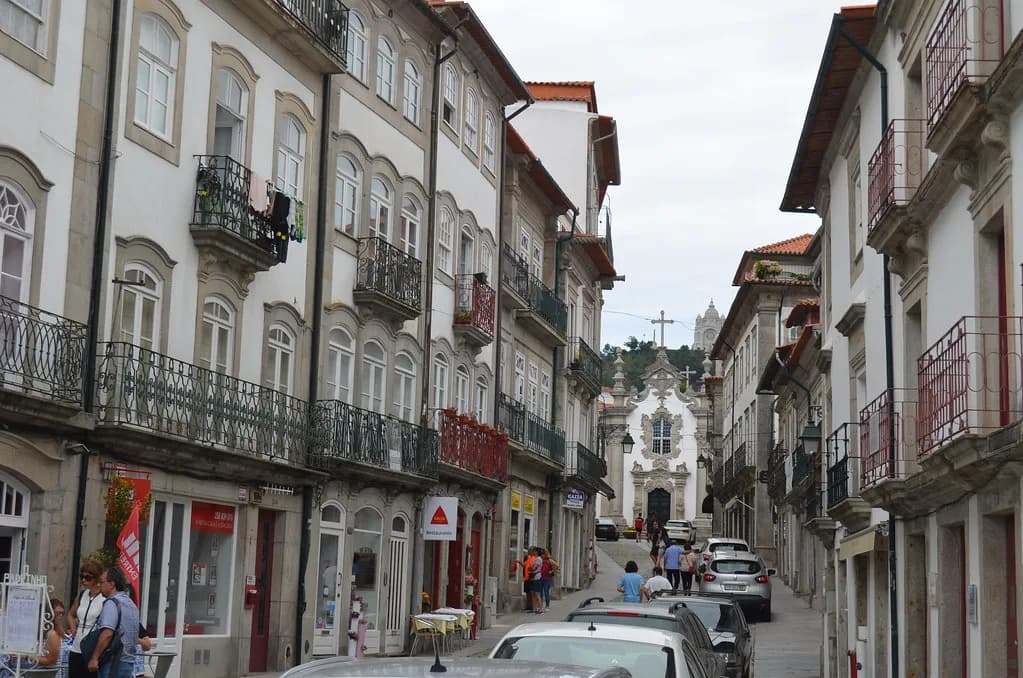
Start with the market, walk into the old town and finish at the river. That simple order takes you through the historic centre's squares and narrow streets in a natural line, with the market as the practical warm-up rather than a detour.
The town's churches are part of the same walk and reward a short pause each. Viana do Castelo cathedral, the Sé, sits within the historic centre, so you can fold it into the morning without adding transport. Check the door when you pass, since church opening is not something to assume.
Eating is the natural end of a market morning. Pick up bread, cheese and fruit at the stalls, or sit down for a lunch of caldo verde or grilled fish in the old town, which gives you a reason to eat early and locally rather than defaulting to a café by the car park.
If markets are your focus: other places worth a look in the Minho
Viana do Castelo is a small city rather than a huge market fair, so if markets are the point of your trip, widen the loop. Ponte de Lima, a short drive or bus ride inland, pairs its own market tradition with a famous bridge, and the Lonely Planet guide counts admiring that bridge among the region's best things to do.
Beyond shopping, the region's draw is the coast and the religious sites. The Cabedelo beach and the ride up Monte de Santa Luzia fill an afternoon, and the Lima valley towns fill another day. Use the market as the morning stop and let the Minho supply the rest.
Is the market worth a slot in your itinerary?
Yes, as a short morning stop rather than a headline sight. Give it thirty to sixty minutes on your first morning, buy something for lunch, and then walk the old town while you are already there. Travellers with only one day in the city should still fit it in before the ascent to Santa Luzia.
If markets are the main reason for your trip, plan a half day in Ponte de Lima as well and treat Viana's market as the appetiser. Confirm the days and hours with the local tourist office or the Município before you go, since the schedule is the one detail worth checking in advance.
Explore more Viana do Castelo guides
Frequently Asked Questions
What should I expect from the Viana do Castelo market?
Treat it as a compact, working municipal market rather than a sprawling visitor attraction, so allow roughly half an hour to an hour. Check the days and hours with the local tourist office or the Município before you go, since these vary.
Do I need to budget for the market?
Treat the market as a place to spend on what you choose to buy rather than on an organised or ticketed visit: set aside money for a picnic lunch or a few edible souvenirs, and confirm the days and hours with the tourist office before you go.
Can I combine the market with the Santa Luzia church?
Yes. Do the market first thing in the morning, walk the old town, then take the ascent to Monte de Santa Luzia in the afternoon. That sequence keeps the day in one direction and avoids doubling back.
Sources
Notes for your next Portuguese break
Optional updates to our town guides.
You might also like


Continue reading
More guides you'll find useful