Viana do Castelo Cathedral (Sé) and the Churches Worth Visiting
A practical guide to Viana do Castelo cathedral and the churches around Praça da República, with what to look for and how to fit them into a short break.
On this page
Viana do Castelo cathedral, the Sé, was built in the first half of the 15th century and substantially altered in the 19th, with two crenellated Romanesque towers flanking the façade. It sits so close to Praça da República that you can see it alongside the square's churches in a single unhurried morning. Allow around an hour for the Sé itself and two hours for the whole cluster, since the distances between them are measured in seconds rather than minutes. This guide covers what to look for in each building and how the churches fit into one, two or three days in the city.
The city lies between the estuary of the Rio Lima and the sea, with the Santa Luzia hill rising behind it, and its wealth as a fishing centre and supplier of ships and navigators for the Portuguese discoveries left it dense with monuments and mansions. That density is why church-hopping here works better as a walk than as a checklist.
Viana do Castelo Cathedral: the short answer
The Sé was built in the first half of the 15th century and substantially altered in the 19th, so what you see from the square is a building with a medieval skeleton and a later face. Its two crenellated towers flanking the façade are Romanesque, which gives the cathedral a fortress-like profile unusual among Portuguese sé cathedrals. Expect a working place of worship rather than a curated monument, and dress and behave accordingly.
Walk round the front twice before going in, once for the towers and once for the portal, because the exterior deserves more of your time than you might give a cathedral at home.
Where the Sé is and how to walk there from Praça da República
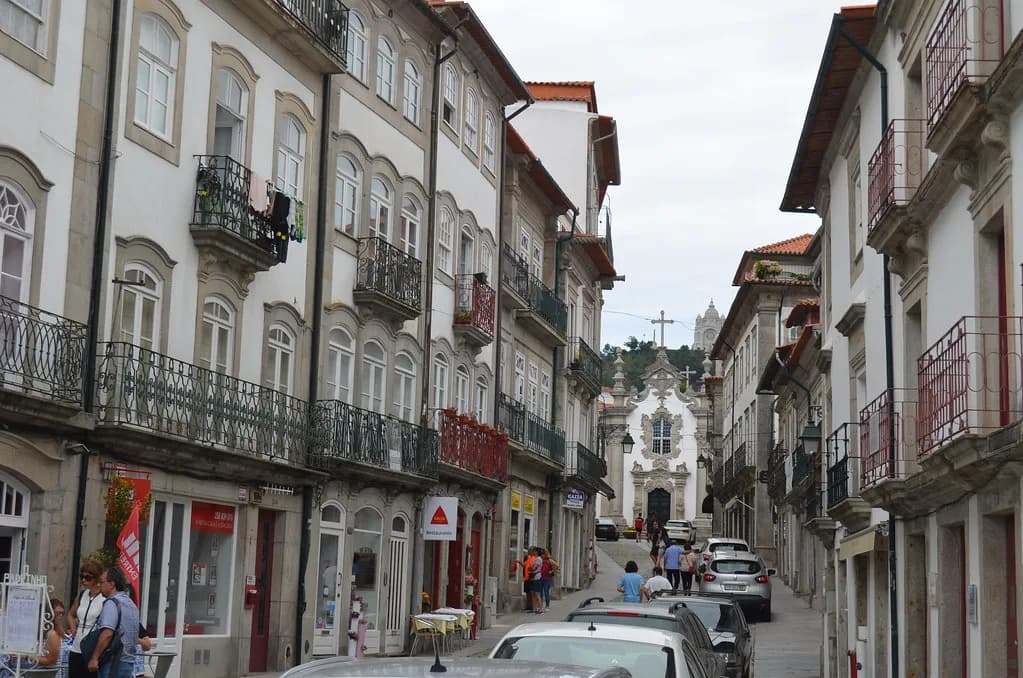
The cathedral stands at the edge of the old centre, a very short walk from Praça da República, the handsome square whose centrepiece is the 16th-century Chafariz fountain. The square lies just north of the cathedral, so the two sights genuinely work as one stop rather than two. Start at the fountain, orient yourself, then walk to the Sé; the leg is flat and easy on foot, and the surrounding lanes are covered in the Viana do Castelo Old Town guide.
The lanes between the two are winding and the pavements uneven in places, so this is not terrain for a rushed schedule. Beginning at the cathedral, crossing to the square and continuing to the old town hall keeps the walking short and lets you double back if a building is busy with a service.
Inside the cathedral: towers, carved woodwork and the later remodelling
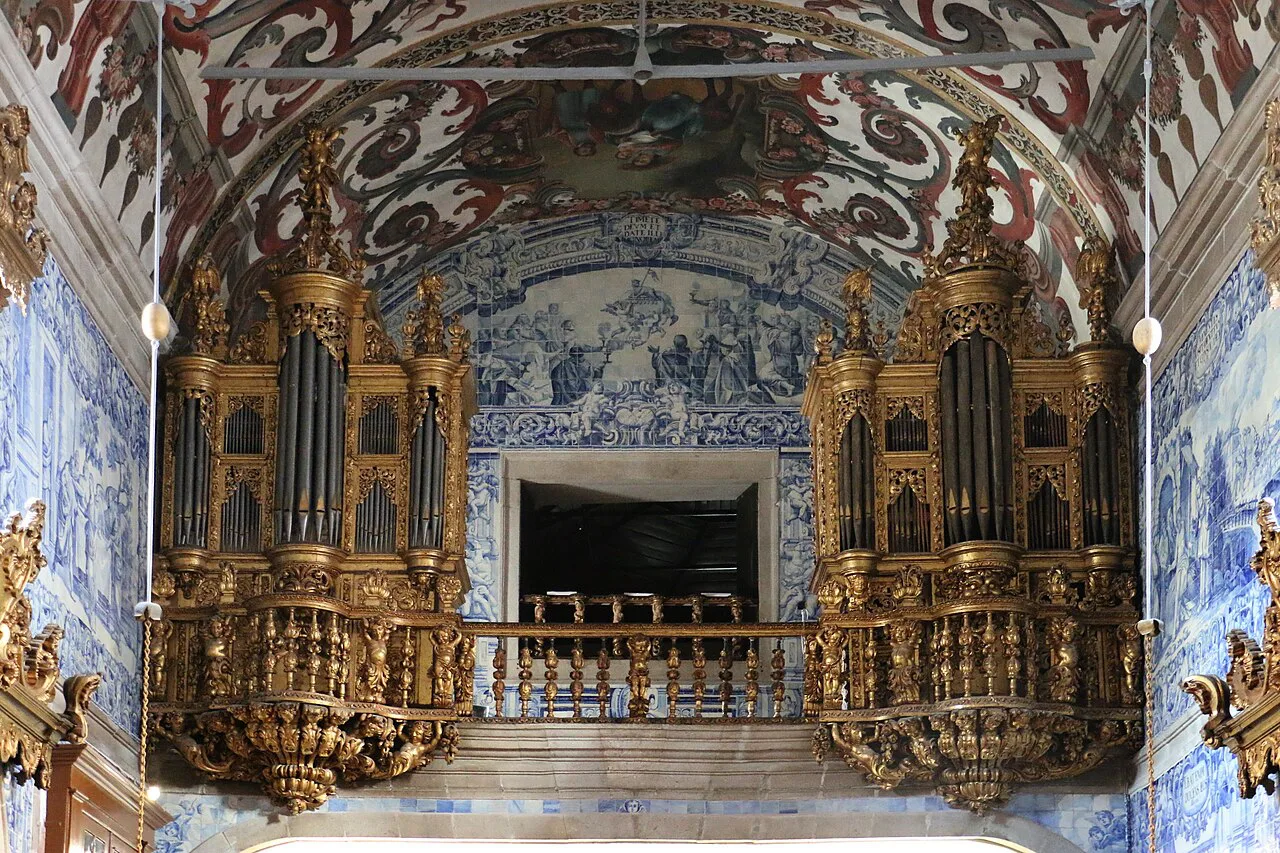
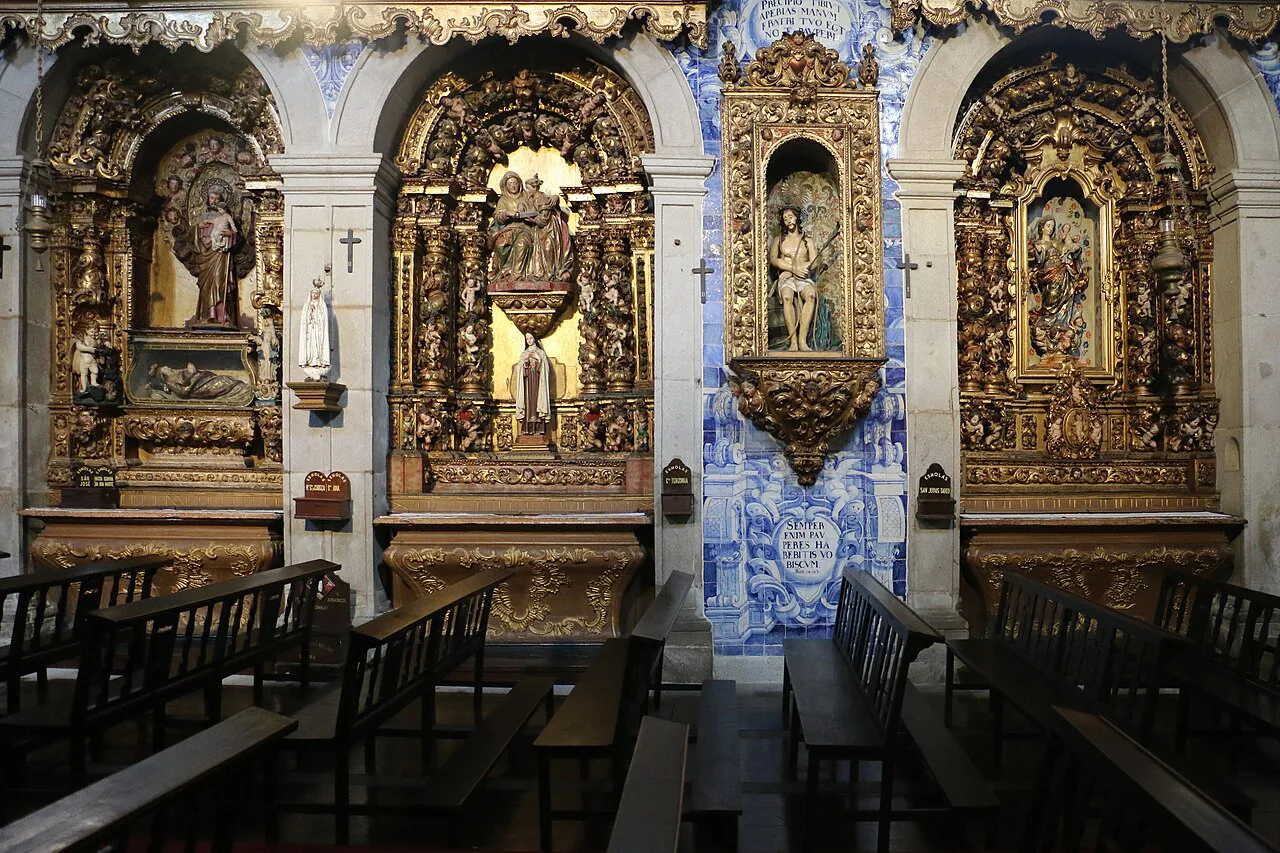
The interior holds fine polychrome wood carving, mainly of the 17th century, which is the detail to slow down for; look around the chapels rather than straight ahead. The impression is of a later decorative scheme layered onto an older structure, which matches the 19th-century remodelling. The cathedral is the mother church of the Diocese of Viana do Castelo rather than a parish curiosity.
Viana's appeal is different from Lisbon's or Porto's cathedrals: it is smaller, less trafficked and grouped with a square that is one of the finest in the country. Come for the intimacy and the towers rather than expecting scale.
Praça da República: the Chafariz and the Misericórdia front
The most impressive building on the square is the Church of the Misericórdia, a three-storey structure with Roman arches and Renaissance balconies stacked up its front. It is unlike a conventional Portuguese church façade, so read it from the square before trying the door; the balconies are the feature most people photograph. The 16th-century fountain anchors the whole composition.
Because the square is open and free, it also gives you something to do if a church is shut or in service: sit on a step and wait. That flexibility is why the square belongs in the middle of the walk rather than at either end.
The parish church begun under João I and its painted ceiling
The town's parish church was begun by King João I in 1285 and completed in 1433, and its façade is dominated by a large Gothic arched portal flanked by two battlemented towers. Inside, the highlight is a trompe-l'oeil ceiling, a painted illusion that repays a few minutes of looking straight up. Set against the cathedral's later carving, it shows how many centuries of redecoration sit inside this small area.
Two battlemented towers on a parish church, plus two crenellated ones on the cathedral a minute away, give the old centre a distinctly defensive skyline. Point your camera at rooftops as well as doorways.
Antigos Paços do Concelho and the rest of the square
On the east side of Praça da República stands the Antigos Paços do Concelho, the old town hall, an early 16th-century granite building now used for exhibitions, with arcades at street level where bread used to be sold. Because it hosts temporary shows rather than a permanent collection, what you find inside varies, and the arcade itself is the reliable pleasure.
Treat the buildings as one ensemble rather than four separate admissions and the half-day plans itself: the Misericórdia front, the old town hall and the fountain set the boundaries, with the cathedral a short step beyond.
The municipal museum and the São Domingos corner
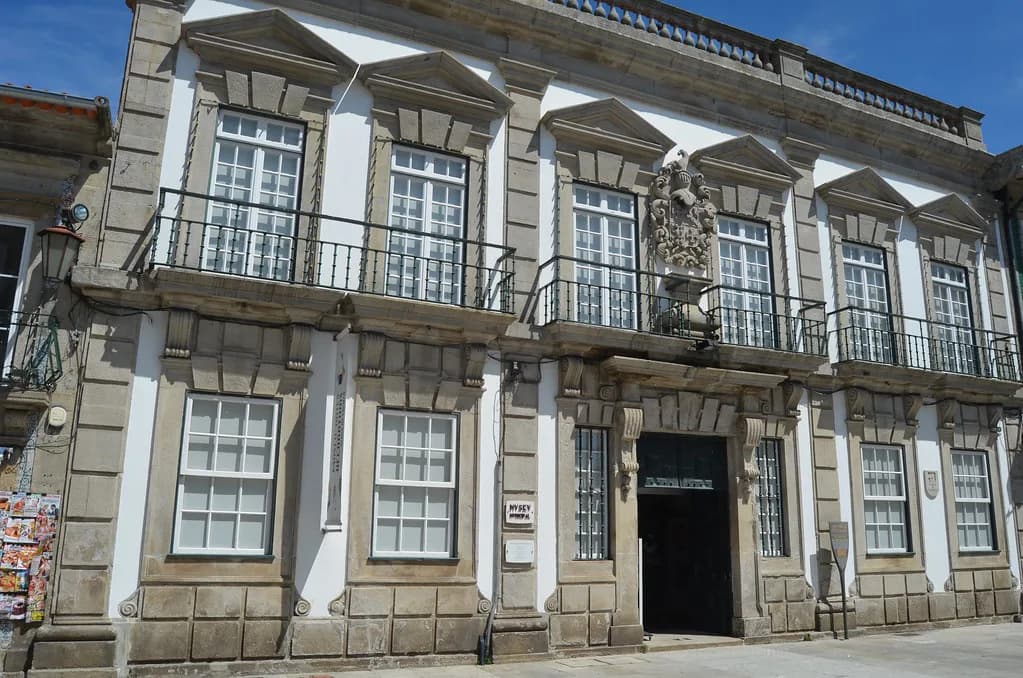
The municipal museum sits diagonally opposite the Igreja de São Domingos, housed in the 18th-century mansion of the Barbarosa Macieis family. Its displays include furniture from Portuguese India and Moorish Spain alongside an important collection of 18th-century Portuguese glazed earthenware. If you have an interest in azulejos and decorative arts, this is the natural companion to the churches rather than a separate outing.
The mansion setting matters: you are looking at rooms built to display such pieces, not a modern white cube. Allow it proper time or skip it entirely; a rushed ten minutes here is worse than no visit.
Sequencing the churches in a half-day walk
My order is the Sé first, while the morning is quiet, then the short walk to Praça da República for the Misericórdia front and the fountain, then the parish church, and finally the old town hall arcades. That sequence puts the open-air square in the middle, which is useful if a service closes a door. The distances are so short that the order is a convenience, not a rule.
A half-day is enough for the churches and square with time for a coffee, but only if you resist adding every museum. See how the old centre relates to the riverfront and the hill in these Viana do Castelo Attractions.
How the cathedral fits a one-, two- or three-day plan
On a one-day visit, fold the cathedral and square into a morning and give the afternoon to the hill; with two days, do the old-town churches on day one and the coast and castle on day two. A three-day break lets the churches become a relaxed first morning before the market and the riverside, which suits anyone arriving on a late train.
The practical point is that this cluster costs you almost no travel time, so it never needs a dedicated day. It works best as the anchor of a morning that drifts into lunch.
Churches further out: Nossa Senhora da Agonia and Santa Luzia
The Nossa Senhora da Agonia chapel, a place of pilgrimage, is approached by a Baroque flight of steps and was begun in the mid-18th century, with its belfry added in the late 19th; the Senhora da Agonia festival fills the area around 20 August each year. Separately, the 19th-century Neo-Byzantine church of Santa Luzia tops the Monte de Santa Luzia, about five kilometres north-east of the city, and can be reached on foot, by car or by the funicular that leaves from near the station.
Prioritise Santa Luzia: the trip up is worth making for the view alone, and the funicular saves the climb if the hill is not your idea of a good time. Build the visit around the panorama rather than the interior.
Senhora da Agonia sits closer to the centre, near the Castelo de São Tiago da Barra at the south corner of the Campo do Castelo, a 16th-century harbour defence whose two towers were added in the 18th century. Combining the chapel and castle makes a coherent riverfront half-hour, though neither substitutes for the cathedral morning.
Practical points: services, entry charges and lunchtime closures
Service times for the Sé, the Misericórdia church and Santa Luzia are posted at the buildings themselves, so look at the notice board on arrival and set the cathedral for the morning. A working church may be closed to sightseers during Mass, which is standard practice rather than a quirk. Do not promise yourself a tower climb: no source confirms roof or tower access.
Entry charges are also a matter for the door, so carry a little cash and check any sign at the entrance before you go in. Beyond that, the churches reward patience more than planning.
Should the cathedral be your first stop?
Yes, make the Sé your first stop of the morning, then let the walk flow through Praça da República and the parish church before the town gets busy. The circuit is short enough that a failed visit costs minutes rather than an afternoon, which is exactly why it suits a half-day; if you are still deciding whether the city deserves your time, read is Viana do Castelo worth visiting before you book the train.
Leave the hill for another part of the day and treat Santa Luzia as a separate outing with its own travel time. That separation is the main trade-off in a short break here: the old-town churches are almost free of logistics, while the outlying churches need a decision about how to get there.
Explore more Viana do Castelo guides
Frequently Asked Questions
Is Viana do Castelo cathedral free to enter?
No current entry charge for the Sé is published, so treat a donation as the sensible default and check any notice at the door when you arrive. A working church may also close to sightseers during services.
How long does it take to visit Viana do Castelo cathedral?
Allow around an hour for the Sé itself, including the exterior towers and the carved interior, and about two hours for the cathedral, Praça da República and the nearby churches together. The buildings are within a minute or two of each other, so the time goes on looking rather than walking.
Can I visit the cathedral and Santa Luzia on the same day?
Yes: the old-town churches suit a morning and Santa Luzia an afternoon, since the hilltop church is roughly five kilometres north-east of the city and reached on foot, by car or by funicular from near the station. Keep the two halves separate rather than interleaving them.
Sources
Notes for your next Portuguese break
Optional updates to our town guides.
You might also like

Continue reading
More guides you'll find useful