Porto to Viana do Castelo: Train, Bus or Car?
Viana do Castelo is about an hour north of Porto by train. Compare train, bus and car, see where each arrives, and plan a short break around the old town.
On this page
The train is the simplest way from Porto to Viana do Castelo: direct services from Porto Campanhã take a little over an hour on the fastest departures. The town works as a day trip from Porto, but it rewards an overnight stay more than most places within an hour of the city. This guide compares train, bus and car, explains where each leaves you, and lines up the old town, Monte de Santa Luzia and the far bank of the Rio Lima into a realistic plan.
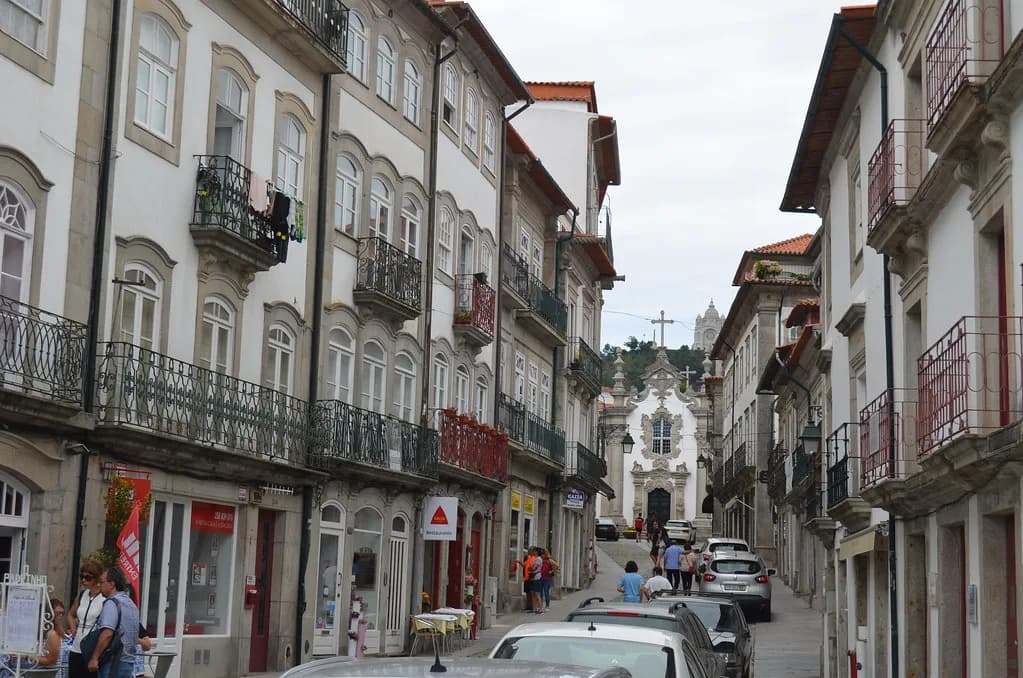
The centre is compact and unfussy: colourful facades, a basilica on the hill and a working river estuary. Put the old town first and the hill later, when the light softens over the rooftops, then read the Viana do Castelo Old Town guide before you go.
How far is Viana do Castelo from Porto, and how long does the trip take?
Viana do Castelo sits about 64 km north of Porto, near the mouth of the Rio Lima. Direct trains from Porto Campanhã run around 16 times a day, with the quickest covering the distance in 1 hour 7 minutes and the average journey around 1 hour 35 minutes. That puts the town comfortably inside day-trip range: leave Porto after breakfast and you still have a full afternoon for the centre and the hill.
Porto to Viana do Castelo by train: journey time, frequency and tickets
Direct trains are the norm, so the train is the option most travellers should take. Omio lists an average of 29 trains a day with an average journey of about 1 hour 28 minutes, while Trainline gives 16 trains a day, an average of 1 hour 35 minutes and a fastest time of 1 hour 7 minutes. The two booking sites measure slightly different things, but both describe direct services, so no change of train is needed and the trip is short enough in both directions for a single day.
Fares vary with how far in advance you book and which service you choose, so compare prices on a booking site rather than assuming a flat fare. Decide whether a flexible ticket is worth the extra on a day when you may want to linger.
Porto to Viana do Castelo by bus: what the booking sites show
Long-distance coach operators appear on the same booking sites alongside the rail service. A coach can win if your accommodation sits nearer a bus or coach stop than Campanhã, or if the train times on your date leave an awkward gap. The trade-off is that coaches share the road with traffic, so a journey that looks similar on paper can stretch when the approaches to Porto are busy.
Treat the bus as the fallback rather than the default for a short break. Check the coach timetable against the rail timetable for your dates and take whichever gets you into town earlier, because an early arrival buys the quietest hour in the centre.
Driving from Porto to Viana do Castelo: flexibility and parking
Driving north gives the most flexibility and lets you stop along the coast, but it adds the usual friction of arriving in a Portuguese city centre by car. The centre is compact and best explored on foot, so park on the edge and walk in. Driving suits an overnight stay better than a day trip, since you pay for parking once rather than twice.
Aim for a car park within walking distance of the centre rather than threading through the narrow streets around Praça da República. Parking tariffs and payment methods vary, so read the signs at the car park you choose on the day. For what to see once you are on foot, see Things to Do in Viana do Castelo.
Where you arrive: Viana do Castelo station and the walk into the old town
The railway station sits outside the historic centre rather than in the middle of it, so allow time to walk to the streets around Praça da República. The route is flat enough to manage with a small case, which makes an overnight stay practical without a car. Coming off the train, head north towards the river and the square.
Whichever you take, the walk in is where the town first makes sense: the grid loosens, the facades brighten and the river opens ahead of you.
What to see in the old town: Praça da República and the streets around it
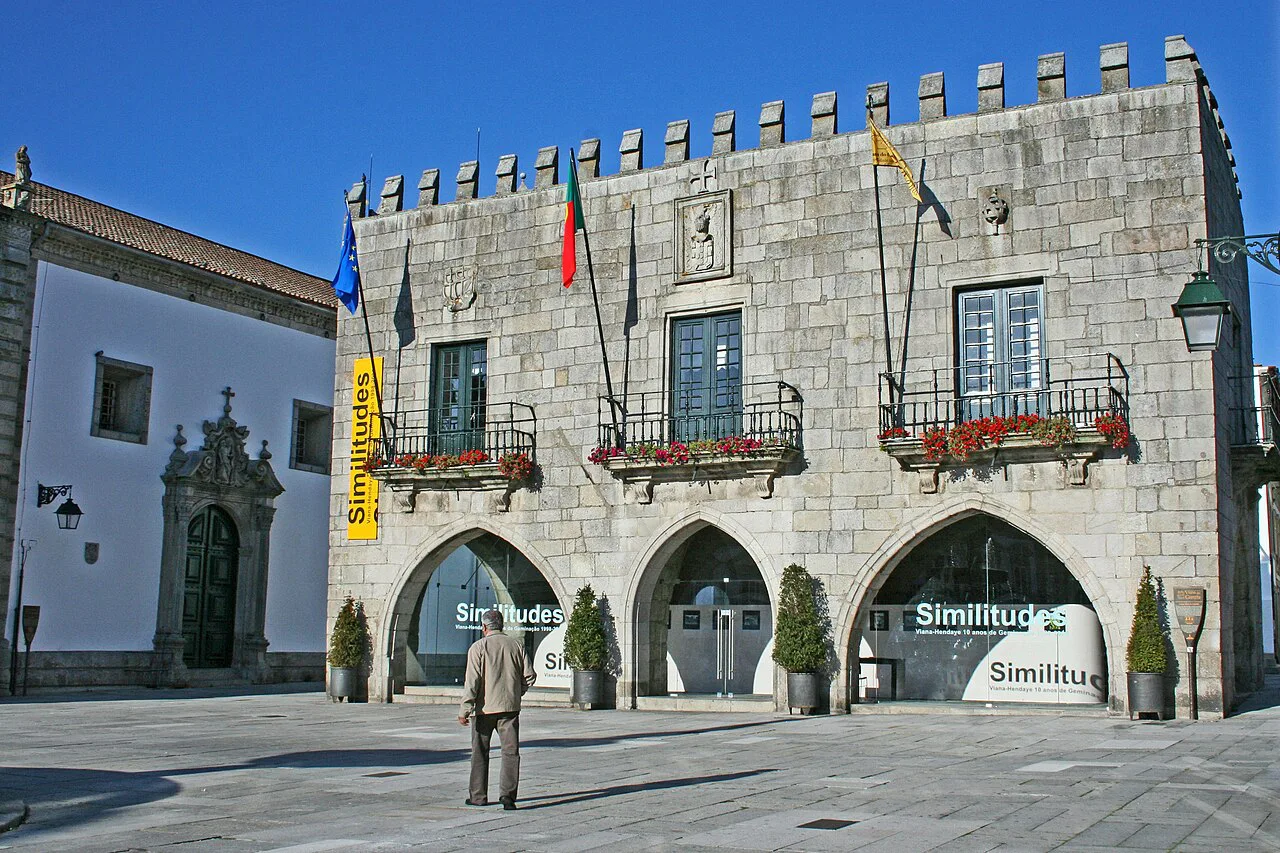
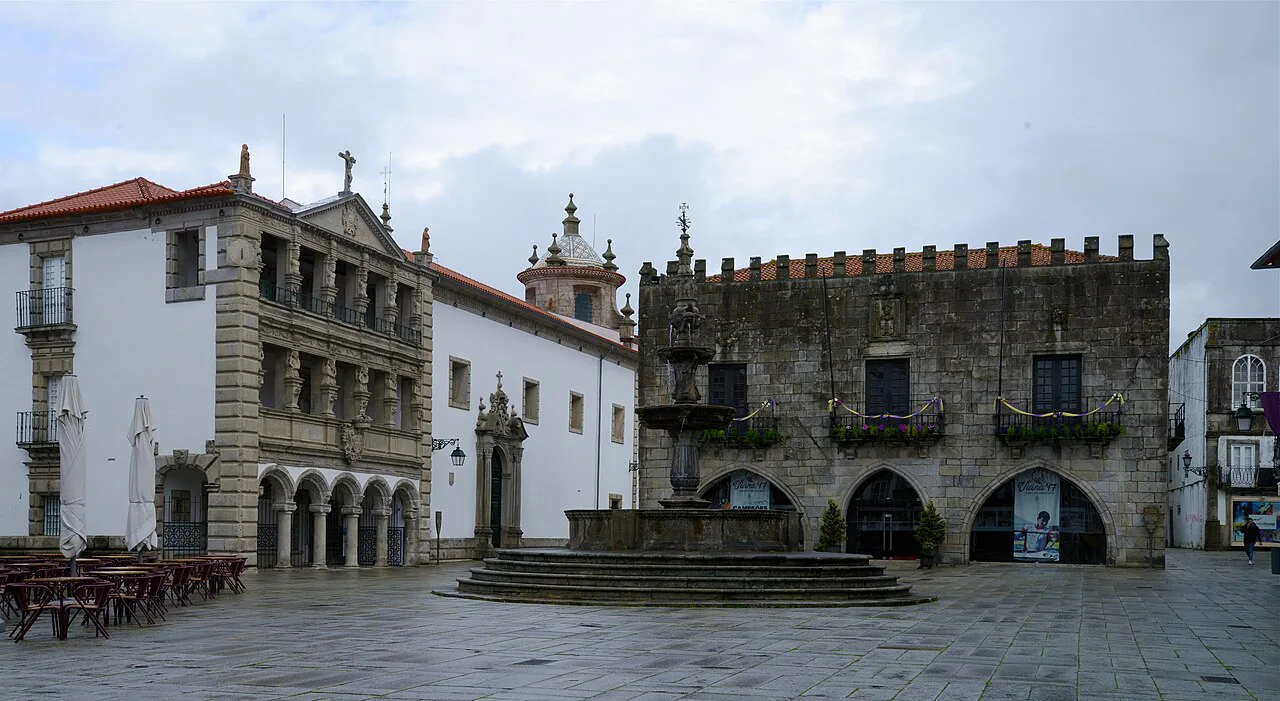
Start at Praça da República, the square at the heart of the old town, ringed by sixteenth-century buildings painted in deep reds and golden yellows. The streets radiate from it, and the pleasure is in wandering without a fixed itinerary: small churches, a coffee and a pastry, a morning built on texture rather than checkboxes. The facades are lived in rather than staged, with laundry on wrought-iron balconies and bakeries serving locals.
Build in time for the cathedral and the smaller churches, which reward a slower pace than the square itself. The rest of the day's things to do fit around this compact core, so you never need transport inside the centre.
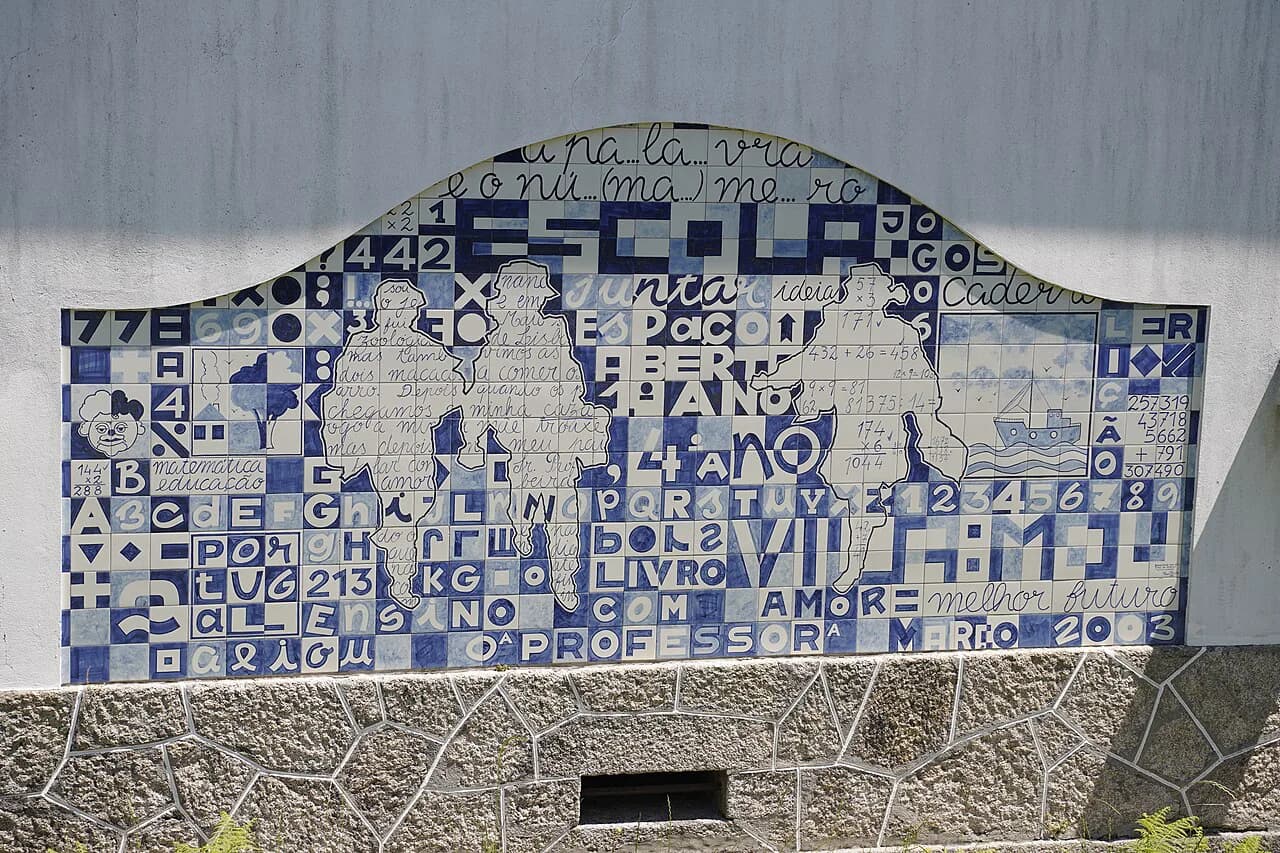
If you want to see the town's azulejos properly rather than catching them in passing, give the tiled interiors and facades their own hour.
Monte de Santa Luzia: the 284-step staircase, the funicular or the drive
The Basílica de Santa Luzia crowns Monte de Santa Luzia above the town, reachable three ways: on foot up a monumental staircase of 284 steps, by funicular, or by car. The climb is the honest choice if your knees and the weather allow, because the white dome grows larger with each flight and the terrace opens over the red rooftops and the Rio Lima valley. If the steps sound like a chore, the funicular removes the effort without removing the view.
Whichever way you go up, time your arrival for late afternoon so the light thickens over the estuary. The interior of the basilica is more ornate than the plain exterior suggests, with a decorated dome and tiled surfaces, and the terrace outside is the real reward. The Pousada next door, a granite building with colonnaded arcades, is worth a glance from outside.
Crossing the Rio Lima to Darque for the other bank's view
Cross one of the bridges south over the Rio Lima to Darque and the picture changes: the urban grid dissolves into small hand-worked fields, scattered houses and a quiet that feels far from the coast. With a car the detour takes about 45 minutes and shows what Viana do Castelo actually is, a working town with countryside attached rather than a museum piece.
On a one-day visit by train, the south bank is the first thing to cut. The bridge walk eats time you would rather spend on the hill and in the centre, and the best estuary views are already available from the Santa Luzia terrace. Save Darque for an overnight stay or a return trip with a car.
How many days does Viana do Castelo need? One day versus an overnight stay
One full day covers the old town, the basilica and the terrace, enough to decide whether you want to come back. Two days lets you slow down: a morning in the centre without watching the clock, an afternoon on the hill, and time for the riverfront without sacrificing lunch. A second day here is about depth, not distance.
An overnight stay also solves the day-trip problem of the last train, because you can eat dinner in town and walk back to a bed rather than racing to the station. Weigh the cost of a night against the cost of a rushed afternoon.
Should you day-trip from Porto or stay the night?
Day-trip if your itinerary is tight and you want a change of scene from Porto, because the train is quick, direct and frequent enough to make the return easy. Stay the night if you want the centre at its quietest, dinner without a timetable, and a morning on the hill before the day visitors arrive. The trade-off is simple: the day trip is cheaper, the overnight stay is better.
Either way, treat the town as one stop of several days in northern Portugal rather than a rushed pause between Porto and the Spanish border. Give it a full day at minimum and you leave with a clearer sense of the Minho coast.
Which ticket should you book?
For most travellers the train is the answer: direct from Campanhã, a little over an hour at best, and frequent enough that a day trip works without stress. Compare fares in advance, arrive in the morning, and put Praça da República before Monte de Santa Luzia so the hill gets the late light. If you can spare the night, take it, and let Darque wait for the second morning.
Explore more Viana do Castelo guides
Frequently Asked Questions
What train line is Viana do Castelo on?
It is served by direct trains from Porto Campanhã, which is why no change of service is usually needed. The fastest direct trains take about 1 hour 7 minutes, with the average journey closer to 1 hour 35 minutes depending on stops. Check the operator's journey planner for the timetable on your date, since departure times shift with the season.
Sources
Notes for your next Portuguese break
Optional updates to our town guides.
You might also like


Continue reading
More guides you'll find useful