Tavira Castle: What You'll See Inside the Ruined Walls
Tavira Castle is a free hilltop ruin with a walled garden, an octagonal tower and wide views over the old town, the Gilão river and the salt pans.
On this page
Tavira Castle is a ruin with a garden inside it, not a palace you walk through, and admission is free. Budget 15 to 20 minutes for a typical visit, most of it spent on the walls looking down over the old town, the river and the salt pans. This guide covers what actually stands, the gate and towers you see, the history behind them, the opening seasons published for the site and the church next door.
Set your expectations low and the castle rewards you: there are no furnished rooms, no visitor centre and no café inside the walls. What survives is several square towers, a many-sided tower, long stretches of curtain wall and a municipal garden laid out in 1938. Treat it as the viewpoint stop within a compact loop of the old town rather than a half-day outing.
A ruined Moorish fortress turned public garden
The castle sits on the hill above the Gilão, on ground the Moors fortified to command the river crossing. Its core is Moorish, built of rammed earth between the 11th and 13th centuries, though most of the masonry you see today belongs to later rebuildings and 20th-century restoration. The interior was never reconstructed as a palace: the municipality bought the site in 1938, laid out a garden and the castle was listed the following year.
That history is why the visit is short. There is no sequence of rooms to follow and nothing to queue for; you walk in through the gate, cross the garden and climb onto the wall walk. The pleasure is the completeness of the ruin, with curtain walls running on three sides and the town spread out beneath.
The walls, towers and gate you actually see
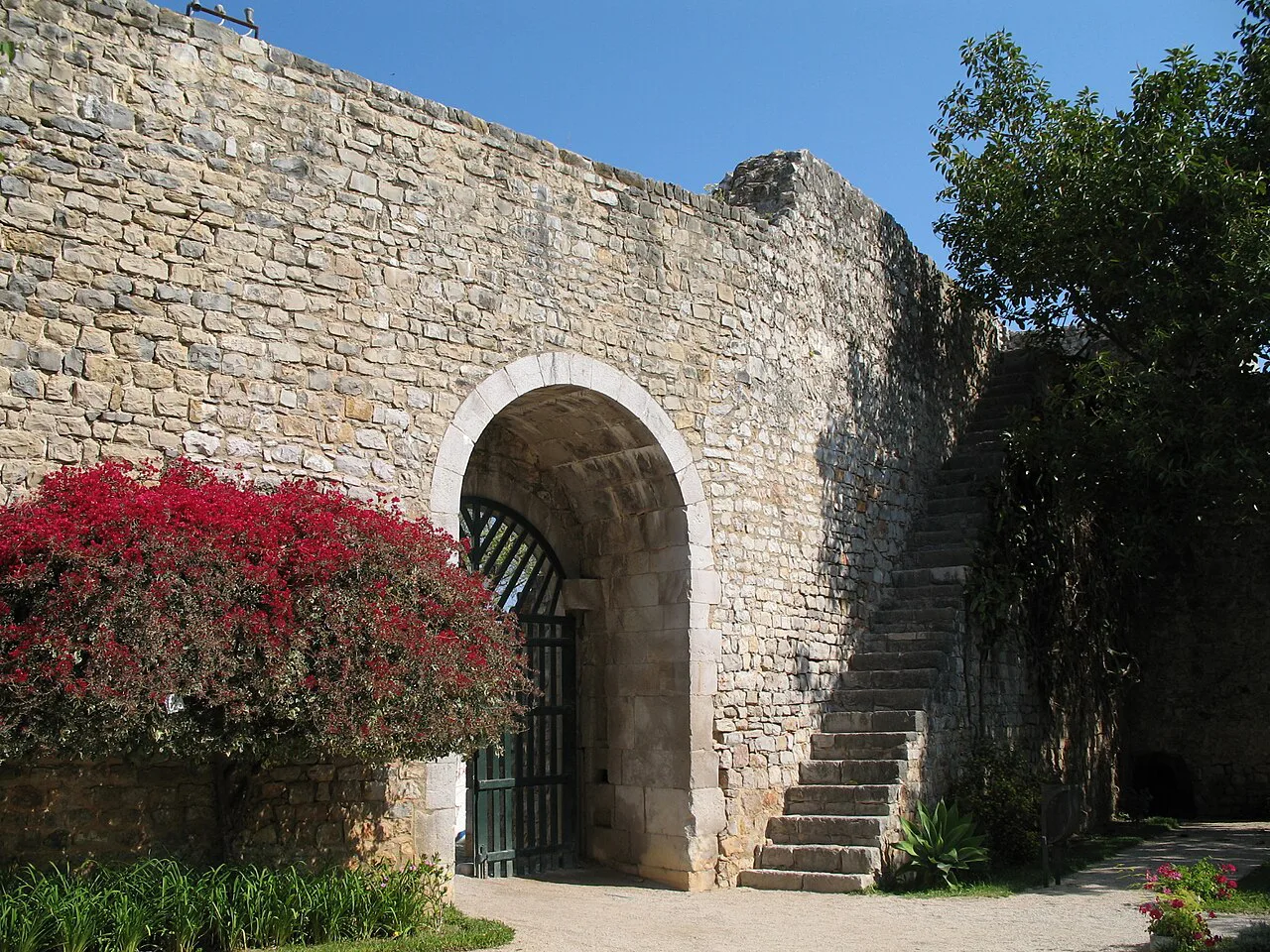
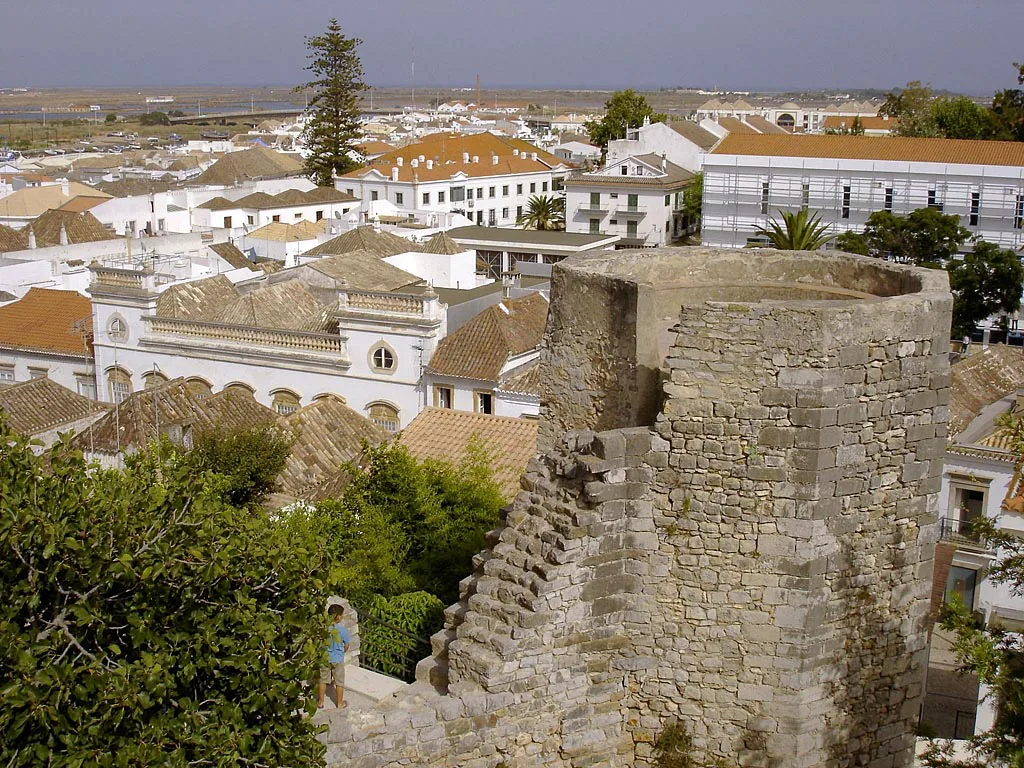
The surviving castle was small and roughly rectangular. Two square towers and one many-sided tower remain, with wall on three sides and the interior given over to the garden; you can climb both the walls and the towers. The many-sided tower is the unusual feature, and the stretch of wall nearest the entrance arch makes the clearest sense of how tight the original enclosure was.
The gate is part of the same visit. A gate built in 1520 still faces Praça da República, next to where the tourist office now stands, and the Arco da Misericórdia survives along with part of the Alcáçova. Decorative and architectural fragments from the castle are displayed in the Islamic art branch of the Tavira museum on the main square, which is worth pairing with the castle if you want the stones explained.
Walking the walls: the view over town, river and salt pans
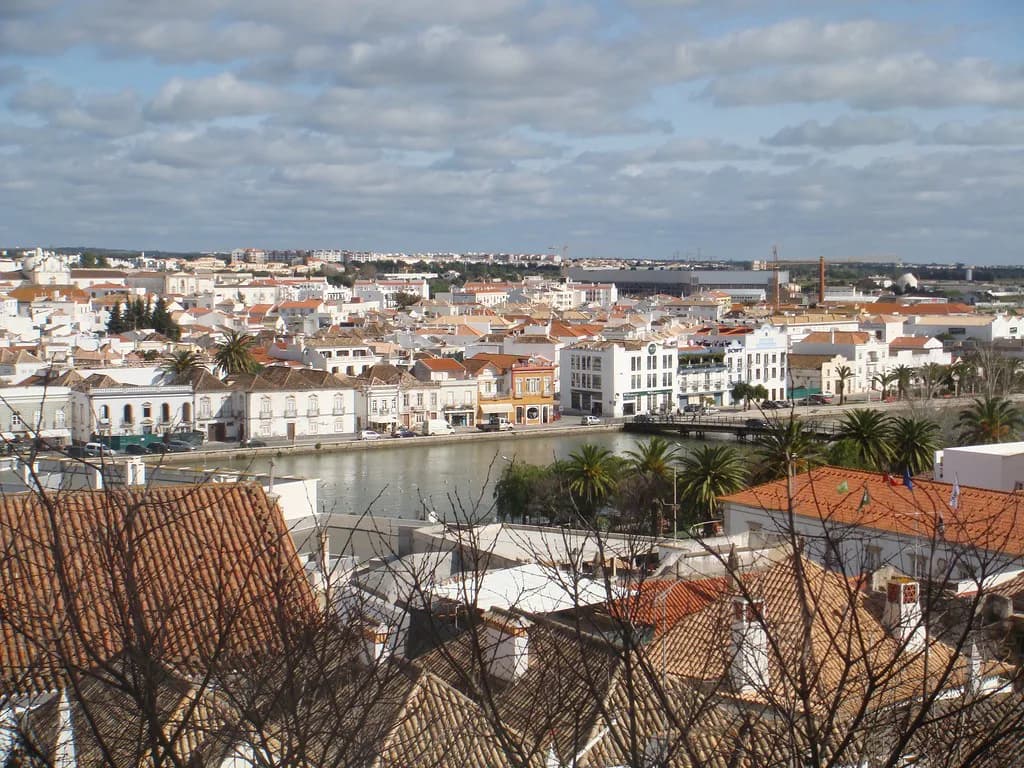
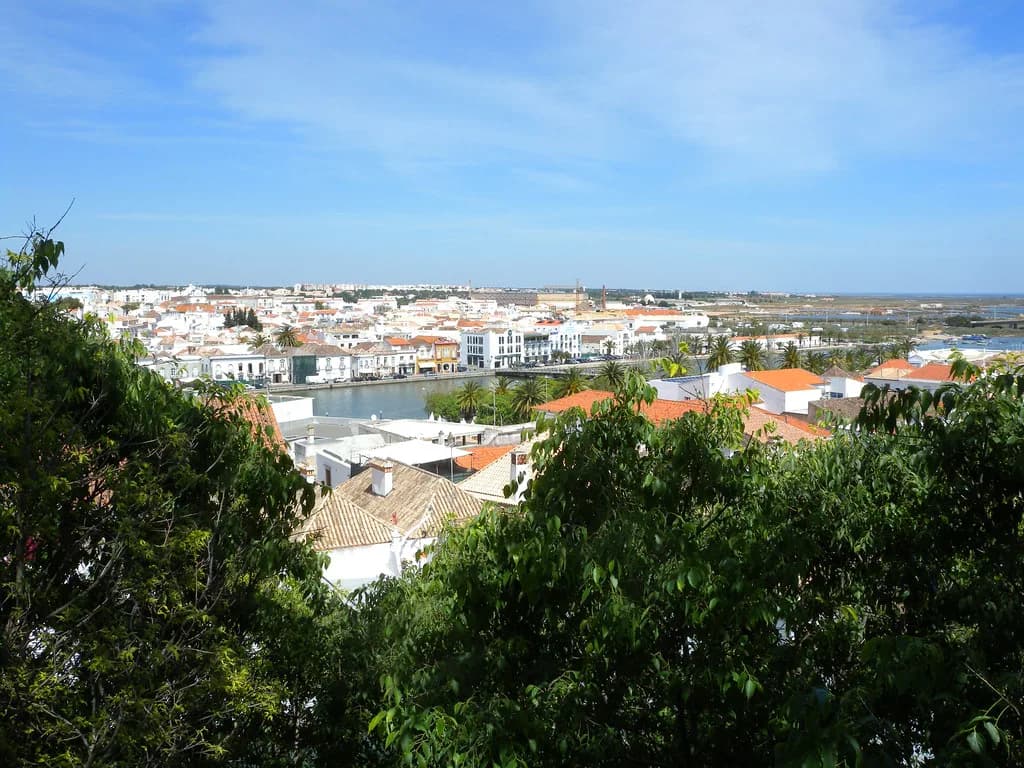
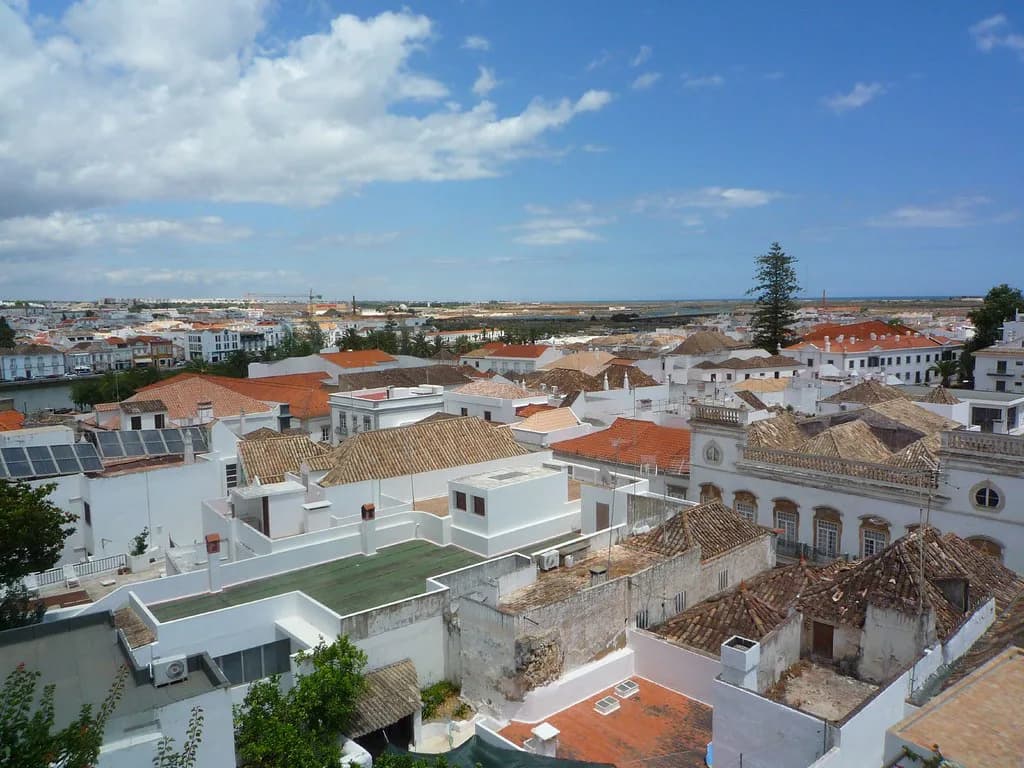
The view is the reason to come. From the walls and towers you look over the whole town, the Gilão, the lagoon and the salt pans beyond, which is precisely what the site was built to watch. Go up early in the day: the light over the town and river is best before the sun is high, the walls give almost no shade, and the stone holds the heat by afternoon.
Allow a little longer if you are photographing, because the angles change as you move around the circuit. The castle is the natural high point of any wander through the old town, and it slots in neatly before or after the riverside. If you want the rest of the town mapped out around it, see these things to do in Tavira and plan the loop on foot rather than in a car.
The garden inside, and how long to allow
Inside the walls is a small municipal garden, the Jardim do Castelo, planted after the town bought the site in 1938. It is a place to sit in the shade of the walls rather than a botanical garden with labels, and it gives the ruin the feel of a town park with battlements. Because it is a garden, there is nowhere to shelter indoors if it rains.
A typical visit lasts no more than 15 or 20 minutes, and most visitors move on to one of the historic churches nearby. If that sounds slight, remember it is free and central, so it costs you little to fold into an hour's walk. Anyone wanting a longer, structured look at the old town should book a Tavira walking tour rather than expect the castle to fill an afternoon.
Opening seasons and admission
Admission is free, and the castle opens as a public garden rather than a ticketed monument. Opening times reported for the site vary: one guide gives 10.00 to 17.00 in autumn and winter and 10.00 to 19.00 in spring and summer, while another gives summer hours from 8.30 to 19.00. Check the times posted at the gate on the day.
There are no entry tickets, guided tours or café inside the walls, so nothing else needs booking. If your short break overlaps a public holiday, check the municipal notice before making the castle the reason for a walk up the hill.
Where to find it, beside the Igreja de Santa Maria do Castelo
The castle stands at Largo Abu-Otmane, a few metres from the Igreja de Santa Maria do Castelo, and both sit at the top of the old town within easy walking distance of the river. The church was built on the site of the mosque, and its clock tower is thought to have been the minaret, which is why the pairing feels like one stop rather than two.
Inside that church lie Paio Peres Correia and the seven knights, the story the castle's conquest is built on. Pair the two buildings, then walk back down through the lanes to the river. If churches are your focus, Churches in Tavira sets out the others close by in the same quarter.
A short history in five points
First, the Moors built the fortress on the hill to cover the ford across the Gilão, with Almoravid walls and later Almohad work in taipa. Second, Christian forces took Tavira between 1239 and 1242, credited in the chronicle to Dom Paio Peres Correia of the Order of Santiago, and in 1244 King Sancho II granted the town to the order. Third, King Dinis had the fortress rebuilt around 1292.
Fourth, the 1755 earthquake damaged the castle badly, and it was never rebuilt for defence. In the first half of the 19th century the castle yard served as the town cemetery, busiest during the cholera epidemic of 1832. Fifth, the municipality bought the site in 1938 and laid out the garden, and the castle was listed in 1939.
Is Tavira Castle worth your time?
Yes, if you take it as a free viewpoint and a piece of town history rather than a monument with interiors. It suits anyone already in the old town, costs nothing and takes under half an hour, which makes the trade-off easy: go early, climb the walls, look out over the salt pans, and spend the saved time on the churches and the riverfront.
Skip the climb if you want furnished rooms, labels and a ticket desk, or if the heat is at its peak and nobody in your group copes with shadeless stone. The wider Tavira Attractions: 7 Visitor Guides page shows what else fills a one to four day break.
When to climb, and what to do next
Make the castle the first stop of a morning: climb the walls before the sun is high, cross the garden, then step into the Igreja de Santa Maria do Castelo beside the gate. Walk back down towards the river and the old town to finish. That sequence gives you the views in the best light with the least heat, and it leaves the rest of the day free.
Check the hours posted at the gate if you are visiting outside the main season, since reported times vary. Everything else about the visit is settled: there is no admission charge, the site is small, and it does not need booking.
Explore more Tavira guides
Frequently Asked Questions
Do you need tickets for Tavira Castle?
No. The castle is open as a public garden and admission is free, so there is nothing to buy and no guided tour to reserve. You walk in, cross the garden and climb the walls.
How long should you spend at Tavira Castle?
Fifteen to 20 minutes covers a typical visit, most of it on the wall walk for the views over the town, the river, the lagoon and the salt pans. Photographers may linger longer as the angles change around the circuit.
What is there to see inside Tavira Castle?
A small garden, surviving stretches of curtain wall on three sides, two square towers and the many-sided tower you can climb. There are no furnished rooms or visitor centre, so treat it as a viewpoint and a piece of military history.
Sources
Notes for your next Portuguese break
Optional updates to our town guides.
You might also like
Continue reading
More guides you'll find useful