
Casa das Histórias Paula Rego: A Visitor's Guide to Cascais's Paula Rego Museum

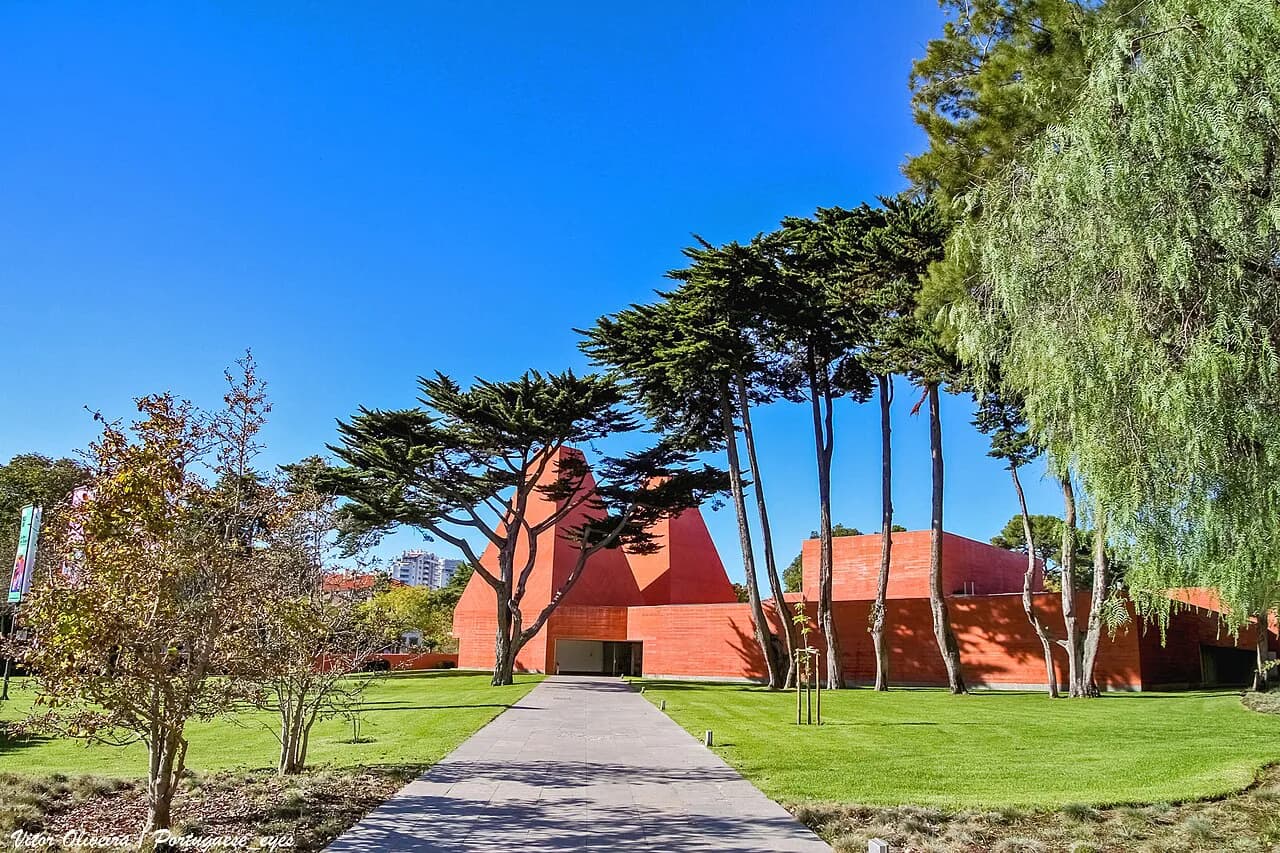
Casa das Histórias Paula Rego is a small, purposeful museum in Cascais devoted to the work of Paula Rego and her husband, Victor Willing, set in a building the artist herself commissioned. It is worth an hour to ninety minutes of a Cascais day, and the architecture — two pyramid towers in red concrete — is half the reason to come. This guide covers where the museum sits, what Souto de Moura built, what hangs inside, how to pace a visit and what to pair it with nearby.
What the Casa das Histórias Paula Rego is
The museum was commissioned by Paula Rego and the municipality of Cascais to house a collection of works by the artist and her husband, Victor Willing. That scope defines the visit: this is a single-artist story told through a purpose-built building, not an encyclopaedic gallery you wander for an afternoon. Knowing whose work you are about to see makes the rooms read as a narrative rather than a sequence of unrelated pictures.
Paula Rego chose the architect herself, and the building was designed to meet the demands of a working museum while still giving visitors a warm reception. That detail matters on arrival: the scale is domestic rather than monumental, so the entrance, shop and café feel like parts of one coherent house. If you have seen Rego's work in reproduction, this setting is the point of the trip.

Where it is and how to reach it
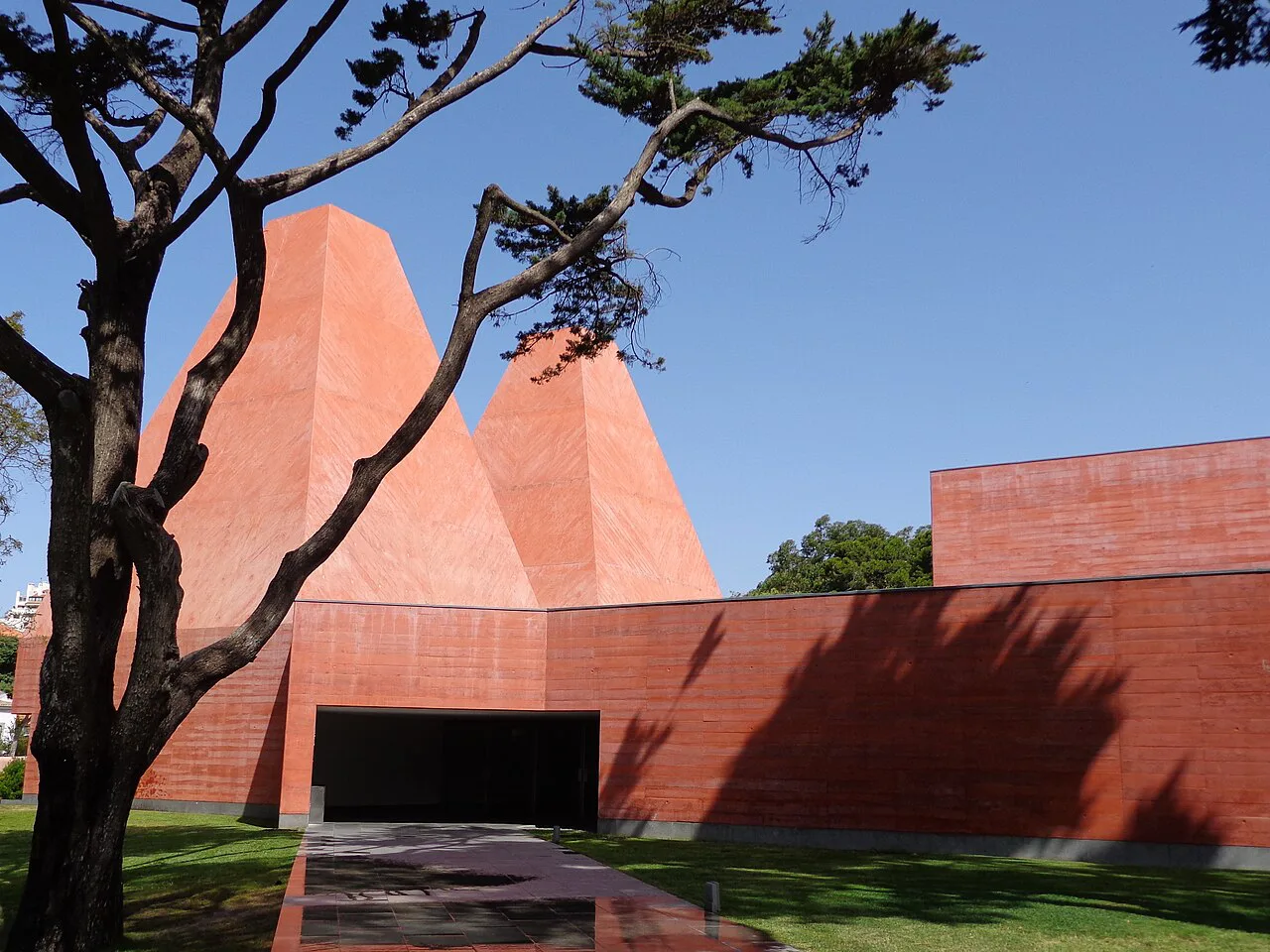
The museum stands at Avenida da República 300, 2765 Cascais, north of the old centre and close to the Parque Marechal Carmona. Coming from the town, head up Avenida da República and you will spot the building long before you reach the door: two pyramid towers in red concrete rise above the surrounding trees, so navigation needs no map once you are on the avenue. Allow a comfortable walk rather than a hurried one, and treat the approach as the first part of the visit.
Because the address sits on the same avenue that runs up from the centre towards the park, it slots naturally into a walking route rather than requiring a separate trip. The surrounding streets are quiet and residential, with the museum garden as the obvious place to pause. Set aside the morning or the late afternoon for it and leave the middle of the day for the town.

The building: Souto de Moura's red concrete
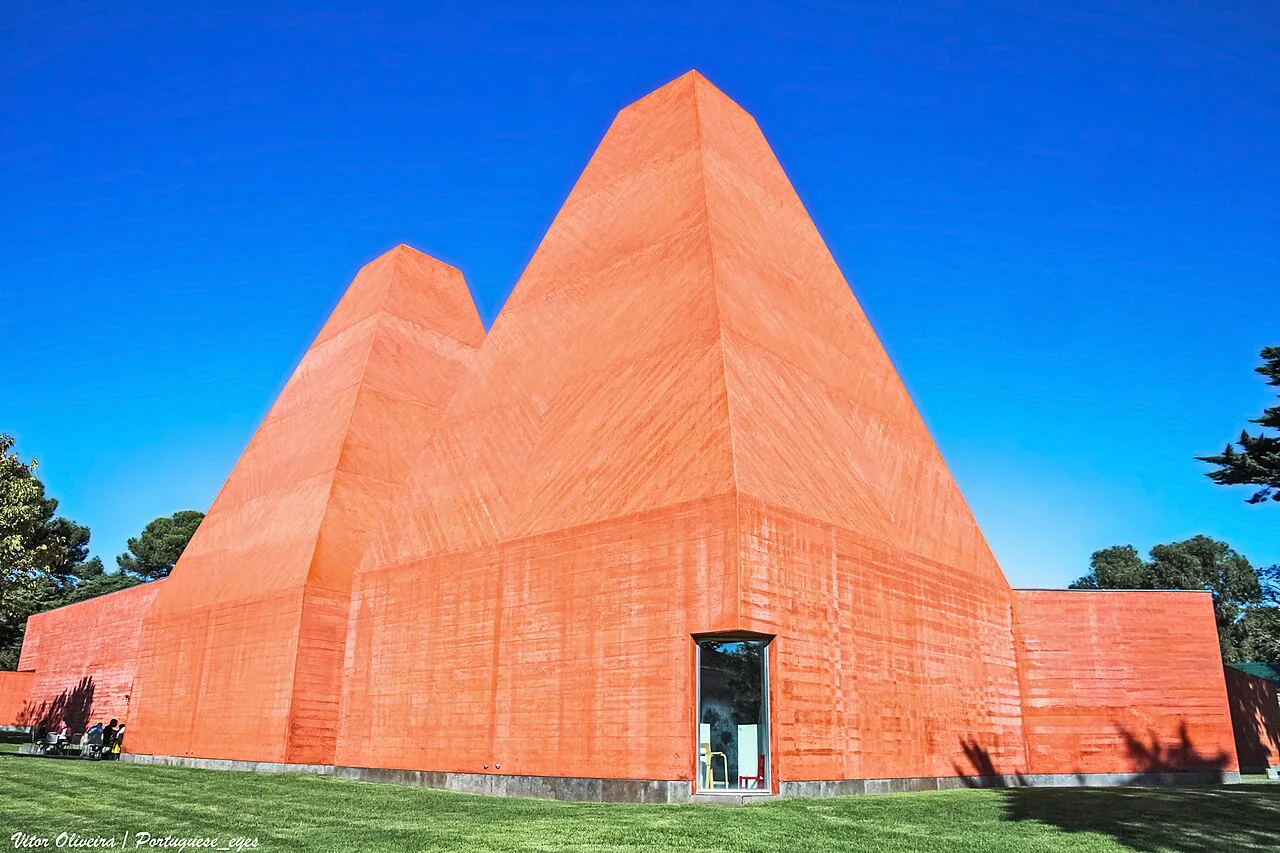
Eduardo Souto de Moura designed the Casa das Histórias, and the building is instantly recognisable for its two pyramid-shaped towers and the red-coloured concrete used in its construction. The form borrows from the region's historical architecture and reinterprets it in contemporary terms, so the towers read as chimneys, silos or belvederes rather than as pure abstraction. Look at how the concrete changes colour through the day before you go in.
Inside, four wings of different heights and sizes wrap around a central upper room that holds the temporary exhibition, with the building's internal rooms arranged in sequence around that core. The interiors are decorated in neutral tones and floored in the blue-grey marble of Cascais, a local stone that quietly ties the galleries to the town outside. The exhibition space amounts to 750 m² above the technical and service areas, which gives you a realistic sense of scale: generous but never exhausting.
The building also holds a shop, a café that opens onto a green garden, and an auditorium with 200 seats. The land and trees that stood on the site before construction were kept and worked in as fundamental elements, so the garden is part of the design rather than leftover space. Walk the outside before or after the galleries; the relationship between the concrete volumes and the planting is the clearest expression of the architect's intentions.
What to see inside
The permanent collection brings together works by Paula Rego and Victor Willing, which gives the museum a two-voice character unusual for a single-artist foundation. Expect drawings, paintings and prints in rotation rather than a fixed hang; the central top-lit room is given over to temporary exhibitions, so what you see there will differ from one season to the next. Read the room sheets as you go — with a collection this personal, the context does more work than the labels alone.
Loop through the four wings in order, saving the central room for last so the temporary show lands after you have absorbed the permanent work. The auditorium is worth a glance for its scale even when nothing is programmed, and the shop is the practical stop for catalogues if a particular series catches your eye. For a museum of this size, the interior rewards slow looking over wide coverage.
How long to allow and how to pace the visit
Give the Casa das Histórias about an hour to ninety minutes. That is enough time to see the permanent collection, take in the temporary exhibition in the central room and walk the garden without rushing. If you are travelling with someone who wants to sit out a gallery, the café facing the garden is the natural waiting point, and it splits the visit neatly in two.
Pace it as a morning or late-afternoon stop rather than the centrepiece of a whole day. The building is compact, the collection is focused, and the pleasure comes from looking closely at a few rooms instead of ticking off a long list of galleries. Pair it with a walk along the coast afterwards, when the light on the concrete is at its best.
Opening hours, tickets and closures
The museum's own site publishes current opening days, closing times, admission charges and any reduced rates, and that is where to confirm them before you travel. Portuguese museums often close one day a week, so check the calendar for your dates rather than assuming a pattern. The same page is the place to look for holiday closures and for whether temporary exhibitions carry a separate ticket.
Check whether booking ahead is required or merely advisable for the dates you have in mind. If you are on a short break and the museum is central to your plans, confirming the day before avoids a wasted walk along the avenue. The garden and café are part of the same visit, so ask about access to them when you check admission.
What's nearby for the rest of the day
The museum sits in a quarter with more than enough to fill the rest of a day. The Parque Marechal Carmona, with its wooded paths and peacocks, is a short walk east along the same avenue, and the Museu Condes de Castro Guimarães sits within it. Both make an easy, low-effort pairing with a museum visit.
Head back down towards the coast and the shoreline takes over: the Boca do Inferno blowhole and the cliffs of the Costa da Guia lie west of the centre, within reach on foot or a short ride. If you want a lighthouse and a small fort instead, the Farol de Santa Marta offers both, with the Museu do Mar Rei D. Carlos close by for the town's maritime history. Our Cascais Attractions: 7 Visitor Guides map out how these fit together.
Is the Casa das Histórias worth a morning?
Yes, if you want one museum done properly rather than several done quickly. The Casa das Histórias Paula Rego pairs a distinctive building with a collection that means something, and it fits neatly into a half-day in Cascais without swallowing the rest of your plans. Confirm hours and admission on the museum's own site before you set out, then build the walk and the garden around it.
Explore more Cascais guides
Frequently Asked Questions
How do I get to the Casa das Histórias Paula Rego from Cascais centre?
The museum is at Avenida da República 300 on the western side of Cascais, and the walk from the centre follows that avenue. The two red concrete towers make the building easy to identify once you are on the avenue, so you do not need to navigate street by street.
Is the Casa das Histórias Paula Rego open on Mondays?
Check the museum's own site for the current week's opening days before you go, since Portuguese museums commonly close one day a week and the day can vary. The same page lists holiday closures and any changes to normal hours.
Do I need to book tickets in advance?
Booking rules are set by the museum and published alongside its opening hours and admission information. Check those pages for your dates, and if the museum is central to a short break, confirm the day before to avoid a wasted walk along the avenue.
What can I see besides the galleries?
The building includes a shop, a café opening onto a garden and a 200-seat auditorium. The garden keeps the trees and land that stood on the site before construction, so it is worth walking before or after the collection.