
Parque Marechal Carmona: Cascais's Shady Town Park
Parque Marechal Carmona is worth 45 to 60 minutes of a Cascais break, ideally paired with the two museums that sit on its edges. It is a shady town park rather than a landscaped garden worthy of a special journey, so slot it into a walk through town instead of building a day around it. This guide covers what to look for inside, how to reach the gates on foot, and how the park fits together with the Condes de Castro Guimarães Museum and the Paula Rego Museum.
The park lies on Avenida da República, the avenue that runs back from the seafront towards the station and the museum quarter. That position makes it a natural midpoint in a half-day loop of Cascais, with lawns for a breather before or after the museums.
What the park is and why it earns an hour
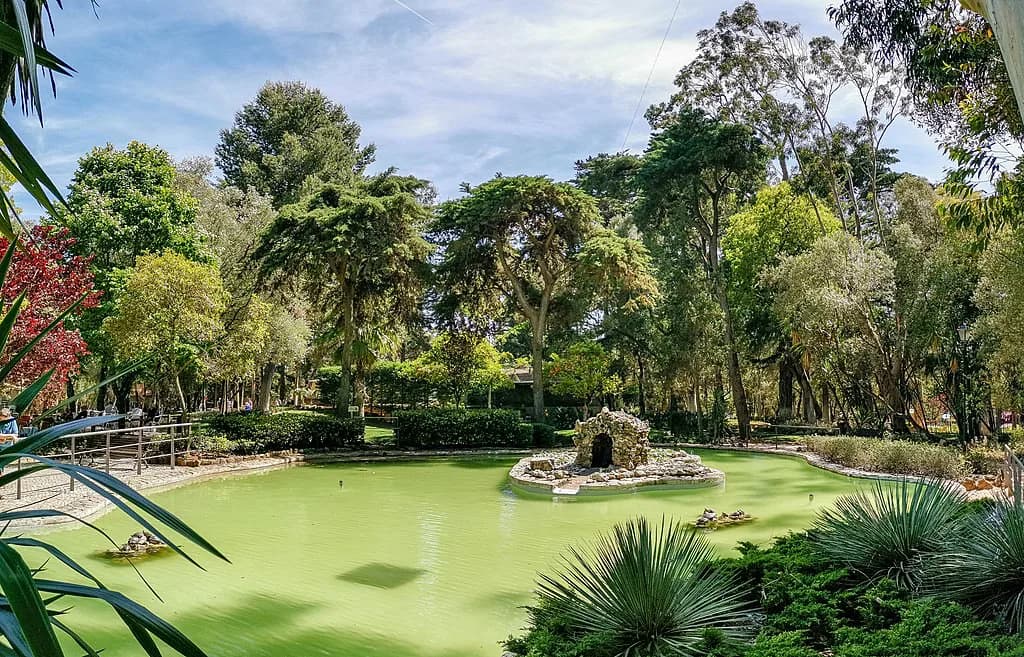
Parque Marechal Carmona is a municipal park of broad lawns, ornamental flower beds and a dense canopy of mature trees, including palms and pines.
The park opened to the public in 1944, so the scale of the trees reflects eight decades of growth rather than a newly planted municipal space.
Treat it as a pause rather than a sight: Cascais packs a lot into a small centre, and the park is the obvious place to sit down between the museum quarter and the coast. The honest trade-off is that there is no spectacle here, only shade, water and birds, so anyone expecting a botanical garden will be underwhelmed.

Where the park is and how it fits a walk through Cascais
The park fronts Avenida da República, across the road from the eye-catching contemporary building that houses the Paula Rego Museum. The castle-like Condes de Castro Guimarães Museum stands inside the park itself, so one crossing of the avenue covers both collections and the gardens.
A sensible route runs from the train station down Avenida da República, into the park for the Condes de Castro Guimarães Museum and a lap of the lawns, then across the avenue to the Paula Rego Museum. From there the seafront, the Cascais Marina and the old town are within easy walking distance, so the park slots neatly into the middle of a day rather than its start.
If you are still choosing what to prioritise on a short break, Cascais Attractions: 7 Visitor Guides shows how the park sits alongside the coast and the old town.

Getting there on foot from the centre, the marina and the station
Cascais is compact and the park is a level walk from almost everywhere a visitor stays or stops. From the train station, follow Avenida da República towards the sea; from the marina and the old town, walk inland along the same avenue. Allow roughly ten to fifteen minutes from either end, and rather less from the museum quarter, which begins almost opposite the gates.
The walk itself is part of the visit: Avenida da República is lined with the kind of tiled façades and calçada pavements that give Cascais its character, and the approach passes close to the Museu do Mar Rei D. Carlos if you are tracing the town's royal and maritime history.
What to see inside: lawns, trees, ponds and the Ribeira dos Mochos
Inside the walls, the layout is informal: broad lawns, flower beds and a mature tree canopy that keeps much of the park in shade even at midday. A stretch of the Ribeira dos Mochos, the small stream that gives the park one of its quieter corners, runs through the grounds.
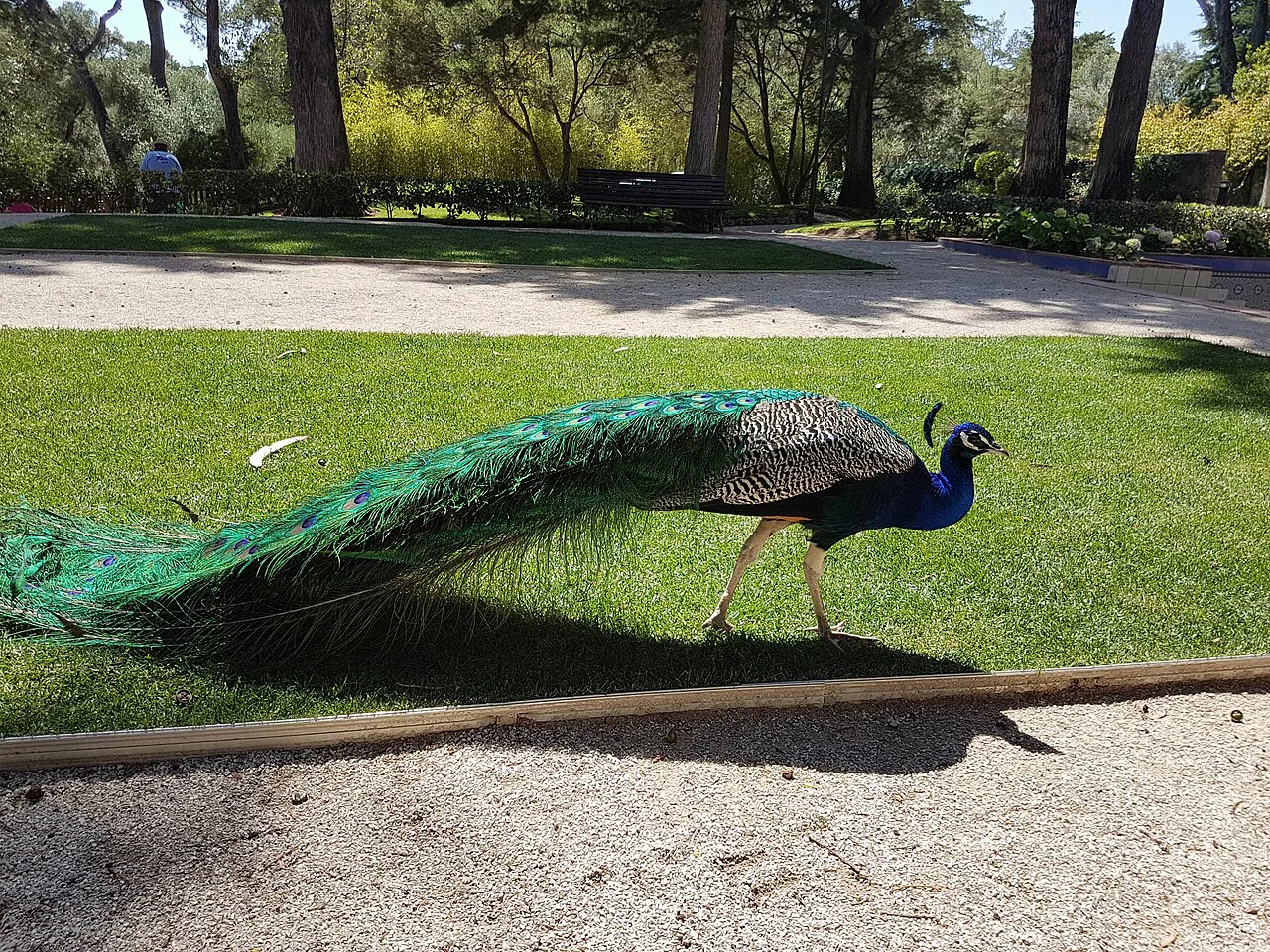
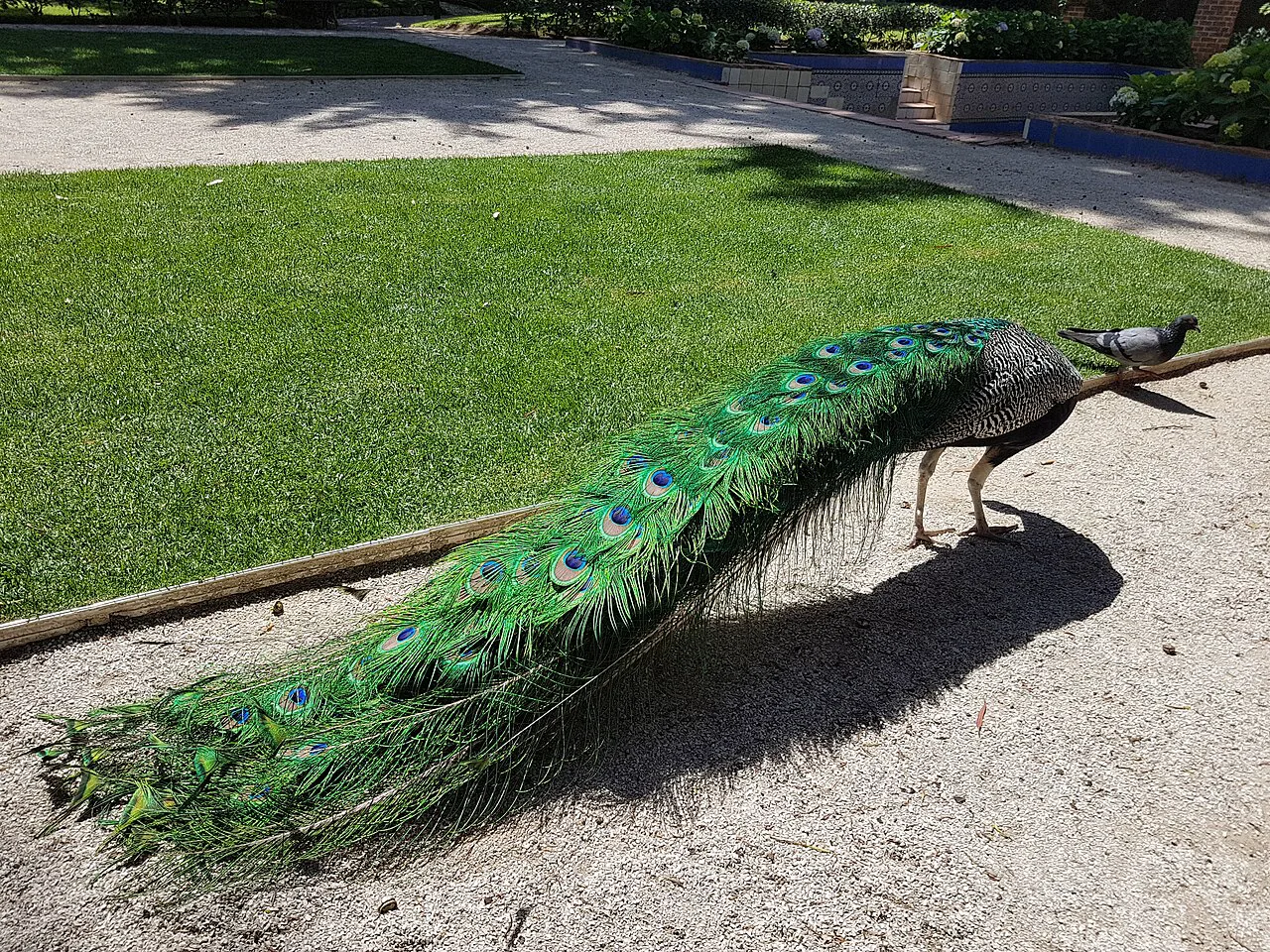
A duck pond is the focus for most families, and the lawns are often used for picnics. Look out for the peacocks that wander the grounds; they are the park's most photographed residents and the reason many children ask to come back.
Sculptures are dotted through the gardens, which gives a slow lap something to look at beyond the planting. None of this is blockbuster material, but it rewards a leisurely circuit rather than a quick pass through the gates.
The Condes de Castro Guimarães Museum inside the park
The Condes de Castro Guimarães Museum occupies a castle-like building inside the park, and it is the reason many visitors walk through the gates at all. The museum publishes its own opening days, ticket prices and any closures, so check those before planning your lap of the gardens around it.
Pairing the house with the park makes sense because the two share the same entrance and the same pace: an hour indoors followed by a slow walk under the trees. If the museum is closed on the day you visit, the gardens still justify the detour on their own.
The Paula Rego Museum across the road
The Paula Rego Museum, known in Portuguese as the Casa das Histórias Paula Rego, stands across Avenida da República from the park in a distinctive terracotta-coloured building. Its collection and temporary exhibitions make it the strongest cultural reason to spend a half-day in this part of Cascais.
Because the two museums sit close to one road, the obvious plan is to cross the avenue once and see both, with the park in between for a rest. The Centro Cultural de Cascais, run by the Fundação D. Luís I, is another gallery in the same quarter if you want a third stop.
How long to allow and when to go for shade
Budget 45 to 60 minutes for the park alone, and two to three hours if you add both museums. The dense canopy makes it a genuinely useful midday stop in summer, when the exposed seafront and the calçada pavements become uncomfortable. Early morning and late afternoon are quieter and better for photographs of the ponds and the peacocks.
The park is a working municipal space, so it can host events or temporary installations that change how much of the lawns you can use. If a particular corner matters to your plans, check with the Câmara Municipal de Cascais before you go.
Picnics, benches and a breather between sights
This is a picnic park by design: lawns, benches and shade, with families spreading out blankets while children chase the birds. Bring your own food and drink, and the town centre is only a short walk away when you want a proper meal.
For travellers on a one-to-three-day Cascais itinerary, the park works best as a scheduled pause rather than a sight in its own right: twenty minutes on a bench between the museums resets the pace of a walking day. It is also one of the few places in central Cascais where children can run without traffic nearby.
What's nearby: the museum quarter, Casa de Santa Maria and Boca do Inferno
The park anchors the museum end of Cascais. Beyond the Paula Rego Museum, the seafront walk leads to the Casa de Santa Maria and the Farol de Santa Marta, whose lighthouse sits on the headland above the coast.
Continuing west along the coast brings you to Boca do Inferno, the collapsed sea arch where waves crash into a narrow inlet. It makes a natural end point for a day that begins in the park.
If you want to fill the rest of the day beyond this quarter, a broader list of things to do in Cascais covers the old town, the citadel and the coast without repeating what is here.
Practical points: hours, tickets and closures
The park is a public municipal garden, so its gates, any seasonal closing times and access rules are set by the Câmara Municipal de Cascais rather than by a ticketing desk. Confirm current opening times with the municipality before a visit that depends on them.
The Condes de Castro Guimarães Museum and the Paula Rego Museum keep their own hours and ticket arrangements, which do not follow the park's. Plan the gardens and the collections as two separate stops, each checked against its own published information.
Is the park worth an hour of your Cascais break?
Yes, if you are already seeing the museums on Avenida da República; no, if you are looking for a garden to justify a trip on its own. The park is at its best as a shaded pause between the Condes de Castro Guimarães Museum and the Paula Rego Museum, with the coast and Boca do Inferno a short walk beyond.
Build it into the middle of a walking day rather than the start, bring a picnic if the weather is warm, and confirm the museums' opening days before you set out.