
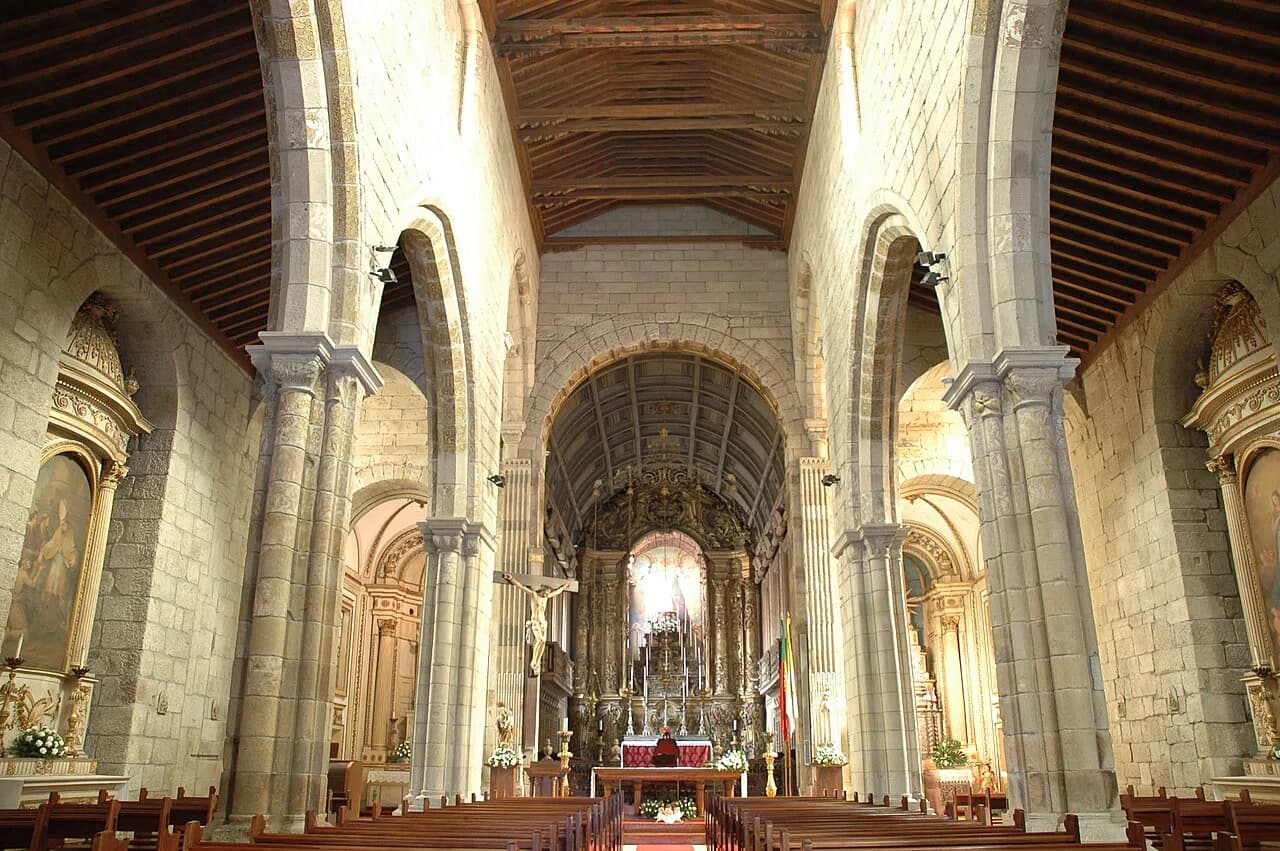
Igreja de Nossa Senhora da Oliveira: Guimarães' Old Town Church

The Igreja de Nossa Senhora da Oliveira is the church on Largo da Oliveira, the square at the heart of Guimarães' historic centre, and it is worth 30 to 45 minutes of your day, more if you linger on the square. The visit is less about a single blockbuster interior than about reading one scene: the collegiate church, its Manueline tower and the Padrão do Salado standing in front of it. This guide covers where the church sits, how to approach it on foot, what to look for inside and out, and how to fit it into a short break in Guimarães.
Allow a little longer than you would for a parish church, because the square rewards slow looking. The tower carries a small 19th-century alarm box most visitors walk past, and the Chapel of São Nicolau tucked at the corner by Rua de Santa Maria has a story of dismantling and reconstruction behind it. Pick a quieter hour for photographs of the facade, then let the square itself do the rest.
Where the church sits in Guimarães
The church stands on Largo da Oliveira in the historic centre, in the former parish of Oliveira, São Paio e São Sebastião. The city grew up around this square, which was previously known as Praça Maior, so you are standing at the original nucleus rather than at a later addition.
Treat the square as your fixed point for the old town: the church occupies one side, the Padrão do Salado stands directly in front of the facade, and the streets of the centre radiate from here. That makes the church a natural first stop, because everything else in the medieval core is a short walk away. If you are planning a wider wander, the Guimarães Attractions: 6 Visitor Guides collection maps out the other monuments within easy reach of this square.

Approaching on foot through the old town
Most visitors arrive on foot, and the approach shapes the first impression. Coming down from the upper town, the streets narrow and the granite closes in before the square opens out, which is why the church tower reads as a landmark from several streets away. Wear shoes with grip, because the calçada paving on the slopes into the centre is polished and slick after rain.
If you come from the direction of the castle and the palace of the Dukes of Braganza, the walk down into the centre takes you past the old gateways and into the commercial streets before you reach the square. That route gives you the layout in sequence: upper town first, medieval core second. It is also the reason a single day covers Guimarães comfortably on foot.

The church: a 10th-century monastery remade in Gothic
The church's origins lie in a monastery founded by Countess Mumadona Dias in the first half of the 10th century. It was a double house, housing both monks and nuns, and the countess retired here at the end of her life; the building you see today is the result of centuries of rebuilding and restoration.
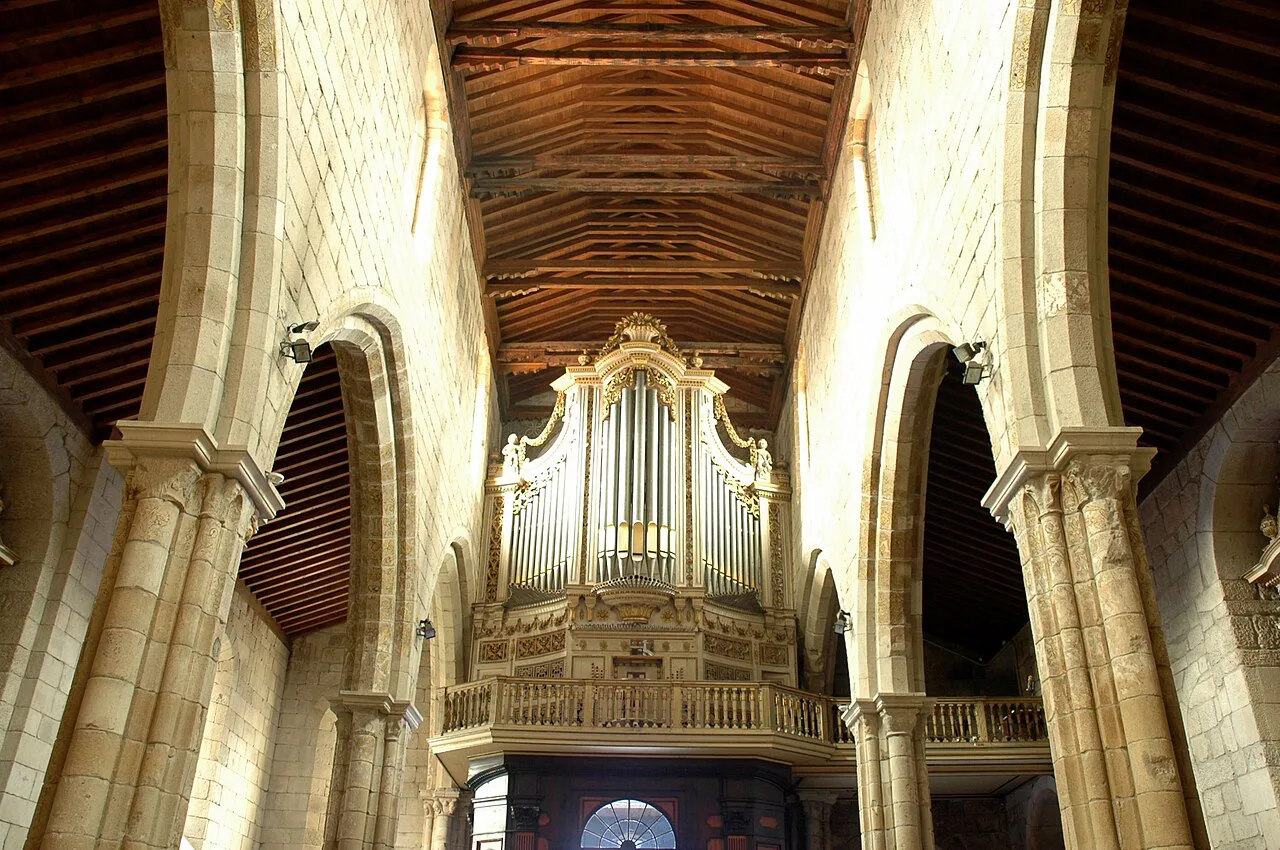
In 1387, in fulfilment of a vow made before the Battle of Aljubarrota, King D. João I funded a complete remodelling of the old convent core and commissioned a new church from the master João García de Toledo, working from Gothic models. Look for that Gothic structure as the skeleton of the present building, with later layers applied over it.
The Manueline tower and its alarm box
The tower was added later, in the 16th century, and carries decorative features in the Manueline style associated with the reign of D. Manuel I. Because it is set slightly apart from the main roofline, it is the element you will photograph first from the square.
On the right-hand side of the tower, look for the old alarm system of the historic centre, which dates from the 19th century. A locked box held a handle connected to the tower bell, and the bell would ring the number of the station where a fire or other emergency had broken out, sending residents to the right spot; similar boxes survive on the flanks of other churches in the city.
The Chapel of São Nicolau and the Nicolinas
At the corner next to the tower, facing Rua de Santa Maria, a railing encloses the small Chapel of São Nicolau, patron saint of Guimarães' students. The original chapel was built in 1663; it was dismantled during a controversial renovation of the church in 1970, the stones were saved, and the Nicolinos rebuilt it in 1998 with help from several bodies and the city council.
The saint lends his name to the Festas Nicolinas, the festivities organised by students of the Guimarães secondary school, which run annually from 29 November to 7 December. They are student celebrations rather than church services, so do not plan a visit expecting liturgy on those dates.
The Padrão do Salado in front of the facade
Directly in front of the church stands the Padrão do Salado, a Gothic porch-like monument erected to commemorate the victory of King D. Afonso IV at the Battle of Salado in 1340. Inside it sits a cross with Christ crucified on one face and Our Lady on the other, said to have been brought from Normandy by a Guimarães merchant, Pero Esteves.
Its unusual open shape makes it one of the most photographed monuments in Guimarães, and it is the reason the square photographs so well in the late afternoon, when the porch frames the church behind. Circle it rather than stopping at the front, since the carving reads differently from each side.
How much time to allow, and when to come
Budget 30 to 45 minutes for the church, tower and chapel, then add time on the square for the Padrão do Salado and a coffee. The square is small enough that you can see all three components in one sweep, which makes it an efficient stop rather than a half-day outing.
Mornings are quieter on the square, and the facade is easier to photograph before the light flattens later in the day. If your short break runs to several days, put the church early in the first morning and use the rest of the day for the upper town, leaving the afternoons free for the streets around the centre.
Opening times and entry: what to confirm
Opening times and any entry charge for the church are not fixed here, so check before you travel: confirm with Guimarães Turismo, whose contact details appear with the town heritage listings, or ask at the tourist office on arrival. Plan the church as the anchor of a morning and slot the rest of the old town around whatever time you are given.
What to see next around the square
When you leave the church, the historic centre keeps going: the Customs Tower and the town wall and battlement are listed heritage sights within the old core, and the Porta da Vila gateway leads back up towards the upper town. Largo do Toural, the broad square on the other side of the centre, makes a sensible next stop before you climb to the castle.
If you are building a wider day, pair the church with the palace of the Dukes of Braganza up the hill, which gives you the medieval centre and the upper town in one loop. The Igreja Sao Francisco is another option in the same compact area, so you can compare interiors without crossing town.
Is the church worth your morning?
Yes, as the centrepiece of the old town rather than a stand-alone sight. The Igreja de Nossa Senhora da Oliveira gives you the square, the Padrão do Salado and the Manueline tower in one place, and the alarm box and the Chapel of São Nicolau reward the ten extra minutes most people skip.
Build your morning around it, check opening times before you go, and walk down from the upper town so the layout makes sense as you go. From there, the rest of the centre, the square at Largo do Toural and the hilltop palace are all within a half-hour's walk.