
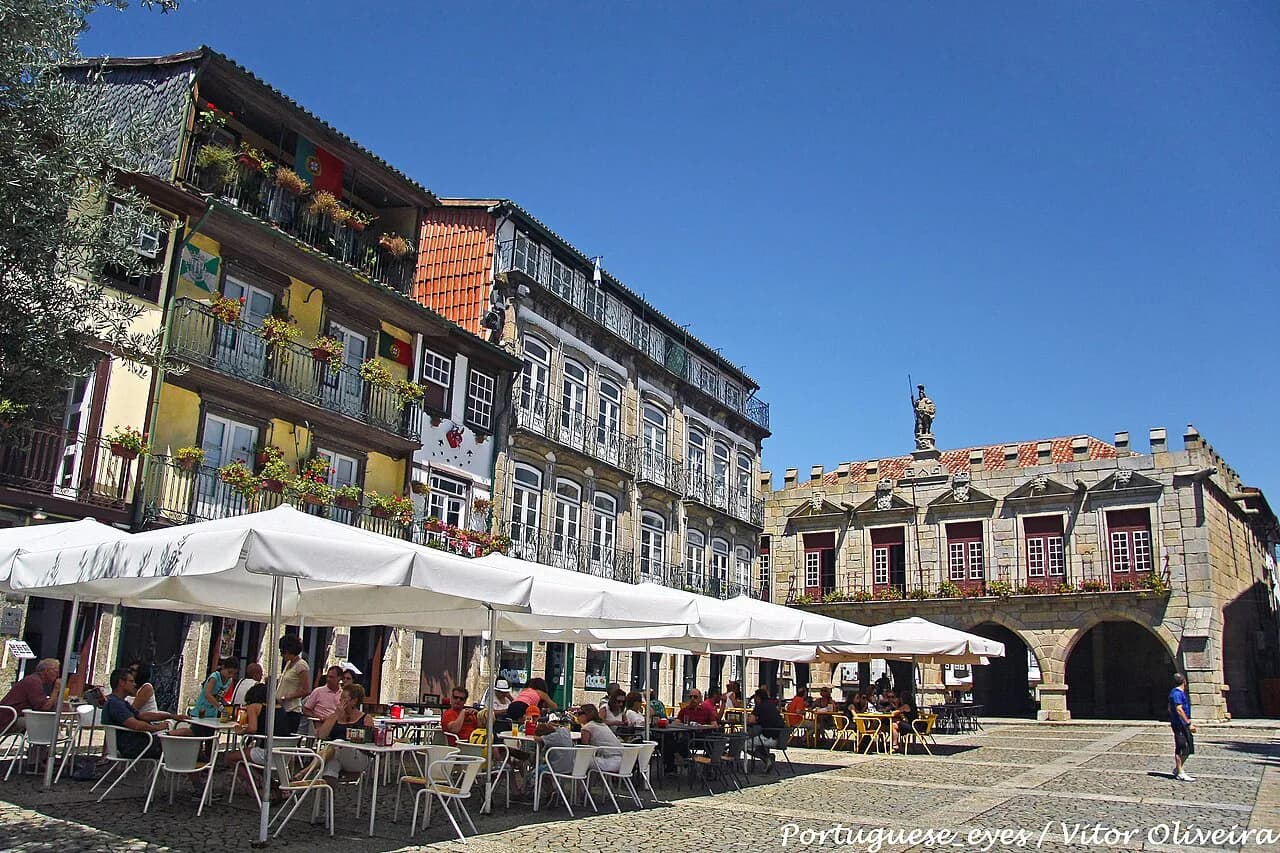
Largo da Oliveira: Guimarães' Old Main Square

Largo da Oliveira is worth 30 to 45 minutes of anyone's day in Guimarães: it is the square the city grew around, and it packs a Gothic church, a Manueline tower, a victory monument and a small chapel into one compact space. The page covers what each element is, how to reach the square on foot from the upper historic centre, what to look for that most visitors walk past, and how to link it to nearby sights without turning the visit into a march.
What Largo da Oliveira is and where it sits
The square began life as the Praça Maior, the main square of Guimarães, and the city spread out around it. It is in the historic centre, a short walk inside the old perimeter rather than out on the modern edge of town, and the Colegiada de Nossa Senhora da Oliveira stands on the square itself.
The religious house on the site has origins going back to a monastery founded by Condessa Mumadona Dias in the first half of the 10th century. That monastery was a double house, holding both monks and nuns, and the countess withdrew there at the end of her life.
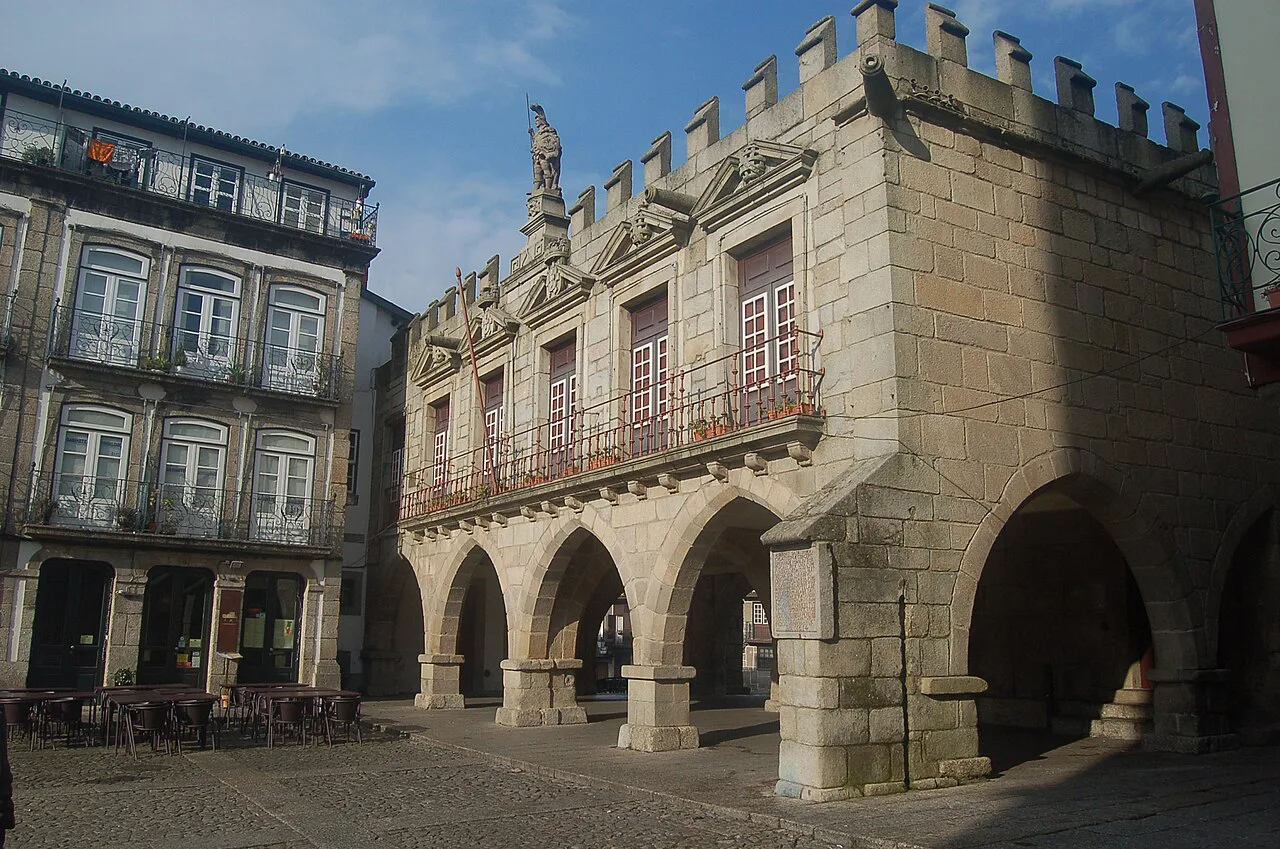

How to reach the square on foot from the lower town
Guimarães is small enough that the square is reached on foot from almost anywhere in the centre, and the last stretch runs through the old streets rather than along traffic arteries. Treat any walking time you see quoted elsewhere as approximate and set off with the square marked on a map rather than a stopwatch.
If you are arriving from the newer part of town, use the Largo do Toural as your orientation point: it is the wide square on the edge of the historic centre, and from there the old streets lead up towards the Largo da Oliveira.
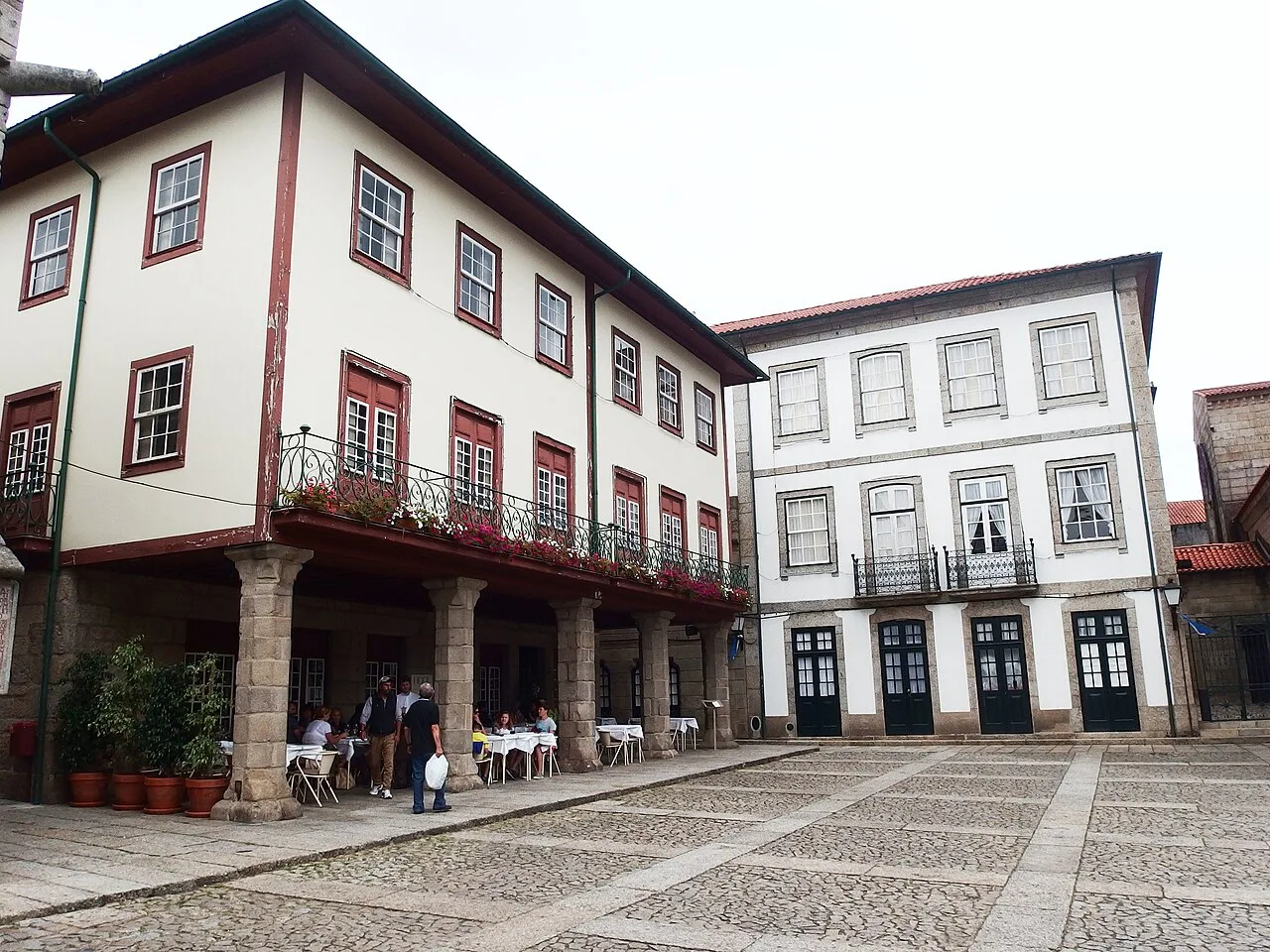

The Colegiada de Nossa Senhora da Oliveira: Gothic church and Manueline tower
The church you see is largely the work of D. João I, who in 1387 rebuilt the old conventual complex in fulfilment of a vow made before the Battle of Aljubarrota; the commission went to the master João García de Toledo, who worked from Gothic models. Later conservation and restoration campaigns gave the building the form it has today, so read the fabric as layers rather than a single moment.
The tower came later, in the 16th century, and carries Manueline decorative details from the reign of D. Manuel I. Look at the portal for the carved station numbers, which marked zones of the city and were understood by residents.
Igreja de Nossa Senhora da Oliveira, Guimarães carries a separate guide to the church itself if you want to look at the interior rather than the square. No source here gives visiting times or admission arrangements for the Colegiada, so work out the church part of the day from what is posted at the door.
The Padrão do Salado: the Gothic monument in front of the church
The Padrão do Salado is not a generic cross but a victory monument: it was built to commemorate D. Afonso IV's success at the Battle of Salado in 1340. The Gothic canopy shelters a cross with Christ crucified on one face and Our Lady on the other.
The crucifix was given by Pero Esteves, a Guimarães businessman who, by local legend, brought it from Normandy. Its unusual form and architecture make it one of the most photographed monuments in the city, which means the best moment to look at it properly is early or late in the day rather than at the crowded middle.
The Capela de São Nicolau and the tower's old fire-alarm box
On the corner beside the tower, facing the Rua de Santa María, a small balcony holds the Capela de São Nicolau, the patron of Guimarães students. The original chapel dates from 1663; it was dismantled in a controversial 1970 reform of the church, the stones were kept, and the Nicolinos rebuilt it in 1998 with help from local bodies and the council.
The student festivities named after the saint, the Festas Nicolinas, run from 29 November to 7 December and are organised by pupils of the IES Guimarães. Read that as the traditional calendar slot rather than a programme for any particular year, and look for the current schedule nearer the time.
Easier to miss is the old alarm system on the right side of the tower, which dates from the 19th century. A locked box held a handle connected to the tower bell, and one person was responsible for it; the bell rang the number of the station where a fire or other emergency had broken out, the population turned out, and the ringing stopped only when the emergency was over. Similar boxes survive on the sides of other churches in the city, so the one here is a good introduction to a small piece of civic machinery most visitors never notice.
The square's cafés and terraces, and how long to allow
The square is ringed by cafés with terraces, which makes it a natural pause rather than a sight to tick off. Sit facing the church and you get the tower, the Padrão do Salado and the passing life of the centre in one view, which is the reason to build a break into your walk here rather than pushing straight on.
Allow 30 to 45 minutes for the square itself, including a slow look at the church exterior, the Padrão and the tower details, plus a coffee if the weather is on your side. If you plan to go inside the Colegiada as well, budget more and treat the square as the fixed point you return to rather than the first item on a list.
Nearby: Museu de Alberto Sampaio and Torre da Alfândega
Two other sights sit within a few minutes of the square: the Museu de Alberto Sampaio and the Torre da Alfândega. Both are signposted from the historic centre and easy to fold into the same walk, and the Rua da Rainha D. Maria II is the street to note if you want to link the square to the rest of the old town.
The palace of the Dukes of Braganza is a slightly longer walk uphill from the square but belongs in the same half-day. Paço dos Duques de Bragança is the Portuguese name to look for on signs if you are navigating by map.
If you want the wider set of sights around the old centre in one place, the Guimarães Attractions overview lays out the shortlist, from the castle to the churches. It is a sensible next read once you have the square fixed in your head.
Practical points: when to go and what to check
Mornings and late afternoons suit the square best: the light is softer on the church facade, the terraces are less full, and the Padrão is easier to photograph without a queue of people in front of it. The square itself is open public space, so there is no gate and no ticket for the ground you stand on.
Opening arrangements for the Colegiada and for the nearby museums are set locally and can change with the season or with services, so check the current times before you build a day around going inside. For any café in the square, look at the door or ask when you arrive rather than relying on an assumed schedule.
Is Largo da Oliveira worth a stop?
Yes, and it earns its place at the start of a Guimarães day: the square gives you the city's origin story, a Gothic victory monument, a Manueline tower and a chapel with a 20th-century rebuild in one small space. Give it 30 to 45 minutes, sit down once, then walk on to the Museu de Alberto Sampaio and the Torre da Alfândega while you are still in the old centre.
Explore more Guimarães guides
Frequently Asked Questions
What is the Padrão do Salado?
It is a Gothic monument in front of the Colegiada de Nossa Senhora da Oliveira, built to commemorate D. Afonso IV's victory at the Battle of Salado in 1340. Its canopy shelters a cross with Christ crucified on one side and Our Lady on the other, and the crucifix was given by a Guimarães businessman, Pero Esteves.
Do I need a ticket for Largo da Oliveira?
No, the square is public space and there is nothing to pay to walk through it, sit on a terrace or look at the Padrão do Salado. Anything you pay for is inside the buildings around it, and those arrangements are set by each institution.
How long should I spend at Largo da Oliveira?
Thirty to 45 minutes covers the square itself at an unhurried pace, including the church exterior, the Padrão do Salado, the tower details and a coffee. Add more time if you plan to go inside the Colegiada or continue to the nearby museums.