
Largo do Toural: Guimarães' Main Square and Its Old Town Gateway
Largo do Toural is the main square of Guimarães and the easiest place to start a short break, because it sits immediately outside the old Porta da Vila gate into the walled centre. Allow twenty to thirty minutes to walk it, look up at the façades and take coffee, then pass through into the historic streets. This page covers where the square is, how to reach it on foot, what is worth looking at around it and what lies beyond the gate.
What Largo do Toural is and why it anchors a visit to Guimarães
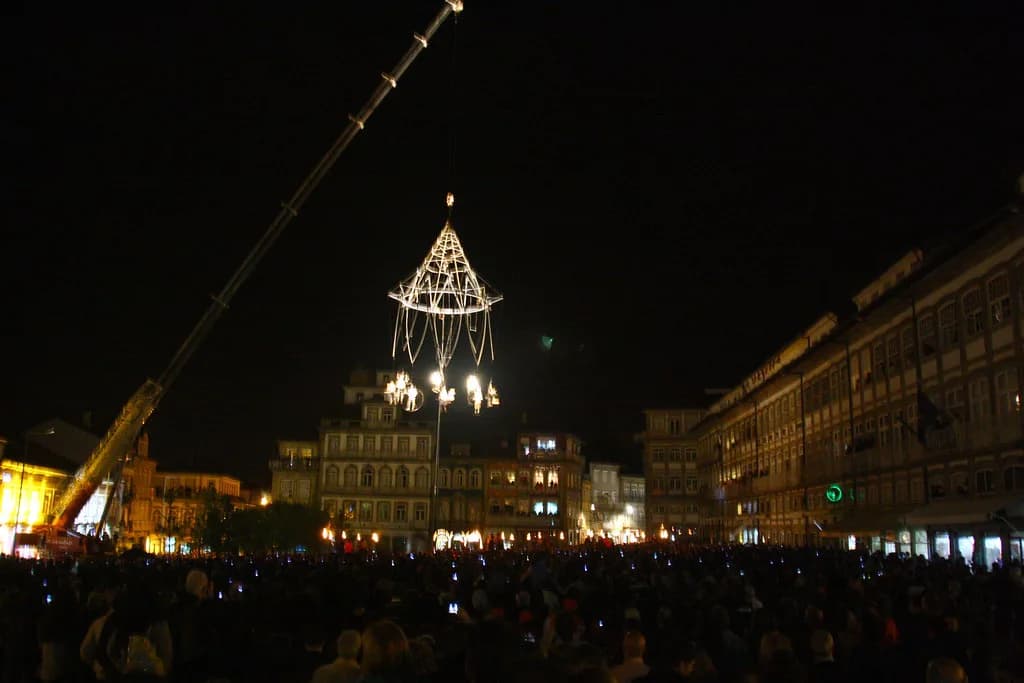
Largo do Toural is the city's principal square and is widely treated as its heart, a broad open space ringed by shops, restaurants, pastelarias, cafés, bookshops and tobacco kiosks. That everyday mix is the point: this is civic Guimarães going about its business, not a monument with a queue and a ticket desk.
Its name and origins come from the bull fairs once held here, on the ground just outside the main town gate. The square began in the seventeenth century as a place for cattle fairs and bullfights, and the name is bound up with that past. Treat those dates as background rather than a fixed timeline you will find on a plaque.
Practically, it works as a gateway rather than a destination in its own right: you arrive, orientate yourself, see the scale of the old town ahead and then walk into it. If you are building a short itinerary, the wider selection of sights in our Guimarães Attractions: 6 Visitor Guides slots neatly around this starting point.

Where the square sits: outside the old Porta da Vila
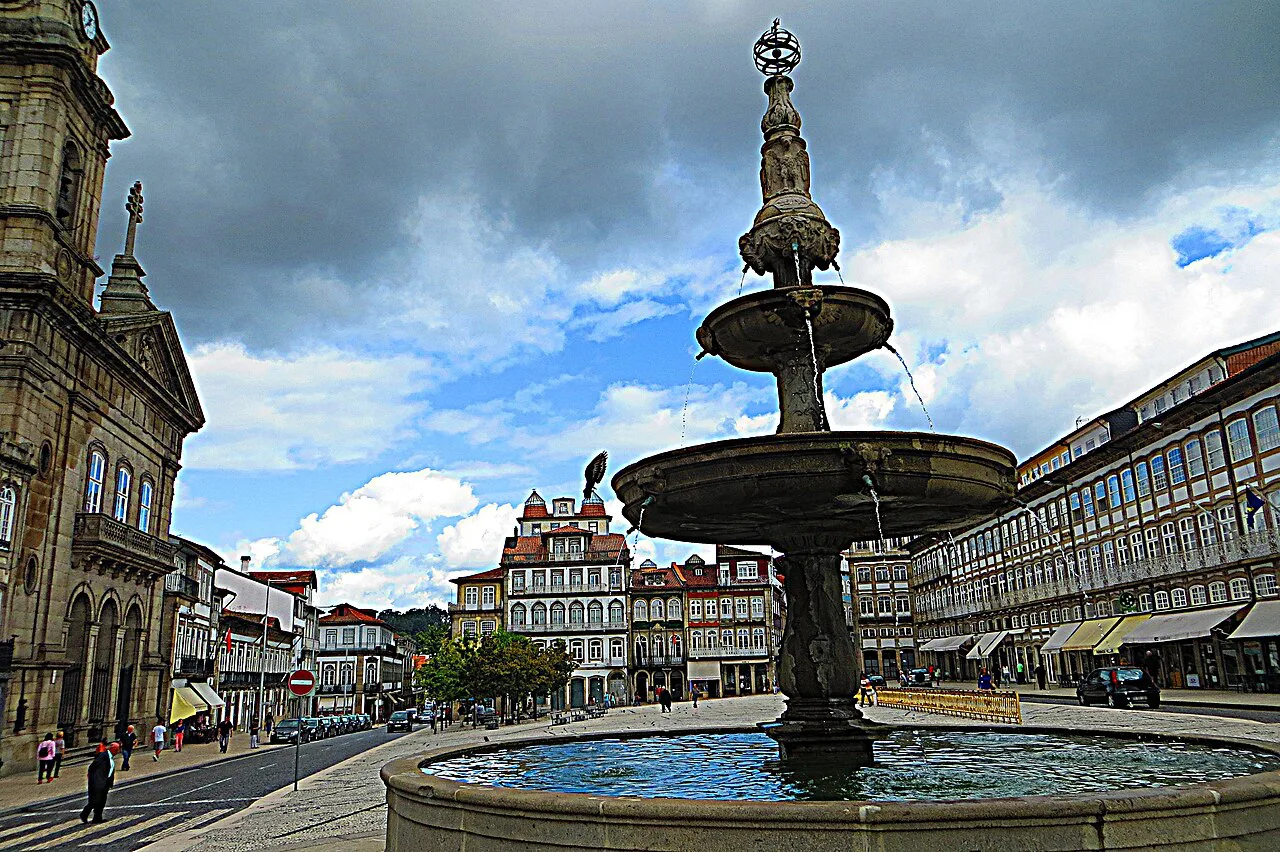
You reach Largo do Toural by leaving the old town through the Porta da Vila, the historic gate that once marked the edge of the walled centre. The square therefore lies just beyond the defensive line, which is exactly why it hosted fairs and markets that needed space outside the gates.
That position makes the square a hinge between two Guimarães: the dense medieval lanes inside the walls and the broader commercial streets outside them. Coming from the modern city, you meet Toural first and the old town second, so it makes sense to plan your day in that order rather than doubling back.

How to reach it on foot from the historic centre
From the lanes around the castle and the palace, walk downhill through the old town until you pass through the Porta da Vila; the square opens out directly in front of you. The distance is short enough to cover on foot in a few minutes, and the route doubles as a look at the old streets themselves. Exact walking times depend on your starting point, so judge it once you are in the centre rather than planning a fixed schedule.
If you are coming from the Palace of the Dukes of Braganza, the walk down through the historic centre to the gate is the natural approach. Combine the two in one loop: the palace first, the old lanes second, and Toural last before you stop for lunch.
What to look at around the square: façades, frontages and local shops
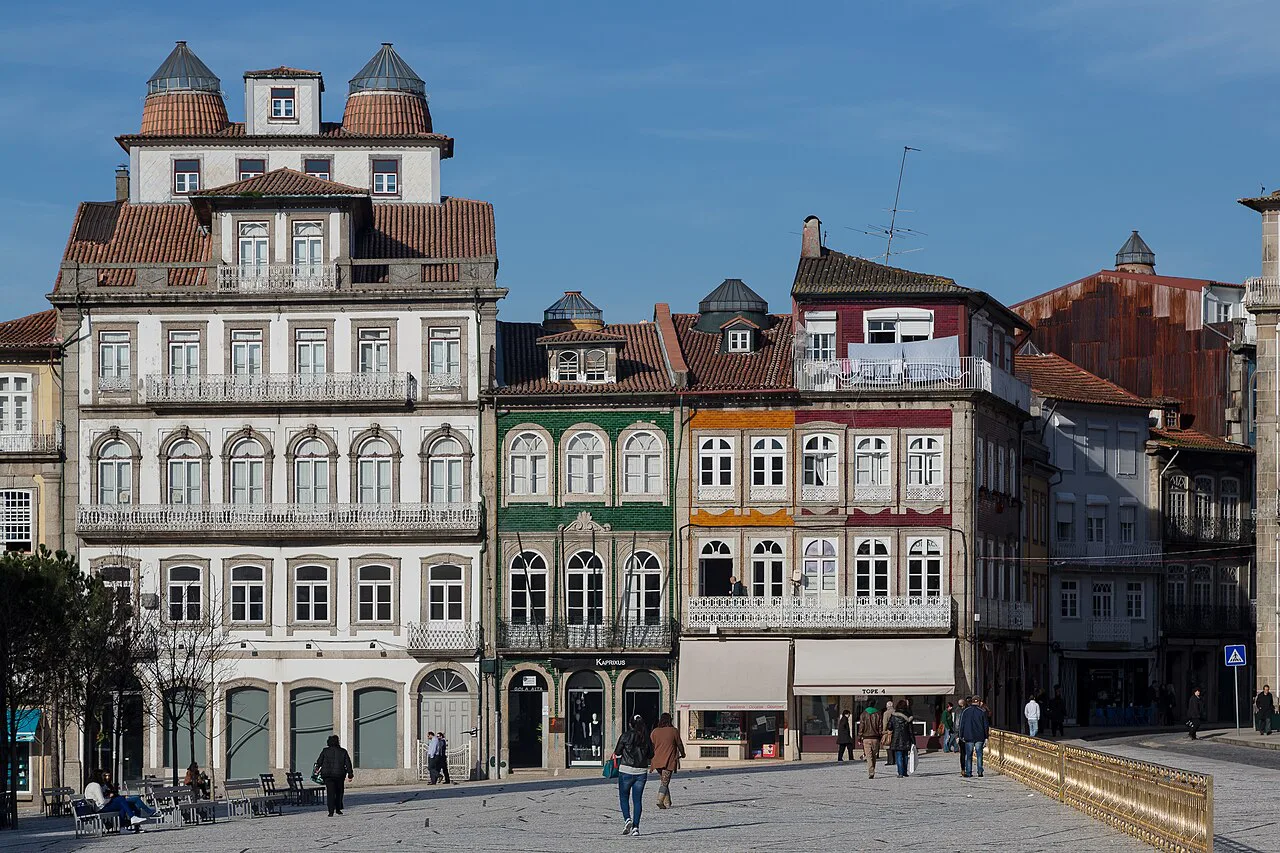
Look up rather than ahead. The buildings around the square combine older façades with the modern cafés and shops at street level, and that layering of old and new is what gives the place its character.
At street level the square is lined with local commerce: small shops, bookshops, pastelarias and cafés that make it a practical stop rather than a photo opportunity. Use it to buy a coffee or a pastel de nata and to get your bearings before heading into the narrower streets.
The space itself is open and level, framed on all sides by low-rise buildings, which makes it easy to walk a circuit while you decide where to head next.
Reading the square as a gateway, not a ticketed sight
Strictly speaking the square is a gateway rather than a collection of sights in its own right; the buildings that frame it are the backdrop, and the historic streets beyond the gate are where the monuments begin.
Read the square as an overture: the civic frontage, the cafés and the open space set you up for the old town. Save the churches and palaces for once you are through the Porta da Vila.
The square's everyday role: cafés, pastelarias and local commerce
This is a square you use, not one you queue for. The surrounding streets hold local shops, restaurants, pastelarias and cafés, plus bookshops and tobacco kiosks, so it functions as a meeting point and a place to run errands as much as a sight.
The square is an open public space, so you can slot it in around whatever else is open that day. Bear in mind that individual cafés and shops keep their own hours and closing days, so check each premises on arrival.
How much time to allow and how to slot it into a short break
Twenty to thirty minutes is enough for a circuit of the square, a look at the façades and a coffee. Add more if you want to browse the shops, but do not budget a half-day here on a short break.
The sensible sequence for a one- or two-day visit is Toural first, then through the Porta da Vila into the old town, finishing with the castle and palace area. Doing it in that direction means you are always walking forward through the city rather than retracing your steps.
Meals are the other thing to plan around: Portuguese restaurants commonly close one day a week, so if a particular place matters to you, check its door or ring ahead rather than assuming it will be open. A flexible lunch near the square, chosen on the day, is the low-risk option.
Nearby: stepping through into the old town and what lies beyond
Walk back out through the Porta da Vila and you are back on the square; head the other way through the gate and you enter the historic centre. The Largo da Oliveira, with its arcaded buildings and the Colegiada de Nossa Senhora da Oliveira, is the other great square of the old town and the obvious next stop.
Beyond the gate, deeper into the old town, are the castle and the palace, both worth a proper visit rather than a passing glance. If you want to weigh up the palace against the rest of the city, our guide to the Paço dos Duques de Bragança sets out what is inside.
For churches, the Igreja de Nossa Senhora da Oliveira, the Igreja de São Francisco and the Igreja de São Domingos all sit within the compact centre, so you can see several in a single morning without transport.
If you are still filling your days, our round-up of things to do in Guimarães, including the Castelo de Guimarães, helps you decide what deserves the remaining hours.
Should Largo do Toural be your first stop?
Yes, if you are arriving on foot from the modern city: Toural is the natural threshold between the new town and the walled centre, and it costs you half an hour at most. See it, have a coffee, then step through the Porta da Vila and let the old town take the rest of the morning.
Go with modest expectations and you will enjoy it more. Treat the square as a place to orientate, eat and start walking rather than a sight to tick off, and check opening days at the door for any café, church or museum you particularly want to visit. For more, see Guimarães guide.