
Nazaré Lighthouse: How to Visit the Farol da Nazaré

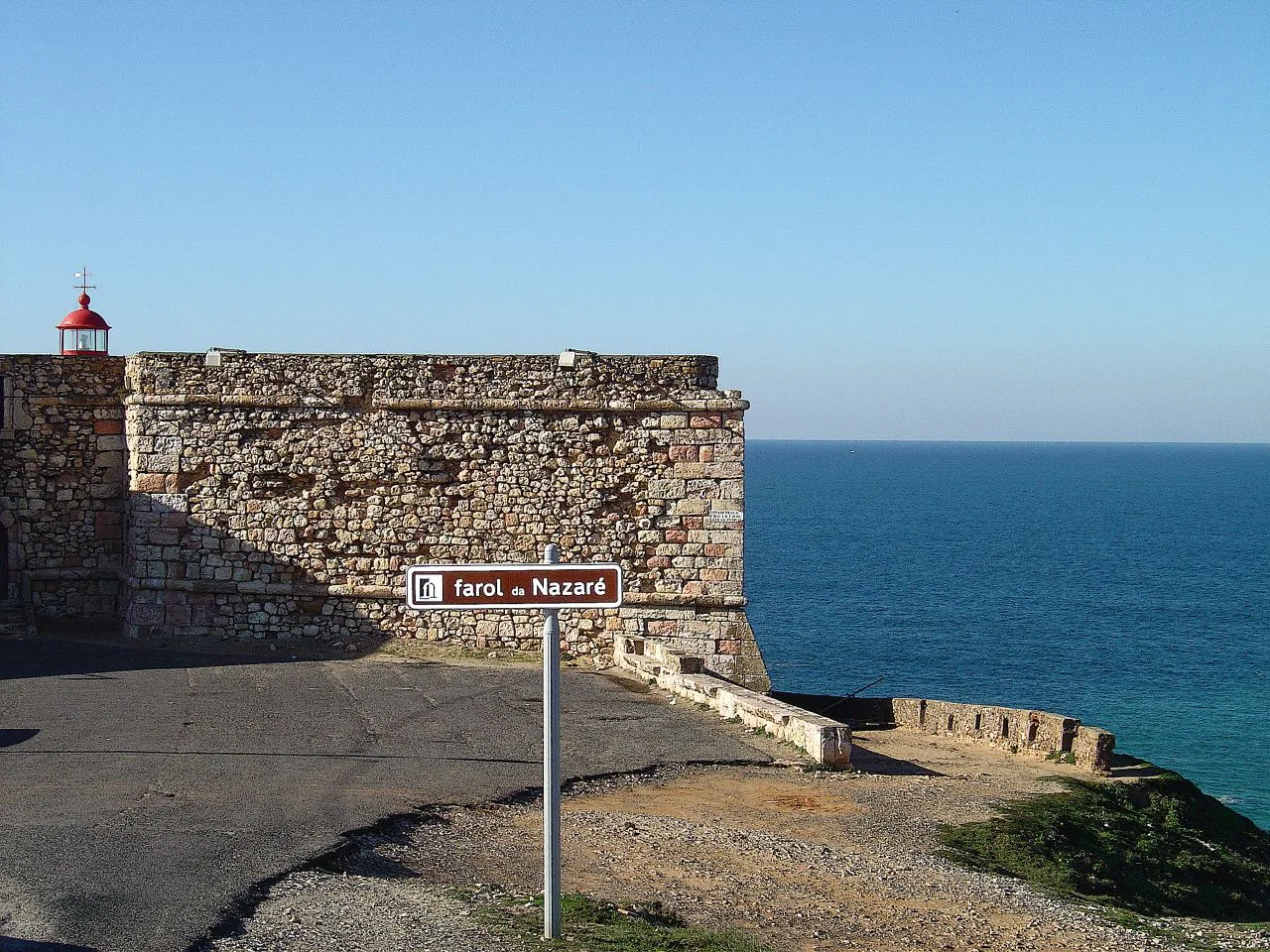
The Nazaré lighthouse is the Farol da Nazaré, a small tower standing on the walls of the Forte de S. Miguel Arcanjo at the tip of the Sítio promontory, directly above Praia do Norte. You visit it as part of the fort, not as a separate monument, and the same entry covers the ramparts, the lighthouse terrace and the Surfer Wall of big-wave boards inside.
Allow roughly an hour for the fort and lighthouse together, more if a swell is running and the terrace fills up. The walk along the promontory is short but exposed, so wind rather than distance decides how long you linger.
What the Nazaré lighthouse actually is
The lighthouse is a working light on a 16th-century fort, which is why the visit feels like two things at once. You walk through the gate into a walled courtyard, then out onto the battery where the tower rises above the Atlantic. The Municipality of Nazaré lists the Forte de S. Miguel Arcanjo among the town's monuments and heritage sites, and the lighthouse is the structure on top of it.
Do not expect a tall landfall light with a spiral staircase and a panorama at the top. This is a compact building on a headland, and the views come from the fort's terrace and walls rather than from a climb. The reward is the sightline down onto Praia do Norte and out over the water. What stands inside the walls, and how the visit works, is set out in this guide to the Forte de São Miguel Arcanjo, Nazaré.

Where the lighthouse sits in Nazaré
Nazaré splits into two levels. The beachfront, with the seafront promenade, the Municipal Market and the fishing quarter, sits at sea level; the Sítio da Nazaré occupies the high promontory above it. The fort and lighthouse are at the far end of Sítio, on the Praia do Norte side, so you cross the district before you reach them.
That geography matters when you plan the day. The lighthouse is not a five-minute stop from the beach; it is a walk from the top of the cliff path, past the Ermida da Memória and the open square, then out along the headland. Praia do Norte, the beach that made the town famous, lies directly below the fort.

Getting up to Sítio from the beachfront
The simplest route from the seafront is the Ascensor da Nazaré, the funicular that lifts passengers from the lower town to Sítio in a couple of minutes. From the top station it is a short level walk through the square and along the promontory to the fort gate. The ride saves you the climb; the walk at the top is easy going. Check the day's running times at the lower station before you set out.
If you would rather walk, the road and the stepped path up the escarpment both reach Sítio, but they are steep and shadeless in the middle of the day. Whichever way you go up, the wind on the headland is usually stronger than down on the beach, so a layer helps even in summer.
What you see when you arrive
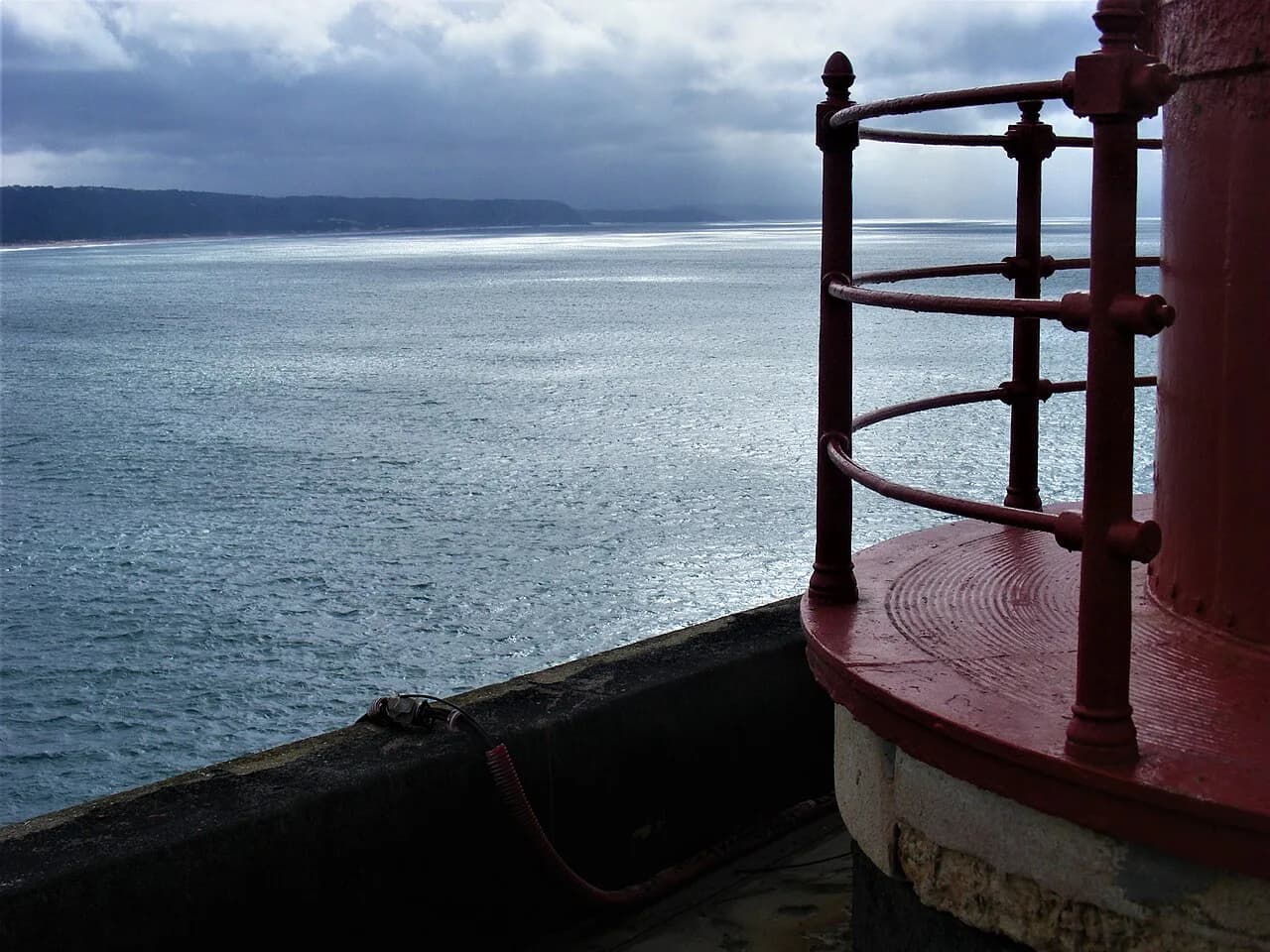
The view is the main event. From the fort walls you look straight down the cliff at Praia do Norte and out across open ocean, with the Nazaré canyon offshore beneath you. The canyon is a submarine feature roughly 5,000 metres deep and about 230 km long, and it is the reason the swell arrives here with such force.
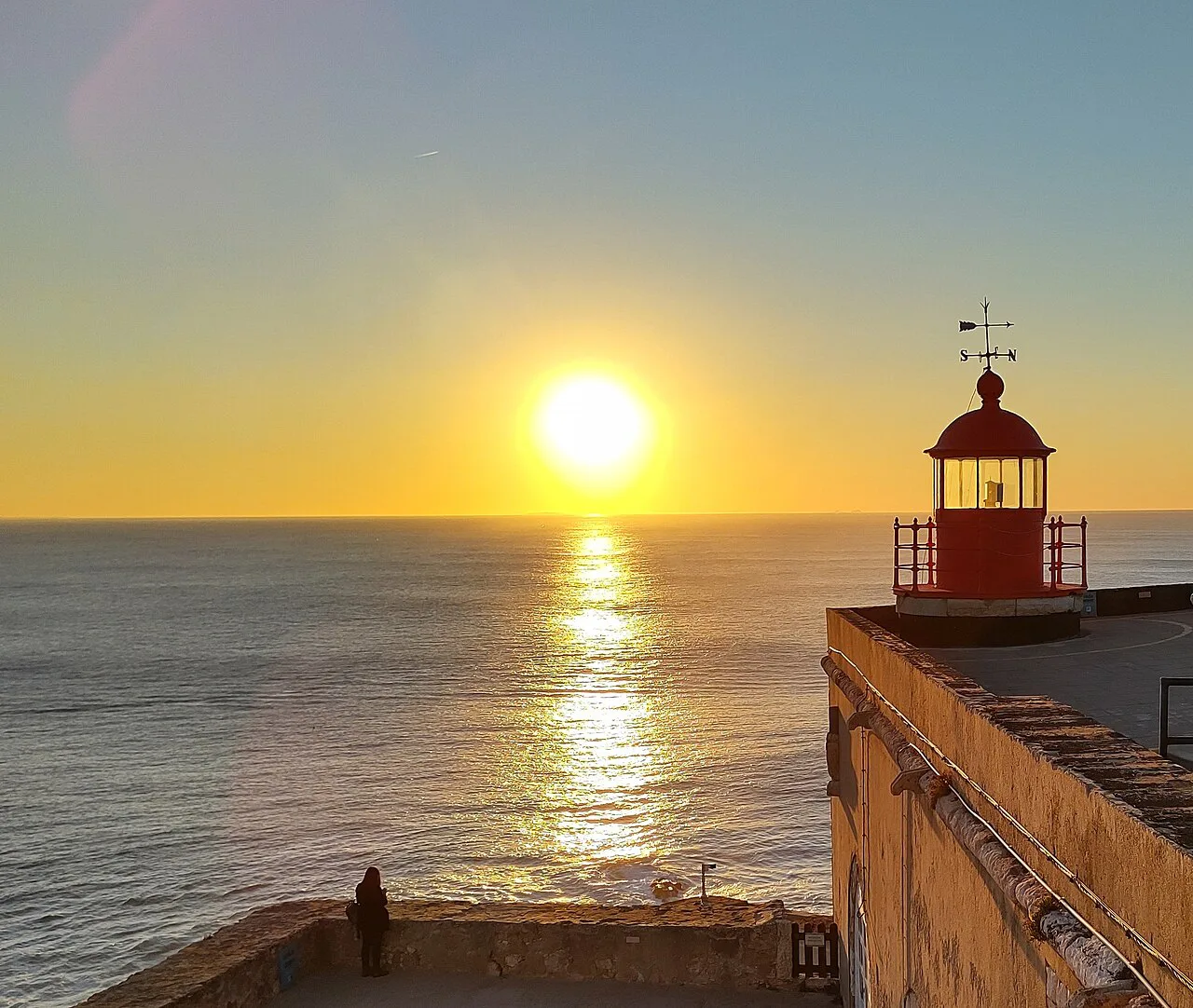
The lighthouse itself stands within the fortification, its white and red tower unmistakable against the sky. Around it, the stone walls, the paved terrace and the low parapet give you several angles on the coast in both directions. Give yourself time to walk the length of the battery rather than stopping at the first viewpoint inside the gate.
The Surfer Wall inside the fort
Inside the fort, boards ridden at Praia do Norte are displayed along the walls, a collection known as the Surfer Wall. It began with a board donated by the big-wave surfer Pedro Scooby and grew to about 35 boards within a year, including boards from Garrett McNamara, Maya Gabeira and Sebastian Steudtner. The names on the wall are a roll call of the people who made the beach famous after McNamara's ride here in 2011.
For a non-surfer the boards are still worth a few minutes: they are battered, wax-stained and much longer than the ones you see in ordinary line-ups. Read the labels before you head back out to the terrace, since the display sits between the entrance and the lighthouse.
Tickets, hours and the last entry
Entry to the fort and lighthouse is €1, with children under 10 free. Published hours are daily from 10.00 to 20.00, with last entry at 19.30. Those are the only concessions stated, so there is no need to hunt for a separate family or senior rate.
Hours can shift with the season and with surf competitions that use the headland, so confirm the day's times at the gate or with the municipal tourism office before making the trip up. If you are coming specifically for a big swell, check the timetable before you commit to a late-afternoon slot.
Big-wave season versus summer
The big-wave season runs from November to February, when Atlantic storms send swell into the canyon and the waves at Praia do Norte can reach extraordinary heights. In that window the fort terrace becomes a viewing stand, with crowds pressed against the parapet and the lighthouse framed against the spray.
Between roughly March and October the water is usually calmer and the terrace is a quiet place to look at the geology of the canyon and the scale of the beach below. A visit then is about the view and the fort, not the spectacle, and it is a calmer, quicker stop.
Understand the trade-off before you plan around the waves. Nazaré's reputation rests on a seasonal pattern, not a schedule: no one can tell you in advance which day a record swell will arrive, so treat a sighting as luck and the viewpoint as the certain part of the trip.
How long to allow, and what to pair it with
Plan on 45 minutes to an hour for the fort and lighthouse, and add the same again if you want to walk down onto Praia do Norte or linger on the terrace when a swell is running. The site is small, so the time goes on looking rather than queuing.
Pair the visit with the rest of Sítio. The Ermida da Memória, the small chapel said to mark the spot where an image of Our Lady was found in the 12th century, sits just inside the district, and the Miradouro do Suberco gives a different angle back over the beach resort below. Between them you can fill a half day on the promontory without returning to sea level.
Nearby: Praia do Norte and the town below
Praia do Norte lies directly under the fort, reached by road around the headland rather than by a path down the cliff. It is the beach the big-wave surfing made famous, and seeing it from above helps you understand why the scale impressed the surfing world. Swim only where the lifeguards and flags allow it; the surf here is powerful.
Back down in the lower town, the Municipal Market and the seafront are the natural next stop, with the fish and shellfish specialities of the town, caldeiradas and dried fish among them, on offer around the harbour. If you want the town's social history rather than its waves, the Museu Dr. Joaquim Manso in Sítio covers fishing life and local ethnography.
Wind, exposure and crowds
The promontory is fully exposed, and the wind that makes the viewpoint dramatic also makes it uncomfortable. A short visit in a strong northerly can feel much longer than its clock time, so carry a windproof layer and keep an eye on the younger members of the group near the parapet.
Crowds are the other variable. On an ordinary day the fort is calm and the small entry charge keeps it that way; when a big swell coincides with a weekend or a competition, the road to Sítio and the terrace can both jam. Going early in the morning is the practical hedge on busy days.
Is the lighthouse worth the trip up to Sítio?
Yes, provided you treat it as a viewpoint with a small fort attached rather than a monument to tour. The token entry charge, the canyon view and the Surfer Wall make it the best short stop in Nazaré, and the funicular removes most of the effort.
Build it into a morning in Sítio with the Ermida da Memória and the miradouro, then descend for the market and the seafront. Check the day's opening hours before you go up, and keep your expectations of a wave modest outside November to February.