Things to Do in Nazaré: Praia, Sítio and the Big-Wave Viewpoints
Plan a short break in Nazaré with the best things to do, from Praia da Nazaré to Sítio, the funicular, Miradouro do Suberco and the lighthouse over Praia do Norte.
On this page
Nazaré works best as one full day, or two if you want the clifftop and the beach without rushing. The town splits into two halves: Praia, the beachfront strip where buses drop you, and Sítio, the old village on the cliff above, reached by funicular, on foot or by car. This guide takes each half in turn, names the viewpoints and monuments worth your time, and tells you honestly what to keep short.
The town sits on Portugal's Silver Coast, roughly 120 km north of Lisbon, and grew from a fishing village into a global big-wave destination because of the Nazaré Canyon offshore. That canyon is why Praia do Norte can produce enormous surf, and why winter visitors arrive with cameras rather than swimwear.
Nazaré in a nutshell: Praia below, Sítio above
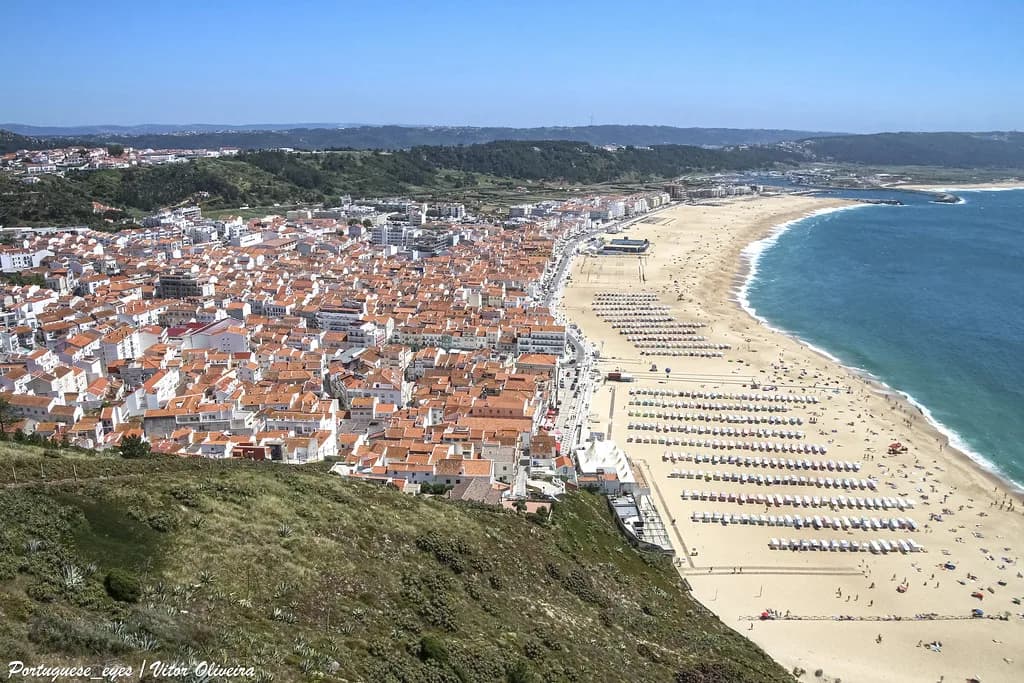
Think of Nazaré as a lower town and an upper town. Praia is the flat area around the beach, with the seafront promenade, shops and restaurants; Sítio is the neighbourhood perched on the cliff, home to the sanctuary, the chapels and the best-known viewpoints. Buses from Lisbon drop passengers right in the centre near the beach, so most people start at Praia and go up later.
The two halves feel genuinely different, and that is the main planning decision. Sítio is quieter and more historic, while the beachfront is busier and more commercial. If you only have half a day, pick one half rather than trying to see both at a run. For a closer look at the upper village's streets and squares, the guide to the Nazaré old town covers it in detail.
How to get to Nazaré from Lisbon and Porto
Direct coaches run from Lisbon, with Rede Expressos leaving from Sete Rios and Flixbus from Oriente; the journey takes about 1.5 to 2 hours and ends in the town centre. Driving from Lisbon takes a similar 1.5 hours in normal conditions, though traffic builds in town during summer and peak surf season.
From Porto, Flixbus also serves Nazaré and drops you in the heart of town near the beach, with the trip taking considerably longer than from Lisbon. Once you arrive, the centre and waterfront are walkable; the climb to Sítio is the one leg worth planning, whether by funicular, bus, taxi or car.
How many days Nazaré needs
A half-day covers either the beachfront or Sítio, not both comfortably. One full day lets you walk Praia in the morning, ride the funicular up after lunch and stay for sunset at the clifftop viewpoints. Two days give you room for the fort and lighthouse above Praia do Norte, a slower look at the sanctuary, and time to eat properly in Sítio.
Nazaré also works as a base for two to three days rather than a single stop, which suits a short break built around one town. If you prefer a city with more museums and indoor options for wet days, compare this with things to do in Aveiro or things to do in Braga before committing.
Praia da Nazaré: the beach and the seafront promenade
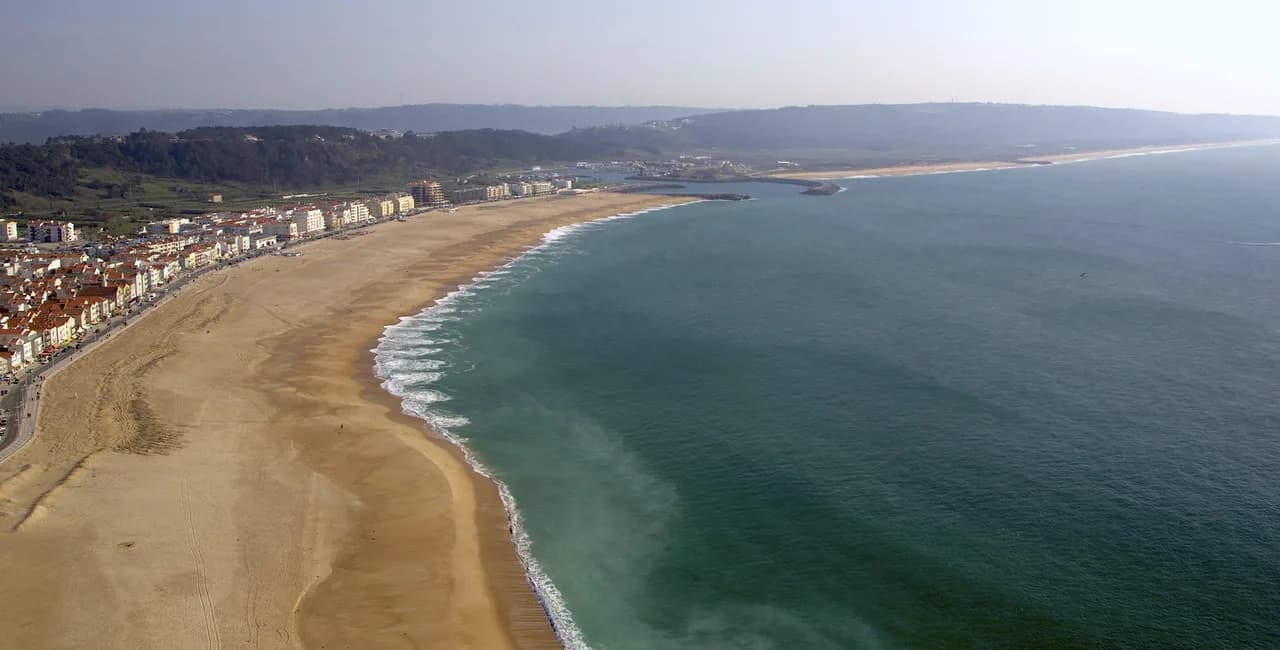
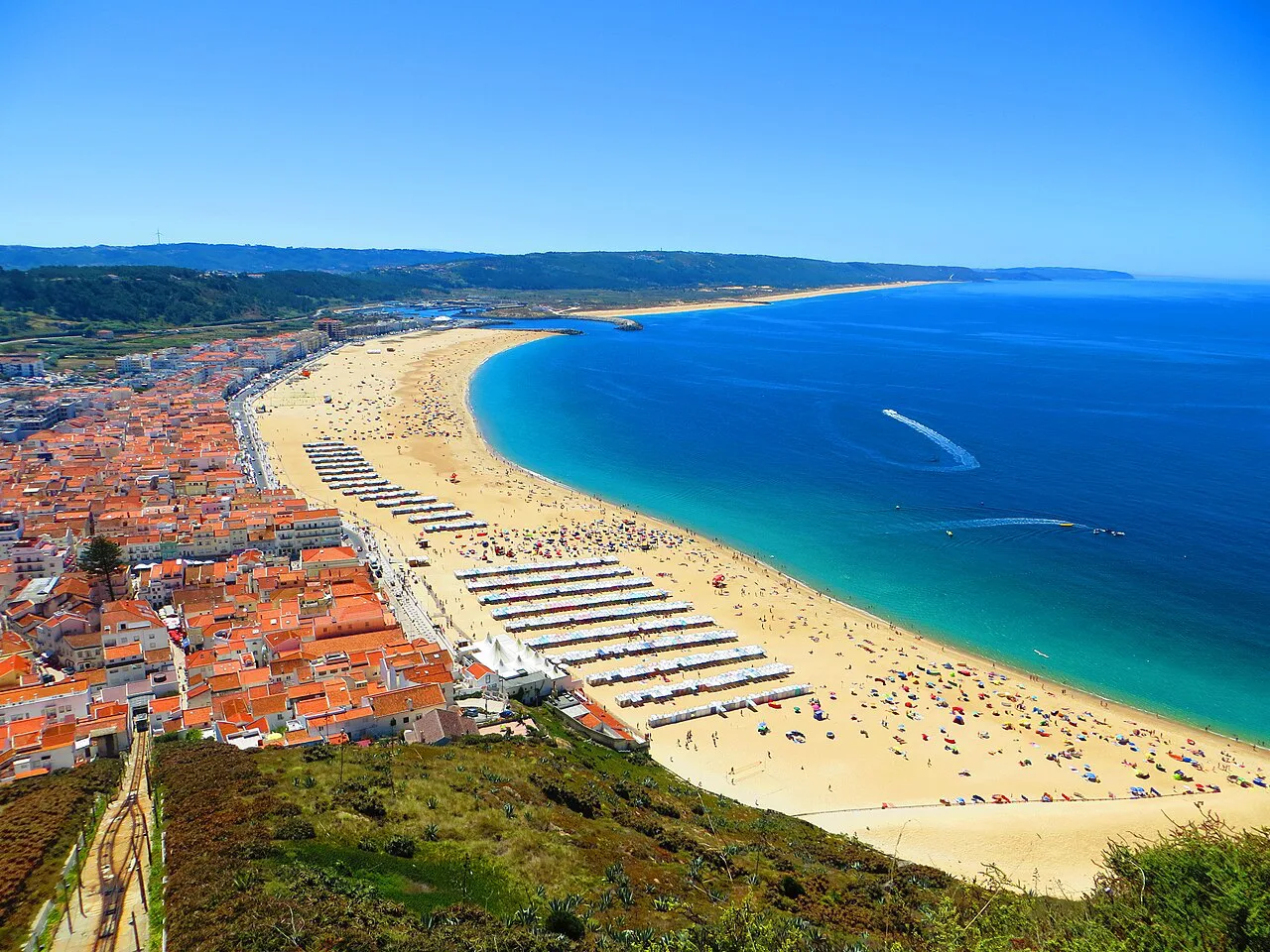
Praia da Nazaré is the long sandy beach at the foot of the town, backed by a promenade of roughly 1.5 km lined with shops, boutiques, restaurants and beach bars. It is the social centre of the lower town and the easiest place to spend an hour if you arrive before check-in.
Be candid about the promenade: it gets very crowded and the shops lean towards mass-produced souvenirs, so treat it as a stroll rather than a highlight. Walk it once, pick a restaurant off the front, and put your time into Sítio instead. The beach itself is best in the May to September window, when sunny weather makes sunbathing and swimming realistic.
Riding the funicular up to Sítio, or walking instead
The Nazaré funicular connects the lower town to Sítio in a short ride and delivers one of the best views of the trip as it climbs. One guide reported a round-trip fare and departures roughly every 15 minutes, which made it a cheap way to save your legs for the clifftop.
The alternatives are walking up the hill, which is free but steep, or driving if you have a car and want to continue to Praia do Norte afterwards. Local buses and taxis also cover the climb if the queue at the funicular is long. Check the day's running times at the lower station before you rely on the last ascent.
Sítio da Nazaré: the square, the sanctuary and the Ermida da Memória
Sítio's main square sits just behind the Miradouro do Suberco viewpoint and holds the Santuário de Nossa Senhora da Nazaré, the church at the heart of the town's founding legend. Around the square you'll find small shops selling local products and fish restaurants with views over the ocean. Visiting before sunset lets you combine the sanctuary with the best light of the day.
A short walk away, the Ermida da Memória marks the spot where, by local tradition, a nobleman's horse was saved from the cliff edge in the twelfth century; the chapel built in gratitude became a place of pilgrimage. The story of Dom Fuas Roupinho and the stag still appears in statues and artwork across town, which makes the chapel a useful first stop for understanding what you are looking at. For the full set of religious buildings, see the guide to Churches in Nazaré.
Miradouro do Suberco and Baloiço da Ladeira: the clifftop viewpoints
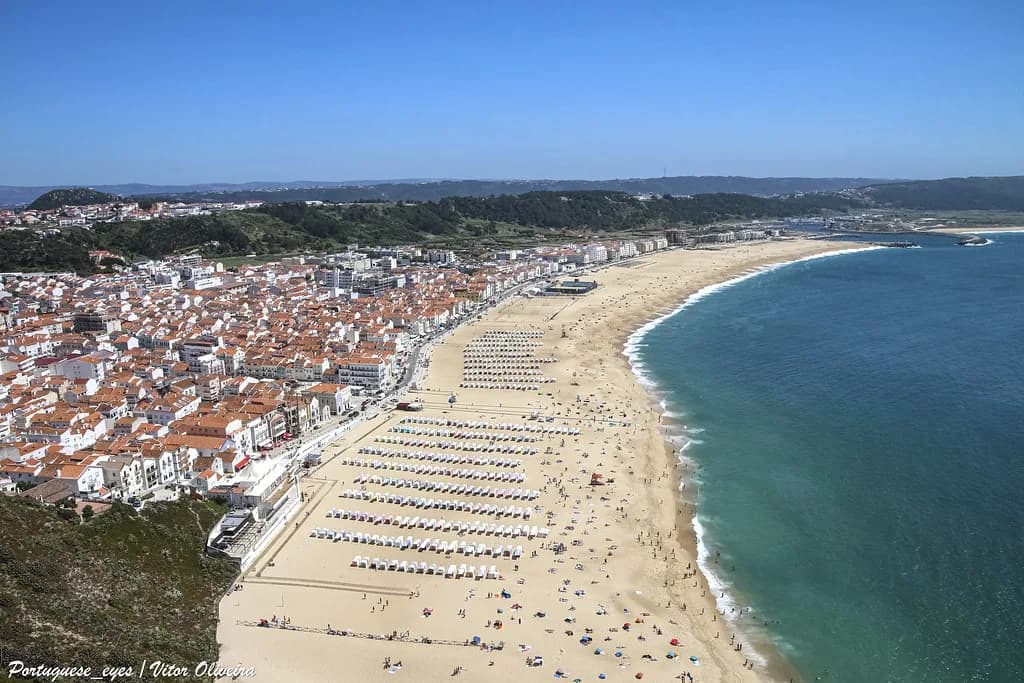
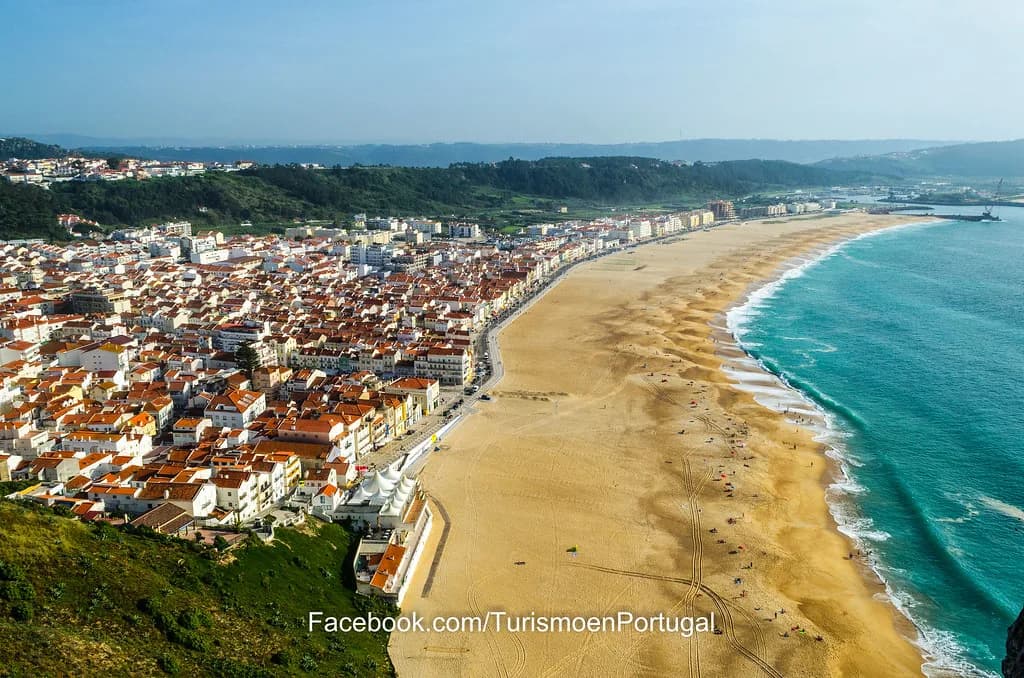
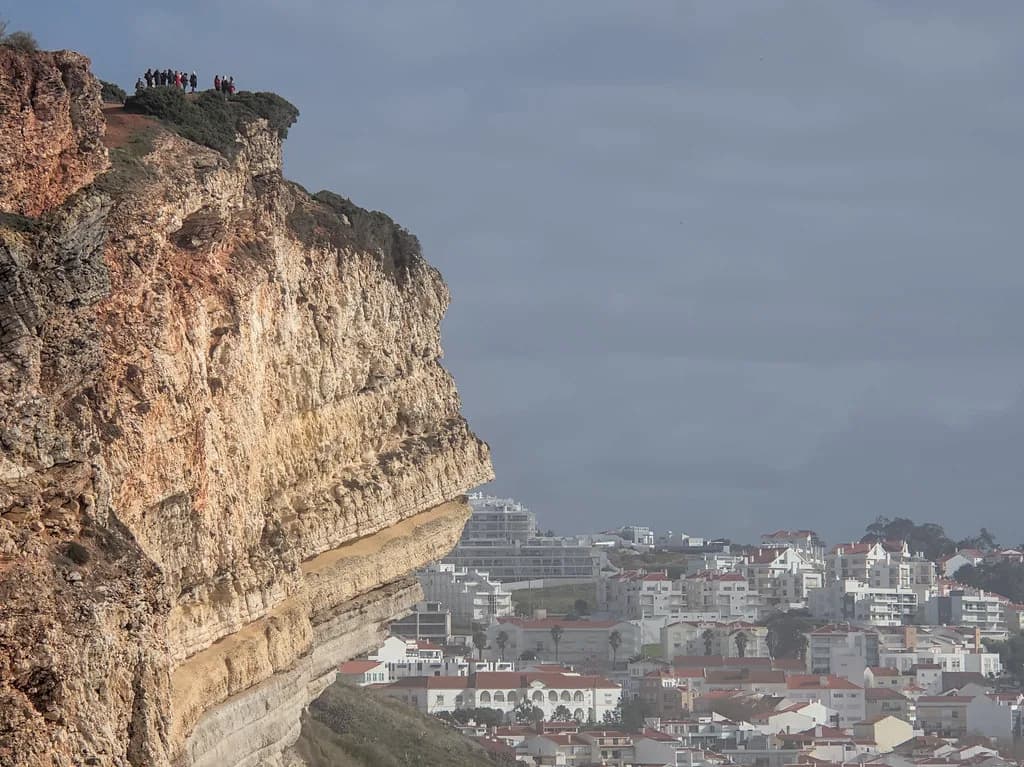
Miradouro do Suberco is the headline viewpoint, looking down on the beach, the sea, the cliffs and the red-roofed houses of the lower town. From here you can see both halves of Nazaré at once, which finally makes the town's layout obvious. Come before sunset and stay for it if the weather is clear.
The Baloiço da Ladeira, a swing set up for photographs against the coastal backdrop, is a short detour from the main viewpoint and popular with people wanting a picture rather than a long stop. Both viewpoints are free and need no booking; the main cost is the funicular fare up. For the full spread of viewing spots, work through The Best Viewpoints in Nazaré.
Fort of São Miguel Arcanjo and the lighthouse above Praia do Norte
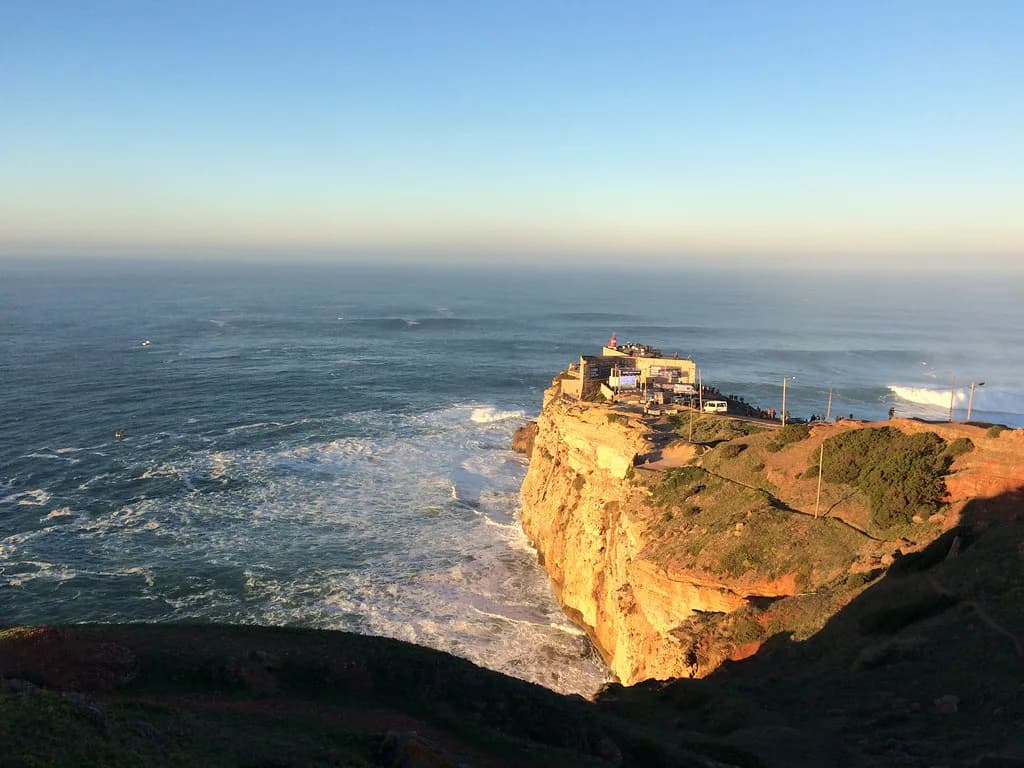
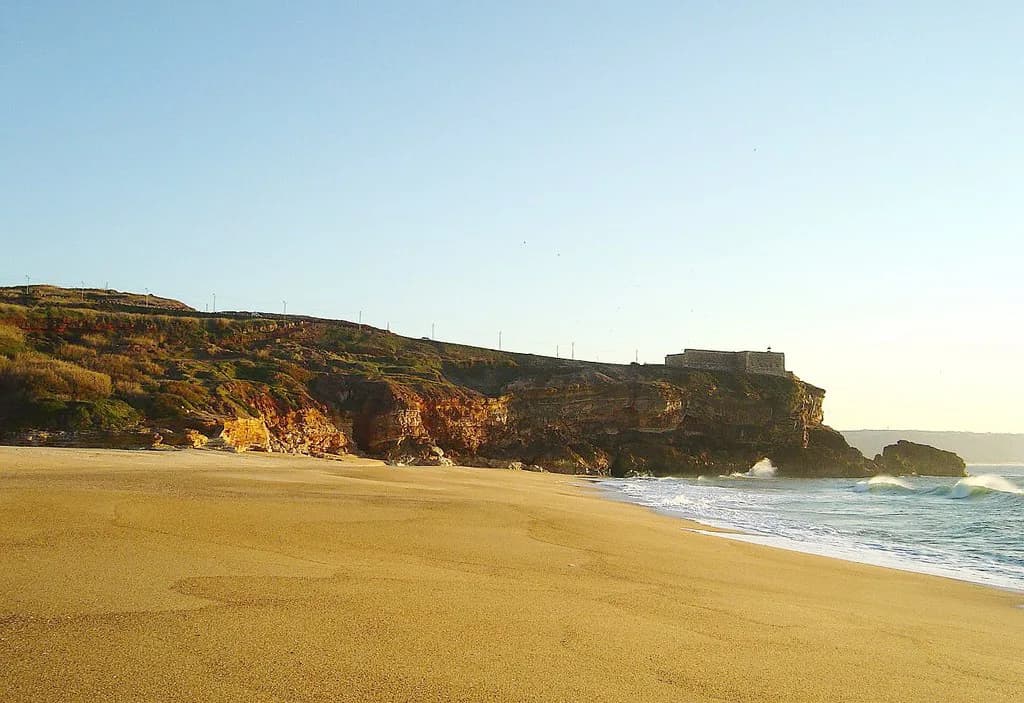
Past Sítio, a path leads to the tip of the cliff where the Fort of São Miguel Arcanjo and its lighthouse overlook Praia do Norte. This is the place to stand if you want to watch the surfers on the big-wave beach, and it gives the most dramatic view of the Atlantic anywhere in town. Go late in the day for sunset over the water.
The fort and lighthouse are the anchor of any visit built around surfing, and the walk from the Sítio square is short enough to combine with the sanctuary and the viewpoints. Visiting hours for the fort are worth confirming on the day at the site itself, since the clifftop path is accessible regardless.
When the giant waves come, and what has to line up
Big-wave season runs roughly October to March, when the Nazaré Canyon can amplify Atlantic swells into the enormous surf the town is known for. Those waves are not a daily show: they form only under specific weather and swell conditions, so a winter trip is a chance rather than a guarantee.
The town's surf history includes Garrett McNamara's ride on a 23.8 m wave at Nazaré, which set a world record at the time. Read that as history rather than a promise of what you will see, and check the surf forecast before building a day around the lighthouse. For a fuller picture of how the season works, read the guide to Nazaré big waves.
Praia do Norte and surfing: what a beginner can and cannot do
Praia do Norte is a serious big-wave venue, not a beginner's beach; the expert surfers who come here are chasing the canyon's giant swells. Watch from the cliff and leave the water to people with the right boards and experience. It is worth the walk simply to see the scale of the place.
Eating in Nazaré: fish, snacks and a pastel de nata liqueur
Fish restaurants cluster around the Sítio square, where the tables look out over the ocean and the cooking follows the day's catch. Down at Praia you have more choice along the promenade, but the upper town is the more atmospheric setting for a long lunch.
On the Sítio square, local women sell inexpensive snacks worth trying: tremoços (salted lupin beans), pevides (salted pumpkin seeds) and bolachas de amendoim, the peanut biscuits best bought in the large size. Elsewhere in town you can find licor de pastel de nata, a liqueur made to taste like the custard tart, which makes a small, cheap souvenir of the trip.
If you want to cook for yourself or assemble a picnic, the Nazaré market is the place to buy produce and local goods rather than the souvenir shops on the seafront. The guide to shopping in Nazaré covers the shops worth a stop.
The seven-skirt dress and the women selling snacks on the square
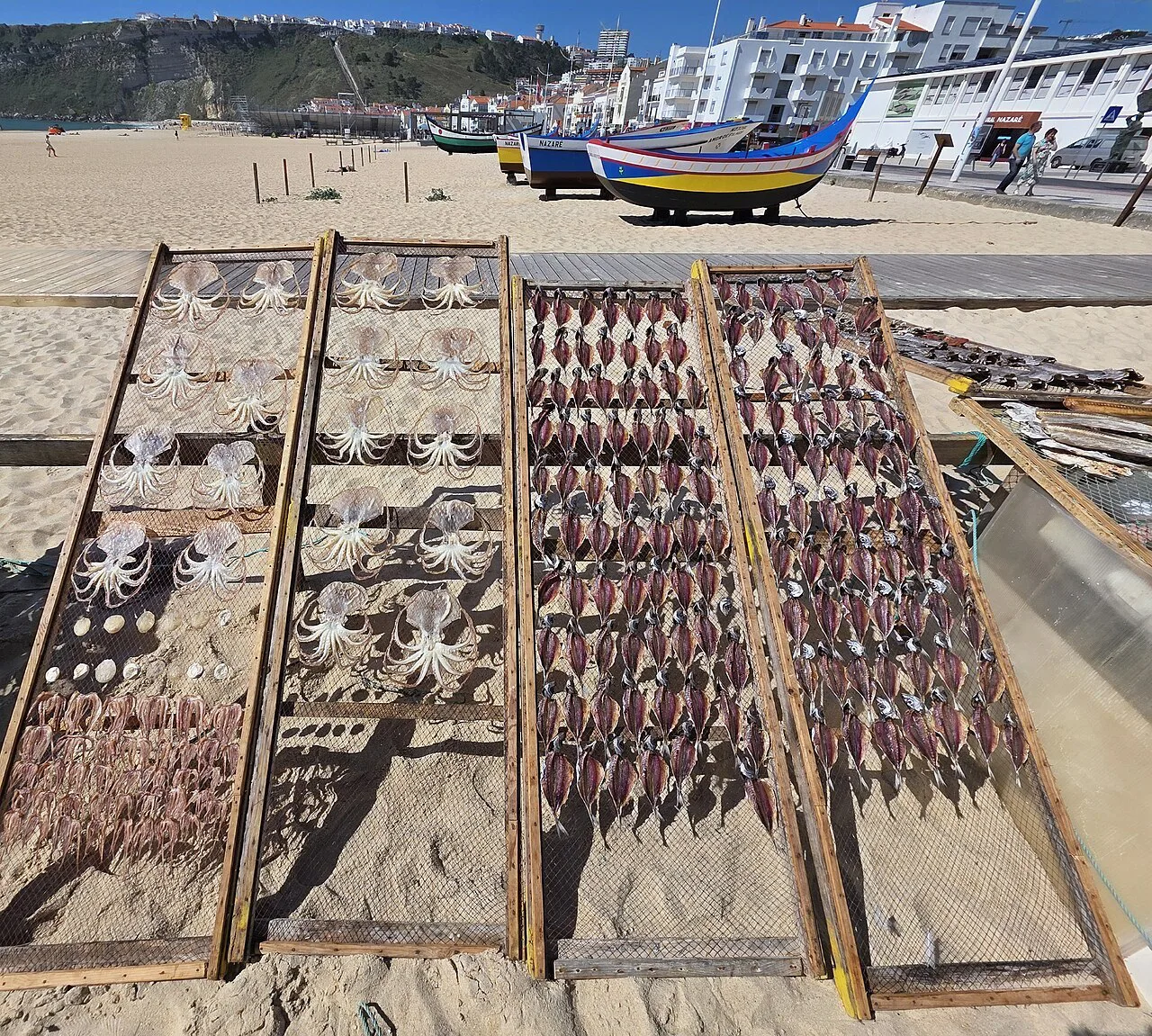
The traditional costume of Nazaré is defined by seven colourful, intricately worked skirts, a custom now kept mainly by the older generation. You will see women wearing it around town, particularly in Sítio, where they sell dried fish, homemade snacks and local accommodation.
Buying a bag of pevides or a peanut biscuit from them is a small, direct way to support the tradition rather than photographing it from a distance. It also gives you a reason to linger on the square when the church is busy.
What to skip or keep short if you only have a day
With one day, put Sítio first: funicular up, sanctuary and chapel, Miradouro do Suberco, then the walk to the fort and lighthouse for sunset. Keep the promenade to a single pass and eat in Sítio rather than on the seafront. That order uses the light well and avoids climbing the hill in the heat of the afternoon.
If you are weighing Nazaré against somewhere with more indoor sights, the guide to Museums in Nazaré will show you what else is on. Otherwise, keep the day simple and accept that the cliffs are the main event.
Practical points: crowds, weekends and big-wave traffic
Weekends bring local families, and summer brings beach crowds, so a midweek visit is calmer. Peak surf season adds traffic in town and around the clifftop roads, which matters if you are driving up to Praia do Norte. Build in slack for the funicular queue and the single-lane stretches near the fort.
Ericeira, the surf town further down the coast, is the obvious add-on if you want a second stop on the same stretch of coast and have a car. If you are planning to string several coastal stops together, see our Silver Coast guide for how to pace them.
Is the clifftop or the beach the better half of Nazaré?
For most short-break visitors, Sítio wins: the sanctuary, the viewpoints, the fort and lighthouse, and the fish restaurants by the square give you more in less time. Praia is where you arrive and where you sleep, but the promenade does not need more than one walk.
Spend your money on the funicular round trip, a bag of tremoços on the square and a slow lunch above the ocean. Leave the giant waves as a winter possibility rather than the reason for the booking.
Explore more Nazaré guides
Frequently Asked Questions
How many days do you need in Nazaré?
One full day covers Sítio and the main viewpoints; two to three days let you add the fort, the beach and a relaxed lunch in the upper town. A half-day is enough for one half of the town only.
Where is Nazaré located?
Nazaré is on Portugal's Silver Coast, about 120 km north of Lisbon, with direct coaches from the capital and a scenic drive of roughly 1.5 hours. It faces the Atlantic, which is why the surf at Praia do Norte is so powerful.
Can you see the giant waves on any winter day?
No. The big-wave season runs roughly October to March, but the enormous surf needs specific weather and swell conditions, so a winter visit is a chance rather than a guarantee.
Sources
Notes for your next Portuguese break
Optional updates to our town guides.
You might also like
Continue reading
More guides you'll find useful