Nazaré Viewpoints: Where to See the Waves and the Town
Nazaré viewpoints compared: the fort by the red lighthouse for the waves, the Sítio clifftop over the town, and how to walk between them in a short break.
On this page
For the classic big-wave view, go to the Fort of São Miguel Arcanjo, the clifftop fort beside the red lighthouse above Praia do Norte. For the best view of Nazaré itself, climb to Sítio da Nazaré, the upper town on the cliff, and look back down over the beach and rooftops. This guide sets out what each viewpoint actually gives you, where they sit in the town's two-level layout, and how to link them on foot in a short break.
Nazaré is split in two: the lower town along the seafront, and Sítio on the clifftop above it. Most of the viewpoints that matter sit at one end of that split or the other, so knowing which level you are heading for saves a lot of backtracking.
Which Nazaré viewpoint should you choose?
Choose by what you want to look at. The fort and lighthouse terrace looks straight down the face of the big-wave arena at Praia do Norte, with the sand and the open Atlantic below you. Sítio looks the other way, back along the town and Praia da Nazaré, so it is the better pick for the postcard view of the resort.
If you have time for only one, the fort wins for spectacle and Sítio wins for orientation and the town panorama. The honest trade-off is that hopping between them mid-swell costs you the very thing you came to watch, so pick a spot and stay put if the surf is doing something.
Fort of São Miguel Arcanjo and the red lighthouse: the classic big-wave viewpoint
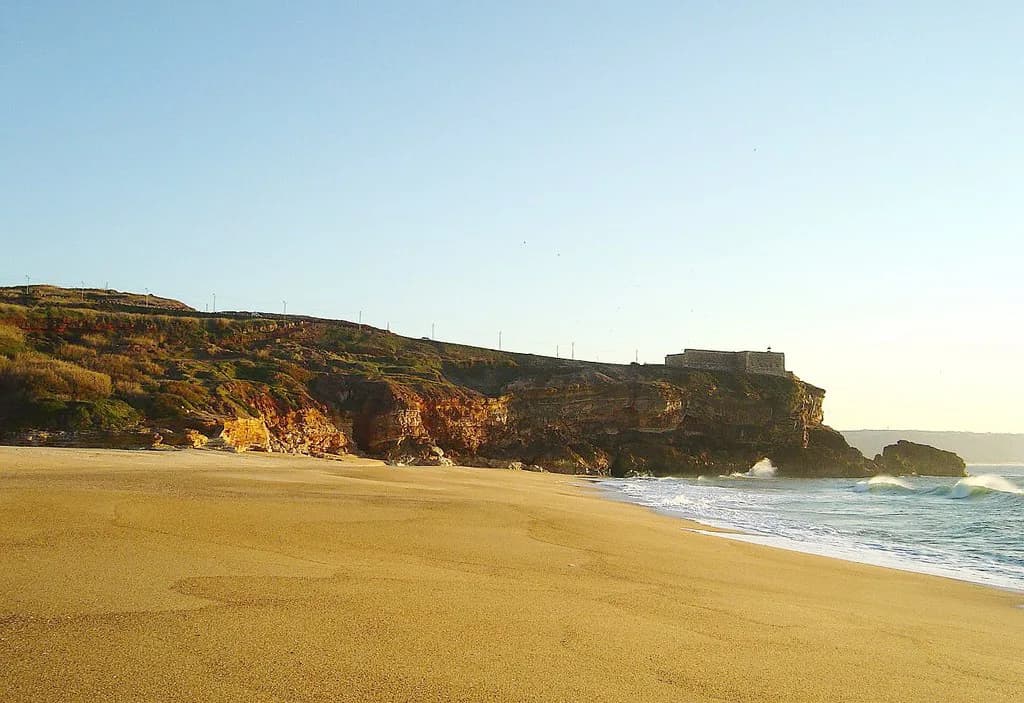
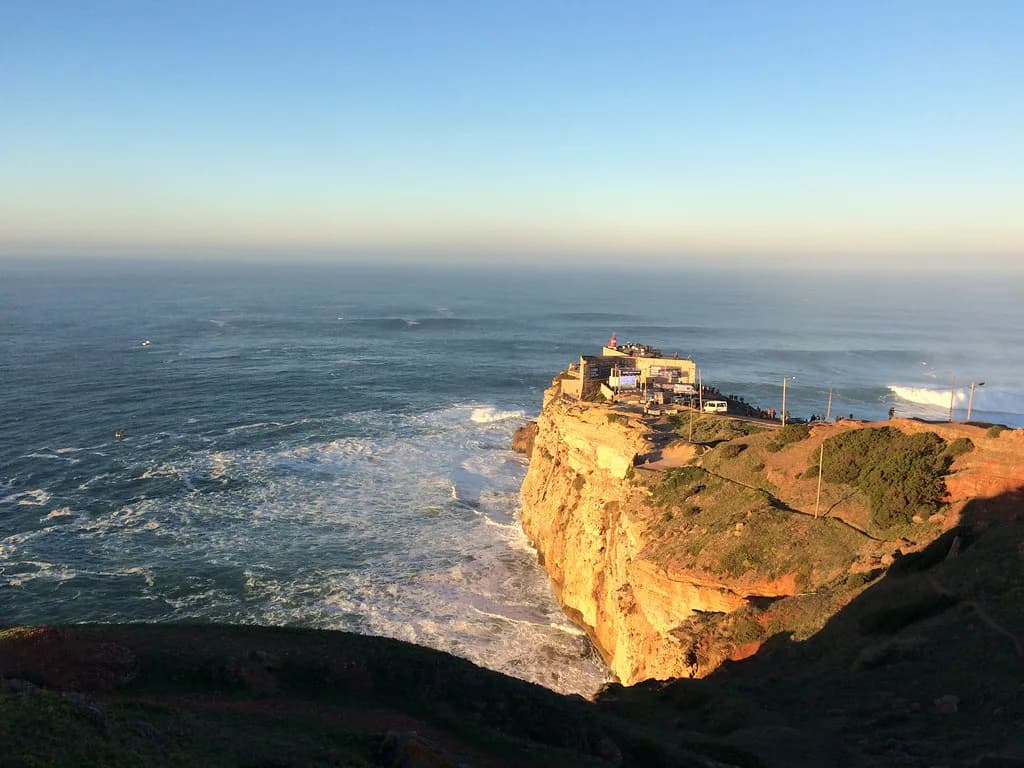
The Fort of São Miguel Arcanjo is the most recognisable viewing point in Nazaré, valued less for its military past than for the terrace it gives you over the water. The red lighthouse stands at the fort, and the pair together form the image most people carry home. Treat the fort as a viewpoint first and a monument second, and arrive expecting wind rather than shelter.
This is where you look down on Praia do Norte rather than along it. The angle compresses the scale of the swell and shows you the lines coming in, which is why photographers crowd the terrace when the waves are running. In flat weather the same terrace gives you a clean coastal view and a sense of the drop off the cliff.
Practical planning starts with the approach: the fort sits on the clifftop edge of town, reached by road and on foot along the headland. If you plan to go inside, check the day's opening before you build your morning around it, since access can be restricted.
What you actually see from the fort terrace versus the sand at Praia do Norte
The fort terrace and the sand are two different experiences, not rival versions of the same one. From the terrace you read the whole arena, see the sets form out at sea and watch other people's reactions along the rail. From the sand you get the height and noise of the water at close range, which is more visceral and far less informative about what is coming.
The mistake is moving between them while the surf is building: by the time you have walked down and back up, the best sets have gone through. Choose one position for the session and accept that you will miss something. Stay off the wet sand when the swell is up, because the water here arrives with force and no warning.
Sítio da Nazaré clifftop: the view back over the town and the beach
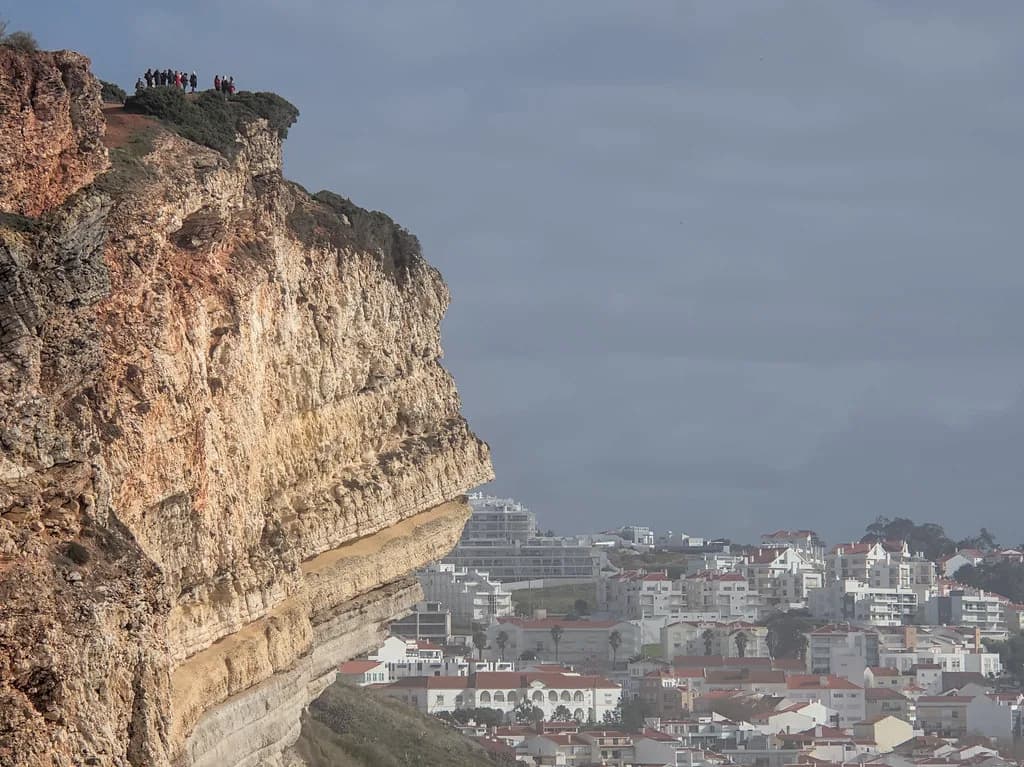
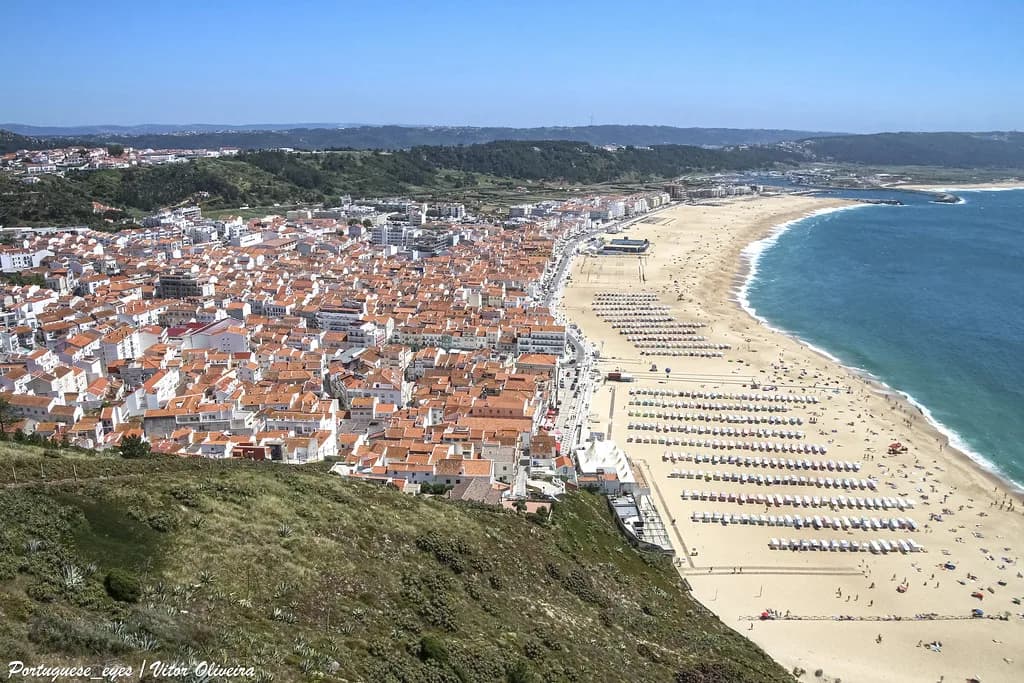
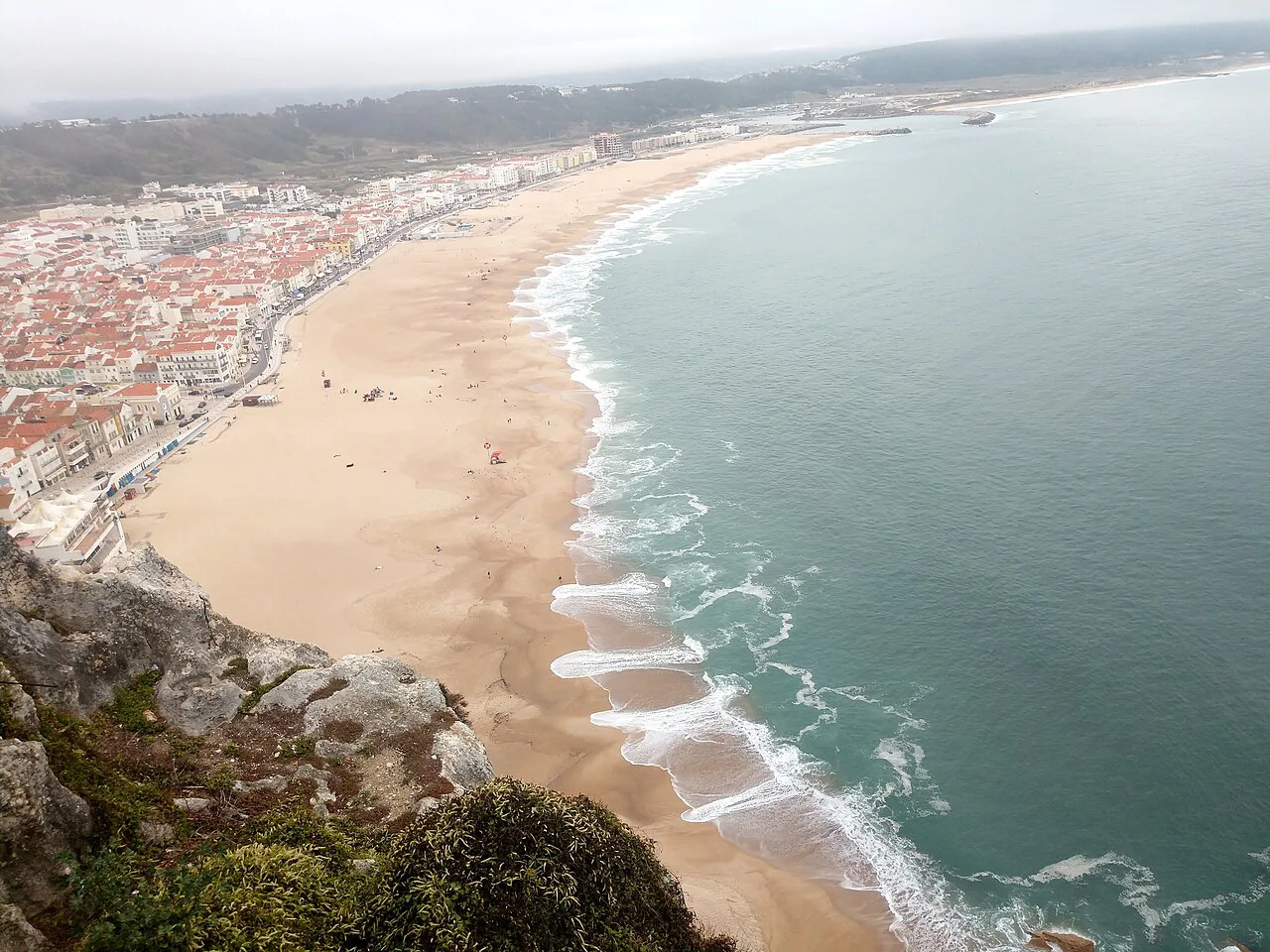
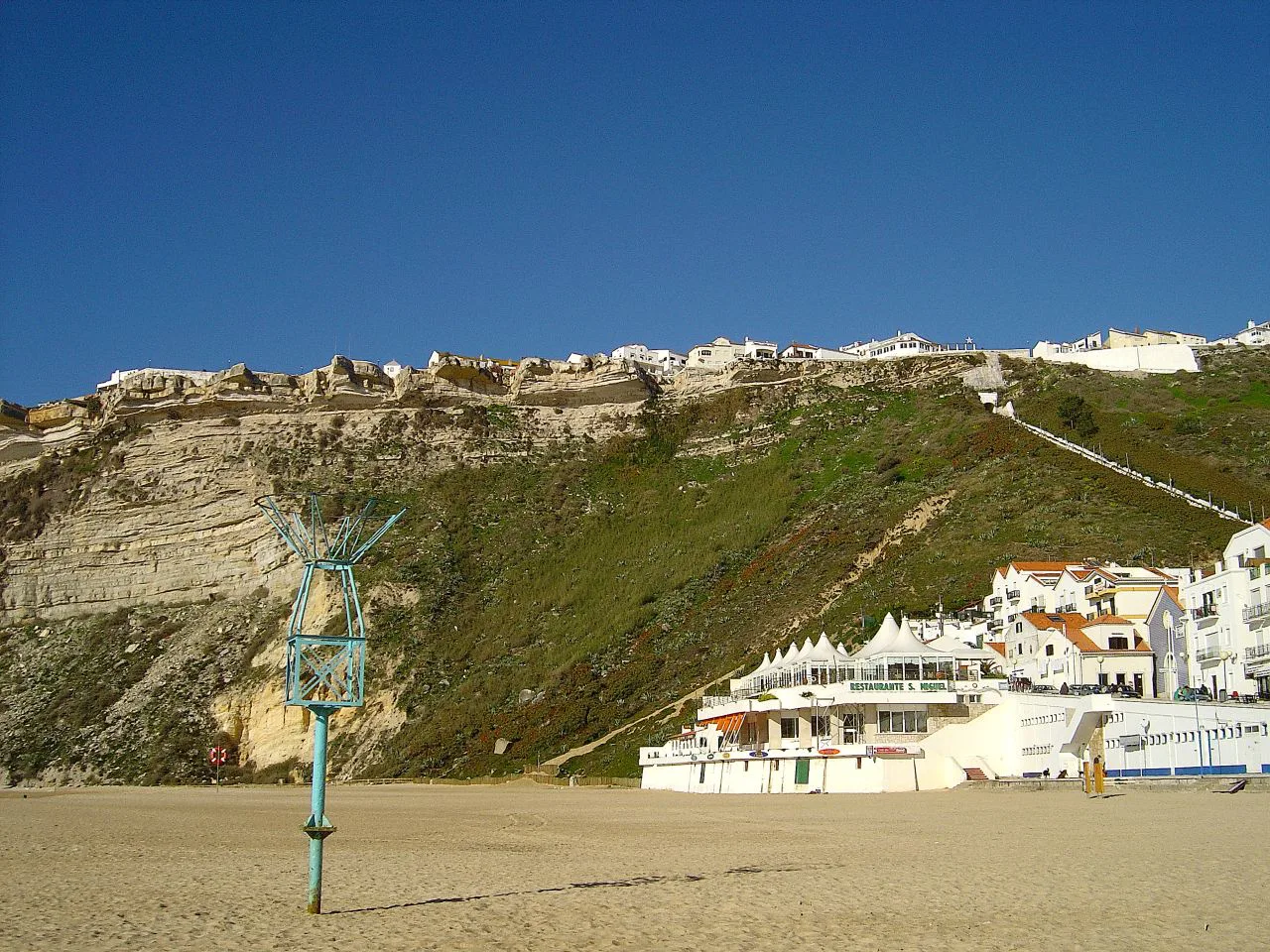
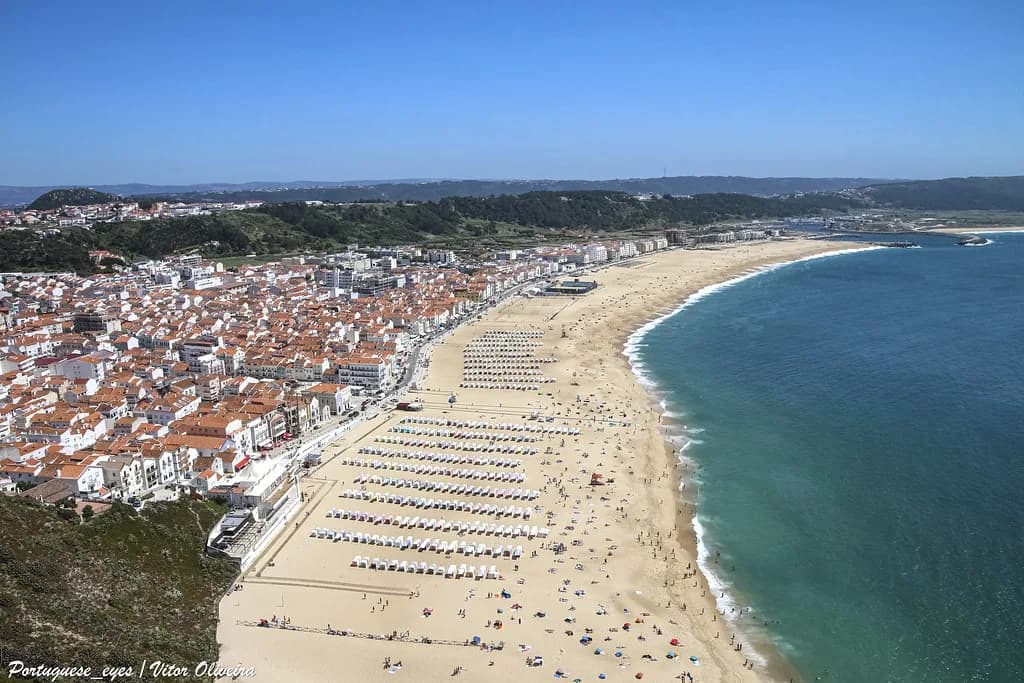
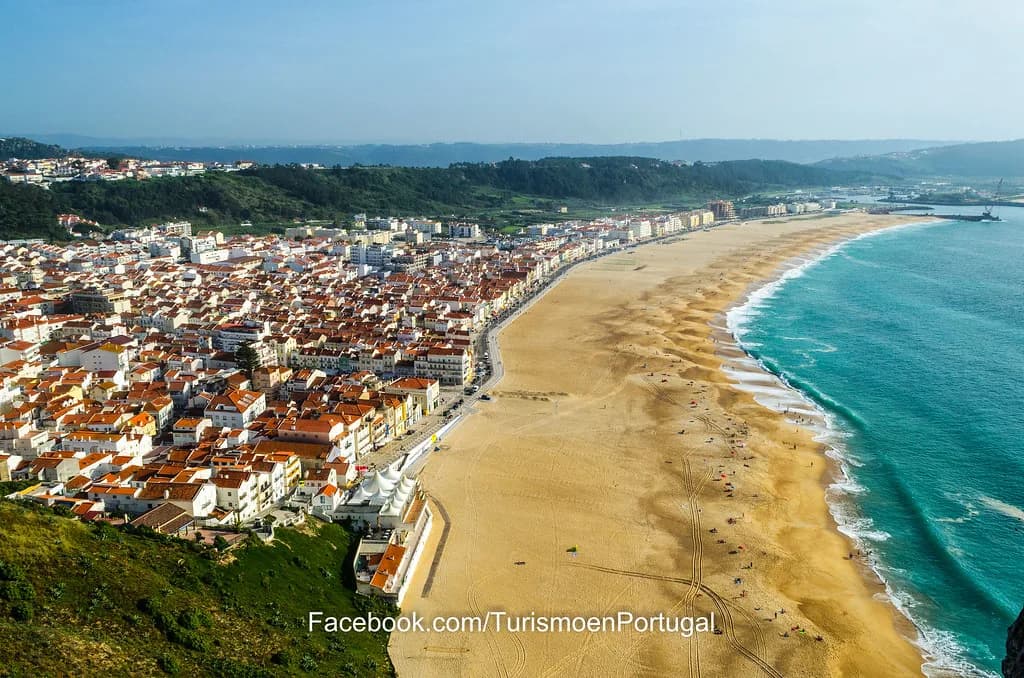
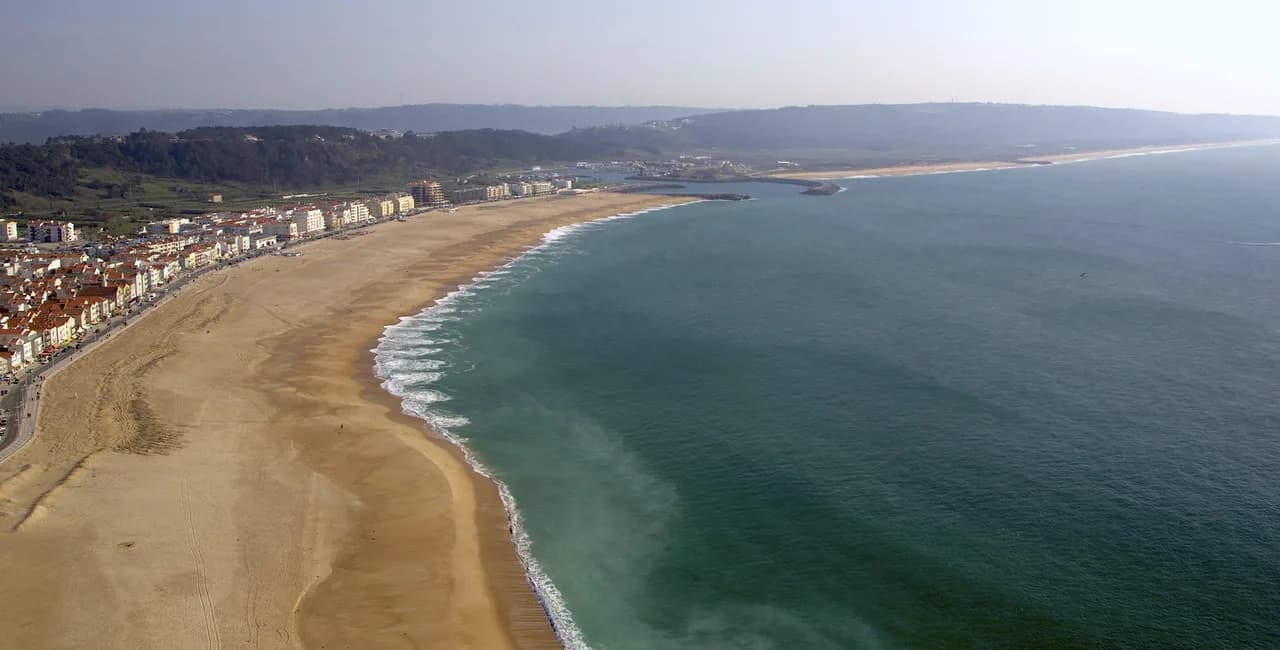
Sítio da Nazaré is the upper town on the cliff, and its real value is the reverse view: the lower town, the seafront and Praia da Nazaré laid out below you. It is also where the Sanctuary of Our Lady of Nazareth stands, so the clifftop works as a half-day in its own right rather than a quick photo stop. Come up for the panorama, then stay for the square around the sanctuary.
From up here the town's layout finally makes sense: the grid of streets, the shoreline, and the headland running north to the fort. Late afternoon suits the view best, when the light comes across the water towards the cliff. It is a calmer place to stand than the fort terrace, which matters if you are travelling with children or anyone unsteady on their feet.
The wave-height marker and how to read the scale of the swell
A wave-height marker at the fort is the best way to make sense of what you are looking at, because the ocean here gives no reliable sense of scale on its own. Look at the marker, then look at the water, and the true size of the swell lands. Without that reference, most people underestimate it badly.
Use the marker alongside the surf reporting rather than instead of it, since what is breaking out at sea is not always what reaches the cliff. If you want the seasonal pattern and how the wave is generated, read up on it before you travel. That way a quiet day does not feel like a wasted one.
Viewpoints over the traditional town and Praia da Nazaré
The lower town gives you the everyday Nazaré view rather than the famous one: the seafront, the fishing quarter behind it and the cliff hanging over the beach. Walk the seafront and then take the lanes of the Nazaré old town inland, where the scale drops to washing lines and tiled fronts. The best angles are found on foot rather than from a marked platform.
For the wider picture of the town and beach, the clifftop at Sítio beats anything at sea level, because height is what makes the shoreline legible. Keep half an hour for wandering the old town streets after you come down, when the light softens and the seafood places start filling.
Getting between the viewpoints: walking, driving and the climb to Sítio
There are two ways up to Sítio: on foot or by road. The climb on foot is steep and exposed, so treat it as a proper walk rather than a stroll, with water and a slower pace; if you are not walking, drive up and park near the sanctuary square. Either way, the reward is the reverse panorama over the lower town and beach.
The fort is on the headland beyond the town, reached by road or by a coastal walk from the seafront. Allow more time than the map suggests: the distances are short but the gradients are not. Without a car, plan the day by level — lower town in the morning, Sítio in the afternoon — rather than criss-crossing the cliff.
Practicalities: parking near the fort, wind and spray at the cliff edge
Parking near the fort is tight when the surf is up, so arrive early or leave the car in the town and walk the headland instead. Wind and salt spray are constant on the cliff edge, and the temperature up there is lower than on the seafront even on a bright day. A windproof layer and something to hold your phone steady are worth more than an extra lens.
Stay behind the barriers at the fort and keep well back from the cliff edge everywhere else; the ground is loose in places and the drop is real. Wear shoes with grip rather than sandals, since the paths and viewpoints are often wet.
How long you need and where viewpoints fit into a one- or two-day visit
Give the fort and its terrace two hours including the approach, and Sítio another two with the sanctuary and the walk down. That leaves the rest of a day for the seafront and the old town. Two days lets you keep one morning flexible, so you can return to the fort if the surf is forecast to build.
Build the itinerary around the light and the weather rather than a fixed list: fort in the morning, Sítio in the late afternoon, seafront in between. This ordering keeps you on one level at a time and saves the steepest walking for when you choose it.
Fort or clifftop first?
Start at the Fort of São Miguel Arcanjo if the waves are the reason you came, and give it your full attention rather than splitting the session with the beach below. Move to Sítio afterwards for the town panorama, when the light is better and the wind feels less relentless. If you only have an afternoon, pick one and do it properly.
Explore more Nazaré guides
Frequently Asked Questions
Do you need a car to reach the Nazaré viewpoints?
Not strictly. The lower town and the fort headland can be explored on foot, though the walk involves gradients. A car makes the climb to Sítio easier, but parking near the fort is tight when the surf is up, so many visitors leave the car in town and walk.
Sources
Notes for your next Portuguese break
Optional updates to our town guides.
You might also like
Continue reading
More guides you'll find useful