Nazaré Big Waves: When They Break and Where to Watch
Why Praia do Norte produces giant waves, when the big-wave season runs, and where to watch from the Forte de São Miguel Arcanjo clifftop in Nazaré.
On this page
Nazaré's big waves break between October and March, with the most powerful swells usually arriving between November and February. There is no fixed date when the giants appear: the season sets the odds, an Atlantic storm decides the day. This guide covers why Praia do Norte produces waves of this size, how to read a swell forecast before you commit to a trip, and where to stand on land to watch safely.
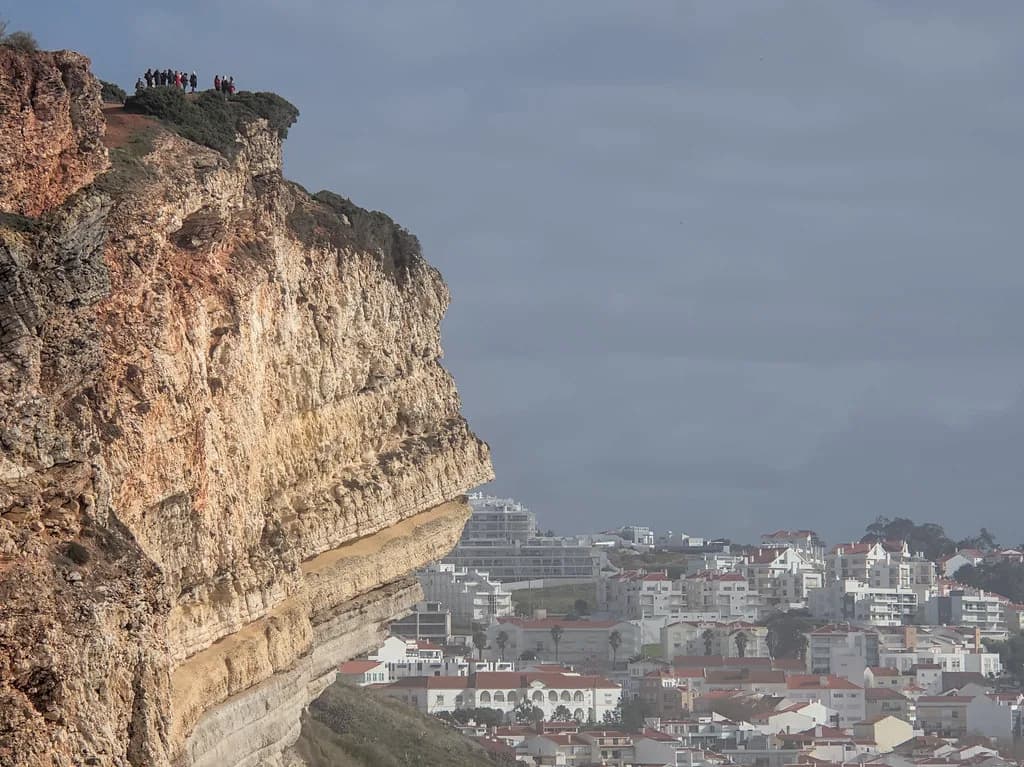
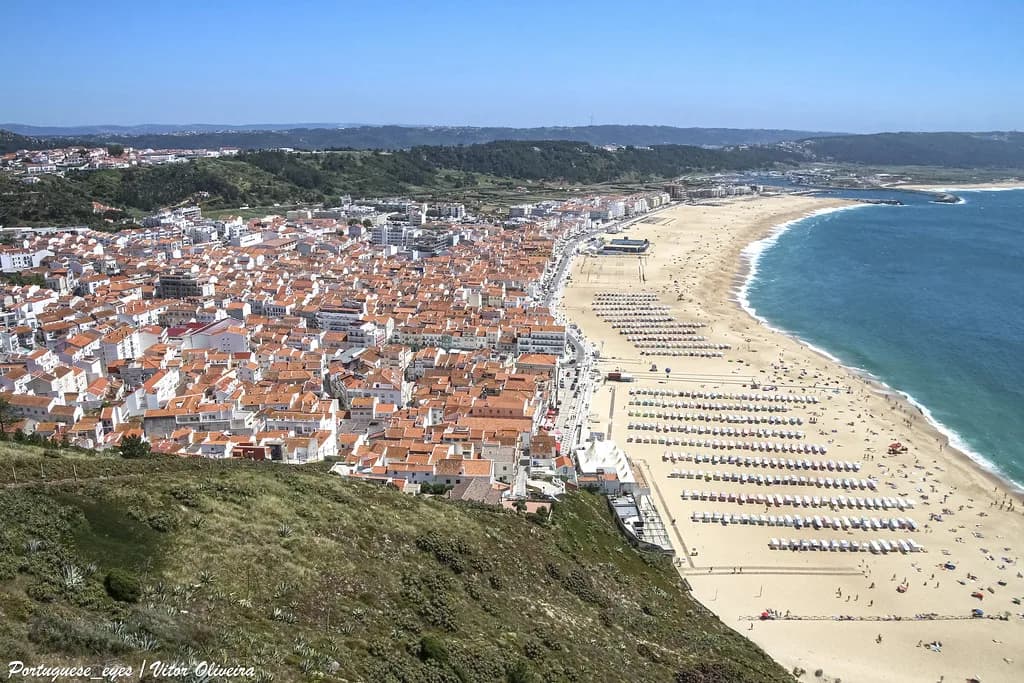
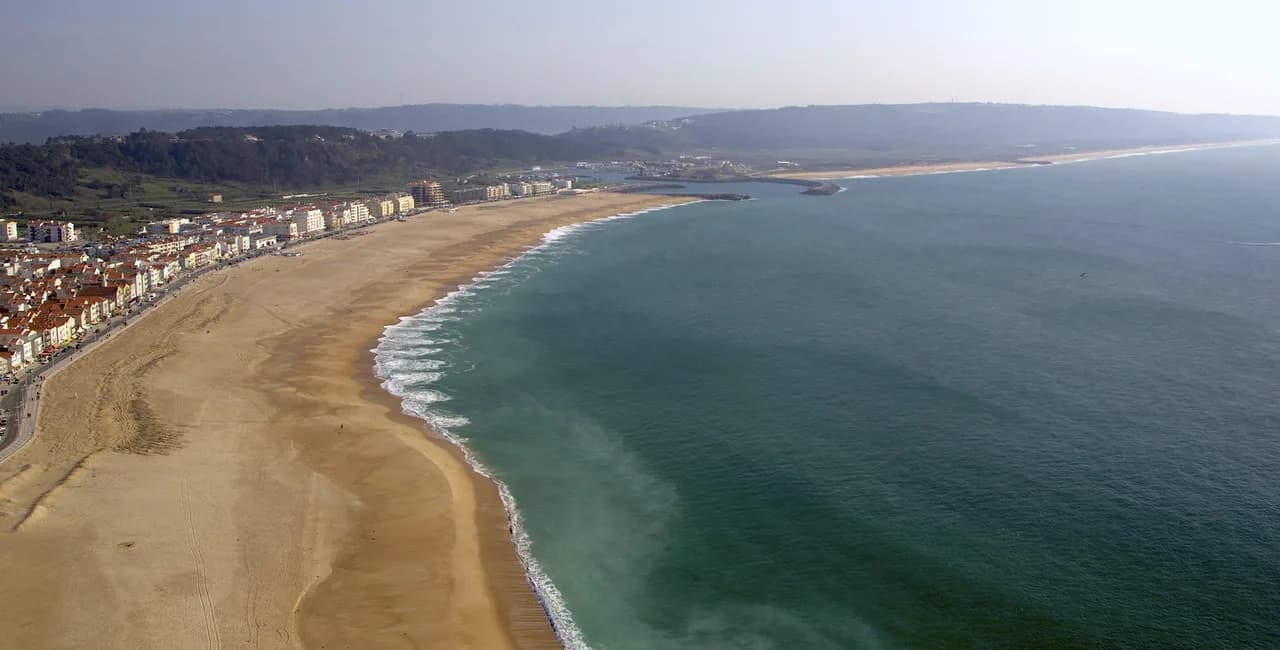
It also sorts out Nazaré's two levels, which catch first-time visitors out. The town itself sits at sea level around Praia da Nazaré, while the Sítio quarter and the Forte de São Miguel Arcanjo lighthouse sit on the headland above, directly over the big-wave break. That cliff is where you want to be on a big day; the wider Things to Do in Nazaré guide helps plan the rest of the short break.
What makes the waves at Nazaré so big: the Nazaré Canyon and Atlantic winter storms
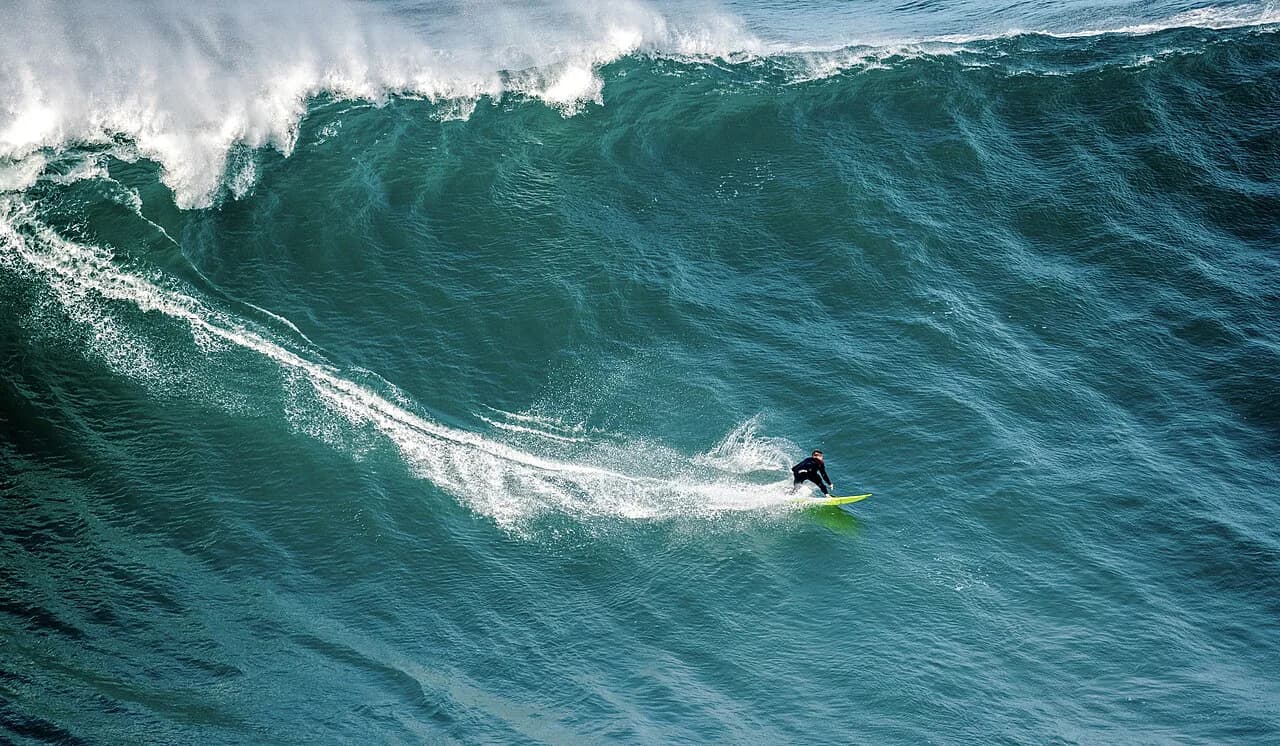
The engine is the Nazaré Canyon, a submarine canyon roughly 230 kilometres long that reaches more than 5,000 metres deep just a few kilometres off Praia do Norte. Deep-ocean swell races up the canyon with little loss of energy, while waves crossing the shallower shelf alongside slow down. When the two meet at the shore, the canyon swell stacks up and jacks into the near-vertical faces the beach is known for.
The canyon does the amplifying; Atlantic winter low-pressure systems supply the raw swell. That combination is why the season is a winter one, and why the biggest days cluster in the colder months rather than in summer. On an ordinary summer afternoon you will see a broad, brisk Atlantic beach, not a wall of water.
When the big waves break: the October to March season and the November to February peak
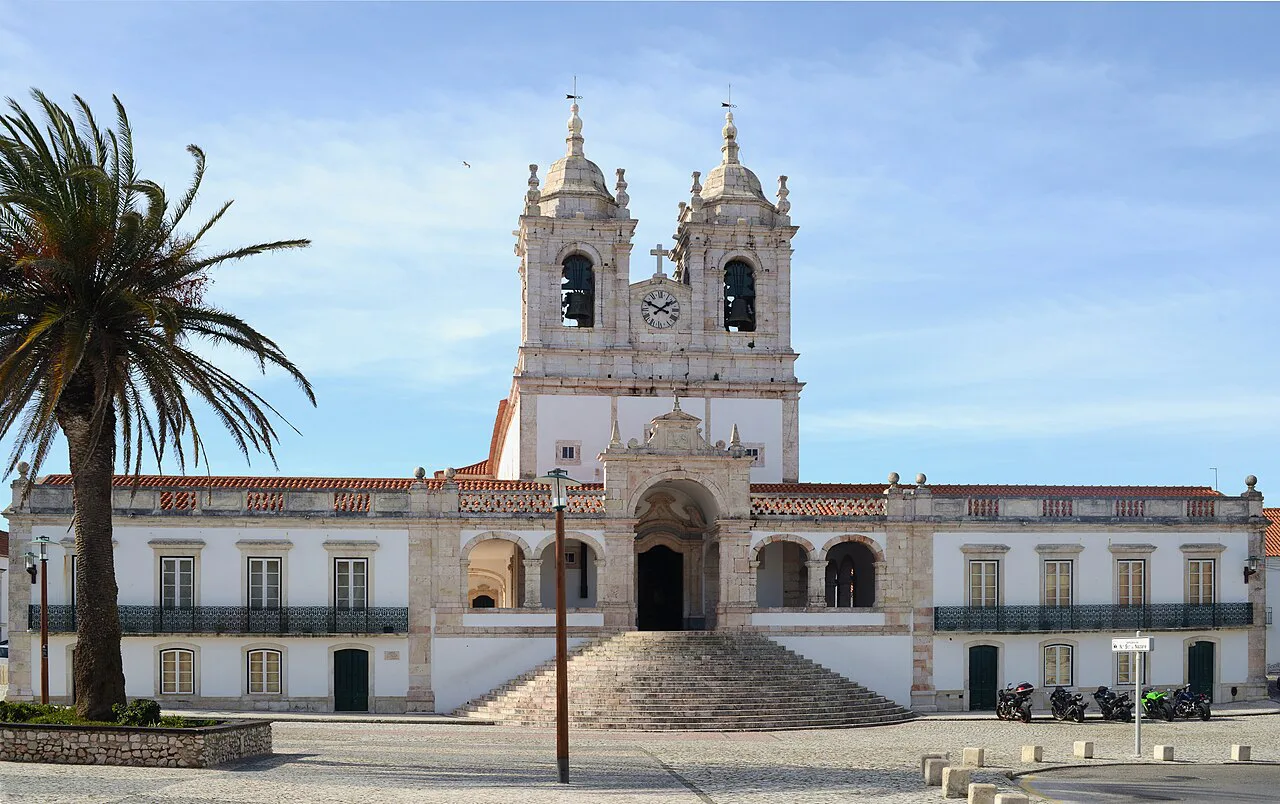
Treat the calendar as a probability, not a promise. The season runs from October to March, and the most extraordinary days usually fall between November and February, when tow-in teams and the world's big-wave events chase the biggest forecasts. Outside that window the odds drop sharply, and a summer visit is a beach-and-headland trip rather than a big-wave one.
Within the season, a single storm can deliver a giant day and then fade within 24 hours. Forecasters tracking the swell publish running summaries of likely wave days, and those pages show plainly how conditions shift as a system approaches. Build flexibility into your dates if the waves are the main reason for coming.
Does Nazaré have big waves right now? Reading forecasts and webcams before you travel
Never book on the assumption that a giant day will land in your window. Forecasts combine marine model data with live readings from an offshore buoy and are projected about seven days out, and accuracy improves the closer the day gets. Check the forecast again a day or two before travelling rather than relying on a plan made weeks earlier.
Live webcams and wave-height readings are the honest check on the morning itself. A forecast can promise a swell and the wind can still spoil the shape, and a favourable direction can turn a medium swell into something worth watching. If the numbers are modest, adjust the day rather than write off the trip.
For an overview of what else fills a Nazaré itinerary when the swell stays small, start with the wider set of things to do in Nazaré. It helps to have a wet-weather and flat-sea plan ready, because most days in Nazaré are not giant-wave days.
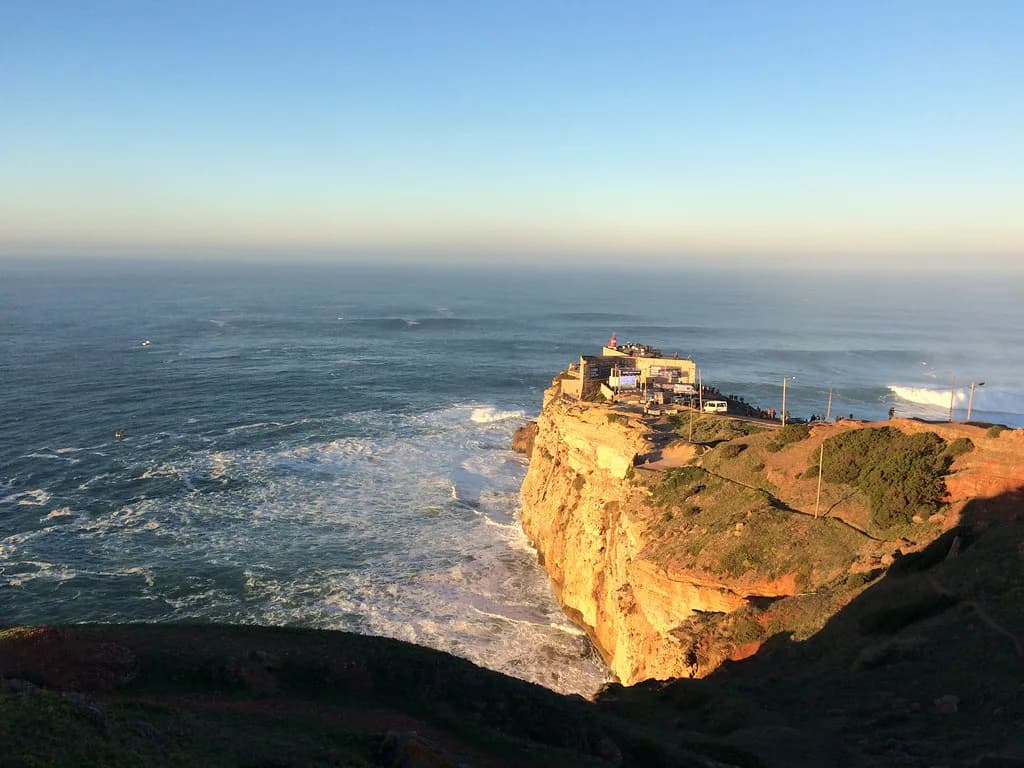
Where to watch from land: the clifftop by the Forte de São Miguel Arcanjo lighthouse above Praia do Norte
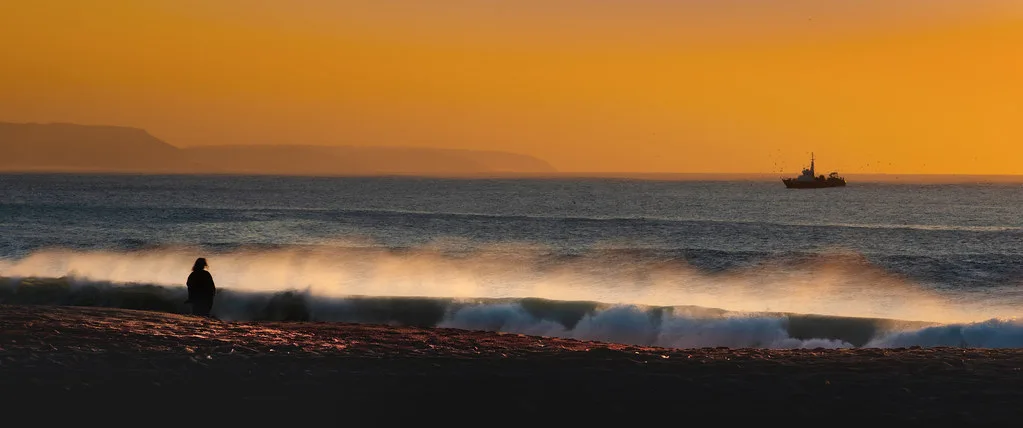
The safe, land-based viewpoint is the clifftop beside the Forte de São Miguel Arcanjo lighthouse, directly above the break at Praia do Norte. From there you look down on surfers and jet-ski teams from a few dozen metres above the action, which is far better than anything you would get from the sand.
Arrive early on a big forecast. The headland fills quickly once word gets out, and the best positions along the rail go first. Bring a windproof layer, because the same exposure that gives the view also gives you the wind.
For more elevated spots around town, including the Sítio headland, see this guide to the best viewpoints in Nazaré. The clifftop by the fort is the one to prioritise when the swell is up, but the others earn their place on quieter days.
How to split your day between the Praia da Nazaré seafront and the Sítio clifftop above it
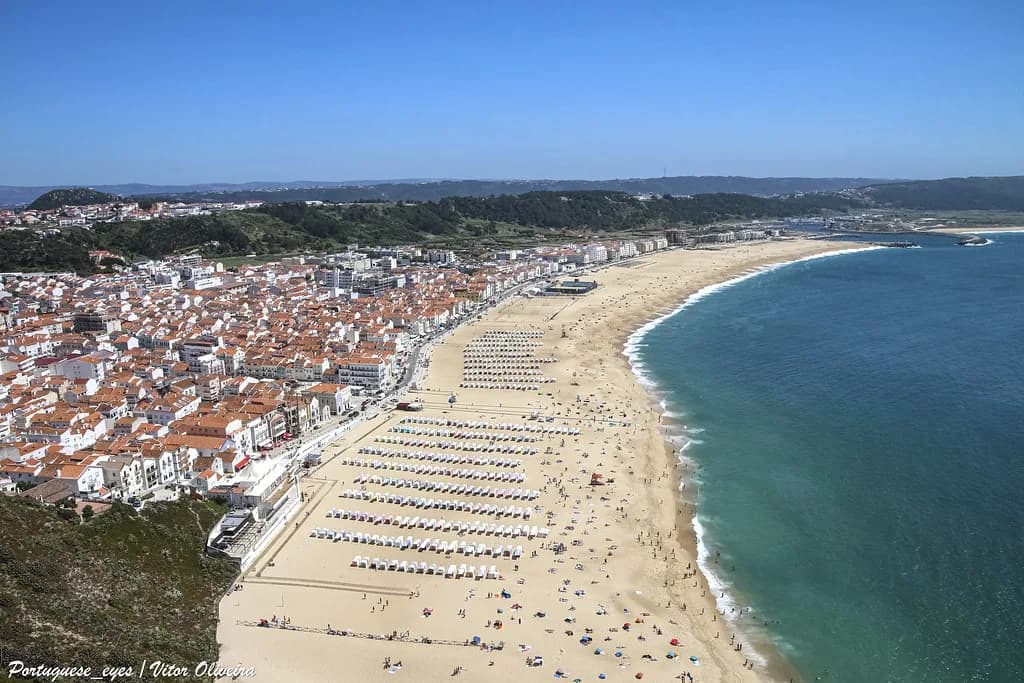
Nazaré works as two worlds joined by a steep climb. Down at Praia da Nazaré you get the fishermen's quarter, the seafront and the sand; up in Sítio you get the headland, the lighthouse and the big-wave view. The link between them is the historic funicular, which saves your legs on the way up.
A sensible shape is seafront in the morning and headland in the afternoon, or the reverse if a big forecast has you chasing first light on the cliff. Allow time to walk part of the old town between the two, where the streets are narrow and the pace is slow. The Nazaré Old Town rewards a wander even when the waves are quiet.
How long to allow in Nazaré and how it fits a one to four day short break
Nazaré suits a single overnight or a full day inside a longer short break. If the waves are your reason for coming, give yourself at least two nights in season so a shifted swell does not leave you with nothing. If you are here for the town, one unhurried day covers the seafront, Sítio and the headland.
For a wet or flat day, the museums in Nazaré fill a couple of hours nicely, and the local churches add another stop or two. Both are indoor options that do not depend on the Atlantic cooperating.
Anyone drawn to the water rather than the cliff should read up on surfing in Nazaré before deciding whether to get in. The break at Praia do Norte is a specialist, tow-in arena, not a beginner's beach.
What a visit is like outside big-wave days: the beach, the funicular and the headland
Most days in Nazaré are not giant-wave days, and that is fine. The beach at Praia da Nazaré is broad and bracing, the headland gives you the view regardless of swell size, and the funicular makes the climb between them easy. The clifftop is still worth the trip on a flat day, if only to see the scale of the canyon's outlet.
The town also holds a market and a run of small shops that make a slow morning, which matters when the forecast is stubbornly small. See the Nazaré market guide if you like browsing food and local produce.
If you want the water without the risk, a boat trip out of the harbour is another way to see the coast. It will not put you near the big-wave break, but it does give a different angle on the cliffs.
Records set at Praia do Norte, including Sebastian Steudtner's 26.21 m ride in 2020
Praia do Norte holds several of the largest waves ever ridden, for both men and women. Sebastian Steudtner's 26.21 metre (86 foot) wave in October 2020 is the official Guinness World Records mark, and Rodrigo Koxa's 24.38 metre ride in November 2017 sits among the biggest. Maya Gabeira's 22.4 metre wave in February 2020 is the women's record.
Garrett McNamara's 23.77 metre ride in November 2011 was the earlier Guinness mark that first put the beach on the global map. For the fuller story of the town and its fishing roots, the Nazaré history page sets the record-setting years in context.
Should you build your trip around a big-wave forecast?
Yes, if you can be flexible and you accept the odds. Pick a window between November and February, keep two or three days free, and let the forecast decide which is the big day. If your dates are fixed, come anyway for the seafront, the Sítio headland and the clifftop view, and treat a giant swell as a bonus.
Start with the wider Nazaré attractions guide to shape the rest of the short break, then check the swell a day or two out. The waves are never guaranteed, but the cliffs, the funicular and the two halves of town are there whatever the Atlantic does.
Explore more Nazaré guides
Sources
Notes for your next Portuguese break
Optional updates to our town guides.
You might also like
Continue reading
More guides you'll find useful