Nazaré Itinerary: A 2–3 Day Plan for the Town and the Cliffs
Plan a Nazaré itinerary that splits the seafront town from the clifftop Sítio, with the fort, the big-wave viewpoint and the funicular.
On this page
Plan two days for Nazaré, or three if you want a slower cliff day and a half-day out to Alcobaça. The town works best when you treat it as two levels: the lower town along Praia da Nazaré, and the clifftop Sítio about 110 metres above it, linked by the funicular or a steep walk. This itinerary gives you a day on each level, a flexible third day and a timing decision about the winter swell.
Nazaré is a working fishing town that became the big-wave capital of the world, and the two identities sit comfortably side by side. You can spend a morning on the sand and an afternoon watching surfers from a clifftop without any sense of contradiction. If you are still weighing it up, our guide to whether Nazaré is worth visiting sets out what the town does well and where it falls short.
Nazaré in two or three days: the short answer
Two days is the honest minimum. Day one covers the seafront, the old fishing heritage and the climb to Sítio for the sanctuary square and the viewpoints; day two is the fort, the lighthouse and Praia do Norte, with the market and boat exhibition as a slower substitute. A third day adds Monte de São Bartolomeu, the Pederneira viewpoint or a half-day to the Mosteiro de Alcobaça.
One day is enough only if you accept a rushed version: beach, funicular, viewpoints and the fort, with nothing lingered over. Three days suits travellers who want the cliff walk to feel unhurried and who fancy a monastery detour. Anything longer and you are using Nazaré as a coast base rather than seeing the town.
How Nazaré is laid out: the lower town, Praia, Sítio and Pederneira
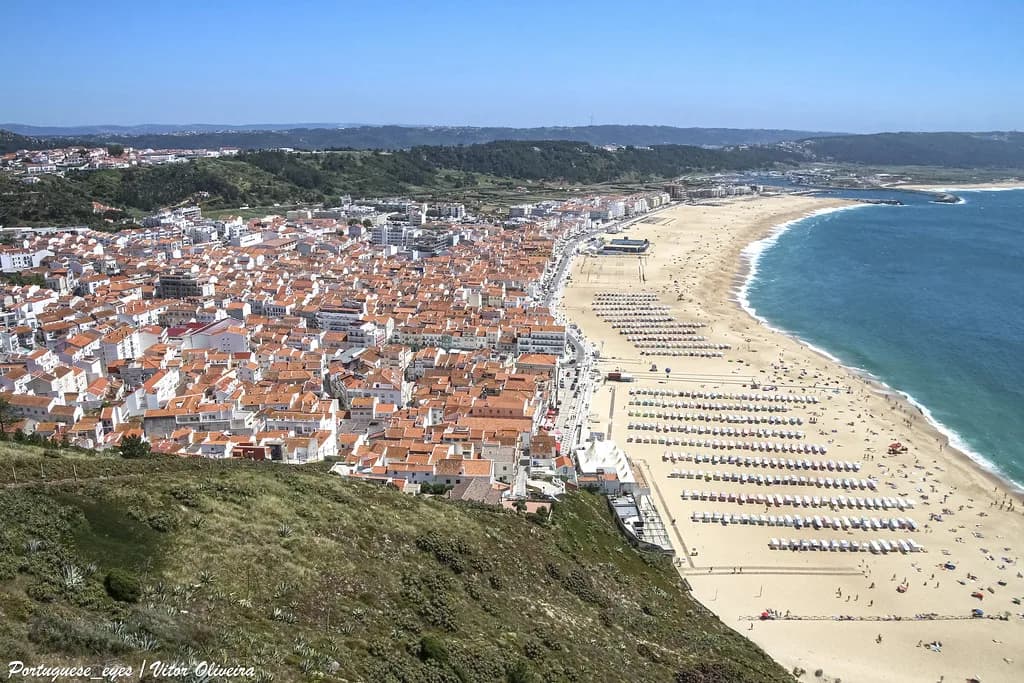
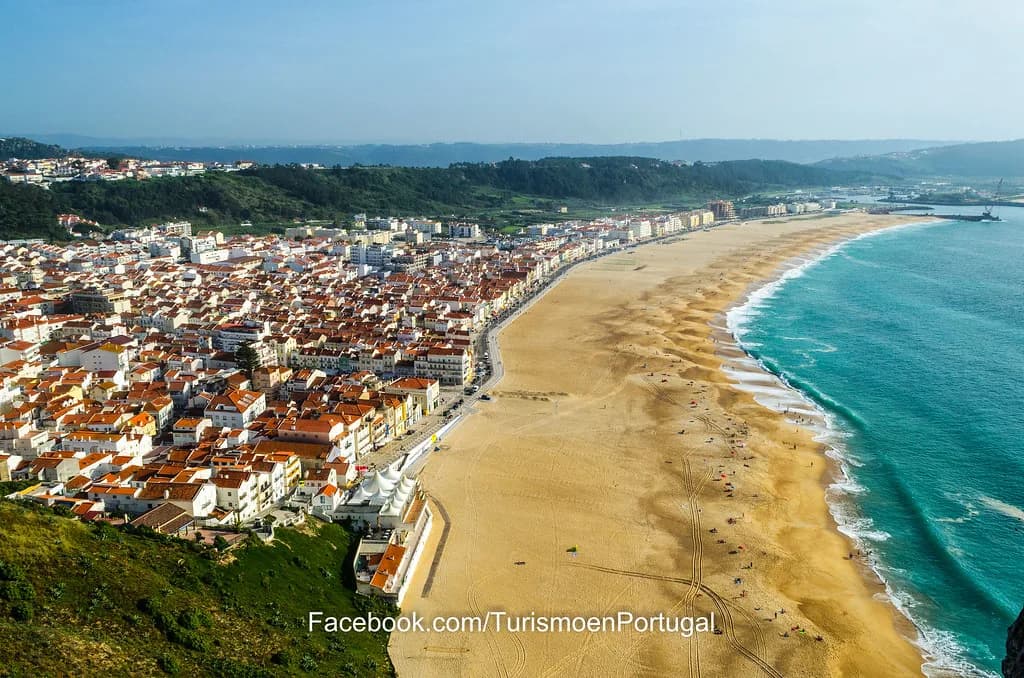
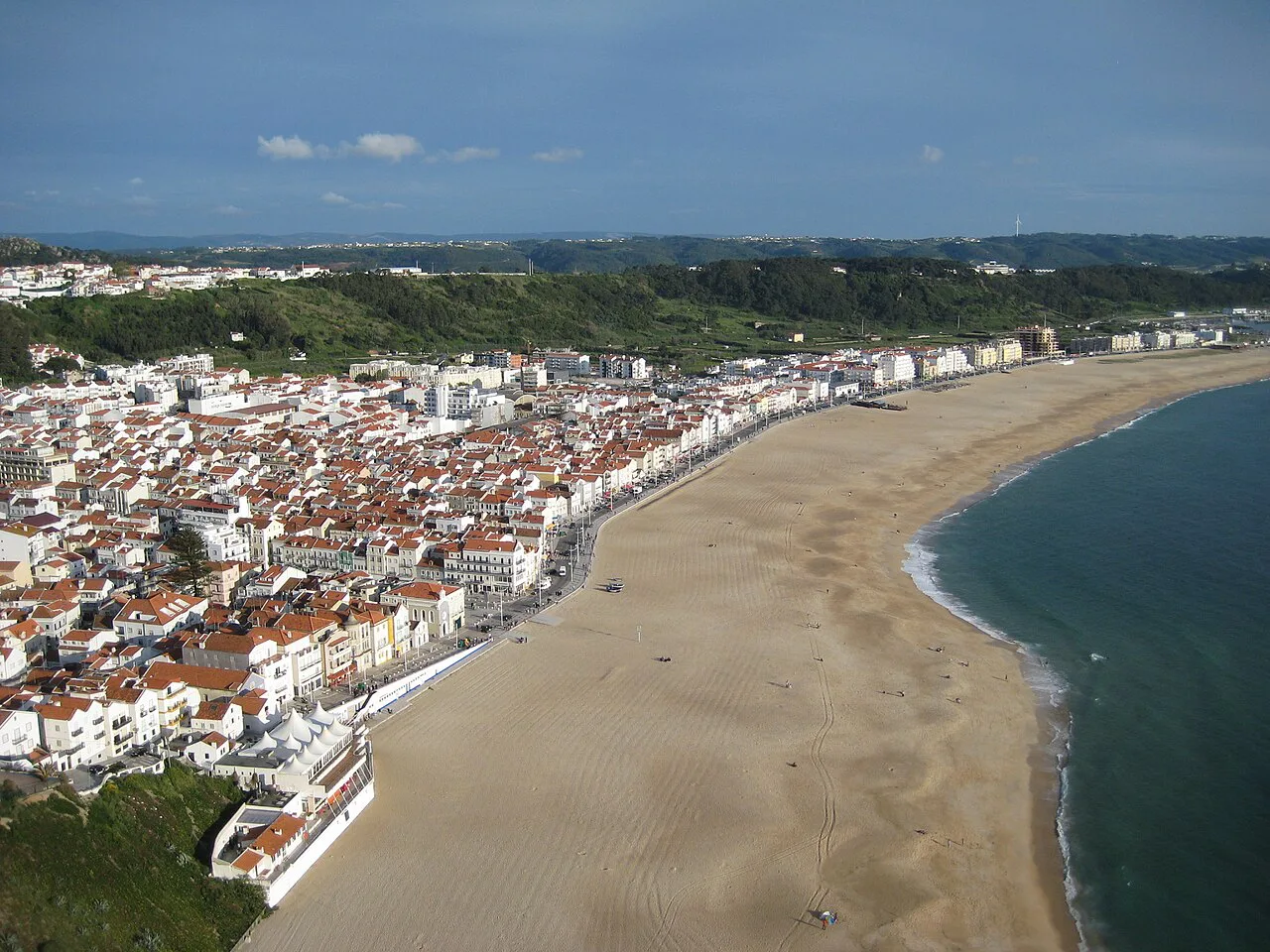
Nazaré divides cleanly. The lower town runs along the seafront and Praia da Nazaré, where the fishing quarter, the market and most everyday eating places sit. Above it, the Sítio is the clifftop district, reached by funicular or on foot, holding the Santuário de Nossa Senhora da Nazaré, the main viewpoints and the road out towards the fort.
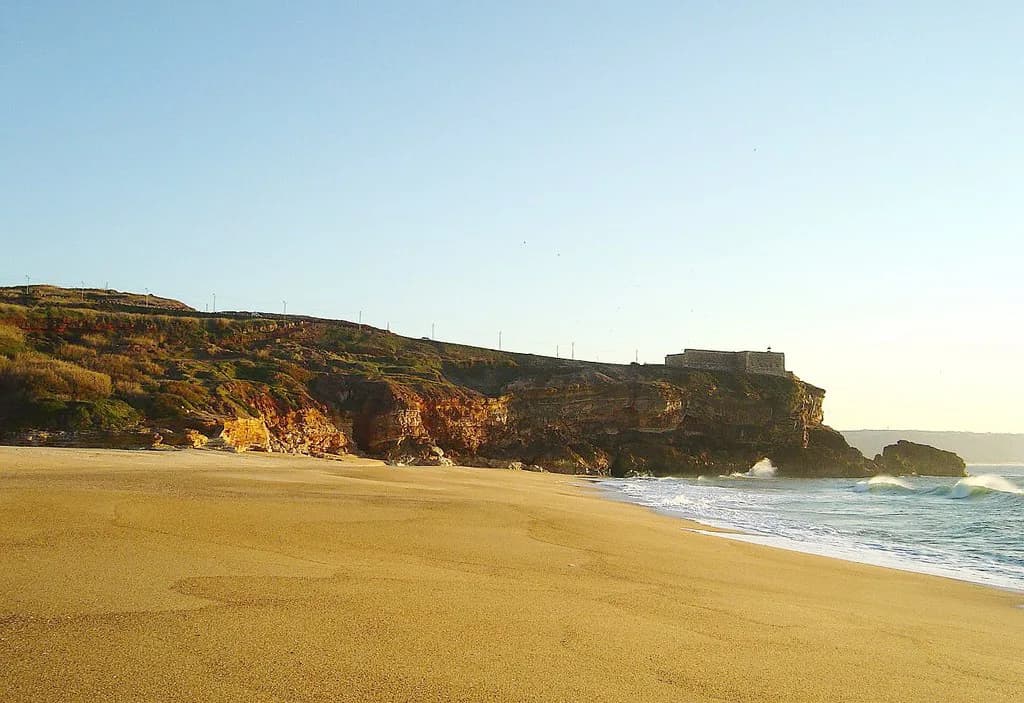
North of the lighthouse, Praia do Norte is the beach that made the town famous, separated from the lower town by the headland and best reached on foot from the fort. Pederneira is a third, quieter settlement inland and uphill, with its own viewpoint over the town and the coast. Getting your head around these four pieces before you arrive saves a lot of backtracking.
Day 1 morning: Praia da Nazaré, the seafront and the old fishing heritage
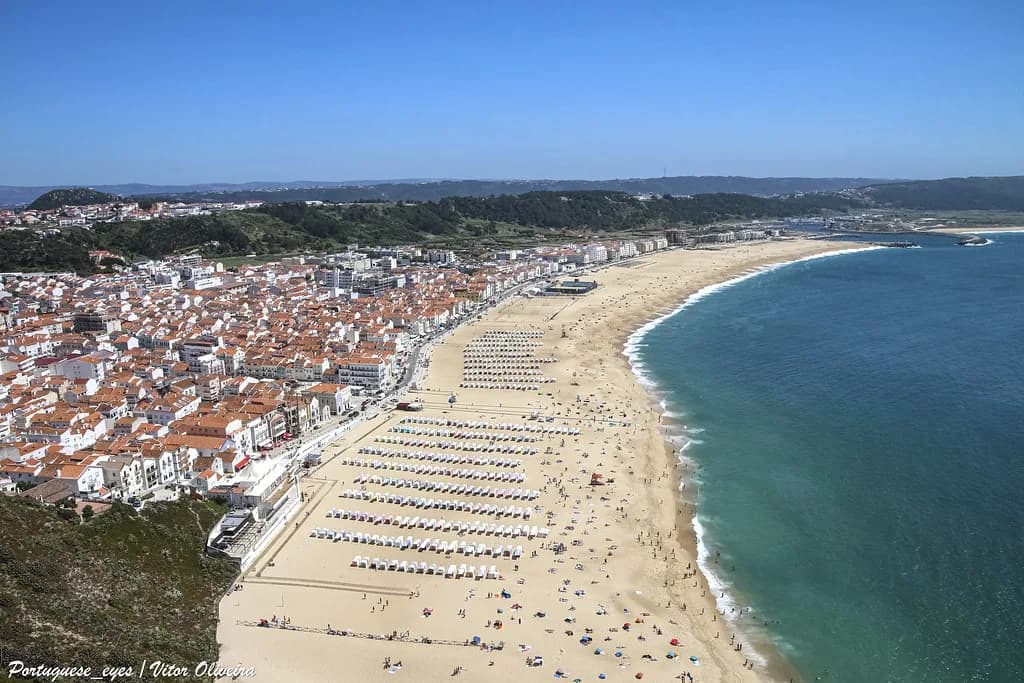
Start at sea level with the long sandy sweep of Praia da Nazaré, then walk the seafront and the streets behind it where the fishing trade still shapes the town. The Barcos Salva Vidas outdoor display of old lifeboats and the Seca do Peixe fish-drying exhibit are open-air stops that explain what Nazaré did before the surfers arrived.
Allow two to three hours for this stretch, including a coffee stop. Keep an eye out for the azulejo-tiled Igreja de Santo António, a small church worth a few minutes for its Portuguese tiles. Save the market for later in the day when the stalls are in fuller swing.
Day 1 afternoon: the funicular up to Sítio, the sanctuary square and the clifftop viewpoints
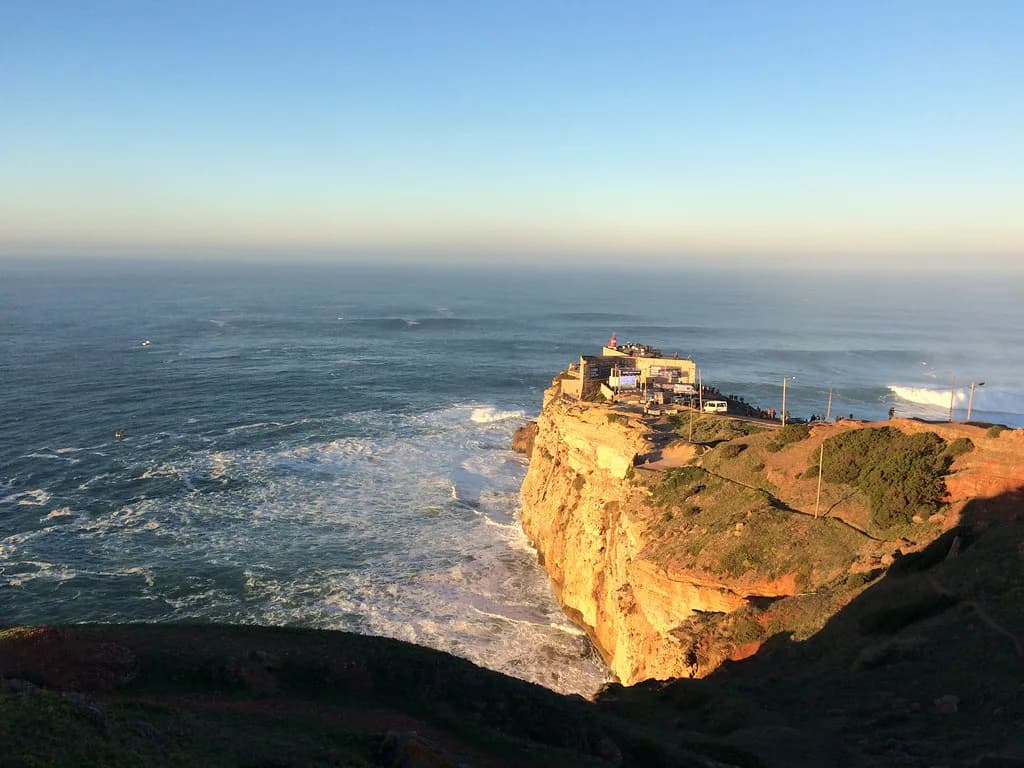
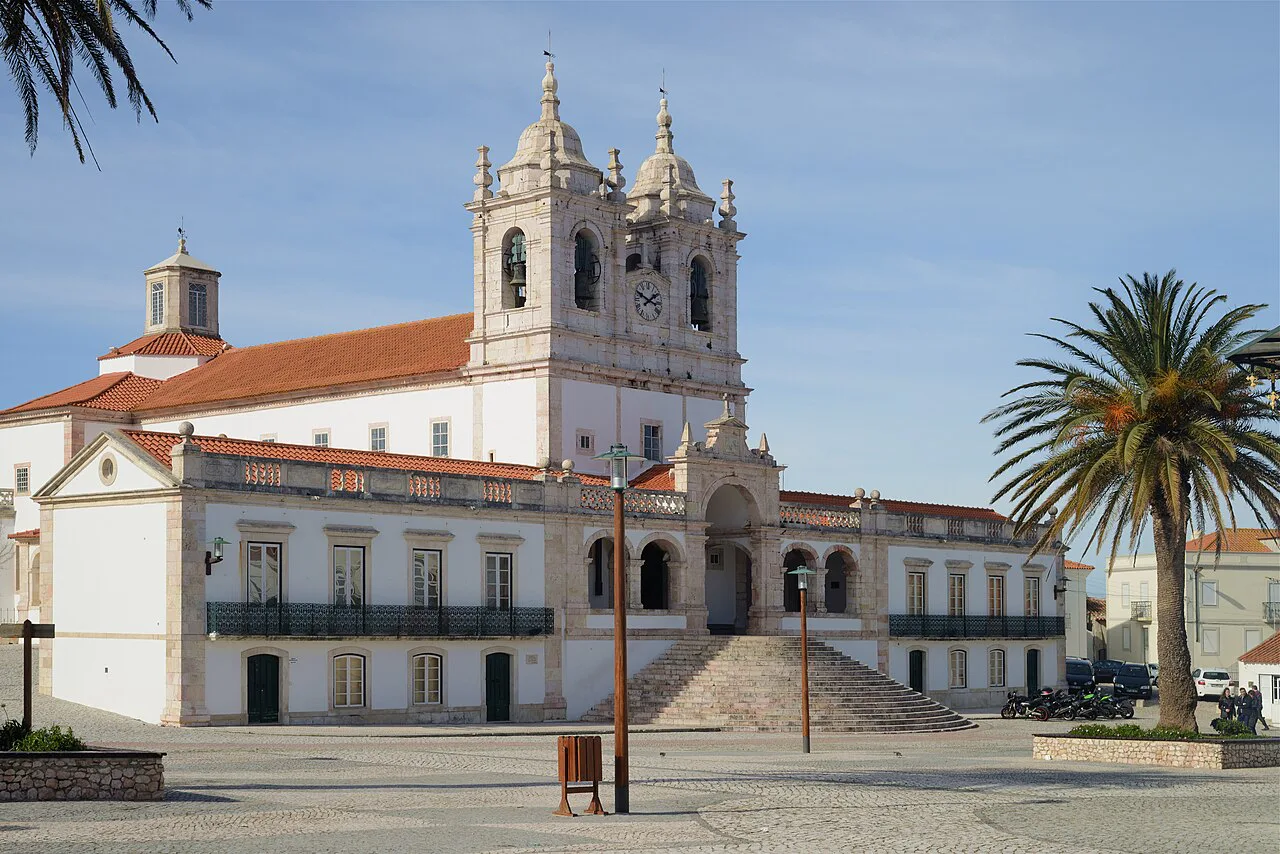
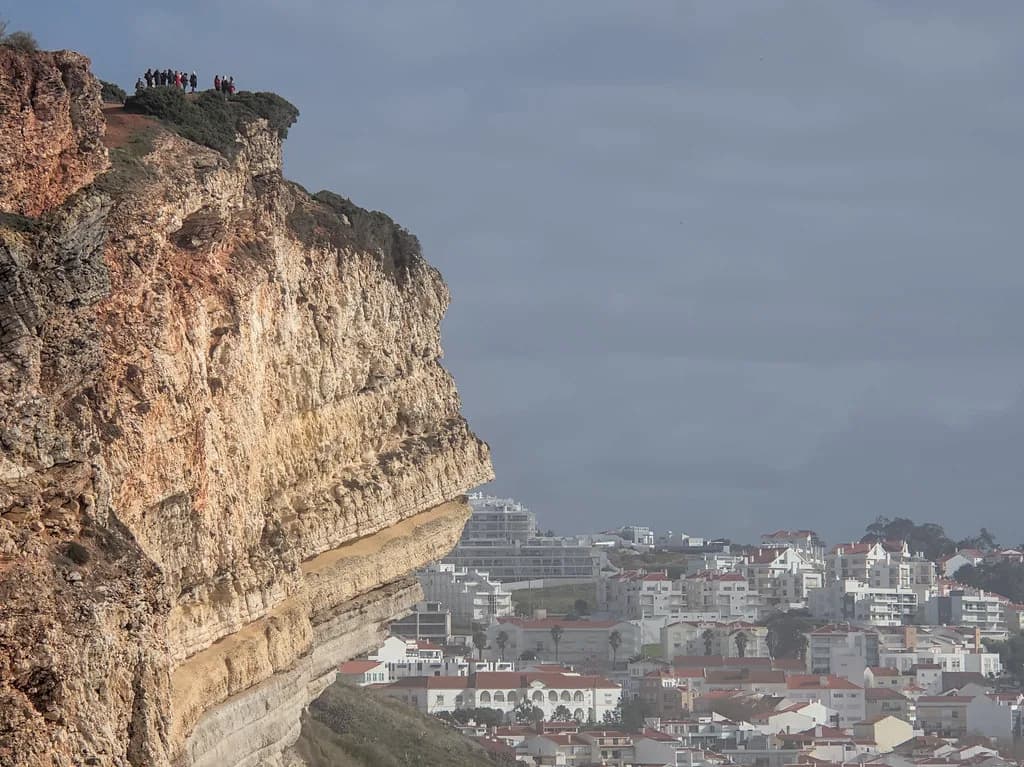
Take the funicular up to Sítio rather than walking, at least on the way up; the ride is short and saves your legs for the cliffs. At the top, the Santuário de Nossa Senhora da Nazaré anchors a broad square, and the two adjoining viewpoints, Miradouro do Suberco and Miradouro da Nazaré, sit on overhanging cliffs roughly 110 metres above sea level with the beach laid out below.
Walk a little further to the quieter Miradouro de São Brás if the main platforms are crowded, and look in on the blue-and-white Ermida da Memória chapel at the cliff edge. Late afternoon is the best light for photographs back over the town. Walk down if you have the knees for it, or take the funicular back.
Day 1 evening: where to eat and what to order in the lower town
Eat down at sea level, where the fishing heritage shows on the menu. Percebes, the gooseneck barnacles harvested from the local rocks, are the dish to try at least once, and fresh seafood generally is the reason to eat here rather than anywhere inland. Simple tascas near the seafront will do the job.
Portions in Portugal are generous, so order fewer dishes than you think you need and add bread and olives only if you want them, since they are usually charged. Check the day's fish by weight before committing. Restaurants here keep their own closing days, so pick your evening by what is actually open rather than assuming Tuesday is safe.
Day 2 morning: Forte de São Miguel Arcanjo, the lighthouse and the big-wave story
Make the fort and lighthouse your morning. The Forte de São Miguel Arcanjo, a sixteenth-century defensive structure, now holds the Farol da Nazaré and the main lookout over the Atlantic; entry was reported at one euro, but treat that as a historical figure and check the current charge on arrival. You cannot drive right up to it, so walk from Sítio or take a tuk-tuk.
On the way you pass the big-wave gateway and the deer-with-a-surfboard sculpture, which has become the town's photo stop. Nazaré holds the Guinness World Record for the biggest wave ever surfed, at 26.21 metres, and the fort is where you appreciate that number. Allow two hours including the walk and the viewing.
Day 2 afternoon: Praia do Norte, the Forno de Orca cave and the dirt path back
From the fort, follow the dirt path down to Praia do Norte, the beach where the giant waves break. In one corner of the beach, the Forno de Orca cave opens through the cliffs with a circular hole in its ceiling, an odd and photogenic sight worth the short detour. The water is cold Atlantic, so this is a walking and watching beach rather than a swimming one.
Give this half-day three hours if you want the cave and a proper look along the sand. Watch the warning signs about wave height rather than testing the waterline. Then walk back up to Sítio for a late lunch.
Day 2 alternative: slower afternoon at the Mercado Municipal and the boat exhibition
If the swell is flat or the weather turns, swap Praia do Norte for the Mercado Municipal da Nazaré, where the fish and produce stalls give you the town's working life in one room. Pair it with the outdoor boat display and the fish-drying exhibit if you skipped them on day one. This is the low-swell substitute that keeps the afternoon full.
Aim to reach the market in the morning, when fish stalls are at their best, and keep the afternoon for a slow wander and an ice cream. Gelatomania is the local ice cream stop if you want something specific to aim for. This version of the day suits anyone travelling with children or without a car.
Day 3: Monte de São Bartolomeu, Miradouro da Pederneira or a half-day out to Alcobaça
For a third day, choose between a walk up Monte de São Bartolomeu for the widest view over Nazaré and the coast, or the Miradouro da Pederneira for a gentler panorama over the town from inland. Both reward the climb; the first is the more strenuous and the better photograph.
If you would rather leave town, the Mosteiro de Alcobaça is the obvious half-day out, a UNESCO-listed Cistercian monastery within easy reach. Keep it to the morning and you are back for the evening. The alternative towns further north, such as Aveiro with its Ria de Aveiro canals and moliceiros, belong to a separate trip rather than this one.
When to come: winter swell versus summer calm
The big-wave season runs from late October to early March, when winter swells arrive. Outside those months you are likely to see a more or less flat ocean, which suits swimmers and families but not anyone hoping for the spectacle. Swell forecasts change by the day, so the season is a probability, not a promise.
Winter gives you the drama and the crowds of wave-watchers; summer gives you reliable beach weather and a calmer town. Our guide to the best time to visit Nazaré lays out the trade-offs month by month. Whichever you choose, plan the fort visit for the morning before the wind picks up on the headland.
What a Nazaré trip costs in euros
Nazaré is a cheap town to visit. The beaches and the viewpoints cost nothing to enjoy, and the outdoor boat and fish-drying exhibits are open-air stops you can wander past at no charge; the funicular is the one small fare you are likely to pay for transport within the town. Food and drink are the main variable: seafood is priced by weight, so ask before ordering percebes or a whole fish.
Fares and ticket charges change, so check what the town and the fort publish on the day rather than budgeting from an old figure. A sensible approach is to budget for food, the funicular ride and one or two small admissions, and treat walking the town itself as the free part. This is not a place where you need to watch every euro.
Practicalities: walking times between the town and the cliffs, and the funicular
The lower town and Sítio are close in distance but far in effort: the climb is steep and the funicular saves the worst of it. On a two-day visit you will go up and down at least twice, so buy single rides rather than committing to anything. The walk between the Sítio viewpoints themselves is flat and quick.
Plan your days so you are not shuttling between levels more than necessary: one day at sea level, one day up top. Wear shoes with grip, since the paths to the fort and the cave are dirt and uneven. From Lisbon, the drive is straightforward, and our guide to Lisbon to Nazaré covers the options if you are coming by car or coach.
Common planning mistakes on a Nazaré itinerary
The biggest mistake is treating Nazaré as a one-stop photo op for the big waves and missing the town at sea level. The second is going in August and expecting surf; the third is trying to see both levels in one afternoon. Build in slack, because the weather on the cliffs decides what you actually see.
The last common mistake is planning around restaurant and museum opening days without checking. Many Portuguese venues close on Mondays or on public holidays, but confirm what applies to each place you intend to visit. Build one flexible afternoon into the plan and a closure stops being a disaster.
Which day to book the fort for
Book the fort and Praia do Norte for your second morning, after you have learned the town at sea level on day one. Go early, walk to the lighthouse, and keep the afternoon free for the cave or the market depending on swell and weather. That order gives you the best chance of seeing the town and the waves on their own terms.
If you have only one day, take the funicular up in the morning, walk to the fort, and come down for a late lunch by the beach; if you have three, add Monte de São Bartolomeu or Alcobaça. Our guide to how many days in Nazaré sets out what each length actually covers.
Explore more Nazaré guides
Sources
Notes for your next Portuguese break
Optional updates to our town guides.
You might also like
Continue reading
More guides you'll find useful