
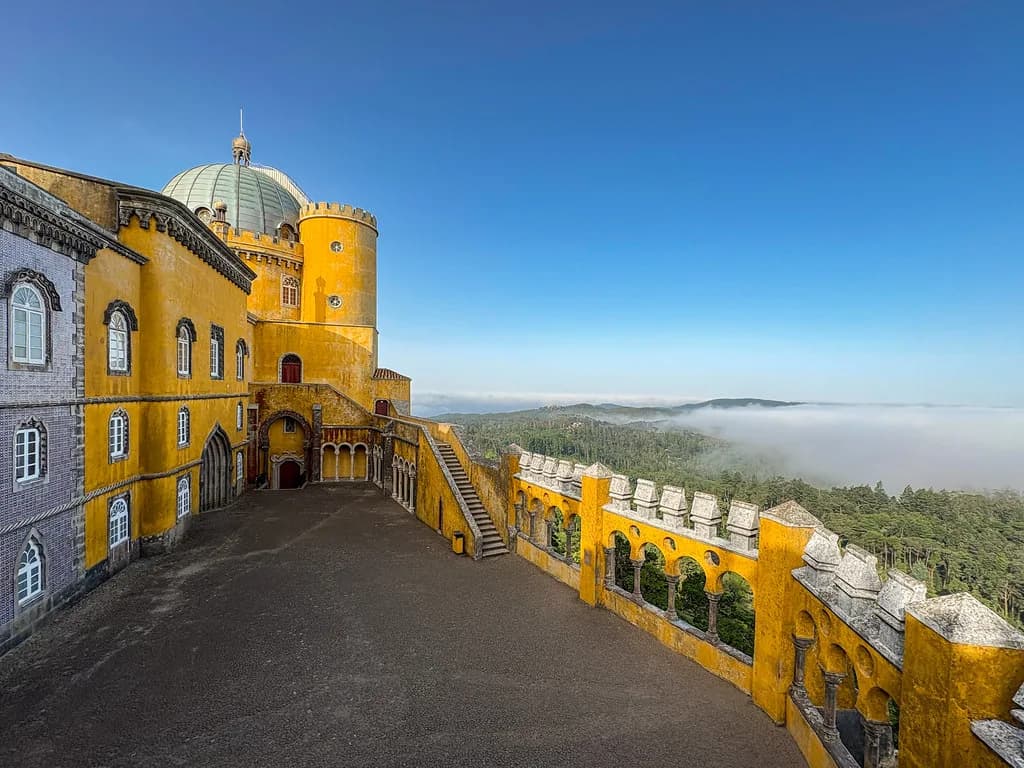
Portugal History: A Visitor's Guide to the Eras and Where to See Them
Trace Portugal's history from Roman Lusitania and Moorish Al-Andalus to the Discoveries and the 1974 revolution, with the places where each era survives.
On this page
Portugal's history is best understood as a sequence of sharp breaks rather than a smooth march: a kingdom recognised in 1143, an empire built on sea routes in the 1400s and 1500s, sixty years under Spanish kings, a dictatorial Estado Novo and a near-bloodless coup in 1974. Few countries pack so much reversal into a territory whose land borders have hardly shifted since the 13th century. This guide runs through those eras in order and points to the towns and monuments where each one is still visible on a break of a few days.
Why Portugal's borders have barely moved since the 13th century
The Kingdom of Portugal was founded in 1143, when the Treaty of Zamora recognised Afonso Henriques as its first king; papal confirmation followed in 1179. Over the next century his successors pushed south and took the Algarve from the Moors in 1249, at which point the mainland map was essentially fixed. That early consolidation is why a traveller in Évora or Coimbra is moving through a frontier landscape that has been Portuguese far longer than, say, the modern borders of Germany or Italy have existed.
The country then turned inward and outward at the same time: castles, palaces and cathedrals went up in the main centres while King D. Dinis founded the University of Coimbra at the end of the 13th century, one of Europe's oldest. For a short-break visitor, this is the layer that gives towns their shape, from walled hilltops to the cathedral squares of the north. Reading a town's street plan is often the quickest way into its medieval period.
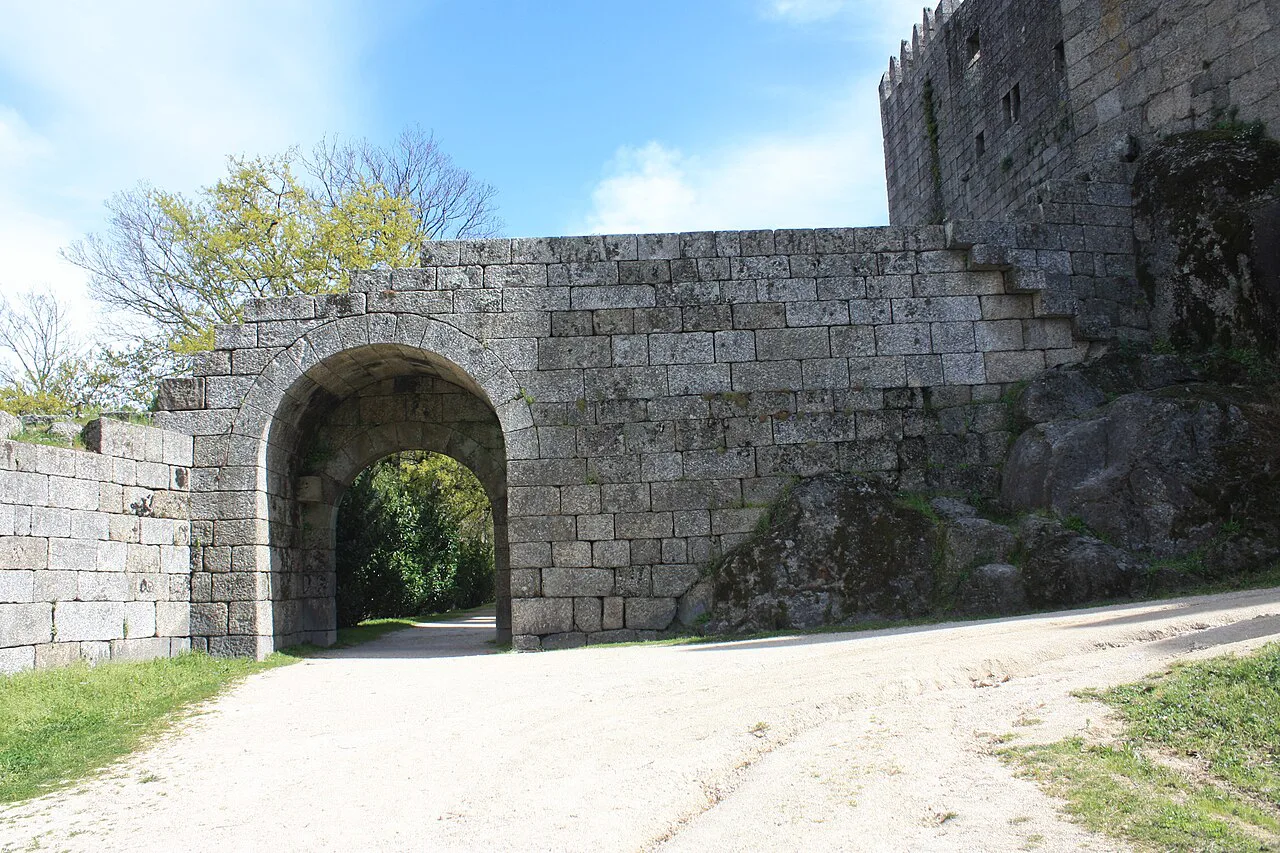
Roman Portugal: Lusitania, Gallaecia and the ruins at Conímbriga and Miróbriga
Before Portugal existed, Rome divided the territory into two provinces: Lusitania in the south and Gallaecia in the north. The conquest took centuries, and the remains left behind include baths, temples, bridges, roads and town houses rather than the triumphal arches of a capital city. Conímbriga and Miróbriga are the standout urban sites, and both are reasonable stops between Coimbra and the Alentejo.
Braga, the old Bracara Augusta, is the other obvious Roman anchor for a short break, since the city's later religious building sits on top of a Roman street grid. If you are planning a northern trip, the Roman layer and the baroque layer are often visited in the same afternoon. Prehistoric sites predate all of this, with human presence in the region going back roughly 400,000 years according to the oldest fossil finds.
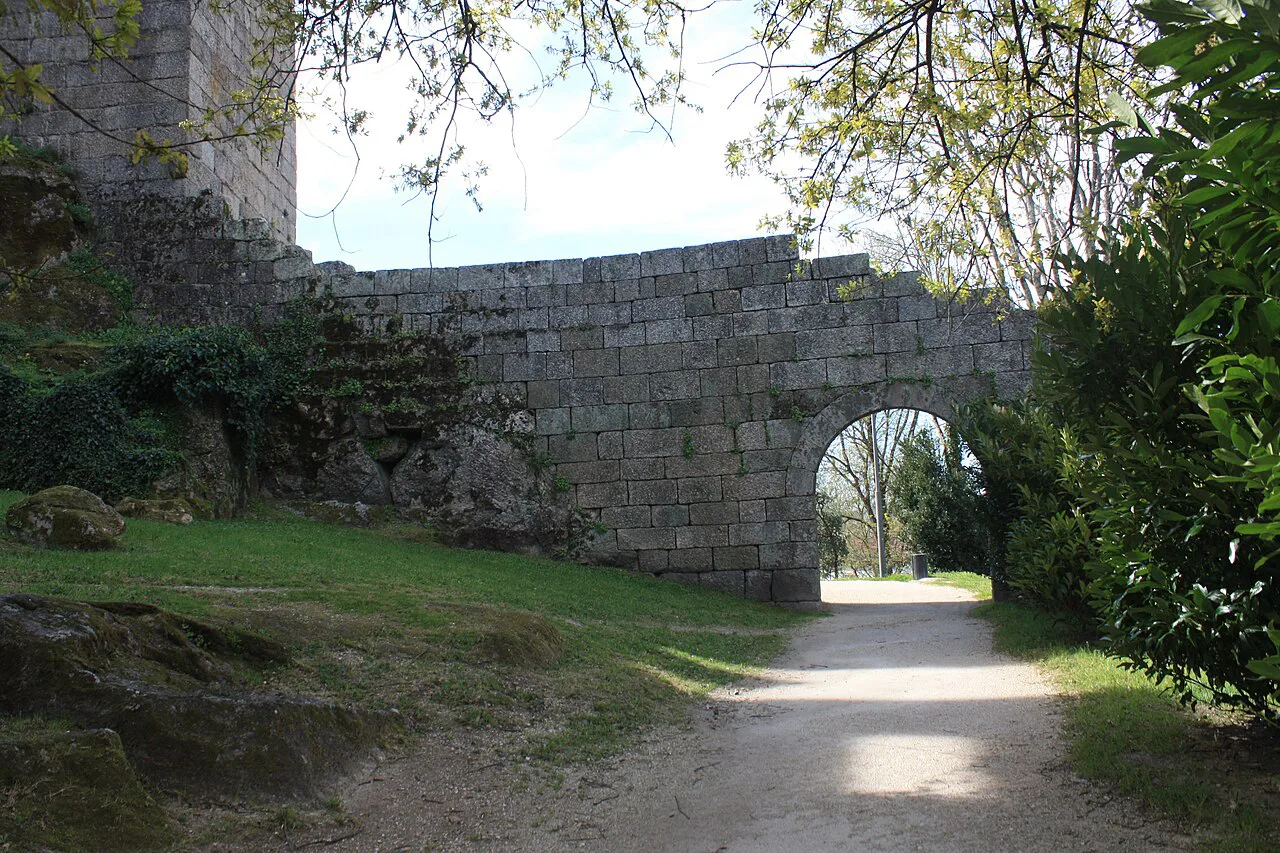
Suebi, Visigoths and the 711 arrival of Al-Andalus
After Rome fell, Germanic peoples took over: the Suebi and then the Visigoths ruled from the 5th to the 8th centuries. In 711 Islamic armies from the Umayyad Caliphate crossed from North Africa, defeated the Visigothic kingdom and established Al-Andalus across most of Iberia. For roughly 150 years the south of what is now Portugal was governed from Córdoba rather than from any Portuguese centre, which is why the country's Moorish heritage is strongest below the Tagus. See our guide to Moorish Portugal for the places where that layer survives.
What survives for a visitor is not palaces but urban logic: the tight whitewashed lanes and hilltop medinas of the Algarve and the Alentejo, plus place names. The Algarve itself comes from the Arabic al-Gharb, the west, and Silves is the most legible Moorish town in the region for a short stop. Pairing a morning in Silves with a castle visit gives the period a physical shape that a museum label rarely manages.
The Reconquista and Afonso Henriques, first King of Portugal
The Christian reconquest moved south through the 12th and 13th centuries, and Afonso Henriques is its central figure on the Portuguese side: acclaimed as king, then confirmed by the papacy, he pushed the frontier below the Douro and beyond. The Algarve was the last piece, taken in 1249, which completed a territory almost unchanged to the present day. The castles along the Tagus and in the Alentejo, from Óbidos to Almourol, are the physical residue of that campaign.
The military orders did much of the fighting and the settling, and the Templars in particular were granted land and castles that later passed to the Order of Christ. Visiting one of their fortresses is the fastest way to see how thin the medieval Portuguese state's manpower really was.
The 1385 crisis, João I and the Treaty of Windsor alliance with England
In 1385 a popular movement acclaimed D. João I as king, beginning Portugal's second dynasty and ending a period of Castilian pressure. He won against the Castilians, and in 1386 sealed the Treaty of Windsor with England, an alliance that has proved unusually durable in European diplomacy. For British travellers this is the one historical thread where their own country is a direct party to Portuguese affairs.
João's sons, praised by Camões in Os Lusíadas, became the generation that launched the overseas expansion; one of them, Henrique the Navigator, is the figure most associated with the caravels and the systematic mapping of the Atlantic coast. Their patronage is why so many Portuguese towns have a Manueline or late-Gothic monument from this period.
The Age of Discoveries: Ceuta, Vasco da Gama and Cabral
Portuguese ships reached Ceuta in 1415, and the following century produced the voyages that made the small kingdom the largest empire in the world for a time. Vasco da Gama found the maritime route to India in 1498 and Pedro Álvares Cabral reached Brazil in 1500; Portuguese navigators also reached Oman, Malacca, Timor, China and Japan within a generation. The Jerónimos Monastery in Lisbon, with its nautical motifs and armillary sphere, was built by King D. Manuel to celebrate the India route.
Outside Lisbon, the period shows up in unexpected places: the Monastery of Alcobaça and the Convent of Christ at Tomar are the most rewarding Manueline buildings on a short break, and both sit within easy reach of Coimbra. Even Aveiro's later prosperity traces back to maritime trade and the salt and lagoon economy of the Ria de Aveiro.
Sebastião's death at Alcácer Quibir in 1578 and the Spanish throne
Young King D. Sebastião died in battle at Alcácer Quibir in North Africa in 1578, and with him died the direct royal line. The vacant throne was occupied by the Spanish kings, and the two states shared a government for sixty years, from 1580 to 1640. For visitors, that union explains a great deal about Portugal's defensive architecture and its suspicion of its only land neighbour.
Spain's failed attempt to invade England in 1588 also dragged Portuguese resources into a war that was not Portugal's, one reason the union became increasingly resented. The loss of independence is remembered as a national trauma rather than a footnote.
1640: the Restoration and João IV
In 1640 a Portuguese revolt ended the Spanish union and put D. João IV on the throne, restoring independence. The Braganza dynasty he founded stayed in place until 1910, longer than any other in Europe. The restoration is why Portuguese towns are littered with fortifications from the 1640s onwards, many of them star-shaped and built by military engineers.
For a short break, the most rewarding stop is Elvas and its star fort, but the smaller border towns of the Alentejo are easier to combine with Évora. The wall circuits are usually free to walk, though individual monument interiors operate their own entry rules.
The 1755 earthquake and the Lisbon Pombal rebuilt
On 1 November 1755 an earthquake destroyed most of Lisbon, which was then the luxurious capital of an empire. The Marquis of Pombal, prime minister to King D. José, rebuilt it on a grid with a monumental riverfront, a plan that still defines the Baixa district today. It is the reason Lisbon looks so unlike the older Portuguese cities further north.
In the same period art-loving, absolutist King D. João V ordered the vast convent and palace at Mafra and the Águas Livres Aqueduct in Lisbon, both of which can be visited as separate excursions. Mafra is a half-day trip from Lisbon and the most concentrated expression of royal baroque ambition in the country.
Napoleonic invasions, the court in Brazil and the 1822 loss of Brazil
Napoleon's troops invaded Portugal in the early 19th century, and the royal court moved to Brazil to keep the dynasty and the empire intact. It returned in 1821 to a changed country: the liberal movement had begun to limit royal power, and the first constitution was close to being approved. Then, after D. João VI's death, civil war broke out in 1828 between his sons D. Miguel and D. Pedro over precisely that liberal settlement.
Brazil had declared independence in 1822, which stripped Portugal of its largest colony and much of its income. The 19th century that followed was one of emigration and slow adjustment, with almost two million Portuguese leaving for Brazil and the United States between the mid-1800s and the late 1950s.
The 1910 revolution that ended the monarchy
A revolution in 1910 forced King Manuel II to abdicate and Portugal became a republic; a 1911 constitution separated church and state and Manuel José de Arriaga became the first president. The republic was unstable, and in 1926 a military coup installed a dictatorship. Together these two dates, 1910 and 1926, mark the end of the old order and the start of the modern state.
The 19th century had also been the age of Portuguese emigration, with large numbers leaving for Brazil and the United States between the mid-1800s and the late 1950s. That outflow shaped the country's demography and its habit of looking across the Atlantic as much as towards Europe.
Salazar, the Estado Novo and neutrality in the Second World War
António de Oliveira Salazar became finance minister in 1928, then prime minister in 1932, and in 1933 issued the constitution of the Estado Novo, the New State. It was an authoritarian, corporatist regime that would last until 1974. Portugal remained officially neutral in the Second World War while allowing Britain to use air bases in the Azores, a balancing act that defined its wartime position.
The regime's later decades were marked by colonial wars in Angola, Guinea and Mozambique, which began in 1961 and consumed the army. Salazar was replaced by Marcello Caetano in 1968 and died in 1970, but the Estado Novo itself did not fall until the army turned on it.
1974: the Carnation Revolution and independence for the African colonies
In 1974 a group of army officers overthrew the Caetano government, an event remembered as the Carnation Revolution. It ended nearly five decades of dictatorship and brought in democratic change, including independence for Portugal's African colonies in 1975. The period left its mark not only in Lisbon's streets but in the sudden return of hundreds of thousands of Portuguese from Africa.
For a visitor, this is the era least visible in stone, since its monuments are civic rather than religious: squares, parliament buildings and the memorials of the 1970s. A short break in Lisbon still passes through the geography of the coup in a single morning's walk.
1986: entry into the European Community
Portugal joined the European Economic Community in 1986, the same year Mário Soares was elected president. Membership brought structural funds that paid for roads, bridges and the restoration of many of the monuments a short-break visitor now sees. It also reoriented the country firmly towards its European neighbours after decades of looking across the Atlantic and to Africa.
The euro replaced the escudo in 2002, which is history rather than a note on what things cost today. Modern Portuguese towns, from Aveiro to Évora, now look and travel like the rest of Western Europe, for better and occasionally for worse.
Where to see each era on a short break outside Lisbon and Porto
The most efficient single base is Coimbra: Conímbriga's Roman ruins, the university's medieval quarter and the Manueline and later layers of the region are all within reach, with Tomar and Alcobaça as easy add-ons. For more of the Roman layer, our guide to Roman Ruins in Portugal picks out the main sites. For the Moorish and Reconquista periods, Évora and Silves are the two strongest candidates, while Elvas and the Alentejo hill towns tell the Restoration and border-fortress story.
For prehistory, the dolmens and menhirs of the Alentejo around Évora are the most rewarding stops and are usually combined with a wine-country drive. Aveiro and Braga round out the picture for the medieval and Roman layers respectively.
Which era should you build your short break around?
If you have three or four days, choose one era and let it shape the route: Roman and medieval Coimbra, Moorish Silves and Évora, or the Restoration fortresses of the Alentejo. Trying to cover every period in a single trip produces a sequence of ruins without a story.
Check each site's current opening days before committing a day to it, since museum and monument interiors vary and several close one day a week. Churches in smaller towns may also shut for lunch.
Explore more Portugal guides
Frequently Asked Questions
Who was the first King of Portugal?
Afonso Henriques is recognised as the first King of Portugal, with the Treaty of Zamora in 1143 acknowledging him as king and papal confirmation following in 1179. He also pushed the frontier south during the Reconquista, though the Algarve was not taken until 1249.
When did Portugal become a republic?
Portugal became a republic after the 1910 revolution, which forced King Manuel II to abdicate. A constitution followed in 1911, separating church and state and creating the office of president, though the republic was unstable and was ended by a military coup in 1926.
Sources
Notes for your next Portuguese break
Optional updates to our town guides.
You might also like



Continue reading
More guides you'll find useful




