Knights Templar in Portugal: Tomar, Almourol and the Order of Christ
Where the Knights Templar left their mark in Portugal, from Tomar's Convento de Cristo to the island Castle of Almourol, and how to plan a short visit.
On this page
Two sites carry the Templar story in Portugal: the Convento de Cristo at Tomar, and the Castle of Almourol on its island in the Tagus. Give them one full day if you only want the atmosphere, or two if you want to see the charola and still catch a boat from Tancos without rushing. This guide covers what the Order became in Portugal, how each site fits a short break, and the practical limits that shape the day.
The Templars were disbanded elsewhere in Europe, but in Portugal the order was refounded as the Order of Christ, which is why so much of their building work survives intact. The wider sweep of that story sits in our Portugal history pages, while this article stays on the ground: named monuments, published opening windows, and the transport links that connect them.
What happened to the Knights Templar in Portugal, in brief
The Knights Templar were present in Portugal from the early twelfth century until the order was dissolved in the fourteenth, and the Portuguese crown then channelled the surviving membership and property into a new Order of Christ. King Afonso Henriques, who founded the kingdom, had granted the Templars lands and castles as reward for their part in the reconquest, and Tomar grew out of that grant.
The practical consequence for a visitor is straightforward: you are not looking at ruins of a suppressed order, but at churches and castles that passed into a successor institution and kept being used. The charola at Tomar, the fortress at Almourol and the estates around them stayed in Portuguese hands, which is why they are still standing rather than quarried away. Knowing the succession saves confusion when you see the cross of the Order of Christ carved where you expected the Templar seal.
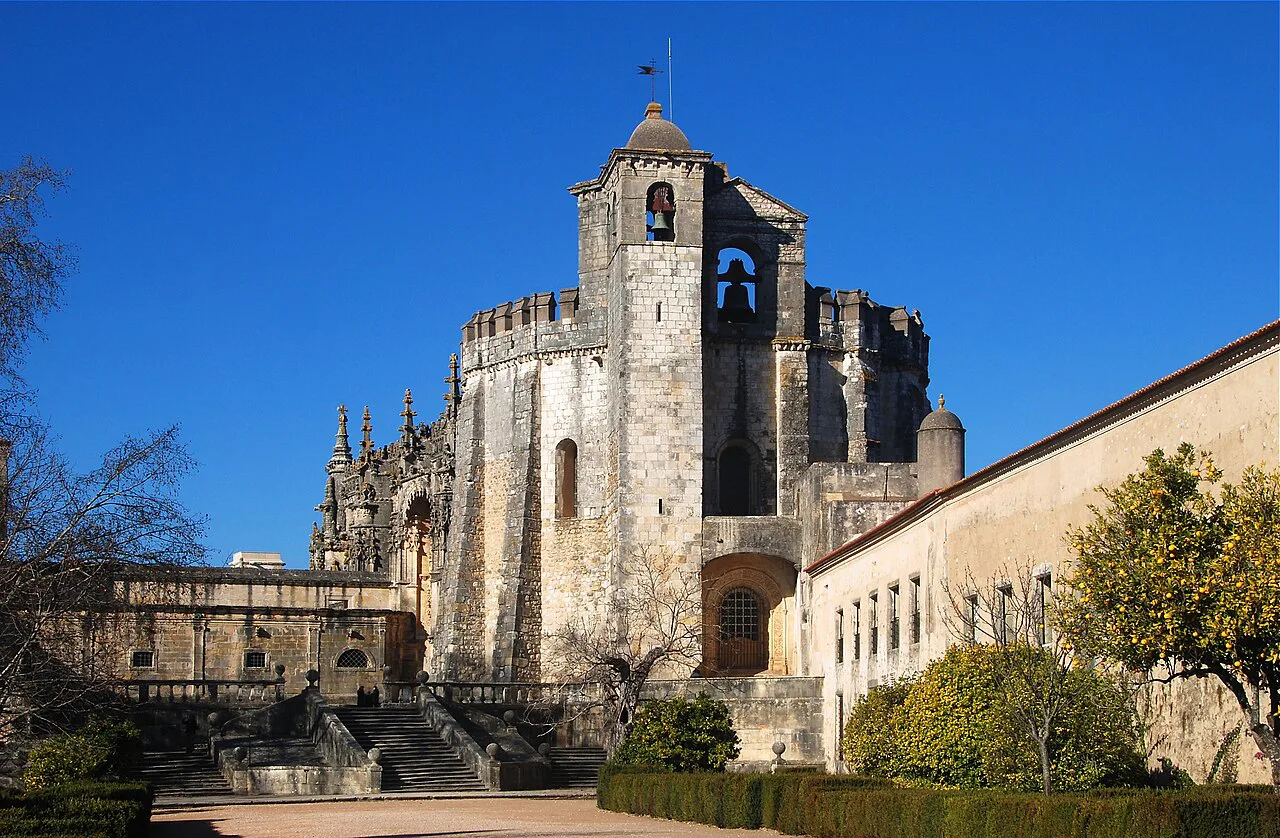
Which Templar sites in central Portugal are worth building a short break around
Build the trip around Tomar first, then add Almourol as a half-day excursion. Tomar is a town with a railway station, food and beds, and the Convento de Cristo sits on the hill above it; Almourol is a single monument on an island, reachable only by boat from Tancos, so it works as an outing rather than a base. Two nights in Tomar gives you one unhurried day at the convent and one for the castle and river.
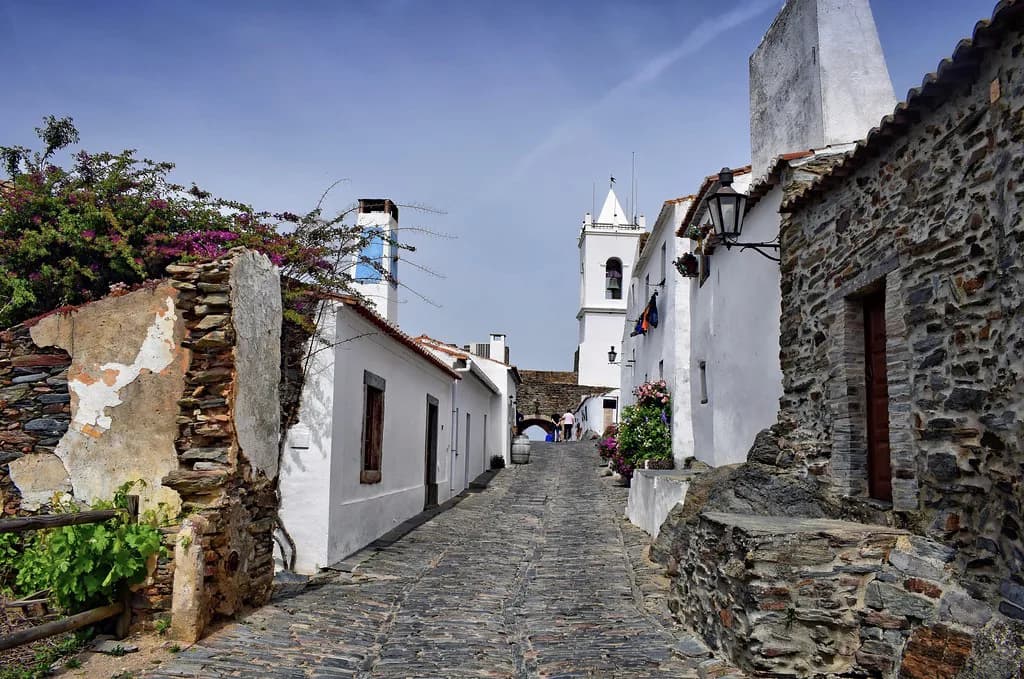
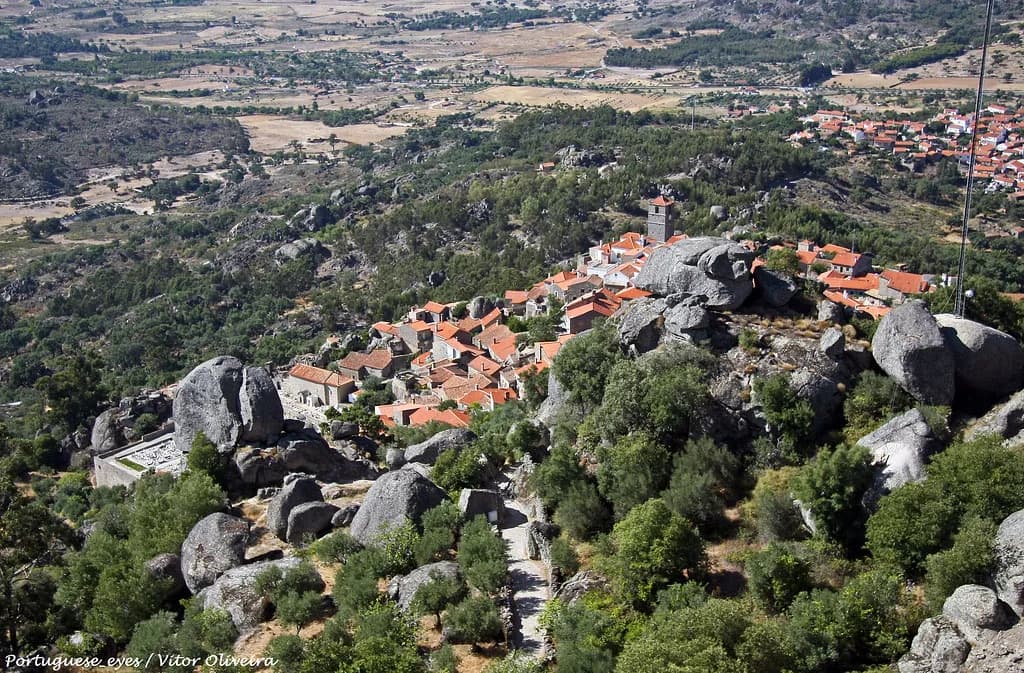
If you are travelling around the region by car or bus, the historical villages of central Portugal make a natural extension, though they belong to a different era of frontier defence and are not Templar foundations. Piódão, a schist village on the slopes of Serra do Açor, is the most atmospheric of them, with steep stairs between slate houses and a small museum. Treat such places as a separate day rather than squeezing them into a Templar itinerary.
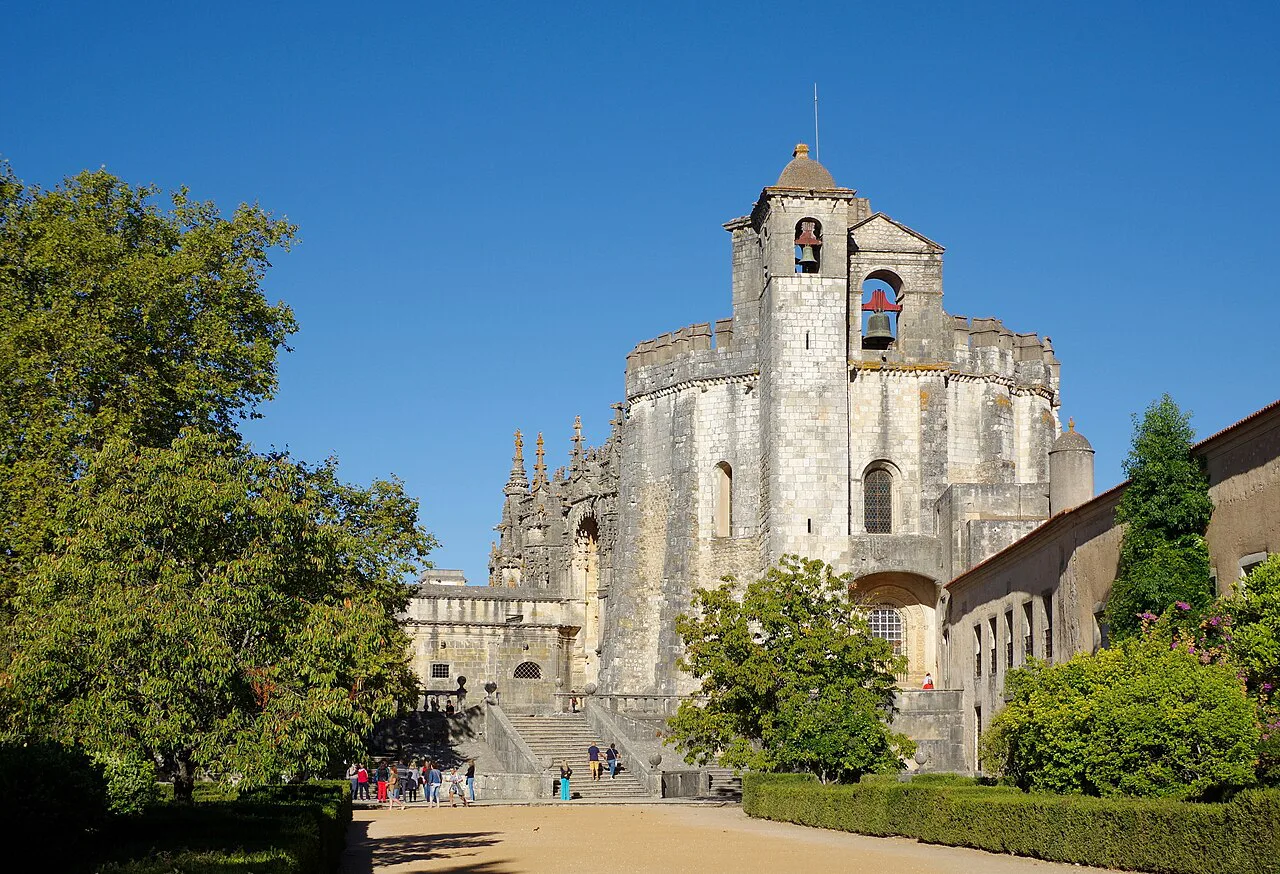
Tomar: the Convento de Cristo and the charola, the Templar heart of the country
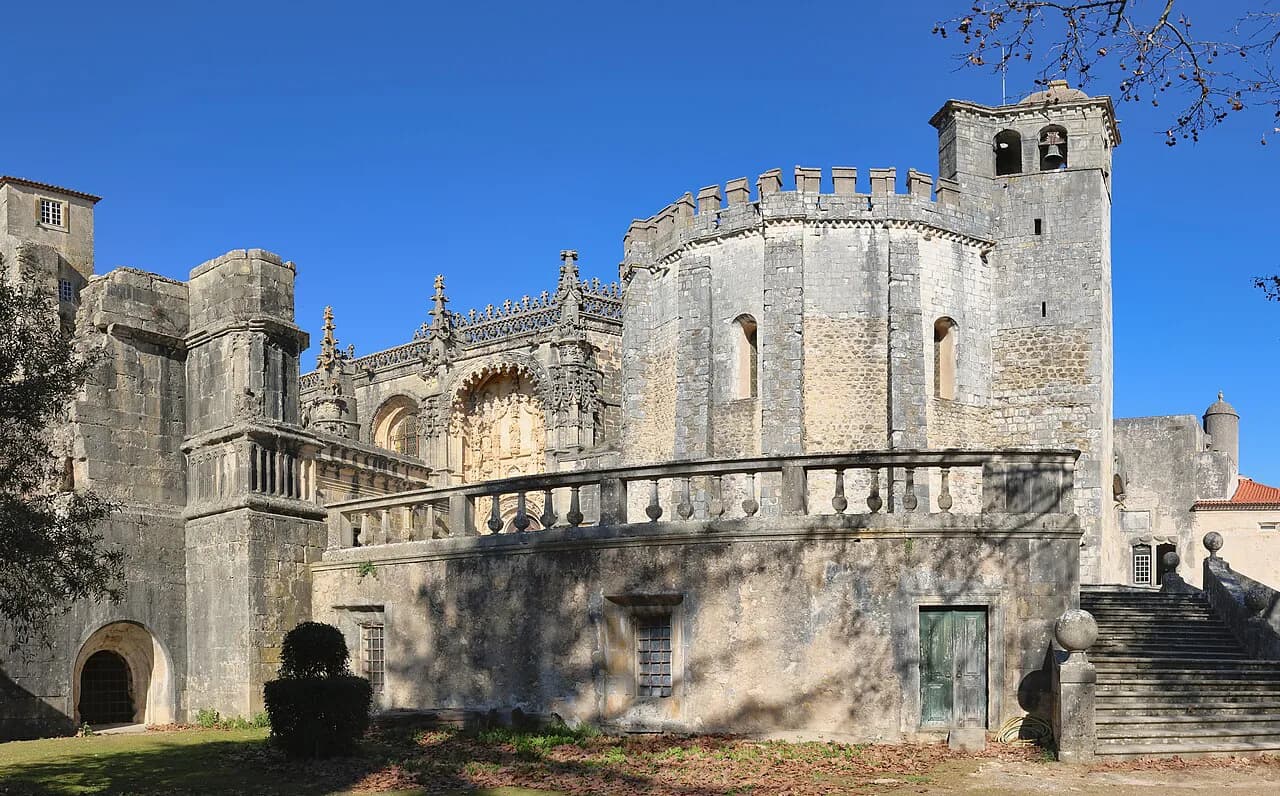
The Convento de Cristo is the reason to come to Tomar: a castle-and-monastery complex whose centre is the charola, the round church the Templars built, later wrapped by the additions of the Order of Christ — cloisters, a chapter house and a Renaissance façade. The visit is a walk through several centuries rather than a single period. Allow two to three hours for the complex and the walk up from the town centre.
Check the convent's published opening days before you fix your dates, because Portuguese national monuments commonly close on Mondays. Ticket prices and seasonal timetables are published by the monument itself, so check those directly rather than relying on a guide written months earlier. If the monument offers online booking, use it, since the charola is the busiest part of the complex.
The town below is worth an hour of its own: the Praça da República with its old town hall, the Synagogue and the riverside gardens along the Nabão. It gives you somewhere to eat between the convent and the evening train, which matters if you are doing Tomar as a day trip. From here, the Age of Discoveries took navigators out of the same river system, a reminder that Tomar stayed strategically useful long after the Templars.
The Castle of Almourol: an island fortress in the Tagus near Tancos
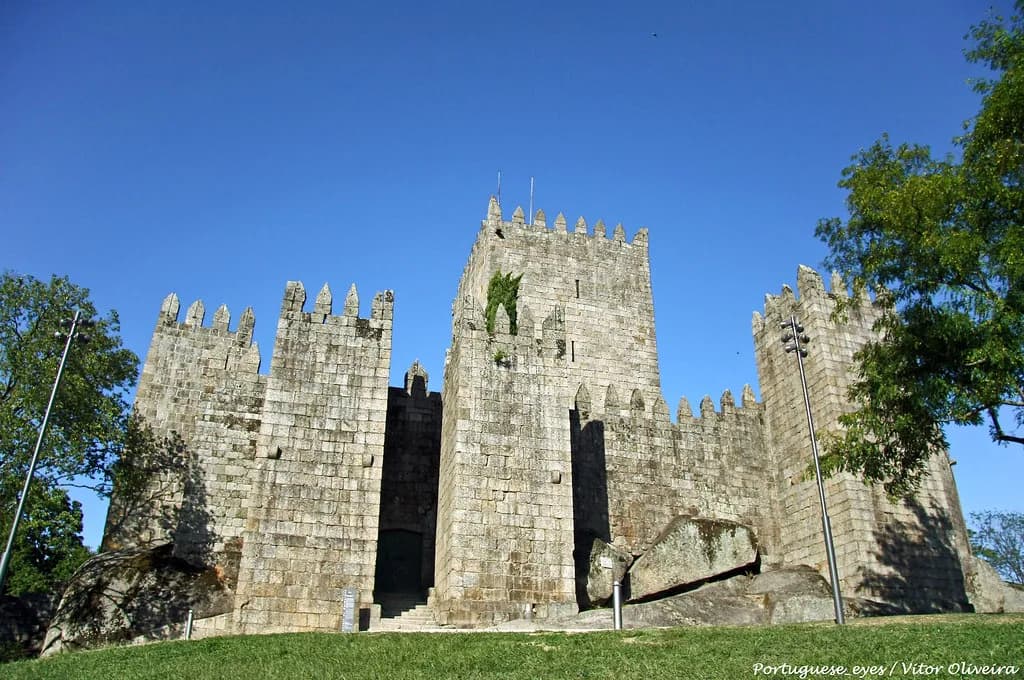
Almourol sits on a rocky island in the middle of the Tagus, and it is the most photogenic of the Portuguese Templar monuments because the setting does the work. The castle existed by 1129, when it was recorded as Almorolan, and the Templars rebuilt it; the main door carries the date 1171. It fell into disuse after the order's dissolution, then was restored in the nineteenth century in a Romantic medieval spirit.
The visit itself is short: a walled enclosure, a keep and river views, with no museum of any size to slow you down. Budget about an hour on the island once you are off the boat, plus waiting time on the Tancos bank. Bring cash for the crossing and check the published boat times before you set out, because the boat governs the day rather than the castle.
How Almourol is reached and when boats run from Tancos
Boats depart from Tancos every hour, and the published windows are 10:00 to 13:00 and 14:30 to 17:00 from 1 November to 28 February, then 10:00 to 13:00 and 14:30 to 19:00 from 1 March to 31 October. Note the midday gap: it is not a continuous service, so the sensible pattern is a morning or an afternoon crossing rather than a lazy all-day shuttle. These are the published hours, so confirm the day's sailings at the quay before committing to a train back.
Getting to Tancos without a car means a train on the Lisbon–Tomar line to the local halt, then a walk or short taxi ride to the river. If you are relying on public transport, do Almourol on the same day as Tomar only if you take an early crossing, because the return connections thin out later. With a car, the drive from Tomar to Tancos is short and there is parking near the embarkation point.
Alcobaça and the Cistercian contrast: a royal pantheon rather than a Templar HQ
Alcobaça is often grouped with Tomar on heritage itineraries, but the Mosteiro de Santa Maria de Alcobaça is Cistercian, not Templar, and it repays a visit on its own terms. The church, begun in 1178, has three naves of equal height, and the monastery holds the fourteenth-century tombs of King Pedro I and Inês de Castro, masterpieces of European funerary sculpture.
The kitchen is the surprise: a room built between 1720 and 1752 with a 26-metre chimney, blue-and-white tiles and a water channel fed from the Chiqueda spring. Opening hours are published by the monastery, with last entry thirty minutes before closing time. Do not assume Tomar and Alcobaça can be done comfortably in one day; they sit in different river valleys and each deserves a half-day.
How many days you need: one day in Tomar versus two with Almourol
One day is enough for the Convento de Cristo and a walk through Tomar if you arrive early and leave on an evening train. Two days lets you add Almourol with a boat crossing and still have time for the town's riverside, which is the version most short-break travellers will enjoy more. Three days opens up Alcobaça as a separate excursion, but only if you have a car or are willing to plan bus connections.
If your interests run older than the Templars, the region also holds Roman ruins that make a good half-day on the way in or out. Beyond that, keep the itinerary tight: the pleasure of this area is unhurried time in two or three monuments, not a checklist of villages.
Getting between Tomar, Almourol and Alcobaça without a car
Tomar has the best rail connections of the three, with services towards Lisbon and the central line, so make it your base and use buses or a hired car for the rest. Tancos is a short hop from Tomar by train or road; Alcobaça is the awkward one, reached by regional bus from Leiria or Caldas da Rainha rather than by direct rail. Check timetables with the operators before you book accommodation, because a Sunday or a public holiday can strip out the useful departures.
If you are heading south afterwards, the Moorish legacy of the Alentejo and Algarve makes a natural next chapter in the country's history, but it is a separate trip rather than a detour from Tomar. Plan the Templar sites as a compact central-Portugal loop and save the south for another visit.
Practical trade-offs: opening days, boat timetables and seasonal hours
The main trade-off is that the boat, not the castle, sets the shape of an Almourol day: miss the last afternoon crossing and you are waiting on the bank. Build in a buffer before any train or bus connection, and check whether the crossing runs in bad weather, since a swollen Tagus can stop sailings. These are the details that turn a smooth day into a frustrating one.
Monuments in central Portugal often shut on Mondays and reduce hours out of season, so put the Convento de Cristo on a Tuesday or later and keep Monday for the town, the river or a village drive. Prices for Almourol, Tomar and Alcobaça are set by the monuments and change, so check the official pages shortly before you travel rather than carrying figures from an old guide.
Early autumn and late spring are the sweet spots: the boat season still runs long afternoons, the heat is manageable on the climb to the convent, and the island is less crowded. Winter crossings stop earlier, which compresses a two-site day and makes an overnight in Tomar the sensible choice.
Where to eat and stay in Tomar and around the Castelo de Bode area
Tomar has the widest choice of beds and restaurants in the area, from tascas near the Praça da República to pastelarias for a quick breakfast before the convent opens. Eat a proper lunch in town rather than on the road, because the stretch around Tancos and the Castelo de Bode reservoir is thin on places to stop. Book accommodation in Tomar itself if you are without a car, so that trains and buses are walkable.
Beyond Tomar, the schist villages offer rural stays with mountain views, but they suit a slower itinerary and add driving. If you want the Templar story as the spine of the trip, keep the base in Tomar and treat the villages and the reservoir as optional excursions. That way the monuments, not the logistics, take up your days.
Should you build your short break around Tomar or Almourol?
Build it around Tomar. The Convento de Cristo and its charola carry the Templar story in the fullest form, with a town around them that works for trains, food and an evening walk. Add Almourol as a timed boat excursion from Tancos, and treat Alcobaça as a separate Cistercian day when you have the time and transport.
Two nights in Tomar, one day at the convent and one at the island castle, is the honest minimum for this corner of Portugal. Check the monuments' opening days and the Tancos boat times before you book, then leave the rest of the schedule loose enough to enjoy the river.
Explore more Portugal guides
Sources
Notes for your next Portuguese break
Optional updates to our town guides.
You might also like
Continue reading
More guides you'll find useful