Castles in Portugal: 8 Worth Visiting and What Each Is Like
Eight castles in Portugal worth a short break, from Guimarães and Óbidos to Almourol and Monsaraz, with what each is like and how it fits one to four days.
On this page
Portugal's castles are best chosen by how they fit your days, not by a beauty ranking. Óbidos and Guimarães slot into a short break with almost no planning, Castelo dos Mouros sits above Sintra as a hill fort rather than a palace, and Almourol, Monsaraz and Bragança each ask for a proper half-day or a night away. This guide takes eight fortresses in turn and says what each is actually like to walk round.
Expect medieval walls, hilltop keeps and long views rather than furnished royal rooms; historic palace interiors are a separate kind of day out. Several of the fortresses below reward a slow circuit of the walls more than a rushed dash through a gatehouse. Opening days and ticket prices vary by site, so build the day around the castle rather than the other way round.
What to expect from Portugal's castles
Most of the castles worth a short-break detour are defensive in origin: curtain walls, a keep, a gate or two and a position chosen for the view. That means the pleasure is in the walk round the ramparts, the climb up uneven stone steps and the landscape beyond, not in rooms of furniture. Allow an hour for a compact fortress and two for a walled town where you also wander the streets.
For a fuller sweep of candidates before you commit, the wider list of the best castles in Portugal groups the same handful of names you will keep meeting, from Óbidos to Monsaraz. Ground is uneven and exposed, with loose stones on some wall walks and little shade on the battlements. Sturdy shoes make more difference than any ticket, and anyone uneasy with heights should think twice before committing to a full rampart circuit.
How to choose: near Lisbon or a night away
Several of Portugal's best-known palaces and castles sit close enough to Lisbon to work as a day out, including the Sintra palaces, the Castelo dos Mouros, Queluz and Mafra. The same broad area logic applies to Óbidos and Leiria, which fit a loop north of the capital. That makes the Lisbon hinterland the easiest starting point if you have only one or two days.
Almourol, Montemor-o-Novo, Monsaraz and Bragança are a different proposition. Each works best as the centrepiece of a night or two in its own region rather than a rushed dash from the capital. If your trip is a single city break, pick one castle nearby and do it properly; if you have three or four days and a car, the Alentejo and the north open up. Car hire and rural roads matter here more than any timetable.
Castelo de Óbidos: the walled town and its ramparts
Óbidos is the classic Portuguese walled town, with the castle and the village inside the walls forming a single visit. The circuit along the top of the ramparts is the reason to come, giving views over the tiled roofs and the countryside beyond. The trade-off is that the wall walk narrows in places and has a drop on the outer side, so it is not for everyone.
Because the town itself is small, Óbidos suits a half-day stop on a drive north from Lisbon rather than a whole break. Wander the main street, look in at the churches, and save energy for the walls. Arrive early if you want the ramparts without a queue of people coming the other way.
Castelo de Guimarães: the founding fortress
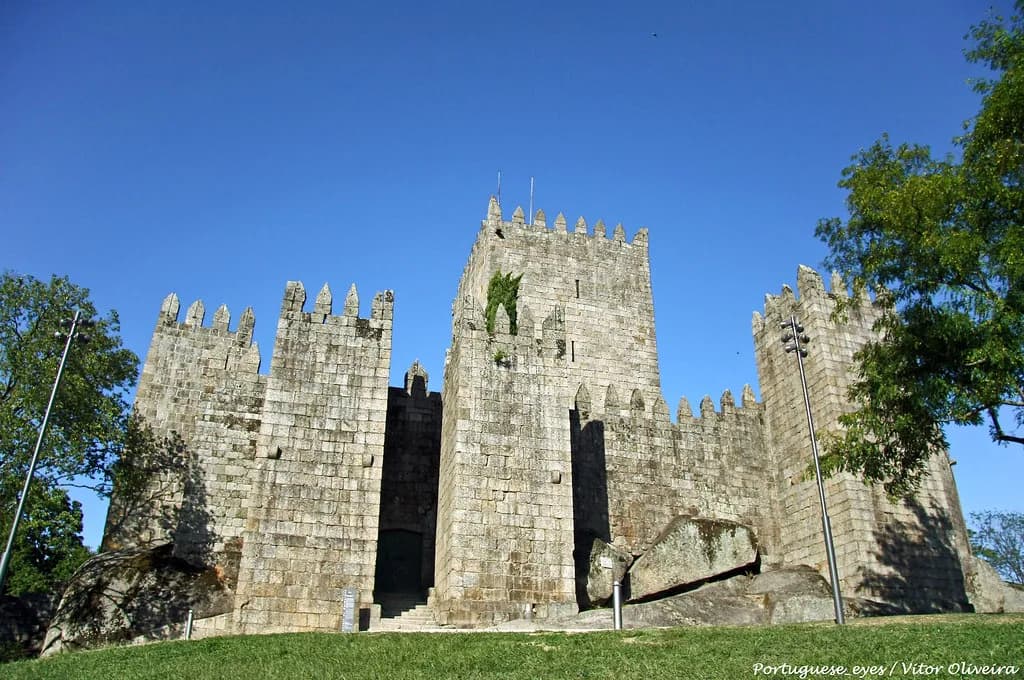
Guimarães holds the castle often described as the birthplace of the nation, a compact granite fortress on a small hill above the old centre. The appeal is the sense of early medieval Portugal: thick walls, a tall keep and a tight courtyard rather than later palace comfort. It takes well under an hour, which leaves the rest of the day for the town.
Pair it with the Paço dos Duques de Bragança next door, a 15th-century palace built by the first Duke of Bragança that later served as a barracks and was restored during the Estado Novo. Inside you see Flemish tapestries and 16th and 17th-century weaponry, and there are often contemporary art exhibitions. Castle and palace together make a satisfying half-day.
Castelo dos Mouros, Sintra: the hill fort above the palaces
Castelo dos Mouros is the Moorish hill fort above Sintra, a line of stone walls threading through forest rather than a furnished palace. The walk between the walls is the point, with views down over Sintra and out towards the coast on a clear day. Treat it as a physical outing: the climb is steady and the stone paths are uneven underfoot.
Sintra's fame rests on its Romantic palaces, and Pena, Quinta da Regaleira and Monserrate pull the crowds, with Pena in particular requiring timed entry and turning busy in high season. If you want a fortress instead, Castelo dos Mouros gives you the walls and the forest without the palace interiors.
Castelo de Almourol: the river island fortress
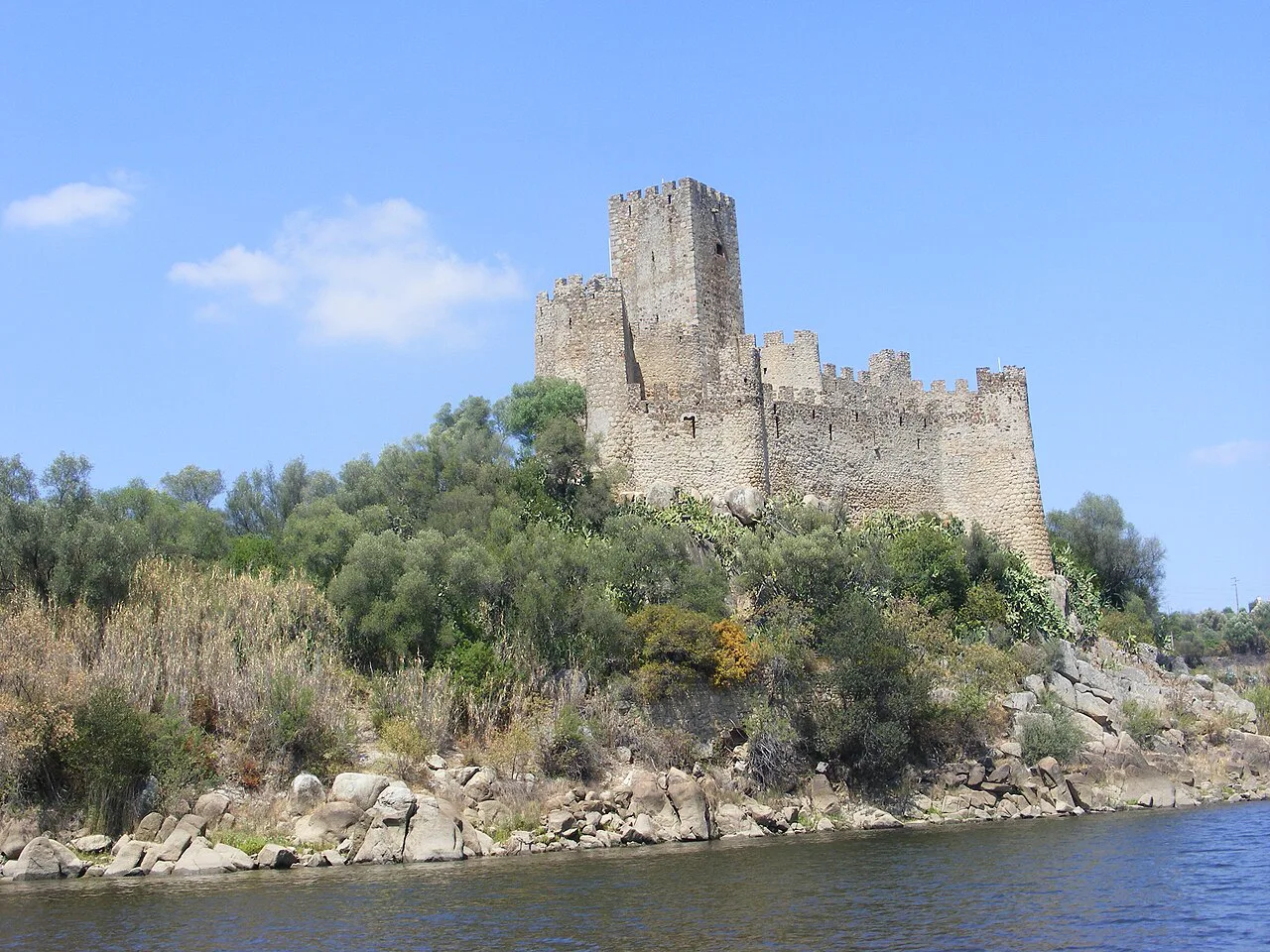
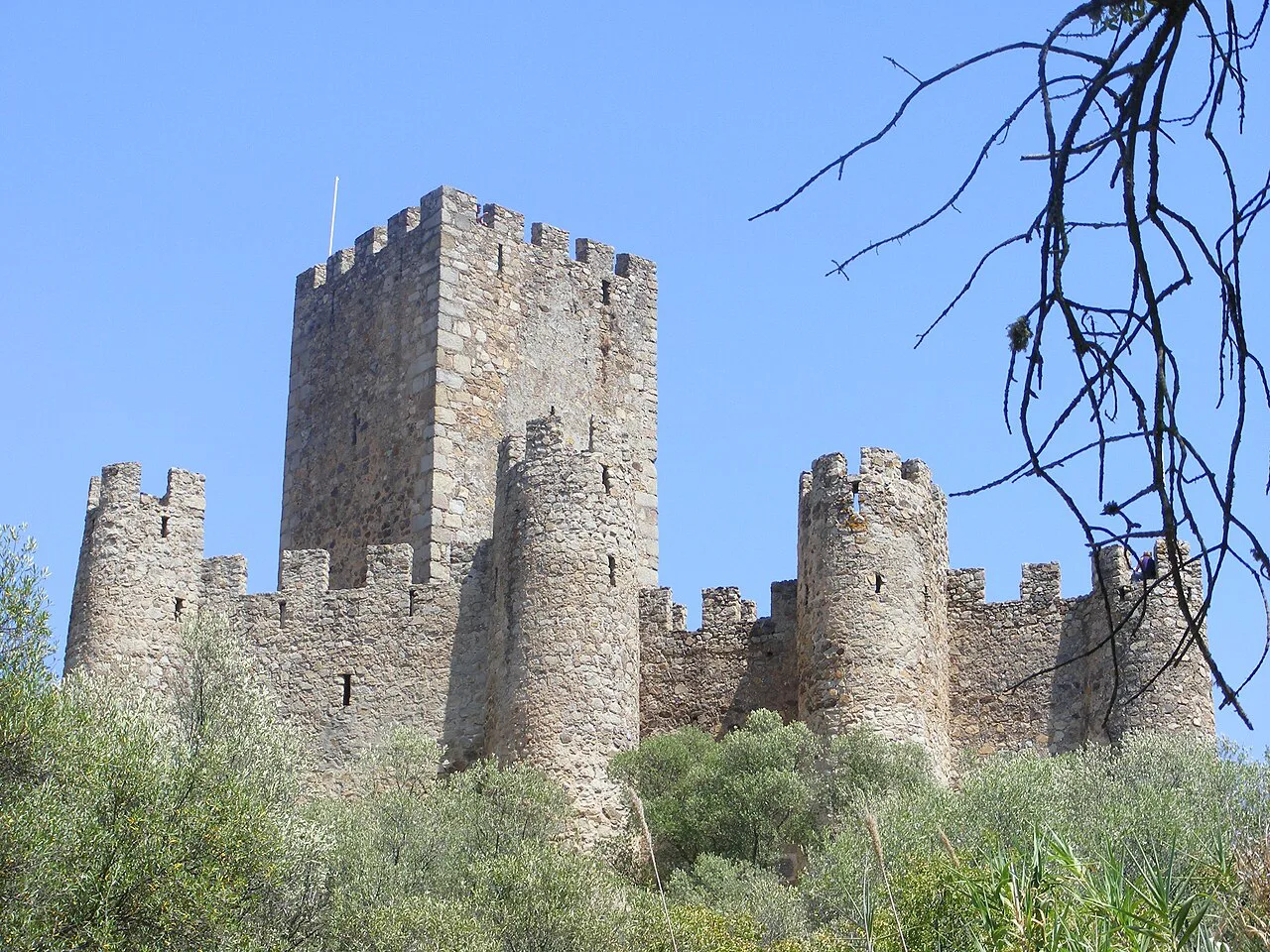
Almourol is the image most people carry of a Portuguese castle: a small fortress on a rocky island in the Tejo, reached by boat. The setting does most of the work, and the crossing is part of the visit. It suits a slow afternoon rather than a flying stop, and the surrounding countryside is quiet; our Almourol castle guide sets out how the crossing and the island visit work.
The trade-off is access. Because the castle sits on an island, you cannot simply drive up and walk in, and the boat crossing sets the rhythm of the visit. Build in time for the approach and check locally how the crossing runs on the day you plan to go.
Castelo de Leiria: the hilltop complex
Leiria's castle stands on a hill directly above the town, so the climb is short and the reward is a wide view over the rooftops. It is a comfortable half-day that leaves time for the town centre.
Because Leiria sits between Lisbon and the north, it fits neatly into a drive that also takes in Óbidos. That pairing gives you one walled town and one hilltop castle without doubling back. Keep the pace slow and let the castle be the anchor of the day.
Castelo de Montemor-o-Novo and Castelo de Monsaraz
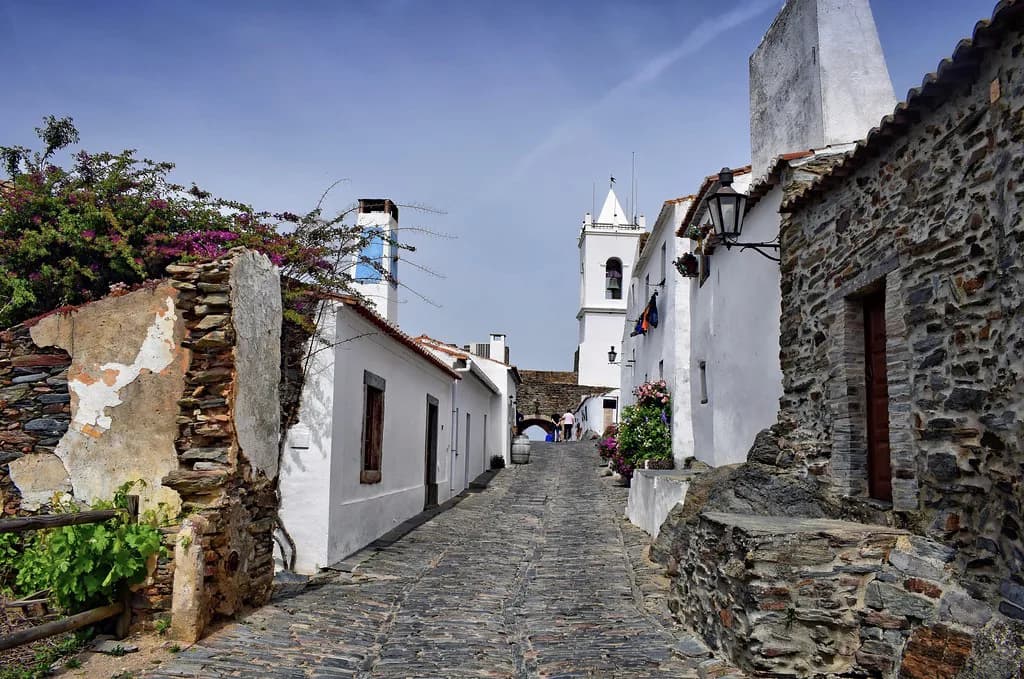
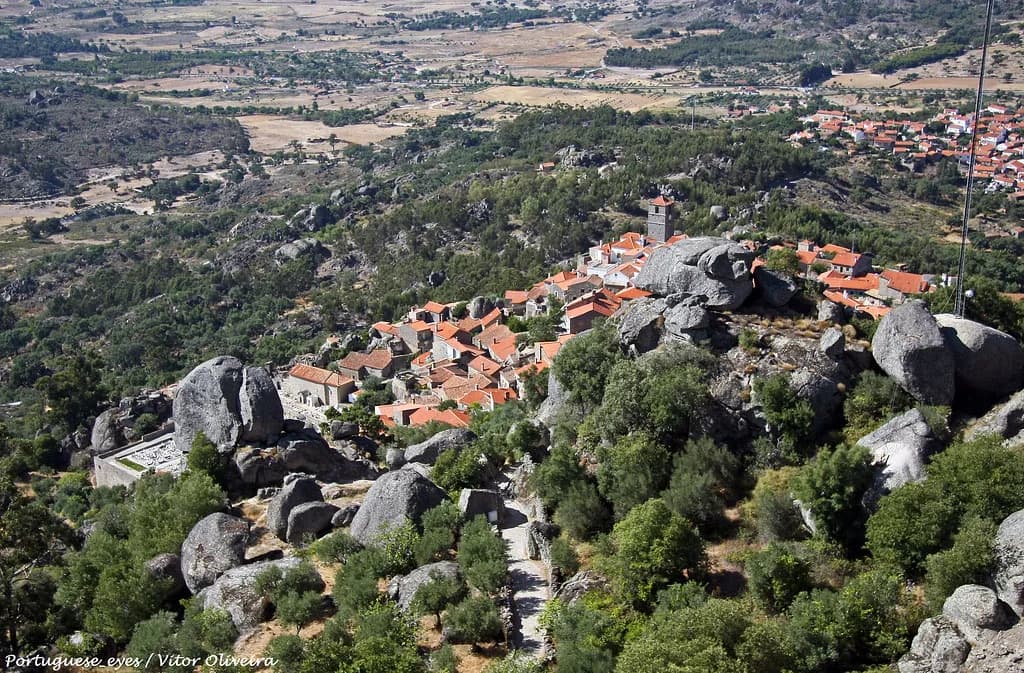
The Alentejo offers two very different walled hilltop experiences. Montemor-o-Novo has a castle and a ring of walls above the town, with the old interior given over to gardens and quiet corners. Monsaraz is the more dramatic: a village enclosed by walls on a ridge, looking out over the plains and, in recent years, the water of the Alqueva reservoir.
Both work best with a car and a night in the region, because the drives between them are long and the roads are rural. Monsaraz in particular rewards an early start and a slow walk along the walls before the day heats up. These are places to linger rather than tick off.
Castelo de Bragança and Castelo de Belver
Bragança, in the far north-east, has one of Portugal's most complete castle complexes, with a walled citadel, a keep and a historic centre inside the walls. It is a destination in its own right and makes sense on a northern tour rather than a short hop from Lisbon. The reward is a sense of a frontier town shaped by its defences, and it earns a place among the best towns in northern Portugal for a night or two.
Belver, on the Tejo in the centre of the country, is the quieter riverside option: a compact castle above the water, best visited as part of a drive along the river. Neither suits a rushed itinerary, and both ask for a night away rather than a day trip.
Which castles are near Lisbon and which need a car
For a short break based in Lisbon, the Sintra castles and palaces, Óbidos, Leiria and Mafra form the practical shortlist, and each can anchor a day. Sintra is easily reached by train from the capital, while the more rural sites reward a car, and Mafra palace is the easiest of the palace stops to add on the same run.
Almourol, Montemor-o-Novo, Monsaraz and Bragança need a car and a night away from the capital. That is not a reason to skip them, but it changes the shape of the trip. If you have only one to four days, one of these plus a Lisbon-side castle is a better balance than trying to see them all.
Palaces versus castles: when a palace fits the day better
A palace is the better choice when you want interiors, collections and a story told room by room rather than walls and views. Queluz and Mafra are the obvious examples near Lisbon, and both pair well with a castle visit on the same trip. If the weather turns, a palace interior is the more comfortable option, and the broader survey of palaces in Portugal shows how varied those interiors are.
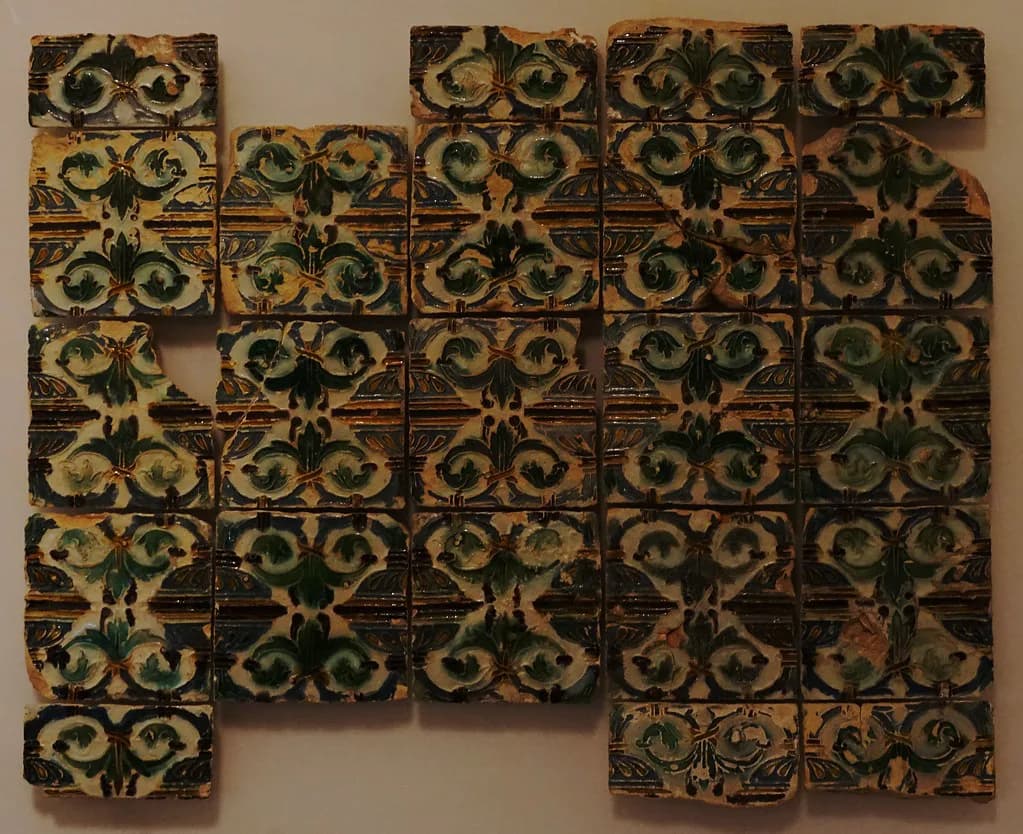
Castles win when you want the landscape and the sense of walking through history rather than looking at it. Tiled walls and floors, the azulejos that define so much Portuguese architecture, are largely a palace pleasure. Choose the day by the kind of afternoon you want, not by which site is more famous.
Practical planning: opening days, ticket prices and uneven ground
Opening days vary from castle to castle, and some Portuguese monuments close one day a week. Check the official page for the specific site before you commit a day, and assume some interiors are closed for conservation at short notice. Ticket prices are published by each site, so check the official page rather than relying on older guides.
Wear shoes with grip and carry water for the wall walks, especially in the Alentejo. If you have limited mobility, ask at the ticket office about accessible routes before buying a ticket. A little planning turns a castle day from a scramble into a comfortable half-day out.
Which castle should anchor your short break?
If you have one to three days, start with Óbidos and Guimarães: both fit neatly into a short trip and give you walls, views and a town to wander afterwards. Add Sintra's Castelo dos Mouros if you want a forest climb, or Mafra if you want interiors. For four days and a car, the Alentejo pair of Montemor-o-Novo and Monsaraz is the standout.
Whichever you pick, build the day around the castle rather than the other way round. Check opening days and ticket prices on the official site, allow for uneven ground and leave time for the town below. That is how a fortress turns from a photo stop into a proper day out.
Explore more Portugal guides
Sources
Notes for your next Portuguese break
Optional updates to our town guides.
You might also like
Continue reading
More guides you'll find useful