
Mafra Palace: What to See Inside Portugal's Baroque Giant
Mafra Palace in Portugal: what to see in the royal apartments, basilica and library, which day it closes, and how long to allow for the visit.
On this page
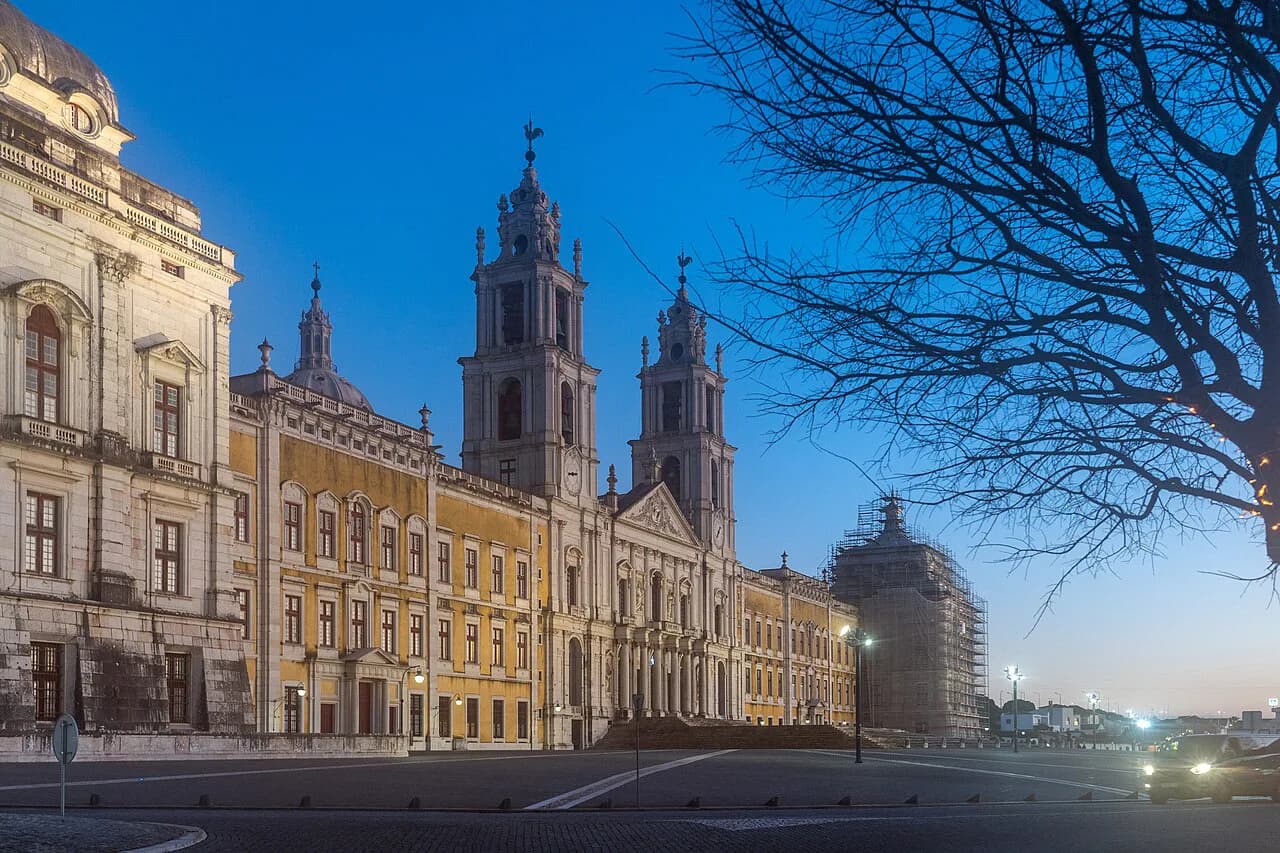
Mafra Palace is worth visiting if you want one building that contains everything: royal apartments, a huge basilica and a Franciscan convent under a single roof, inside a UNESCO World Heritage Site. The Palácio Nacional de Mafra also holds a celebrated library and a 232-metre gallery linking the king's and queen's turrets. This guide covers how the visit works, which day it closes, how long to allow and how to get there from Lisbon or Ericeira.
It is not a castle with a view, so do not come expecting battlements. Come for scale: around 1,200 rooms, a pair of carillons with 98 bells and six historic organs in the basilica. You can read more about how this fits alongside hilltop fortresses in the wider guide to castles in Portugal.
What the Palace of Mafra is
King João V ordered the building, which combines a royal palace, a basilica and a convent, and it is the most important Baroque monument in Portugal. It sits at Terreiro D. João V in Mafra, about 28 kilometres from Lisbon, and was proclaimed a UNESCO World Heritage Site in 2019. The complex was paid for largely by gold flowing in from Brazil, which explains the ambition of its scale and decoration.
If you are comparing Mafra with the country's other big palaces, it is useful to know what makes it different. Palaces in Portugal range from romantic hilltop confections to austere royal convents, and Mafra is firmly the second sort: a working monastery and royal residence in one austere symmetrical block. Its interest lies in the corridor of rooms, the church and the library rather than in rich interior decoration.
How the visit works
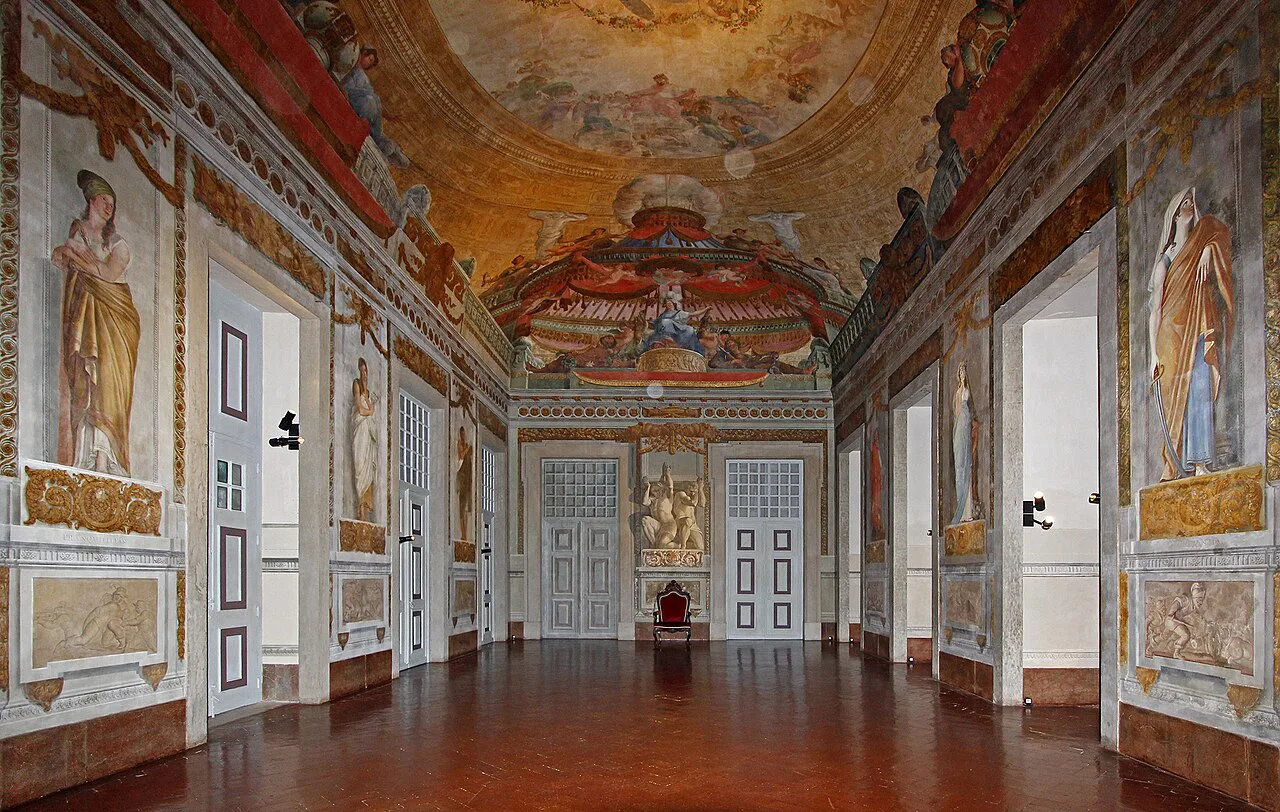
The royal palace occupies the noble floor and both turrets: the king used the north turret, the queen the south, and a 232-metre gallery joins them as Europe's largest palatial corridor. The convent side adds the Campo Santo, the infirmary, the elliptical chapter hall, the literary acts room, the stairway and the dining hall. Expect a long, linear walk through large stone rooms rather than a furnished apartment tour.
The library is the part most visitors remember, described as one of the most beautiful in the world and open to readers on business days except Tuesdays, in morning and afternoon sessions. The basilica holds six organs described as unique heritage worldwide, and the two carillons together have 98 bells. Plan the basilica as a separate stop, since it keeps different hours from the palace.
Opening days and hours
The palace opens every day except Tuesdays, from 09:30 to 17:30, with last entry at 16:30. That Tuesday closure is the single most useful fact for planning: a short break built around a Tuesday in Mafra will find the palace shut. Arrive before mid-afternoon so the last entry does not catch you out.
The basilica runs split hours, 09:30 to 13:00 and 14:00 to 17:30, and closes on Tuesdays as well as on 1 January, Easter Sunday, 1 May, Ascension Thursday (a municipal holiday) and 25 December. The midday gap is the trap: if you spend the morning in the palace you can easily miss the church. Check the palace's own site before travelling if a public holiday falls in your dates.
What to see first if you have limited time
Start with the basilica if you arrive in the morning, because its doors close at 13:00 and do not reopen until 14:00. Then take the palace route through the royal apartments and the gallery, and finish with the library and convent rooms before last entry. This order protects the two elements people most want to see from the split-hours problem.
If you only have an hour or so, choose between the church and the palace interior rather than trying to rush both. The basilica is quicker to see; the palace route takes longer and rewards those with an interest in architecture. Travellers weighing up grand monuments against fortresses will find a different pleasure in the best castles in Portugal, where the drama is landscape rather than interiors.
How long to spend at Mafra Palace
Allow around three hours for the full palace, basilica and convent, with more if you linger in the library or read the displays. The building is roughly four hectares with 156 stairways, so the walking itself takes time even when rooms are quiet. A half day in Mafra, including the town's main square outside the palace, is a realistic slot.
The trade-off is depth against breadth. Mafra is large enough that a rushed visit becomes a blur of stone corridors, so cut the convent rooms first if time runs short. Pairing it with a second monument on the same day rarely works well unless you start early and drive.
Is Mafra worth visiting, and who should skip it
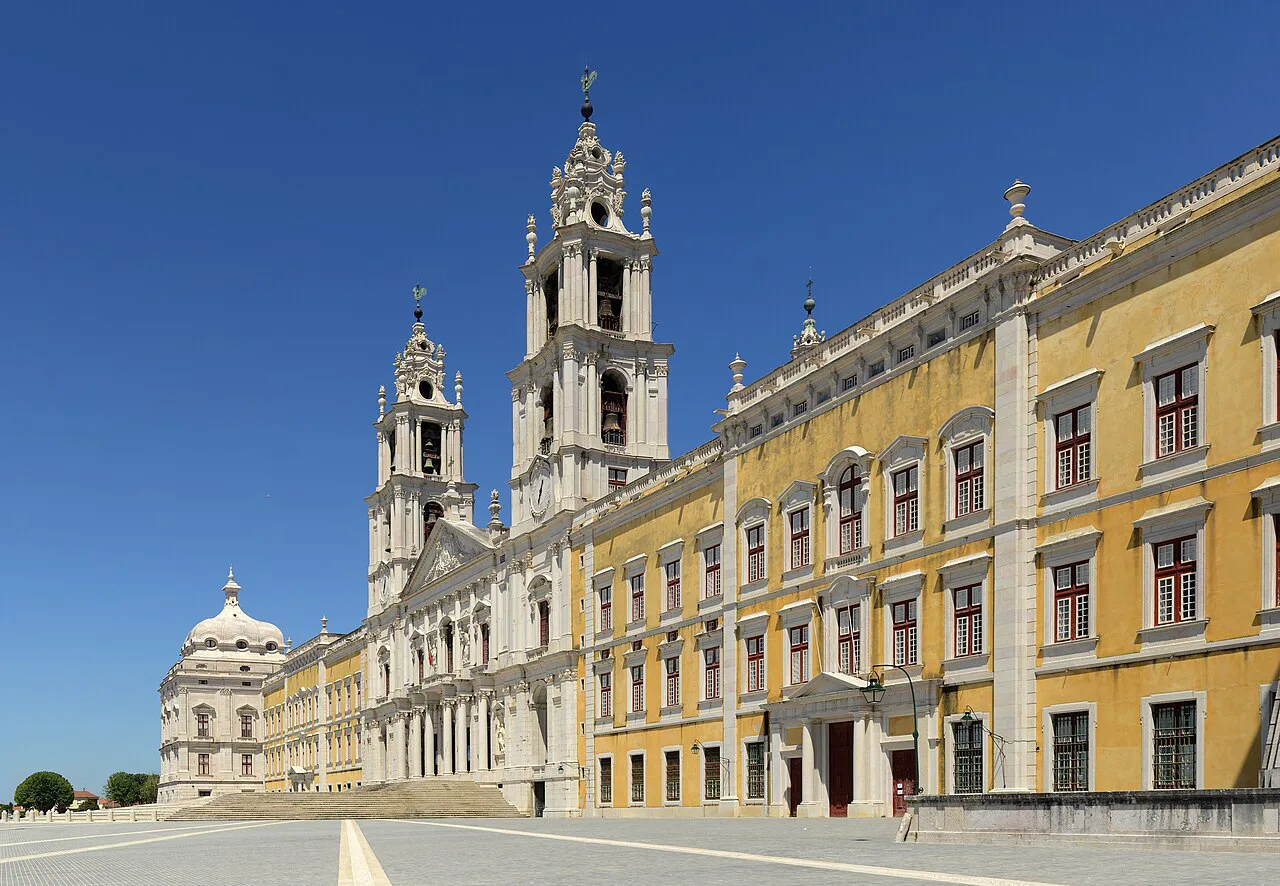
It is worth it for anyone interested in Baroque architecture, royal libraries or monastic life, and for families who want one big, memorable interior without an exhausting hike. The sheer scale of the place, from the 1,200 rooms to the six organs, gives it a wow factor that few Portuguese monuments match. It is a poor fit for travellers who want furnished period rooms, frescoed ceilings and curated displays at every turn.
Skip it if your short break is built around small medieval towns and you would rather see walls and castles. In that case, the Castle of Almourol, a romantic island fortress on the Tagus, offers a completely different day out. Mafra is a Baroque statement, not a castle experience.
Getting to Mafra from Lisbon or Ericeira
Mafra lies roughly 28 kilometres from Lisbon and is easily reached by road, which makes it practical either as a half-day from the capital or from the coast at Ericeira. If you are staying in Lisbon, the visit works as a single focused excursion rather than a full day out. Confirm current bus and coach times locally, as schedules change.
From Ericeira the distance is shorter, so the palace pairs naturally with a coastal base. Drivers should note that the palace sits in the town itself, at Terreiro D. João V, not in open countryside. Public transport users should check the return times before setting off, since the last palace entry at 16:30 shapes the afternoon. If you are planning the coast around this visit, an Ericeira guide helps you line up surf, old town and coastal walks on the other days.
Where Mafra fits in a short Portuguese town break
Mafra works best as one anchor of a three or four-day break rather than the whole trip. Base yourself in Lisbon or Ericeira, give Mafra half a day, and use the rest for a smaller town with a castle or a walled centre. The wider Castles in Portugal Worth Visiting guide helps you pick a companion stop that contrasts with Mafra's Baroque scale.
A sensible pattern is one big monument day, one compact old-town day and one slower day with a market and a viewpoint. Mafra fills the big-monument slot neatly, especially if you arrive before the basilica's morning close. Keep the rest of the break in towns where you can walk everything, and let Mafra be the one place you travel out to.
Should Mafra be on your short-break list?
Yes, if you have a half day free and an appetite for Baroque scale, a famous library and a church with six organs. Go on any day except Tuesday, arrive before the basilica's 13:00 close and leave enough margin for the 16:30 last entry. Buy tickets through the palace's official site and confirm the day's hours before you travel.
No, if your short break is already full of small walled towns and you want castles rather than corridors. In that case spend the day elsewhere and keep Mafra for a future trip with more time.
Frequently Asked Questions
What is Mafra famous for?
Mafra is known for its vast palace-convent, proclaimed a UNESCO World Heritage Site in 2019, which combines royal apartments, a basilica with six historic organs and two carillons, a convent and a celebrated library, all built under King João V.
What is the most famous palace in Portugal?
Mafra is the most important Baroque monument in Portugal, but fame depends on taste: the colourful Palácio Nacional de Pena at Sintra draws crowds for a very different romantic style, while Mafra appeals for sheer scale and its library.
Sources
Notes for your next Portuguese break
Optional updates to our town guides.
You might also like



Continue reading
More guides you'll find useful





